
Andrew Hill Leaves Coca-Cola for Grab: What FMCG and F&B Brands Should Do Next in Southeast Asia
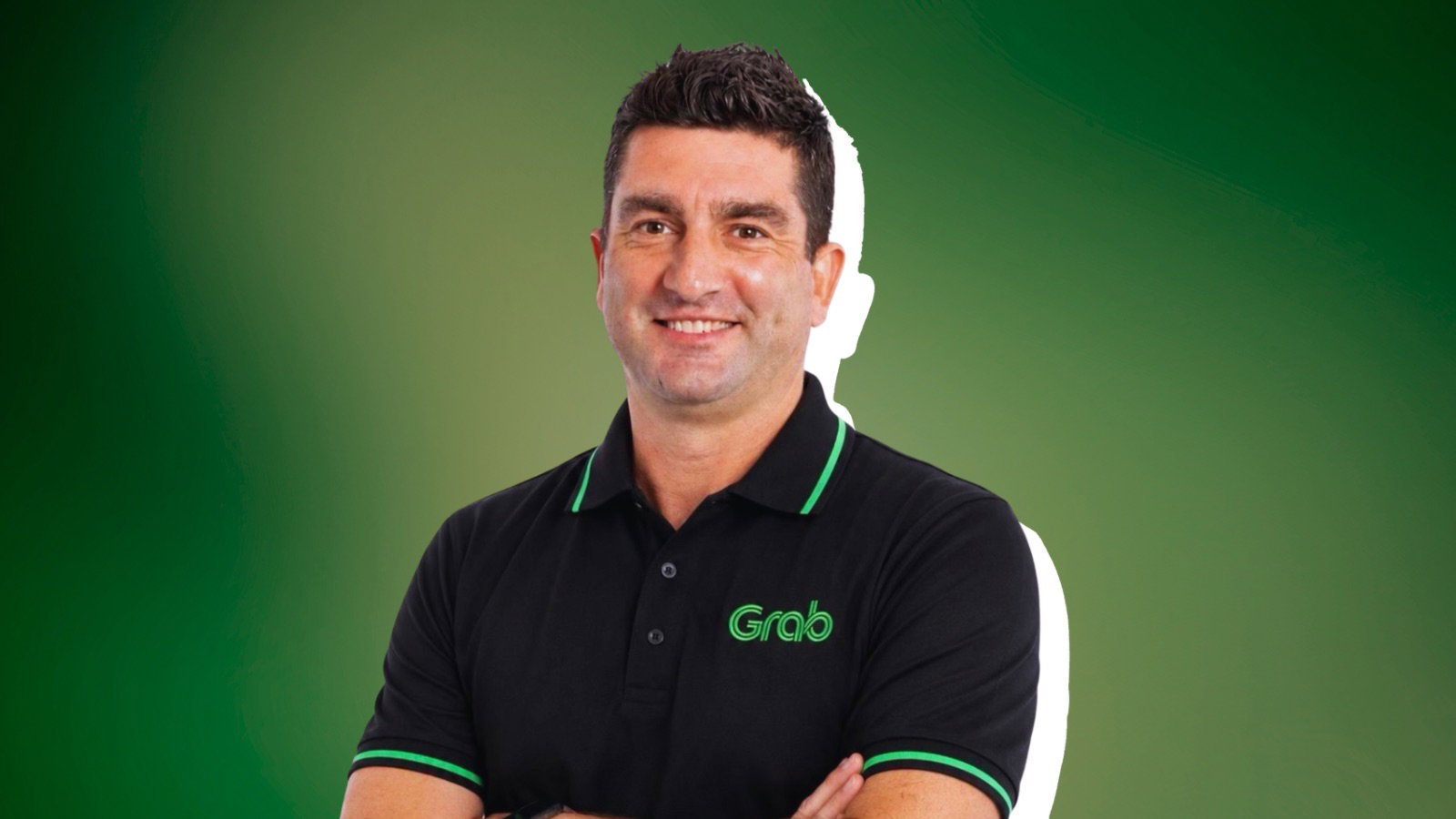
Grab has appointed Andrew Hill, a former Coca-Cola senior director, as its head of regional strategic accounts for F&B and FMCG. Read plainly, the hire says where Grab wants its next dollar from: not delivery fees, but shopper data, retail media and partnership terms that reach across six or more markets at once. For brand teams, this is less a personnel item than a change in who holds the pen on how consumer goods are sold digitally in Southeast Asia.
What long-term trend sits behind one hiring decision
Super apps in this region spent years assembling demand — mobility, food delivery, groceries, payments, fulfilment — and have only recently begun to monetise the attention layer they created. Grab's own disclosures make the sequence visible. Advertising revenues grew 60% year on year to $176 million in 2024, pacing at an annualised run-rate of $216 million in the fourth quarter, according to the company's fourth-quarter and full-year 2024 results. By the time Hill's move was announced, Grab had reported full-year 2025 revenue of $3.37 billion and its first full year in net profit, with Deliveries contributing $1.8 billion, or about 53% of revenue, growth the company partly attributed to a higher contribution from advertising.
Management has also been explicit about why consumer goods companies buy in. On the Q2 2025 earnings call, Grab executives said many FMCG brands in the region struggle to obtain strong data on their own sales because distribution runs through multiple tiers of traditionally operated retail, and that first-party data is what makes the platform's media inventory valuable. The same call put advertising penetration at roughly 1.7% of food-delivery gross transaction value — a level leadership described as improvable, particularly for GrabMart. A GrabAds study produced with Kantar has projected retail media network ad spend in Southeast Asia at US$4.7 billion by 2030. That headroom explains the appointment better than any career narrative.
What Hill is actually being asked to run
Hill announced the appointment in a LinkedIn post, saying he wanted to work alongside leaders in retail media, unlock the potential of shopper data and build partnership ecosystems after leaving Coca-Cola. In an exclusive interview with MARKETING-INTERACTIVE, he described the remit as leading strategic partnerships across Southeast Asia and working with some of the region's biggest brands to help them realise greater value through Grab's ecosystem.
"Having worked on the brand side, I've seen the opportunity firsthand. Now, being part of the Grab ecosystem, I'm excited to help turn that opportunity into reality across Southeast Asia," Hill said. He added that his ambition is to help FMCG brands and F&B merchants make greater use of Grab's ecosystem, spanning consumer insights, advertising, commerce and business solutions.
"I want us to bring strategy and execution together, solve real business challenges and build innovative partnerships that deliver meaningful value for our clients, our partners, shoppers and Grab," he said. Hill said his earlier work alongside Grab from the brand side had given him a firsthand understanding of the platform's scale, its people and the potential of its ecosystem.
"The chance to come across the fence, work with a team and partners I know and help shape what comes next was incredibly compelling," he said, adding that the opportunity also allowed him to contribute to Grab's mission of driving Southeast Asia forward through economic empowerment.
Why his Coca-Cola years read like a preview of the playbook
Before joining Grab, Hill spent several years at Coca-Cola, most recently as digital acceleration strategy and enablement senior director from August 2023. Before that, he was head of O2O strategic partnerships for ASEAN and the South Pacific from May 2022 to August 2023 — a window that matters, because the region's flagship brand-to-platform deal was struck inside it. Coca-Cola and Grab announced a comprehensive regional partnership on 18 August 2022 covering Singapore, Indonesia, Malaysia, Thailand, the Philippines and Vietnam: retailers in Coca-Cola's distribution network were to open digital storefronts on GrabFood and GrabMart, interested merchants could become Coca-Cola distributors, and both companies committed to digital literacy and e-commerce training.
During his time at Coca-Cola, Hill highlighted his involvement in building the company's partnership with Grab, including the Coke & Go initiative, and worked on digital acceleration in New Zealand and AI enablement across ASEAN and the South Pacific. Before Coca-Cola, he was director of sales for APAC at eCommerce intelligence firm Edge by Ascential, where he led regional sales and marketing operations; he had previously served as client director at the company, helping consumer goods manufacturers grow their eCommerce businesses. He had also held roles at Octopus Group and Woolworths Group, based in Australia.
Two things travel with him. He has sat on the buying side of exactly the conversation Grab now wants to scale, including the awkward arithmetic of reconciling distributor economics with digital storefronts. And his eCommerce-intelligence background means he arrives fluent in the measurement arguments brand teams will insist on.
How brand teams should engage the Grab ecosystem: five steps
- Scope the account against the ecosystem, not the app. Decide which of the four layers Hill's description names — consumer insights, advertising, commerce and business solutions — your brand genuinely needs. A beverage company's binding constraint is availability and outlet data; a restaurant chain's is daypart demand and basket size. Writing the brief at layer level, rather than at campaign level, changes who you ask to negotiate with.
- Quantify your data blind spot before you price a partnership. If you cannot state in numbers what you cannot see in traditional multi-tier trade, you cannot value first-party insight. Build the case as a gap: share of sales unobserved, lag in sell-through reporting, and the working-capital cost of that lag.
- Pilot in one market, then replicate the contract, not the creative. The Coca-Cola model was assembled market by market across six Southeast Asian markets, because licensing, distributor structure and delivery economics differ. Reusable commercial terms travel better than localized ad concepts.
- Put distribution, not only media, on the agenda. The durable part of the Coke–Grab design was turning platform merchants into sellers of the brand's products. Ask what incentive would make a Grab merchant carry your SKU, and whether that collides with your existing distributors.
- Settle measurement before signature. Agree attribution windows, incrementality testing, third-party validation and who pays for it. The plumbing is maturing on the agency side: GrabAds expanded its GroupM partnership on 10 December 2024 to enrich first-party audience data with geo-based signals, which is a template for how brand groups will expect reporting to be structured.
Four misconceptions that will cost brands leverage
- A senior hire means budget is already moving. Appointments set direction; the observable change is named accounts, published case studies and revised rate cards.
- Platform CPMs are comparable to open social media. Grab inventory is closer to trade spend than to awareness media — the right comparator is promotional cost per store or per outlet, not a feed impression.
- Engagement equals adoption. In-store sampling and in-app placements can produce clicks without changing repeat purchase; the same caution applies to any incentive-led interface, as we argued in our review of whether rewards nudges prove adoption or just clicks.
- Data sharing is symmetric. Brands often hand over category and outlet-level performance while receiving aggregated platform insight. Specify granularity, refresh cadence, market carve-outs and what happens to your data at termination.
Which indicators to track over the next four quarters
| Indicator | What it signals | Action trigger |
|---|---|---|
| Advertising as a share of Deliveries gross transaction value (about 1.7% cited in 2025 earnings materials) | How much sales pressure sits behind retail media products | If it climbs toward the double-digit revenue share Grab's Deliveries line already shows, expect premium inventory and firmer pricing |
| First case studies and named accounts under Hill's remit | Which categories Grab treats as priority | Request category benchmarks within 90 days of the first public wins |
| Merchant-becomes-distributor programmes of the Coke & Go lineage | Grab moving from media into physical distribution | Map channel conflict before your distributor sees it first |
| Measurement and agency deals after the GroupM geo-data partnership | Attribution maturity across Southeast Asia | Renoegotiate reporting clauses at your next renewal |
Common questions
What does Grab's head of regional strategic accounts for F&B and FMCG actually own?
Strategic partnerships across Southeast Asia with major brands, spanning the ecosystem's four commercial layers: consumer insights, advertising, commerce and business solutions. The role sits between category sales and media, which is why it has historically been hard to fill from either side alone.
Why hire from Coca-Cola rather than from a media organisation?
Because the deal shape Grab needs is a distribution-and-data deal. Coca-Cola's regional partnership with Grab combined storefront digitisation, distributor recruitment and merchant training — capabilities a pure media background does not cover, and precisely the portfolio Hill held from May 2022 to August 2023.
Should smaller F&B merchants expect anything to change?
Not operationally. This remit is aimed at the region's biggest brands and their agency holding groups. Our reading, as analysis rather than company guidance: the practical effect for smaller merchants will arrive indirectly, through richer self-serve advertising tools and tighter competition for on-app placement.
What is the risk if a brand moves too fast?
Over-indexing on a single super app concentrates both demand generation and demand fulfilment with one counterparty, in markets where that counterparty also sets commission and placement terms. Keep at least one rival commerce channel live in every market you enter.
The line for decision-makers
Pricing power in Southeast Asian consumer goods is migrating from shelf space to the data that decides which shelf gets stocked — and Grab has just put a former Coca-Cola partnership builder in charge of selling it.
Reported for GlobalBizSight CompanyWatch by Julian Campbell.
Sources referenced
- Grab fourth-quarter and full-year 2024 results (advertising revenue and run-rate) — investors.grab.com
- Grab fourth-quarter and full-year 2025 results, first full-year net profit — grab.com press release, 12 February 2026
- Grab Q2 2025 earnings call transcript (FMCG data gap, 1.7% advertising penetration) — investing.com
- Coca-Cola and Grab regional partnership announcement, 18 August 2022 — grab.com
- GroupM and GrabAds geo-based audience data partnership, 10 December 2024 — grab.com
- GrabAds and Kantar retail media network spend projection for Southeast Asia — GrabAds/Kantar study coverage
- MARKETING-INTERACTIVE interview and appointment reporting on Andrew Hill