
GlobalBizSight CompanyWatch: A Practical Guide to Anthropic's IPO Valuation Reset
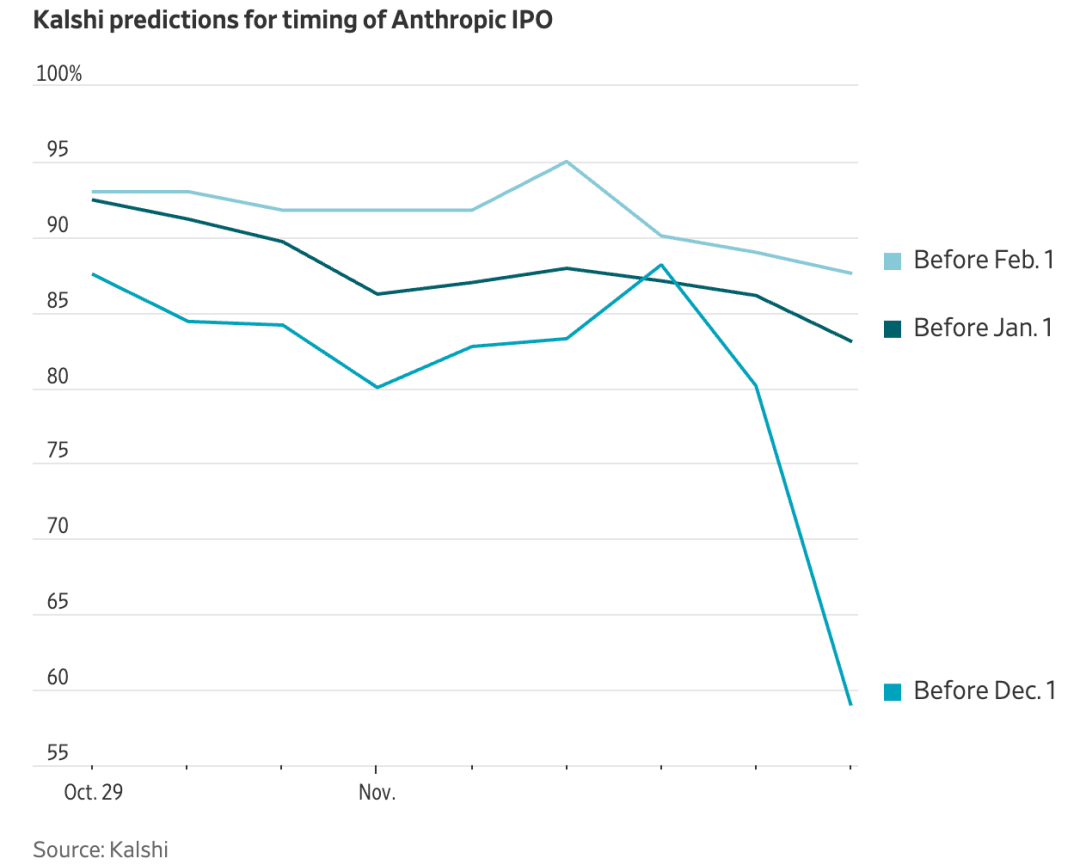
Anthropic's IPO path now looks more like a stress test than a certainty: Kalshi traders cut the odds of a listing this year from close to 90% to below 60%, while investor talks around $1.5 trillion slid toward $1.2 trillion to $1.3 trillion after the November 5 selloff, softer growth and Claude Code departures.
What exactly changed in the Anthropic IPO story?
GlobalBizSight CompanyWatch reads the shift as a valuation, timing and execution reset, not one isolated headline. The trillion-dollar IPO that was expected to raise up to $100 billion and potentially set a global record is now being priced against three pressures: the broad AI market drawdown, a slower growth curve, and the loss of high-profile Claude Code product people. On November 5, some potential investors questioned whether Anthropic could start a roadshow in the week of November 9 and complete a listing in November. Anthropic declined to comment. In its filing, the company states only that it plans to conduct a public offering as soon as practicable after the SEC registration statement becomes effective. If demand is weak, the practical alternatives are a lower valuation, a smaller raise, or a delay.
- September this year: a $2 trillion valuation briefly looked plausible.
- October 14: Anthropic told investors that third-quarter revenue rose about 45% from the prior quarter to $16.8 billion.
- The next day: media reports said some investors lowered the IPO expectation from about $2 trillion to about $1.5 trillion, erasing $500 billion in hoped-for value.
- November 2: an updated prospectus reported quarterly revenue of $16.956 billion, up about 47%, and disclosed $895.4 billion of long-term compute commitments.
- November 5: the AI-market selloff made the roadshow schedule less certain.
- Now: talk has moved to a $1.2 trillion to $1.3 trillion range, with some investors floating $1.1 trillion and waiting for October revenue data.
Why did the November 5 selloff matter so much?
The November 5 market shock changed the comparable prices institutional investors use when they decide how much to pay for a new listing. The Dow fell 1,833 points, or 3.44%. The S&P 500 Index slid 4.36%, the largest single-day drop since the April 2025 tariff shock in the United States. The Nasdaq dropped 5.52%, its worst day in 19 months. The Philadelphia Semiconductor Index fell about 12.3%, the biggest one-day decline since March 2020. Nvidia fell about 9%, AMD fell about 17%, CoreWeave fell about 10%, and Nebius fell about 15%; both CoreWeave and Nebius were about half below their October 6 highs. Microsoft fell 3.6%, while Amazon and Alphabet each fell 2.2%.
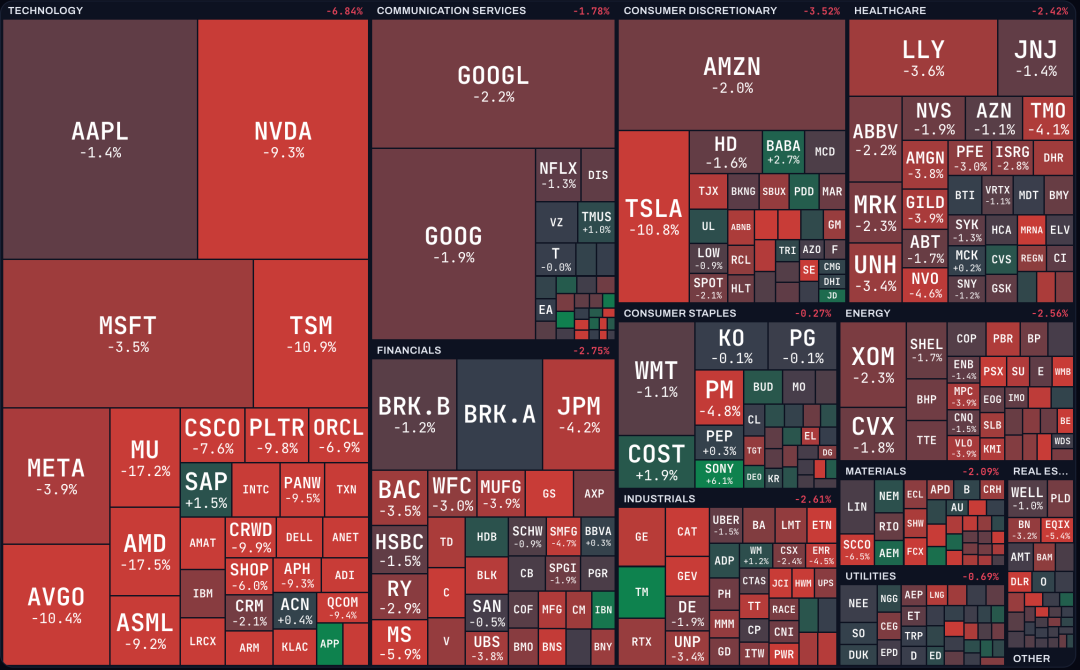
Institutional investors usually measure a new issue against existing tech-stock valuations, earnings expectations and market risk. If AI-related stocks fall broadly, even investors who remain bullish on the long term may demand a lower issue price or reduce subscription size.
Market participants also linked the selling to political risk around data centers. In the United States, local debates over electricity demand, water use and infrastructure pressure have become part of the AI investment story. UBS estimates that about 30% of data-center capacity originally scheduled for addition in the United States in 2028 could be affected by possible construction pause measures. For Anthropic, this matters because the company buys compute at scale while selling AI services directly to enterprises and consumers, so investors are testing whether massive infrastructure spending will convert into durable revenue and profit. The answer ultimately returns to operating performance.
How should readers track the valuation reset step by step?
Step 1: Separate growth from growth speed
Anthropic's revenue is not shrinking. It reported $16.8 billion for the third quarter and then $16.956 billion in the updated filing, which means the business remained very large and still expanded quickly. The reset comes from speed. Second-quarter growth was about 145%, so a quarter at about 45% or about 47% still looks excellent, but it is a different story than the earlier acceleration investors had underwritten. A $2 trillion valuation briefly appeared only in September this year; the next day after October 14, reports said some investors had already moved to about $1.5 trillion. That is why the market began treating the listing as a price-discovery problem rather than a growth celebration. Some media argued that a June listing might have captured the peak growth moment.
Step 2: Watch price bands, not rumor headlines
There is no final issue price. Anthropic's prospectus only states that it plans to conduct a public offering as soon as practicable after the SEC registration statement becomes effective. The price discussion has still moved through several bands. After the investor day, some investors settled around a $1.5 trillion to $1.6 trillion price band. Later, after the market selloff, discussions shifted lower to $1.2 trillion to $1.3 trillion, and some investors suggested $1.1 trillion. The Wall Street Journal reported that major investors remained skeptical about whether the planned listing could still achieve $1.5 trillion after the market turmoil.
Step 3: Treat Claude Code exits as execution risk
Claude Code lost three important members within two weeks. The most visible cases are Cat Wu and Austin Lau. On U.S. time November 3, Cat Wu announced she was leaving Anthropic after about two years. She had helped shape Claude Code from an internal experimental tool into a commercial product. Two days later, she announced she had joined OpenAI to lead product management for core products, reporting to Tibo Sottiaux. On the same day, Austin Lau also announced that he had joined OpenAI. He had been Anthropic's first growth marketing employee and had helped build the growth system for Claude. In January this year, Anthropic had highlighted how he used Claude Code to develop marketing tools that shortened ad creative production from 30 minutes to 30 seconds.
The timing is uncomfortable. Anthropic said in its filing that its overall regretted attrition rate was about 1% in the past 12 months through September 30. That statistic does not yet capture departures since late October. Cat Wu also said that the ability to sell company shares earlier was not a factor in her departure. For CompanyWatch readers, the point is not that one person makes or breaks a business; it is that product-led AI companies are judged partly by the continuity of people who turn models into usable workflows. As Reuters reported, investors tempered their valuation expectations because of the revenue-growth pattern, and the talent exits added another layer of execution concern.
Step 4: Compare with OpenAI's financing reset
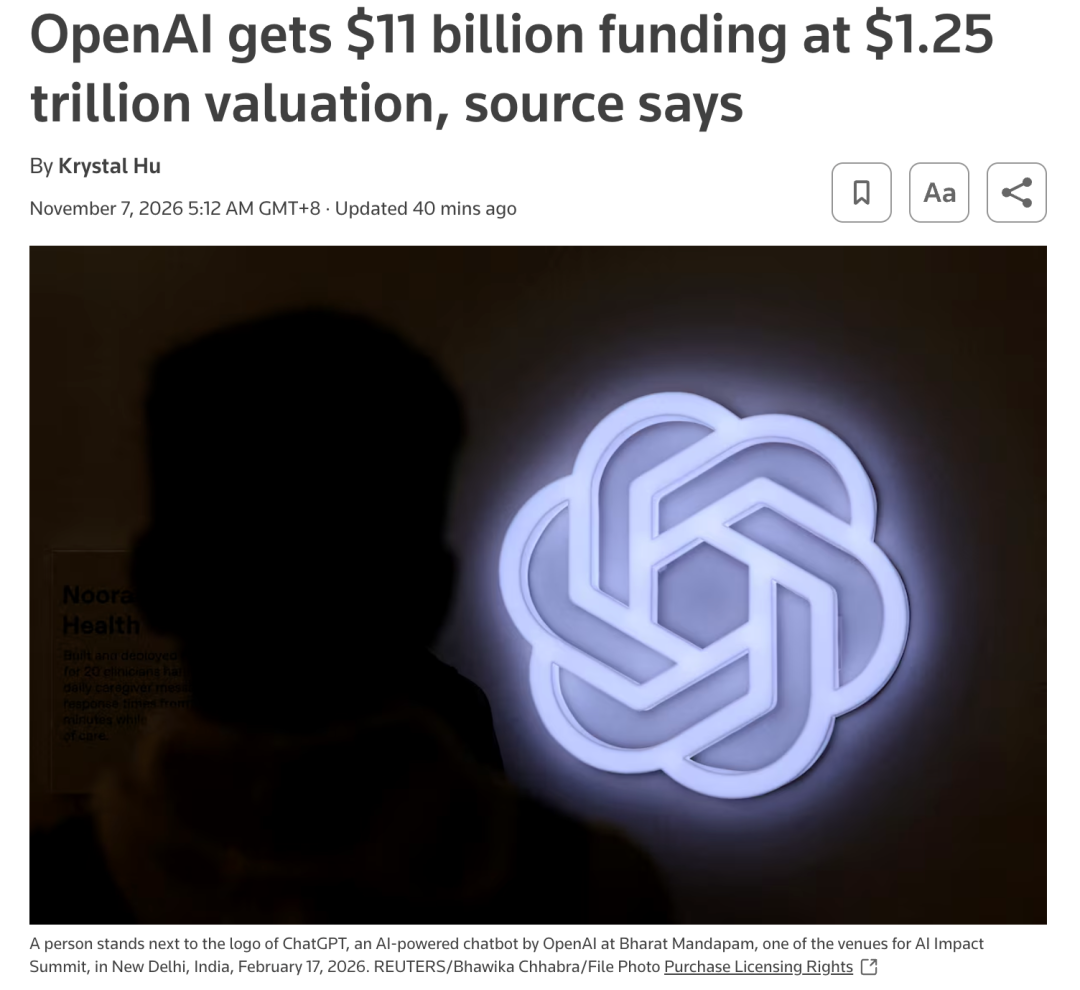
Anthropic's IPO reset is also a race for the same investor dollars. On October 19, media reports said OpenAI was moving quickly to raise about $30 billion before Anthropic's listing, with a target valuation of more than $1.4 trillion. By October 30, OpenAI's fundraising goal had narrowed to about $20 billion and its target valuation had moved to $1.25 trillion. On November 6, OpenAI reportedly had completed a first tranche of about $11 billion, while other capital was still being arranged. Both companies are competing for the same limited pool of investors who want direct exposure to frontier AI. When public market prices fall, private financing terms usually follow.
Step 5: Check the IPO wave and the missing valuation benchmark
Anthropic was expected to become the first frontier AI model company to list in the United States, so its pricing outcome matters beyond the company itself. It has remained in the listing queue even as other AI-related issuers stepped back. As of October 22, data-center operator Switch, AI infrastructure company Nscale and SoftBank-backed SB Energy had postponed IPOs. Nvidia-backed Firmus and Blackstone-backed AirTrunk REIT had withdrawn or paused offerings. Some companies reportedly did not want to compete with Anthropic for institutional attention. Many large investors still see Anthropic as one of the few direct investment opportunities in frontier AI companies. Two weeks later, Anthropic's own timetable was under pressure.
For investors, the practical meaning is larger than one company. OpenAI and Anthropic have no clean public-market comparables for frontier model businesses. If Anthropic lists, even at a lower valuation, investors get a first anchor: they can judge revenue growth, profitability and compute costs in one reported company. That benchmark would then influence how OpenAI and other late-stage AI firms are priced. If a listing happens, the market finally gets a direct valuation tool for frontier AI companies. If it delays, investors must rely more on private funding rounds and prediction markets, which are noisier.

Does delay mean Anthropic is running out of money?
Not immediately. Based on the latest prospectus, Anthropic had about $131.9 billion in cash and short-term investments as of September 30. That gives the company room to absorb a timing setback. The harder question is commitments. The filing shows $895.4 billion of long-term compute purchase and leasing obligations, nearly $900 billion in total, with about $69.8 billion due before the end of September 2027. If financing costs stay high and new capital becomes harder to obtain, Anthropic may need to slow expansion or adjust some investment plans. Companies that depend on its future orders, including data centers, chip suppliers and lenders, could feel the second-order effects. For this reason, GlobalBizSight readers should track the long-term compute commitments in Anthropic's filings rather than only the IPO rumor cycle. Missing one window may be recoverable, but if the AI industry's valuation logic shifts permanently, the next window may not be better.
What are the common misconceptions in this case?
- Equating Kalshi with official guidance. Kalshi is a prediction market. Its contract page notes that market-implied probabilities are not a confirmed IPO date. They show trader expectations, not company commitments.
- Reading a lower valuation as proof of business failure. The reset reflects weaker comparable prices, slower growth pace and execution concerns, not evidence that revenue has fallen. Third-quarter revenue remained $16.8 billion.
- Assuming a postponed roadshow equals bankruptcy risk. The filing still shows about $131.9 billion in cash and short-term investments. The real risk is how long and how cheaply the company can finance massive compute commitments.
- Using old attrition data to disprove current exits. The about 1% regretted attrition rate covers the past 12 months through September 30, not departures since late October.
- Comparing Anthropic only with listed chips and cloud stocks. Chipmakers and cloud providers have mature earnings paths. Anthropic is a frontier model company, so its cost base and revenue mix require a different pricing lens.
What action advice should CompanyWatch readers take?
- Wait for the final filing and price range. Confirm whether a roadshow is scheduled for the week of November 9 or a later date, and whether the offering is still intended to raise up to $100 billion.
- Request the missing operating metric. Some investors are waiting for October revenue data to see whether growth reaccelerates after the third-quarter slowdown.
- Model three valuation bands. A $2 trillion ask was never supported after October; a $1.5 trillion to $1.6 trillion band was an intermediate anchor; a $1.2 trillion to $1.3 trillion band, and even $1.1 trillion, better reflects current market pressure.
- Track compute obligations by maturity. Map the $895.4 billion commitments and about $69.8 billion due before the end of September 2027 against cash reserves, likely financing terms and customer concentration.
- Watch talent and product continuity. Follow Claude Code and Claude team moves, but do not treat departures as proof of misconduct; use them to assess execution risk during enterprise sales and product scaling.
Frequently asked questions
Is the Kalshi drop the main reason Anthropic's IPO is in doubt?
No. Kalshi shows expectations falling from close to 90% to below 60%. The main commercial reasons are slower growth relative to the prior quarter, investor skepticism over a $1.5 trillion or trillion-dollar ask, and the November 5 selloff. Prediction markets can be an early warning, not proof.
Why did investors move from $2 trillion to $1.5 trillion?
Because they started to price the slope, not the absolute revenue number. October 14 investor data showed about 45% growth versus about 145% in the second quarter, so the next day reports said some investors cut the expected valuation from about $2 trillion to $1.5 trillion.
What would a delayed listing mean for suppliers?
It could slow Anthropic's expansion plans, especially if new financing becomes more expensive. Suppliers that rely on its orders, including data centers, chipmakers and financiers, may see indirect pressure because the company has nearly $900 billion in compute obligations, with about $69.8 billion due before the end of September 2027.
How should OpenAI's financing news be read?
As a rival capital-demand signal, not as a separate story. OpenAI's October 19 push to raise about $30 billion, its October 30 reduction to about $20 billion, and its November 6 report of about $11 billion in a first tranche all show that frontier AI financing has become more selective.
References
- Kalshi market page, “When will Anthropic officially announce an IPO?” https://kalshi.com/markets/kxipoanthropic/anthropic-ipo/kxipoanthropic-date
- CNBC, “Anthropic IPO announcement odds drop on Kalshi following midterms and AI sell-off,” November 6 https://www.cnbc.com/2026-11-06/anthropic-ipo-kalshi-post-midterms-ai-sell-off.html
- Reuters, “Investors temper Anthropic IPO valuation expectations over revenue growth,” October 15 https://www.reuters.com/business/finance/investors-temper-anthropic-ipo-valuation-expectations-over-revenue-growth-2026-10-15/
- The Wall Street Journal, “Major Investors Are Skeptical Anthropic IPO Can Achieve $1.5 Trillion Valuation” https://www.wsj.com/finance/major-investors-are-skeptical-anthropic-ipo-can-achieve-1-5-trillion-valuation-ca965d8b