
GlobalBizSight CompanyWatch | Apple Says No to a Single OS: What Ternus's Mac-and-iPad Answer Means for Investors
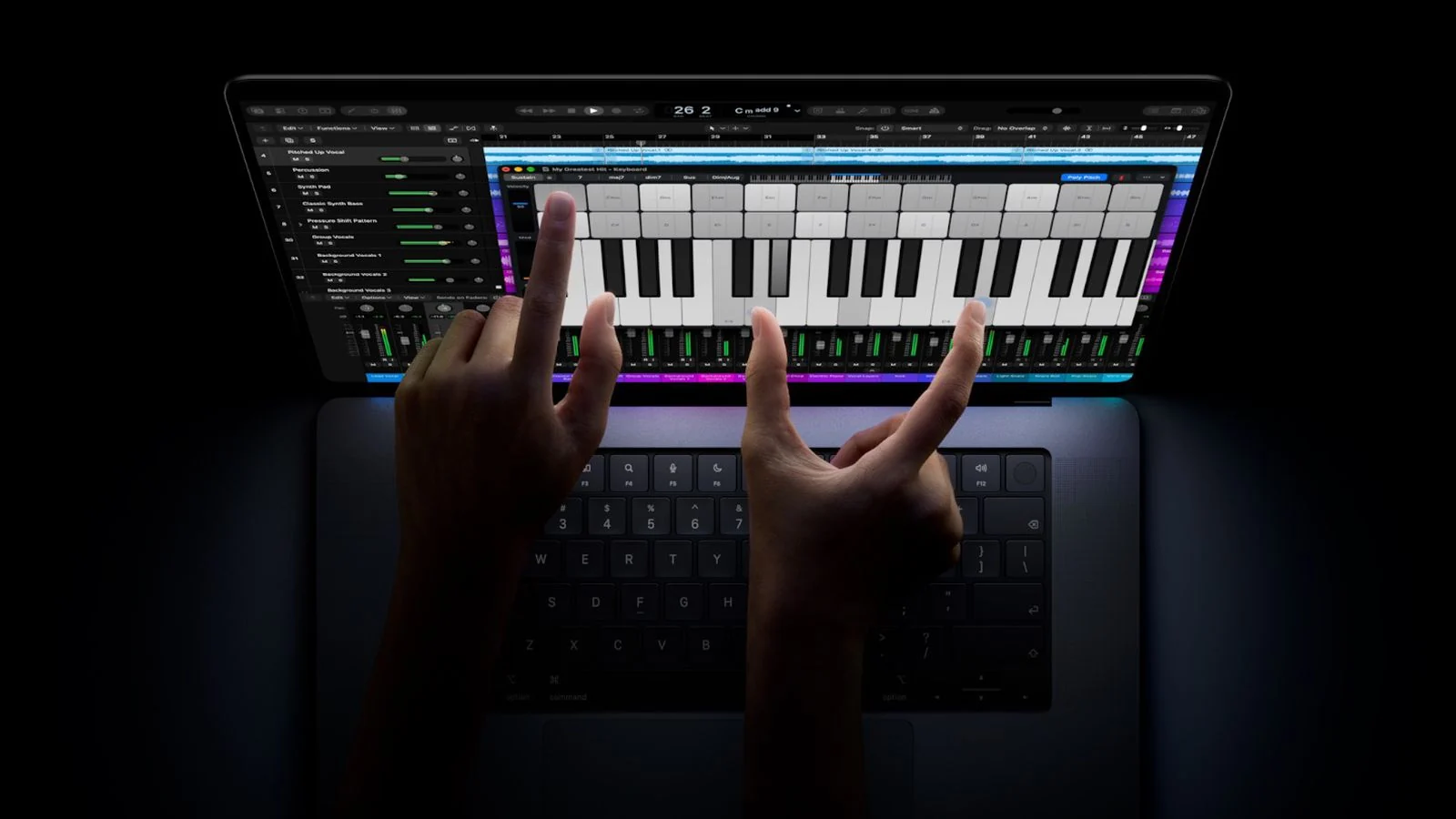
Wall Street's cost-saving thesis died quickly. Recently, on Apple's latest earnings call, analyst Richard Kramer of Arete Research asked chief executive John Ternus whether the newest MacBook Pro — now loaded with borrowed iOS capabilities such as touch interaction, a Dynamic Island and Siri AI — pointed toward a single, merged operating system that would simplify engineering and reduce maintenance spend. Ternus's reply was blunt: Apple "currently has no plans for any fundamentally different change," and even if it did, that is not a topic it would discuss in advance.
For anyone tracking this company rather than reacting to it, the denial is the least interesting part. The real story sits in what Apple is willing to converge (hardware, design language, features, silicon) and what it is structurally unwilling to converge (two shipping platforms), and in the fact that the cost pressure disclosed on the very same call came from memory pricing, not from duplicated software organisations.
Event snapshot: one answer, delivered twice in twelve months
Two executives, two settings, one position. The table below separates what Apple actually said from what commentators inferred.
| Setting | Who | Core statement | What it rules out |
|---|---|---|---|
| Most recent earnings call | John Ternus, chief executive | Mac and iPad are both products the company is proud of; features and capabilities keep being shared across the ecosystem, with Handoff spanning iPhone, Mac and iPad; "no plans for any fundamentally different change" | A merged macOS / iOS codebase on a near-term roadmap; even the discussion of one |
| Interview, 2025 | Craig Federighi, head of software engineering | Refused the iPad-and-Mac fusion idea using the "spork" analogy — a hybrid eating tool that fails on both counts, being neither a good spoon nor a good fork | Design-by-compromise devices that optimise for neither task |
Ternus reinforced the same principle with a product argument rather than a policy one: each category must reach its own best form. His example was the just-released MacBook Pro, which he described as a major leap that improves on its predecessor in every respect.
What the new MacBook Pro borrows — and what it does not
The confusion is understandable, because the borrowing is now visible from across the room. Apple's own launch material for the MacBook Pro with PROLED XDR display confirms a tandem OLED panel, first-party touch input on a Mac, and a Dynamic Island that becomes the home for Siri AI, Spotlight and Live Activities on the Mac desktop. The 14-inch configuration with M5 Max is listed from US$4,499 on Apple's Newsroom, with the machine reaching customers in early November.
- Touch input: the first MacBook Pro ever to accept finger gestures. It is an input channel, not a re-platforming event.
- Dynamic Island: an on-screen housing concept migrated from iPhone. macOS still runs its own menu bar, window server and menu-driven apps around it.
- Siri AI: a shared model-and-assistant layer, not a shared operating system.
- Handoff and ecosystem features: continuity services that deliberately span iPhone, iPad and Mac precisely because the platforms remain distinct.
- Shared code: already available to developers long before any merger, via Mac Catalyst and Apple silicon's ability to run unmodified iPhone and iPad apps inside macOS — both documented on Apple's own developer pages.
Read together, this is the "inspired by, not merged with" logic Federighi laid out in his 2025 interview. Apple is shipping one aesthetic and one assistant across Mac and iPad while keeping two app models, two input contracts and two release trains.
The design layer converged first — that is the tell
A useful data point that the merger debate usually skips: at WWDC in 2025, Apple unified the visual layer across iOS 26, iPadOS 26 and macOS 26 with the Liquid Glass design language, and aligned version numbering so that all platforms carry the same generation number. Apple's developer session describes Liquid Glass as unifying the platform design language. That is a deliberate choice about where convergence is cheap and where it is expensive. Appearance, controls and typography can be harmonised without touching kernel, windowing, file-system semantics or professional app compatibility. Once a company has already bought the low-cost convergence, the residual case for merging the platforms themselves weakens further — which is exactly the position Ternus is now defending.
The money angle: units shrank while Mac revenue jumped
If the analyst's premise was that one OS is a cost lever, the reported numbers suggest the levers sit elsewhere.
- Revenue, not volume, moved Mac. In the September quarter, Apple reported Mac revenue of US$10.79 billion, up 23.7% year on year and more than 11% above consensus. Yet IDC counted Mac shipments down 11% in the same calendar quarter, with Apple's share still rising from 8.5% to 9.5% because the broader market fell harder. Revenue rising 24% on units falling 11% is a price-and-mix story — the touch OLED MacBook Pro, not software consolidation, is doing the work.
- The real margin threat is DRAM. Management guided the following quarter's gross margin to 45%-46%, against 47.9% reported, and attributed the drop chiefly to higher memory costs plus part of the cost of shipping Siri AI. CFO Kevan Parekh warned that discounted component inventory is being drawn down quickly. Software platform duplication did not appear anywhere on that list.
- Total company picture. Quarterly revenue of US$114.48 billion grew 12% year on year, iPhone rose 17.5% to US$57.58 billion, and services hit a record US$31.57 billion — but services growth slowed to under 10% and was guided to 8%-9% next. Full-year revenue reached US$478.8 billion, up 15%, with diluted EPS of US$8.98, up 20%. Greater China returned to roughly 28% growth for the fiscal year after two consecutive down years.
- The tablet side is the fragile leg. IDC put worldwide tablet shipments at 33.6 million units in the second quarter of 2026, down 12.3% year on year; Omdia recorded 13.5 million iPads shipped, an 8% decline, with Apple still first.
The strategic implication is uncomfortable but clear: the merged-OS idea was proposed as an efficiency story, while Apple's disclosed efficiency problem is in bill-of-materials and services growth. Meanwhile, iPad sits in a shrinking unit market and the Mac line is capturing an unusually high average selling price. Two categories behaving differently are worth two product definitions — and, arguably, two platforms.
How this compares with the rest of the industry
| Vendor | Convergence strategy | Observed outcome |
|---|---|---|
| Apple | Two platforms, shared silicon, shared design language, shared assistant, one-touch import into the Mac | Mac revenue and ASP rising together; premium pricing accepted; no compatibility cliff |
| Microsoft | One Windows across tablets and laptops; earlier attempt with the tablet-only Windows RT in 2012 | Windows RT failed commercially; the modern approach moved Arm into standard Windows rather than into a separate OS |
| Samsung | Phone-plus-dock desktop mode layered on mobile Android | Useful for light productivity, but never displaced a desktop OS for professional workloads |
Apple's stance is therefore not isolationism. It is the position of a company weighing the alternative — which has produced compatibility breakage and channel confusion elsewhere in the industry — against the fact that its own fusion experiment was already tested and rejected in favour of iPadOS.
Common misconceptions to retire
- "Touch on the Mac means the merger has started." The boundary is not an input method. App models, windowing, file semantics and professional tooling still differ between iPad and Mac.
- "One OS would save meaningful money." Apple's disclosed margin pressure is memory procurement and Siri AI delivery cost, and shared source code is already available to developers today.
- "The denial means nothing is coming." Denials target fundamental platform changes. Feature migration is accelerating, and the new MacBook Pro is the proof.
- "iPad is the casualty." Nothing in the statement redefines iPad; the more immediate threat to iPad volume is category-wide tablet shrinkage.
- "Executives would announce a platform shift on a call." Ternus explicitly said that even if such a plan existed, it would not be discussed there.
Actionable read: five indicators to track
- Mac revenue versus Mac units. Sustained revenue growth alongside flat or falling IDC shipment figures confirms the ASP-and-mix thesis. A turn to revenue deceleration on stable units would signal the touch premium is not sticking.
- Gross margin trajectory against the 45%-46% guide. If memory costs stay elevated and margins land near guidance, expect pricing or configuration changes rather than software consolidation as the offset.
- Services growth path. A slide below the guided 8%-9% range raises the value of ecosystem lock-in — which is an argument for tighter cross-device features, not a merged OS.
- Developer signals at the next developer conference. Watch for tooling that lets teams test iPad touch interactions on Mac hardware, for Mac Catalyst and iOS-apps-on-Mac investment, and for any shared runtime work. Those are the measurable precursors of convergence; an OS announcement is not required.
- iPad lineup response. If iPad Pro gains laptop-class virtualisation, keyboard-first multitasking or price cuts, Apple is repositioning iPad against its own new Mac rather than against Android tablets.
Bottom line
For a strategy or business-development team, the useful reading of this exchange is that Apple has priced the merger question and answered it with product cadence: converge where it is cheap — design language, assistant, connectivity, silicon — and refuse where it would flatten two categories with different demand curves. In the foreseeable future, iPadOS and macOS continue as independent operating systems, with Apple leaning on ecosystem synergy and feature sharing rather than a single platform. The watch item is not a headline announcement. It is the gap between Apple's stated position and its hardware roadmap, and the quarter in which that gap becomes too expensive to defend with a denial.
Sources for the added figures in this report: Apple Newsroom launch material for the MacBook Pro with PROLED XDR display; Apple's fiscal fourth-quarter 2026 results and earnings-call commentary as reported by Zhitong Finance and Securities Star coverage; IDC quarterly tablet and PC tracker data; Omdia tablet shipment data; Morningstar earnings recap; Apple Developer documentation on Mac Catalyst and running iOS apps in macOS; Apple's WWDC 2025 software design announcement.