
CompanyWatch Q&A: Apple Intelligence Reaches the China Region, and iOS 27.3 Becomes Apple's Toughest Product Test
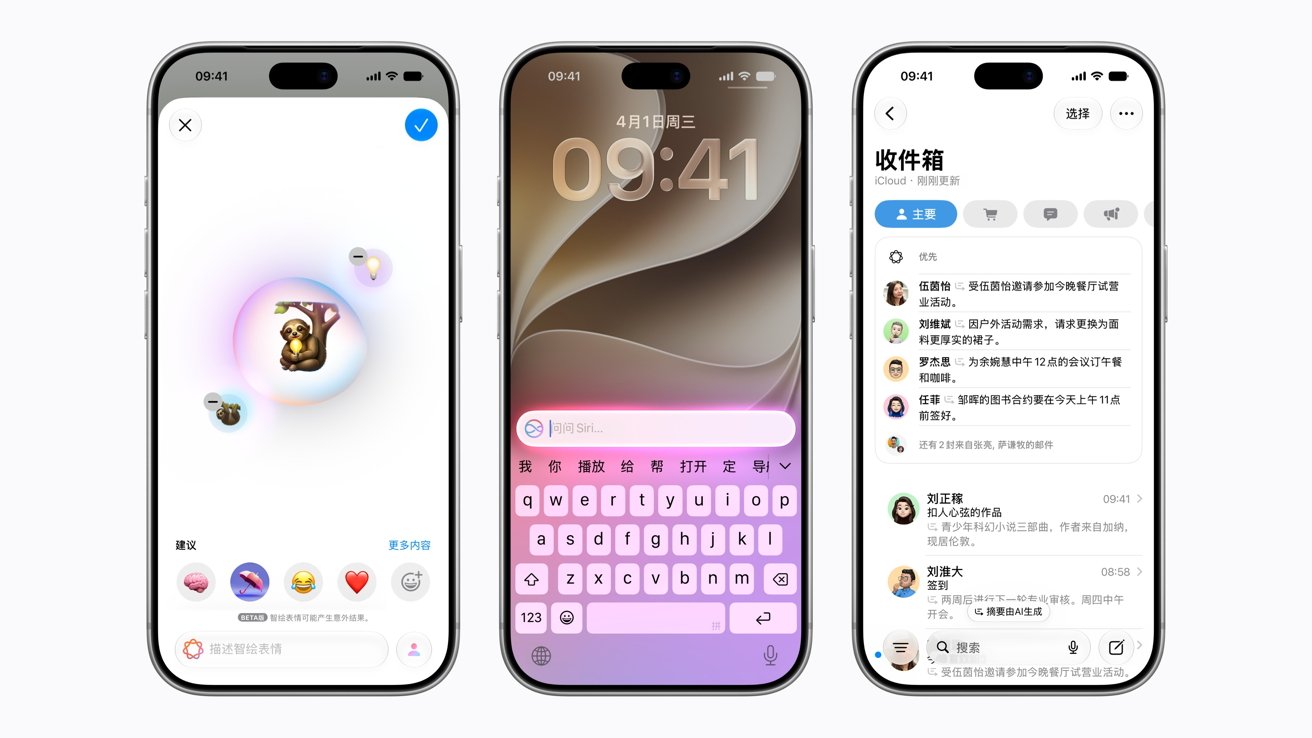
Apple has a habit of turning a software release into a corporate-strategy event, and this autumn's rollout proves the point. The company's generative-AI stack is now being switched on in the China region roughly two years after the same bundle reached users in the United States, and it is arriving deliberately unfinished: a domestic model partner is attached, the rebuilt voice assistant is absent, and the full public release is still months away. For investors, analysts and business-development teams, the useful reading is not whether the features look impressive next to rival handsets. It is what the phasing, the partnership structure and the compliance route reveal about how Apple intends to defend its most contested market. Below, the event is broken into short decision-ready answers.
Snapshot: what actually changed at Apple this week
| Dimension | CompanyWatch reading |
|---|---|
| Company / trigger | Apple; official support for Apple Intelligence in the China region, delivered through the iOS 27.3 developer beta |
| First access point | Developer testing opens November 4, with the first wave published alongside the iOS 27.3 developer beta, according to Apple's China newsroom |
| Full availability | this December, when the iOS 27.3 official release rolls the bundle out to China-region users |
| Local model partner | Alibaba; Apple plans to integrate Qianwen capability into Siri |
| Not included | the AI version of Siri, which is only reaching other countries and regions in 2026 |
| Financial backdrop | Greater China net sales of $64.4 billion in fiscal 2025, down about 4% year on year and a third straight annual contraction, per Apple's fiscal 2025 annual report (10-K) |
| Regulatory step | China requires generative-AI services to be registered before public availability; Apple Intelligence's service was recorded with the national cyberspace authority, as reported by Reuters on July 15 |
Q&A: the seven questions that decide your next move
Q1. If the capability existed in 2024, why did it take two years to arrive?
Because the gate was procedural, not technical. Apple Intelligence was already live in the United States in 2024, yet Chinese rules require registration of large-language-model and generative-AI services before public release, including where those services sit inside a handset. Reuters reported on July 15 that Apple's AI service had been registered with China's cyberspace regulator, and Caixin Global reported that seven mobile-based AI services were cleared in the same round — a filing queue that Apple, Huawei, Xiaomi, OPPO and vivo all had to enter. Treat the two-year gap as a compliance-cycle cost, not a capability shortfall.
Q2. Is this the full product?
No, and the gap is the most underpriced detail in the coverage. The material opened to users is closer to the platform's early international version: photo, text and messaging assistance, with the AI version of Siri excluded because that functionality is only rolling out in other countries and regions in 2026. Buyers comparing an iPhone against a domestic flagship this quarter are still comparing an incomplete AI experience against competitors whose assistants have been shipping locally for longer.
Q3. Which installed base can actually enable it?
A hardware floor applies. Apple's published device guidance ties the bundle to iPhone models built on A17 Pro-class silicon or newer — in practice iPhone 15 Pro, iPhone 15 Pro Max and iPhone 16 and later devices — and early testing notes point to an even narrower first window. Apple has not published confirmation that its separate cloud inference tier operates in the China region for this release, so any evaluation that depends on that architecture should be verified against Apple's own documentation rather than press summaries. The commercial implication: the feature lands on the premium slice of the base first, which flatters upgrade economics but slows reach.
Q4. What does the Alibaba arrangement really signal?
Apple states that the system currently uses generative-AI models built by Apple, while it works with Alibaba to integrate Qianwen capability into Siri later. Read as structure, not slogan: Apple keeps the on-device layer in-house and outsources the locally filed cloud and assistant layer to a partner it cannot own. That is a repeatable template for every regulated market Apple enters next, and it also means a second party now influences the roadmap of Apple's most visible consumer AI interface.
Q5. How does this map to the Greater China numbers?
Apple's fiscal 2025 annual report shows Greater China revenue of $64.4 billion, down roughly 4% and about 15% of total net sales — a segment that has been shrinking even while the brand held premium positions. Handset data suggests demand was never the problem: Reuters reported Apple took a 25% share of smartphones sold in China in October 2025 with sales up 37% year on year, and Counterpoint Research placed Apple first in the market for the fourth quarter of 2025. The AI feature gap therefore reads as a margin-and-retention risk rather than a volume emergency — which is exactly why the December completion date matters more than the November beta.
Q6. What are the most credible downside cases?
Three. First, parity complaints: a launch that omits the AI version of Siri invites direct comparison with local assistants and gives review media an easy negative frame. Second, partner dependency: any change in the Qianwen integration path moves a capability Apple has historically controlled. Third, scope creep in review: registration is a required step but does not lock in how a feature set may need to change over time, so future feature additions may face fresh filing work.
Q7. What does it mean if I sell to, or build on, this platform?
A new surface set opens in one of the largest app economies in the world: summarisation of notifications and email, in-app writing assistance, camera-based recognition and call and audio transcription. For product and business-development teams, the practical question is whether a China-region feature set that arrives later, on fewer devices and without the assistant layer can still be a differentiator inside enterprise workflows — usually it cannot before the iOS 27.3 official release.
Feature checklist: what is genuinely in this build
- Photos: Clean Up removes unwanted elements, generates memory movies, and adds natural-language content search
- Camera and system: Visual Intelligence brings recognition and analysis through the iPhone camera; smart emoji generation supports more personal expression
- Text: Writing Tools handle proofreading, rewriting and summarising; notifications and email are summarised automatically
- Messages: Smart Reply suggests context-aware responses
- Notes and Phone: audio transcription in Notes, call transcription and summary generation in Phone
- Excluded: the AI version of Siri
Common misconceptions
- "Alibaba's Qianwen is powering the whole rollout." Apple's own description is that the current system runs Apple-built generative models, with Qianwen integration planned into Siri.
- "The November beta is the finished product." The beta is a staged test; full availability is scheduled for this December with the iOS 27.3 official release.
- "Every iPhone in China can switch this on." A silicon floor limits eligibility, and early testing has been narrower still.
- "Apple's global AI stack was simply copied into the China region." The compliance route required a locally filed model partner — the architecture changed, not just the shipping address.
- "This removes Apple's China disadvantage." The assistant layer is still absent until the AI version of Siri reaches other countries and regions in 2026.
Action recommendations, by role
- Investors and equity analysts: build the December release into your model, not the November beta, and separate eligibility-limited adoption from genuine demand.
- Industry analysts: benchmark the China-region feature list against locally filed assistants on the same tasks — summarisation, camera understanding, transcription — rather than against Apple's international build.
- Enterprise and channel teams: defer China-region workflow commitments until Siri integration is dated, and confirm which functions require a network path.
- App developers and brand marketers: pilot with the iOS 27.3 developer beta, but ship assuming the eligible device base is premium-skewed and not fully switched on.
- Strategy and procurement: treat the Apple-Alibaba pattern as the template for regulated market entry, and price compliance-filing time into any comparable rollout plan.
CompanyWatch tracking list for the next two quarters
- Share of the China-region installed base able to enable the bundle after the iOS 27.3 official release
- Any published date for the Qianwen integration inside Siri, and whether it expands beyond that single interface
- Feature diffs between the China region and the international build in each subsequent point release
- Apple's reporting of Greater China revenue and iPhone net sales around the December release window
- Refresh rate of the premium iPhone cohort versus local flagship substitutes
- Whether additional Apple AI services require new registrations, and the lead time involved
Watched as a product launch, Apple's move into the China region looks like a small, slightly delayed catch-up. Watched as a company event, it is something more consequential: a demonstration that Apple will ship an incomplete assistant, accept a partner-supplied model for its most public interface, and re-time a global feature set around a filing calendar it does not control. The December completion date is the first checkpoint, but the more informative signal is whether the next twelve months of releases close the parity gap on Apple's terms or on the partner's.