
CompanyWatch Scorecard: Apple's J595 Home Robot vs OpenAI, Meta, Tesla and 1X — Price, Timing and Trade-offs
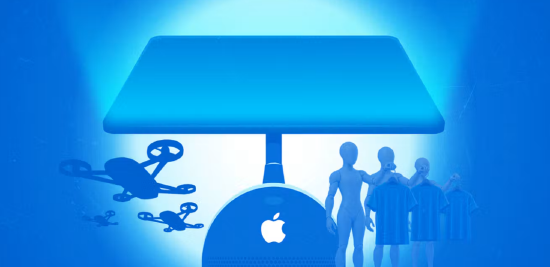
CompanyWatch reads a corporate change as a set of decisions somebody can track. The decision worth putting on the board now is not really about a gadget; it is about whether Apple can build a category from zero. John Ternus has pushed robotics to the front of the agenda since becoming chief executive in September, and the machine that will be used to grade him is J595: a home robot with a 9-inch screen, an articulated arm and a silhouette that people who have seen it compare to the animated lamp in a Pixar film. Below is the scorecard — hardware, software, price, calendar and rivals — with the trade-offs spelled out.
State of play: a frozen body, a shrinking feature set
The programme opened in 2019 with a deliberately modest brief. It was to be a video-calling companion, and the arm existed for one reason: to follow its owner as they moved around a room. AI capability was layered on later, when management decided the device had to carry it, and from that moment the project's target kept inflating.
What J595 is meant to be today, under the current design, is a robot carrying cameras and an array of sensors that reads its surroundings and acts on them by itself: it can switch on a light when someone walks in, can even try to shoo a cat off the table, and has obstacle avoidance built in so it does not knock into furniture.
The constraint is not the body. People involved in the project say most of the hardware was frozen about two years ago, while the software side has never caught up. The hardware group working on J595 has pressed to speed the pace and launch as early as possible; the software group has argued for delay. Over the past year the practical result has been subtraction: planned features have been cut back, narrowing the core pitch to FaceTime calls plus simple home-automation tasks such as turning on lights.
The commercial frame is just as unsettled. Apple has set a planned price of about $1,000, and depending on the component market the final number may come in higher. Several former employees say the device may be named Home View Ultra, extending the naming system of Home View, the fixed desktop device Apple released last month. The original internal hope was to launch next year; the realistic range now stretches to 2028. The hardware team had wanted it on shelves this year.
How J595 stacks up against the other four machines in the frame
| Machine | Form and price signal | Programme-to-product clock | Strongest card | Most likely way to fail |
|---|---|---|---|---|
| Apple J595 (possibly Home View Ultra) | 9-inch screen on an articulated arm; planned price about $1,000, higher if component costs persist | Opened in 2019; hardware largely frozen about two years ago; next year at the earliest, possibly 2028 | Retail scale, installed services base, supply-chain discipline | Base model too thin to justify the price; software scope keeps shrinking |
| OpenAI hardware line (Jony Ive) | Donut-shaped smart speaker planned for next year, with moving parts and a camera that senses user and room | Bought the start-up Ive co-founded a year ago; deal reported at $6.5 billion | Model access plus Ive's design authority; Apple engineering talent it has taken | No manufacturing or after-sales track record |
| Meta Charm | Pocket AI companion in Meta's wider hardware wave (AI glasses, VR headsets) | Concept to product in less than a year; shipments expected in December | Shipping speed and platform reach | Shallow in-home autonomy; category crowding |
| Tesla Optimus | General-purpose humanoid that Musk says will help with chores | Long-running industrial programme, still scaling toward home use | Actuators, factories, cost-curve ambition | Home safety and price, not prototypes |
| 1X Neo | Humanoid for the home, listed at $20,000 outright or $499 a month (1X order page; USA Today) | Unveiled last year; 1X aimed to put it in homes this year; pre-orders reportedly slipped deliveries into 2027 | Clear autonomy story: dishwashing, folding clothes in viral demos | Manufacturing capacity and monthly-cost tolerance |
Read across the table, Apple is not buying the cheapest seat in the house — it is buying the one with the most installed context around it. The ~$1,000 tag sits far below Neo's $20,000 or $499-a-month entry point, yet it sits squarely in the band where the category's most instructive corpse was buried: Jibo, the MIT-born social robot that raised close to $73 million, shipped at $899 in late 2017 after repeated delays and was dead within about a year, with its servers winding down in March 2019 (The Robot Report; The Verge). Price alone has never been the hard part in home robots; day-one usefulness is.
What the comparison wins Apple — and what it concedes
- Keeps: the only player here with a retail channel, financing habit and services bundle already inside the target households; a supply chain able to absorb a component-price shock better than 1X or OpenAI.
- Keeps: a portfolio, not a single bet. Under Kevin Lynch the robotics group is also exploring a wheeled follow-me robot, an indoor flying robot and machines dedicated to specific chores such as folding laundry. Narrow, single-task robots are theoretically far easier to build than a general humanoid; meeting records show Ternus is particularly interested in the chore-specific direction.
- Concedes: time. Meta's Charm went from concept to product in less than a year; Apple has spent nearly a decade on J595.
- Concedes: agent capability. The team was cleared to use models from outside Apple — open-source options and a Google-licensed model — precisely because the in-house stack trails the field.
- Concedes: people. Around 10 genuine robotics specialists inside Apple, against rivals that have hired ex-Apple staff directly.
Nine years of changing hands: 'an iPad on a stick'
The robot has been in development for nearly a decade and has passed through several senior owners; many of them carried other programmes at once, so little of their attention was reserved for this device. Bloomberg has previously reported parts of this history.
The earliest prototype was finished in 2018. The following year Tim Cook watched a demonstration and approved the project to continue. First mules were larger than the current design, and engineers mocked them as 'an iPad on a stick' — one described the look as simply a tablet plugged into a pole.
Hardware has been led by Matthew Costello, who previously ran Beats, the headphone brand Apple acquired in 2014. Software was assigned to Apple's Special Projects Group, the unit then occupied with the Titan programme, Apple's self-driving car. For a long stretch the veteran engineer Brian Lynch, an iPod-era employee, was responsible for both the car's cockpit and J595, and he pictured the robot not only on a side table but on the dashboard of an Apple car.
The switch came in 2021, when Doug Field left for Ford and Kevin Lynch took over Special Projects. Lynch is credited with building health tracking on Apple Watch and rescuing that product line, but most of his energy went to the car; day-to-day robot work sat largely with Chris Sali, who had led Apple Watch software.
From early on the team understood that a premium price could not be carried by a fancy FaceTime terminal. After ChatGPT appeared in 2022 and set off the AI boom, members started adding AI capability and building more complex experiences, with an internal wish list full of proactive agentic functions that would let the device complete varied tasks autonomously. The robotics department created a separate agentic-AI research branch led by Vladan Kortun, who had run AI at Intel and joined Apple in 2021. Because Apple's own models were visibly behind competing products, the team was authorised to use externally available models, including open-source ones and a model licensed from Google. A tie-up between J595 and Siri was planned for later; in the early phase the two teams worked apart, and the Siri team was already under heavy iteration pressure of its own.
When Apple shut the car programme in 2024, Lynch moved his entire focus to the home robot and a large share of former automotive staff was reassigned to him. Three people connected with the project said employees who had worked on robots before that influx were disappointed by his management, describing little communication and little appetite for input from the floor. Lynch's own remedy was to lower the bar for the first generation: ship a base version and add capability through updates, the route Apple took with the original Apple Watch, released in 2015, which gained the health and fitness sensors that made it a hit only afterwards.
Ternus takes the wheel — with a leaner brief
Before his promotion, Ternus had been sceptical of several new ventures, including the car programme that was cancelled and the Vision Pro headset. Even so, three people familiar with the robotics work say he holds higher expectations for that track than for most of Apple's experiments. Last year the reporting line of Kevin Lynch and the Special Projects Group moved from senior vice-president John Giannandrea to Ternus; Giannandrea, who once oversaw Apple's AI business, departed earlier this year. After Apple announced in April that Ternus would take over within the year, he attended almost every J595 and other robot demonstration and planning session while still in transition.
Two people briefed on the strategy describe his company-wide policy as leaner teams and faster delivery. The robotics group is still small: specialists are scarce inside the company, and one estimate puts the number of true robotics experts at around 10. Lynch's software organisation is roughly 300 people, of whom about 30 do research. Members of the J595 project are already discussing a second model, planning to move features cut from this one into the next. Meanwhile early engineers have left: hardware lead Brian Lynch went to the fitness hardware maker Oura, and Jian Zhang, head of robotics research, joined Meta.
Split opinions inside the team are the real story. Some want the device out fast; others worry it will meet the same cold response as Home View. Their arithmetic is simple and unforgiving: the longer Apple waits, the further the industry's AI capability advances, and the higher the expectations set on the first Apple robot. One former engineer who worked on J595 was blunter, saying Apple has been 'torn apart to catch the AI wave'.
The cadence problem, and the price of fixing it
The wider reason J595 keeps slipping is that Apple's operating rhythm is wrong for the task. The company refreshes iPhone and Mac every year; it is not built to develop an entirely new category from scratch, and its default tempo is gentle. Vision Pro was refined for roughly eight years before launching two years ago to underwhelming demand; if J595 arrives next year, its development run will be about as long. In AI the lag is sharper still: the major Siri overhaul took years and, even with the brand-new AI features released this year, Apple remains behind Meta's Muse and OpenAI's Dots in the agent race.
The transition has compressed the calendar further. Tim Cook postponed several product launches so they would land in step with Ternus taking over in September. Since then Apple has released Home View, the foldable iPhone Duo and a touchscreen MacBook to mixed reviews: the $2,899 MacBook was criticised as overpriced; Duo drew strong interest but repeated complaints of cracked screens; Home View was dismissed by critics as an enlarged Apple Watch that still leans on a Siri whose performance remains unsatisfying.
Two external data points matter for anyone modelling this launch. First, the cost risk is real and documented: Counterpoint Research, cited by Reuters in January, forecast memory prices to rise another 40% to 50% in the first quarter after a roughly 50% jump the year before, and CNBC reported mid-year estimates that soaring memory costs would reduce global PC shipments by 10.4% and smartphone shipments by 8.4% in 2026. That is the mechanical pressure behind the warning that J595's final price may exceed about $1,000. Second, delivery slippage is a category-wide condition rather than an Apple pathology: trade reporting on 1X's Hayward, California factory described first-year capacity of roughly 10,000 units against more than 10,000 pre-orders, with delivery dates pushed into 2027 (robot.ofweek.com). Apple's next year or 2028 window is not an outlier; it is the norm in home robotics.
Common misconceptions
- 'J595 was always an AI robot.' It began in 2019 as a video-call device whose arm merely tracked the user; AI ambitions were added later, and they inflated the scope.
- 'The hardware is holding things up.' Most hardware was frozen about two years ago; the pace-setter is software, which has spent the past year removing features.
- 'About $1,000 makes it the safe, cheap option.' It is cheaper than Neo's $20,000 or $499-a-month ticket, but Jibo died at $899 because a companion robot without a first-week job loses its argument regardless of price.
- 'A stripped base model means the project is failing.' It is a deliberate Apple Watch playbook: the 2015 original only became essential after later sensors. The risk is timing tolerance, not the idea.
- 'Ternus backs it, so resources will follow.' His stated policy is smaller teams and faster shipping — with around 10 robotics experts and about 30 researchers inside a roughly 300-person software group.
By the numbers
- 2019 — J595 programme opened; 2018 — first prototype completed (Bloomberg).
- 9-inch screen; articulated arm; obstacle avoidance; planned price about $1,000.
- About two years since most hardware was frozen; one year of feature cuts; launch window next year, potentially 2028.
- Around 10 robotics specialists; software team roughly 300 with about 30 in research.
- Vision Pro: roughly eight years of development, launched two years ago. Home View Ultra benchmark price ladder: $20,000 or $499 a month (1X Neo), $899 (Jibo, 2017), $2,899 (MacBook).
- Memory prices forecast up 40% to 50% quarter-on-quarter after a ~50% prior rise (Counterpoint via Reuters); higher memory costs seen cutting 2026 PC shipments 10.4% and smartphone shipments 8.4% (CNBC).
- OpenAI's purchase of the hardware start-up co-founded by Jony Ive, reported at $6.5 billion (Reuters); more than 400 Apple engineers taken by OpenAI into related projects.
Action advice for investors, analysts and business-development teams
- Anchor valuation to the shipping window, not the demo. Treat next year as the upside case and 2028 as the base case; anything Apple says about a fixed date for Home View Ultra is the single highest-information disclosure to watch.
- Watch the gross-margin pass-through. If the announced price moves above about $1,000, the memory-cost explanation is verifiable against industry pricing data; if it moves below, assume features are being cut again.
- Track the second-generation feature list. Cut capabilities genuinely migrating to a successor proves a platform roadmap; if they never reappear, J595 is a one-off and the robotics portfolio shifts to the chore-specific robots Ternus reportedly prefers.
- Monitor talent flow as a leading indicator. The departures of Brian Lynch to Oura and Jian Zhang to Meta, on top of John Giannandrea's exit earlier this year, are the cheapest real-time read on whether Apple can staff this category.
- Read Home View reception as the demand proxy. Attach rates, Siri dependency and returns on last month's fixed device tell you more about Ultra's prospects than any robot keynote.
- For suppliers: scope the actuator and sensor bill of materials now. A 9-inch display plus a moving arm plus cameras and obstacle-avoidance sensors is a parts list; capacity commitments at around 10,000-unit category scale are where early orders surface, as 1X's backlog shows.
The verdict GlobalBizSight draws from this scorecard is a split one. Apple's competitive position in home robotics rests on assets rivals cannot copy quickly — channels, services, component purchasing power and a portfolio of narrower robot formats that are easier to engineer than a humanoid. What it cannot borrow is patience from the market: J595's hardware has been ready for roughly two years, and the argument for launching is being lost one trimmed feature at a time. For the next four quarters, the useful signals are a firm date, the second-generation feature list, the price actually printed on the box and whether the roughly 10 specialists remain at Apple. Those four data points will tell investors far more about Ternus's ability to build a category from zero than any demonstration in a closed room.