
MacBook Neo vs MacBook Air vs Windows: Reading Apple's 16 Million-Unit 2027 Plan
GlobalBizSight · CompanyWatch · By Marc Hale
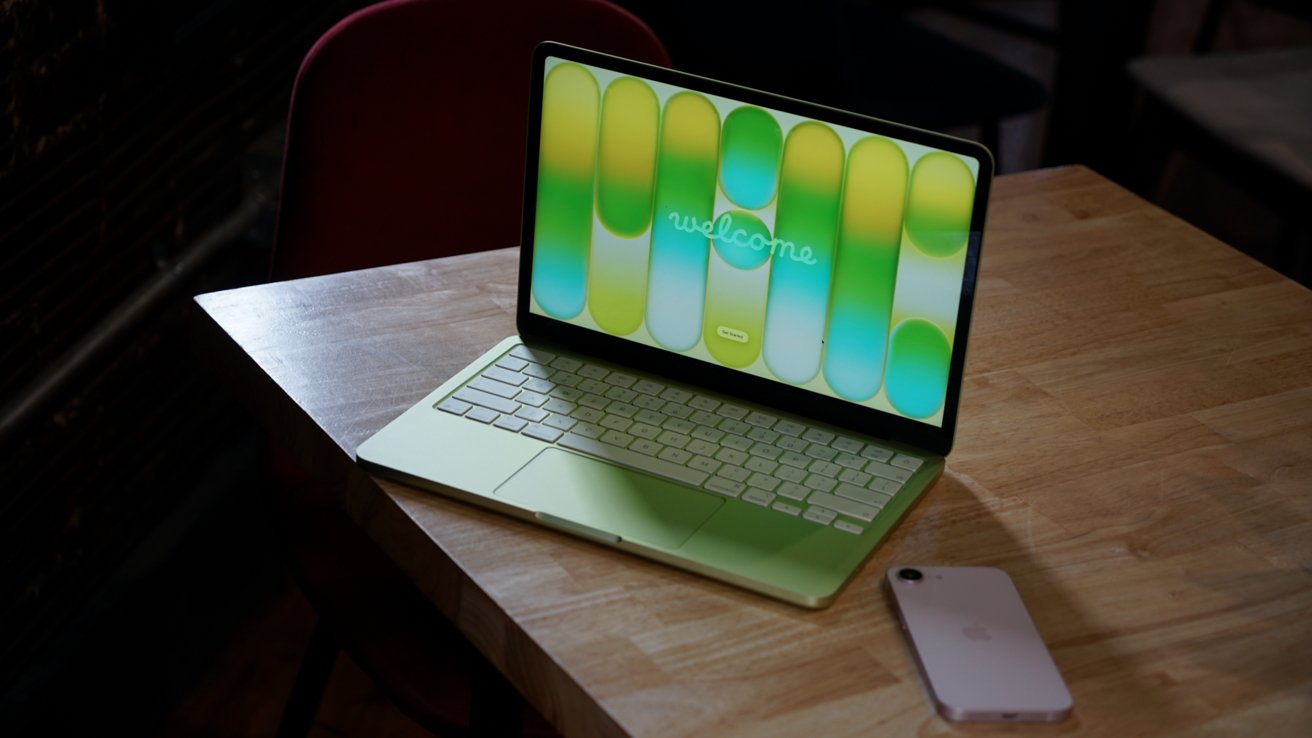
Apple has briefed its supply chain to plan for 16 million units of the second-generation MacBook Neo in 2027, against about 8 million units expected from the first generation in 2026. That is not proof that demand doubled; it is a signal that an A-series chip, a low entry price and an education channel have become the growth engine of Apple's Mac business. The practical question is comparative: MacBook Neo, MacBook Air, or a Windows ultrabook?
What exactly did Apple put in front of its suppliers?
Conclusion first: the figures are planning numbers, not guidance. Reporting by Taiwan-based industry outlet DigiTimes says material circulated to Apple's supply chain projects first-generation MacBook Neo shipments of about 8 million units in 2026, with the second-generation product carrying a target of 16 million units for 2027. Apple has published no such goal, and a supply-chain forecast can be cut as easily as it can be raised.
The framing matters more than the headline. The laptop was introduced in early March 2026, so the 2026 figure covers roughly 10 months of selling, while the 16 million-unit number assumes a complete 12-month cycle in 2027. Part of the apparent doubling is calendar arithmetic. The remaining part is real: demand outran the build plan early on, and Apple raised production intent this May from an initial 5 to 6 million units to about 10 million units.
Does a 16 million-unit MacBook Neo plan fit inside Apple's current Mac volume?
Only if the mix inside Mac shifts hard. Annualised, 16 million units is roughly 4 million laptops per quarter. IDC's tracker put Apple's total Mac shipments at 5.9 million units in the third quarter of 2026, down 11.3% year over year, with the company's share of a shrinking market still rising from 8.5% to 9.5%. On those numbers, the entry machine alone would represent close to two-thirds of everything Apple currently ships under the Mac label — either total Mac volume expands, or the Neo absorbs demand that today buys a MacBook Air.
The counterweight is the market backdrop, which is not healthy. IDC measured worldwide PC shipments at 68.2 million units in the second quarter of 2026, down 4.9% year over year and the first decline after nine consecutive quarters of growth, as memory shortages pushed component costs up. Against that, Apple's global PC shipments grew 13% year over year in the same quarter, a result IDC attributes largely to this entry-level machine. Beating a falling market is a genuine win; growing the market is another problem.
MacBook Neo vs MacBook Air vs a Windows ultrabook: where each one wins
Conclusion first: the Neo is not a worse Air, it is a different job. It buys Apple the price band it never covered, while the M-series keeps the performance band.
| Decision factor | MacBook Neo (first generation) | Second-generation Neo (expected) | MacBook Air (M-series) | Windows ultrabook, same money |
|---|---|---|---|---|
| Availability | On sale since early March 2026 | Expected in the first half of 2027 | Current line-up | Immediate, broad model choice |
| Price anchor | From $599 in the United States; $499 education tier at launch | Not announced | Clearly above the Neo | Equal or lower list price, frequent discounting |
| Silicon | A18 Pro, an iPhone processor repurposed for a laptop | Rumoured A19 | M-series, built for Mac workloads | Intel or AMD parts in the Core Ultra 5 class |
| Memory | 8GB unified memory | Rumoured 12GB | Higher configurations standard | Varies by vendor; check before buying |
| Display | 13-inch Liquid Retina, 2408 x 1506, 500 nits, 60Hz LCD | Same class expected | Bigger, brighter options | OLED appearing fast at the premium end |
| Burst speed | Reviewer runs put the A18 Pro at roughly 3,460 single-core and 8,670 multi-core in Geekbench 6 | Modest generational step expected | Comfortable multicore lead on 8-10 core parts | Apple claims everyday tasks about 50% slower on its Intel Core Ultra 5 comparison, and on-device AI up to 3x slower — a vendor figure, not an independent test |
| Sustained load | Fanless aluminium body, 36.5Wh battery, so long exports and heavy multitasking throttle | 12GB should ease multitasking limits | Better for long render or compile sessions | Active cooling holds clocks longer |
| Best fit | First Mac, student, browsing, documents, light coding, short-form media | The same buyers, plus heavier browser tab loads | Developers, designers, anyone driving external displays | Legacy Windows-only software, game libraries, tightest budgets |
| Trade-off to accept | Two USB-C ports, 60Hz panel, colour-matched but cost-managed chassis details | Price ladder may move with memory costs | Premium of several hundred dollars | Resale, update cycles and battery life drift over years |
Why drop an iPhone chip into a MacBook at all?
Because the A-series is where Apple's silicon is cheapest at volume. The first-generation Neo is the least expensive MacBook Apple has ever sold, and the reason is that it uses an A18 Pro rather than an M-series part: a processor already produced in enormous quantities for the iPhone, with the amortised cost spread across that volume. Lowering the hardware bill pulled the price of entry into the ecosystem down, and it converted Windows laptop owners who had never priced a Mac.
The strategic read: Apple is now running a deliberate two-tier silicon map. The A-series covers the price-sensitive tier; the M-series keeps professional applications, performance headroom and the premium experience. Tim Cook, Apple's former chief executive, said at the time that reaction to the product exceeded the company's expectations and set the best debut for first-time Mac buyers in the line's history — a claim he repeated publicly in March 2026, when he posted that Mac had its best launch week ever for first-time customers.
Where the demand is coming from — and whether it repeats at 16 million units
The channel evidence points to institutions, not impulse buyers. On the fiscal fourth-quarter 2026 earnings call Apple disclosed that 170,000 MacBook Neo units had gone to teachers and students in the Philippines, worth roughly $122 million at local education pricing — one of the largest institutional Mac purchases on record for a single machine.
- In the United States, Apple said about half of the bulk education orders placed in the preceding quarter replaced existing Windows machines or Chromebooks rather than refreshing older Macs — cross-platform conquest, which is the growth pool a 16 million-unit plan needs.
- District-level examples cited in press coverage of that call include a Florida district moving around 25,000 students across 18 high schools, a Washington state district switching roughly 8,000 students off Chromebook, and an Oklahoma district ordering more than 6,000 units.
- Price remains the hinge. Trade reports in late October 2026 said Apple had adjusted the education tier upward to $649 while the machine stayed the cheapest MacBook on sale — proof that the entry price, not the badge, is doing the work.
- Manufacturing is the other hinge. Analyst Ming-Chi Kuo noted at launch that Quanta was the sole assembler, with Hon Hai positioning as a second source; later supply-chain reporting placed Neo builds in both mainland China and Vietnam plants.
What has to be right in the second generation
The product plan reported for the first half of 2027 is small but pointed: a possible A19 processor and memory moving up from 8GB to 12GB, plus new chassis colours. That is a fix list, not a redesign. The first-generation machine is fast in short bursts — its single-core result sits close to M3-era territory — but 8GB of unified memory is the ceiling for students and office users who keep dozens of tabs, a virtual environment and a video call open at once.
Colour is not decoration either. Silver, blush, citrus and indigo already set the Neo apart from grey business laptops and made it legible as a youth product; a wider palette extends that differentiation cheaply.
One display decision will sharpen the internal line. TrendForce expects global OLED notebook shipments to reach 18 million units in 2027, up 42.3% year over year, with Apple's touchscreen OLED MacBook Pro accounted for at 1.2 to 1.5 million units of that volume. Translation for CompanyWatch readers: the upgrade story stays at the top of the range, while the Neo keeps a 60Hz LCD and defends price. That is coherent tiering — and it caps how far the entry machine can be sold as a "do everything" laptop.
What could stop 16 million units? Four risks to watch
- Memory economics. IDC forecasts worldwide PC shipments to fall 11.3% in 2026 on a persistent memory shortage, and Apple told investors that memory costs in the fiscal fourth quarter were higher than in the quarter before. Doubling memory to 12GB into a rising DRAM market is exactly the combination that erodes a $599 price ladder.
- Chip allocation. The A18 Pro is an iPhone part, and the pool of that silicon Apple can divert from phones to laptops is not infinite — a constraint Taiwan-based supply-chain coverage has tied to the Neo's ramp, and one reason the switch to A19 may need to land earlier than a normal product cycle would suggest.
- Internal cannibalisation. Every Neo sold against a MacBook Air lowers Apple's laptop ASP. The 16 million-unit number only flatters the income statement if services attach and upgrade cycles follow.
- Forecast drift. These are supply-chain planning figures reported by DigiTimes, not an Apple target. Apple's own quarter-by-quarter hardware picture, reported on 2 November 2026, still shows why the board liked the product: Mac revenue reached about $10.79 billion in the fiscal fourth quarter, up roughly 23.7% year over year, inside total revenue of $114.48 billion.
Common misconceptions about this forecast
- "Second-generation machines must sell twice as fast per month." No — the 2026 number covers about 10 months, the 2027 number a full year.
- "A phone chip means a slow laptop." Single-core performance lands near M3 territory; the honest limits are 8GB of memory, a fanless chassis and two ports.
- "The Neo replaces the MacBook Air." Apple's tiering keeps the Air above it; the overlap is in what the entry machine now covers, not in a discontinued line.
- "16 million units is Apple's announced goal." It is a supplier planning figure. Treat it as an upper bound scenario.
- "Strong Neo quarter means the PC market recovered." Worldwide PC shipments contracted in both the second and third quarters of 2026.
Action checklist by reader type
- Investors and equity analysts: track Mac revenue per quarter against unit estimates to watch ASP dilution; watch gross-margin commentary for memory cost pass-through; verify whether Apple ever converts the 16 million-unit supply-chain number into demand it is willing to defend.
- PC OEM and component strategists: monitor second-source assembly at Hon Hai versus Quanta and Vietnam output, panel orders for 13-inch LCD at entry pricing, and how fast A-series-derived laptops are copied. OLED ramp at the premium tier (18 million units in 2027 per TrendForce) is where spec pressure lands, not at the entry tier.
- IT and education procurement: price the Neo against Chromebook fleet economics over five years, not list price; confirm management-tooling and exam-portal compatibility; note that about half of US bulk orders displaced Windows or Chromebook devices, so migration effort is the real cost line.
- Consumers deciding now: buy the Neo for browser, documents, coursework and media; buy the MacBook Air if the workflow needs sustained multicore, more memory or external displays; wait for the first half of 2027 model only if 12GB would unblock the purchase.
FAQ
Is the 16 million-unit figure official?
No. It is a supply-chain planning number reported by DigiTimes. The 16 million-unit MacBook Neo number is a supply-chain planning figure reported by DigiTimes, not an Apple-announced target — the company has publicly discussed demand and production adjustments, but has never published a shipment goal.
Is MacBook Neo the cheapest Mac Apple sells?
Among MacBooks, yes. The first generation opened at $599 in the United States with a $499 education tier, making it the least expensive MacBook Apple has offered; the desktop Mac remains a separate, differently priced entry point.
Is an A-series chip enough for four years of use?
For browsing, documents, coursework and light creative work, the evidence so far says yes — single-core speed is competitive and Apple rates battery life at up to 16 hours. For sustained compile, render or heavy virtualisation, the fanless design and 8GB memory are the constraint, which is what the rumoured move to 12GB is meant to relieve.
Does this hurt the MacBook Air?
Some of it is pure substitution at the margin, and that is the trade Apple accepted for volume. The second-generation Neo carries a 16 million-unit plan because the first generation opened up education and first-time buyers, a pool the Air never reached at its price.
Reference sources
- Global PC shipments, second quarter 2026 (IDC data as reported): https://www.electronicsweekly.com/news/business/899811-2026-07/
- Mac shipments and share, third quarter 2026: https://9to5mac.com/2026-10-08/idc-mac-shipments-drop-11-in-q3-as-global-pc-market-slides-20/
- IDC on the memory shortage and the 2026 forecast: https://www.idc.com/resource-center/blog/pc-market-enters-volatile-territory-as-memory-shortage-persists-through-2027/
- TrendForce OLED notebook forecast for 2027: https://www.trendforce.com/presscenter/news/20261029-13287.html
- Tim Cook on first-time Mac buyer records at launch: https://www.tomshardware.com/laptops/macbooks/tim-cook-says-apple-had-its-best-launch-week-for-first-time-mac-customers-with-the-macbook-neo-entry-level-device-now-out-of-stock-with-orders-taking-two-to-three-weeks-to-ship
- Education orders and pricing detail (Chinese-language trade press): https://finance.sina.cn/tech/2026-11-03/detail-inixmnqf8816069.d.html
- Assembly and second-source analysis cited by Ming-Chi Kuo coverage: https://finance.sina.cn/tech/2026-03-11/detail-inhqrmmm9276388.d.html
- Apple fiscal fourth-quarter 2026 results as reported: https://9to5mac.com/2026-11-02/apple-reports-q4-2026-earnings/
GlobalBizSight CompanyWatch — an observation file on a single company's moving parts. Questions about this watchlist or a correction request: info@globalbizsight.com. Written by Marc Hale.