
Apple's November 6 Shelf Date: A Company Watch Read on the OLED iPad mini, M6 iMac and MacBook Pro
Apple put the last wave of its 2026 hardware on sale on November 6: the OLED iPad mini, the M6 iMac and the new MacBook Pro lineup. Read as a corporate event rather than a gadget roundup, the launch is a margin-first move — in-house silicon and premium displays on the Mac side, a deliberately capped spec sheet on the tablet side — and it lands at a moment when Mac revenue is compounding and iPad revenue is not.

What Apple actually put on shelves, and where buyers can get it
Four product families across three silicon platforms, all priced above the volume centre of their categories. Effective immediately, customers can order through Apple's official website and the Apple Store app; first pre-order users — the order book opened on October 28 — have started receiving devices, and Apple Store retail stores plus the Apple-authorized reseller channel have the new hardware on display and in stock today.
| Device | Silicon and wireless | Display headline | Starting price, U.S. market |
|---|---|---|---|
| iPad mini, eighth generation | A20 Pro processor, Apple N1 wireless chip (Wi‑Fi 7, Bluetooth 6) | 8.5-inch Super Retina XDR, the first OLED display in the mini line | $699 for 128GB Wi‑Fi |
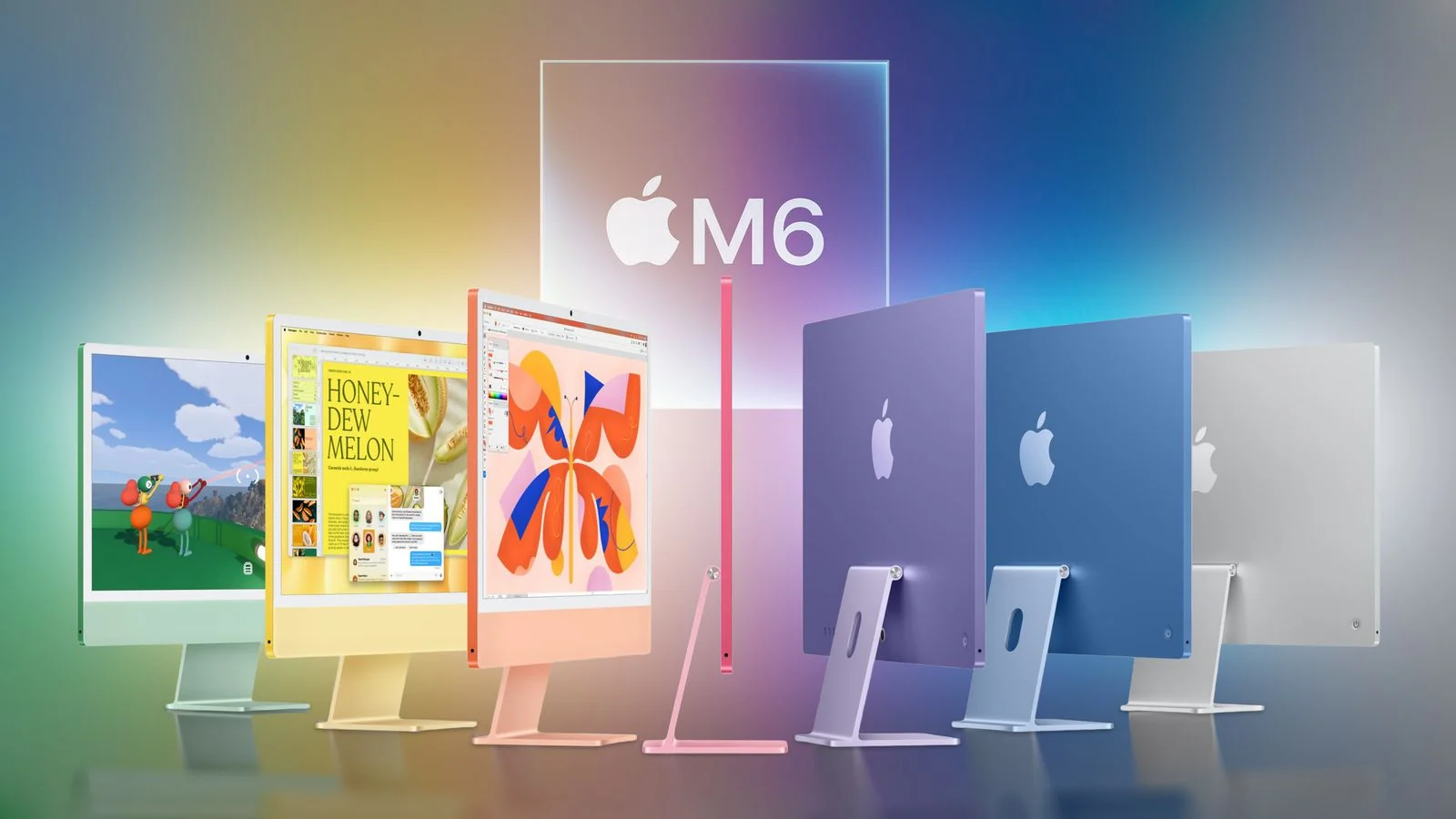
| M6-based iMac | M6 processor, up to 12-core CPU and 12-core GPU | All-in-one desktop, first major update since the M4-based iMac | $1,499 |
| 14-inch MacBook Pro (M6 version) | M6, 12-core CPU and 12-core GPU, N1 wireless chip | Pro laptop display unchanged in format; connectivity upgraded | $1,999 |
| Touch-enabled MacBook Pro models, 14-inch and 16-inch | M5 Pro or M5 Max | PROLED XDR touch display, Dynamic Island replacing the notch, 2,000-nit peak brightness | $2,899 and $3,399 |
Why the eighth-generation iPad mini is the most contested device in the launch
Conclusion first: Apple Inc. gave its smallest tablet a genuine hardware leap and left exactly one ceiling in place, and that ceiling reads as price-ladder defence rather than cost-cutting.
The eighth-generation iPad mini is the first Apple tablet under 10 inches to adopt OLED display technology. The 8.5-inch Super Retina XDR panel peaks at 1,200 nits, holds a contrast ratio of 2,000,000:1 and can dim to as low as 1 nit; the 256GB and 512GB models are also the first to offer a nano-texture glass option, priced at an extra $100, to cut reflections. Internally it pairs an A20 Pro processor with the Apple N1 wireless chip for Wi‑Fi 7 and Bluetooth 6. At 5.4 mm thick and roughly 255 grams, it is the lightest and thinnest iPad product Apple has shipped, and the first iPad rated to IP67-level dust and water resistance. Sound now comes from the Acoustic Display audio solution — the panel itself vibrates to produce audio, so the chassis carries no speaker openings.
The camera and stylus story follows the same logic: a 12-megapixel front camera relocated to the landscape edge for video calls, and continued support for Apple Pencil Pro and Apple Pencil (USB-C). What did not change is refresh rate. The panel stays at 60Hz and does not support ProMotion adaptive high-refresh-rate technology — the single most repeated criticism in early reviews. MacRumors, writing on November 3, 2026, framed the missing 120Hz as the device's main flashpoint, and reviewer commentary has been broadly similar: OLED's near-instant pixel response removes much of the smear users remember from older LCD minis, but anyone placing the tablet next to a 120Hz iPad Pro will feel the gap.
Price positions the product accordingly. In the U.S. market, 128GB Wi‑Fi starts at $699, with 256GB at $799 and 512GB at $999; Wi-Fi + Cellular models start at $849, and education pricing begins at $649.
What the M6 iMac says about Apple's desktop cadence
Conclusion first: the all-in-one is now on a silicon-driven refresh rhythm of roughly two years, and Apple is using cheap mechanical and networking changes to make the wait feel worthwhile.
The M6-based iMac is the first major update to the line since the M4-based iMac. The M6 chip scales to 12-core CPU and 12-core GPU configurations, and Apple states graphics performance reaches up to twice that of the previous generation. Wi‑Fi 7 and Bluetooth 6 are standard, and a 2.5Gb Ethernet port is available as an option integrated into the power adapter — a low-cost way to serve classrooms, studios and small-office desks where Wi‑Fi alone is not acceptable. Pricing is unchanged at the entry point: $1,499 for the 10-core CPU and 10-core GPU build, $1,699 for the 12-core CPU and 12-core GPU build, and from $1,449 under education pricing.
Why the touch MacBook Pro is the strategic tell — and the supply-chain risk
Conclusion first: the highest-priced Mac in the launch is also the most supply-constrained one, which is why lead times, not features, are the number to track.
Today the new MacBook Pro lineup went fully on sale. The 14-inch MacBook Pro (M6 version) starts at $1,999 with a 12-core CPU and 12-core GPU and uses the N1 wireless chip for Wi‑Fi 7 and Bluetooth 6. Alongside it, the touch-enabled MacBook Pro models — 14-inch and 16-inch, from $2,899 and $3,399 — run M5 Pro or M5 Max silicon and introduce the first touch-capable PROLED XDR display on a Mac. Apple retired the notch display design in favour of a Dynamic Island approach, and peak brightness reaches 2,000 nits for both SDR and HDR content.
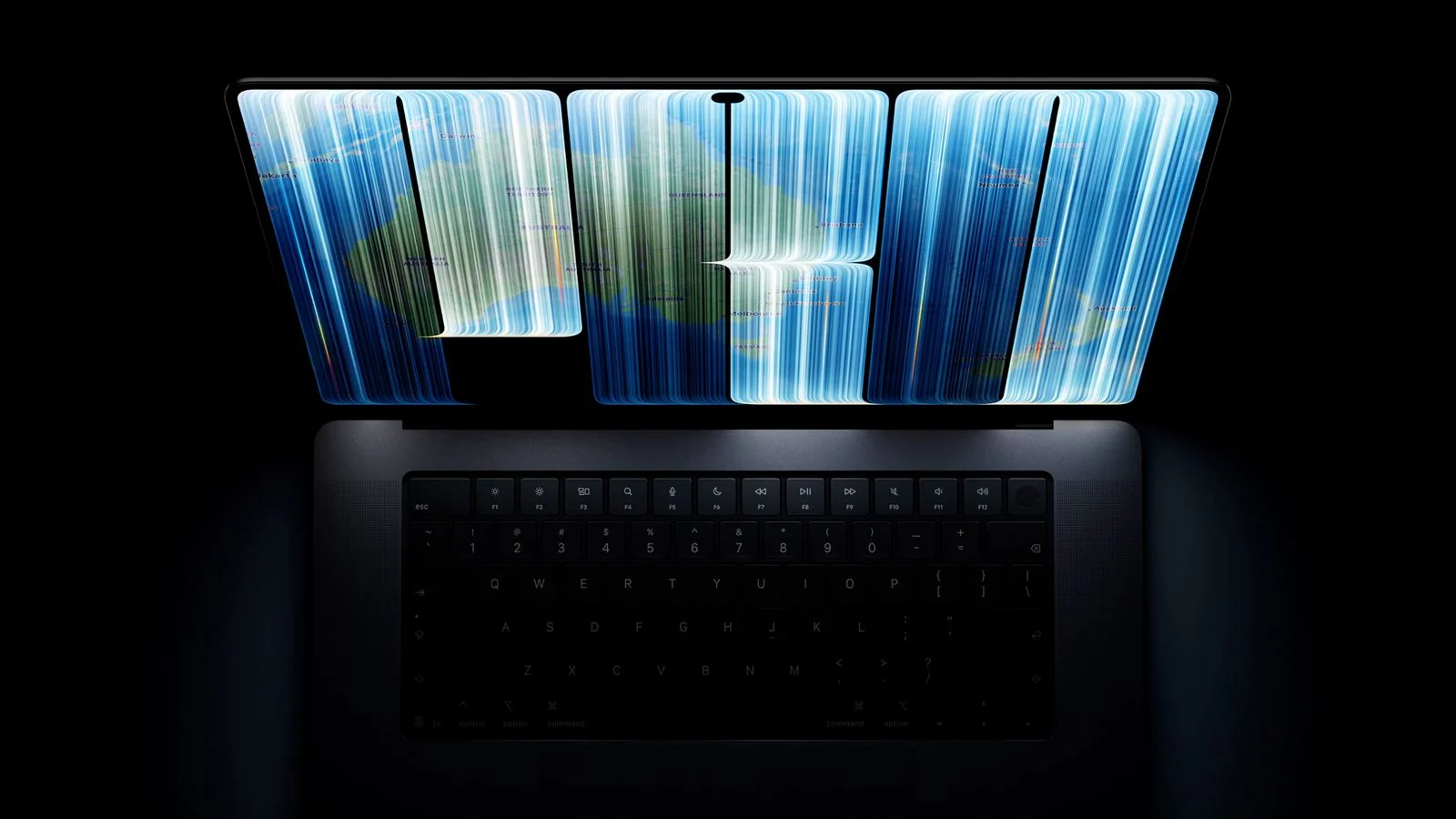
Behind the scene, industry reporting points to concentrated panel sourcing. TrendForce and Korean press have described Samsung Display as the exclusive supplier of the OLED panels for the touch MacBook Pro, built on its new 8.6-generation line in Asan, South Korea, and 9to5Mac reported in June 2026 that Apple's wider 2026 OLED slate is split between Samsung Display and LG Display. TrendForce's October 29, 2026 note expects Apple to ship 1.2 million to 1.5 million OLED touchscreen MacBook Pro units in 2027, while global OLED notebook shipments grow close to 40% in 2026 and more than 40% in 2027 — a structurally growing niche inside a flat PC market.
Two implications follow. First, a brand-new panel line at a 254-ppi tandem OLED specification is a yield risk that sits directly on top of Apple's highest-ASP laptop. Second, the lead times Apple's online store currently shows — shipping windows stretched to 2 to 3 weeks on some silver and Space Black configurations of the 14-inch and 16-inch touch models — are the cheapest real-time demand gauge available to outsiders; for the fastest delivery, walking stock at a local Apple Store remains the practical route.
How the launch lines up with Apple's own numbers
The refresh closes out Apple's end-of-2026 Mac and iPad lineup one week after the company's most recent earnings report, and the segment split explains the emphasis.
- Revenue for the fiscal quarter ended September 26, 2026, reported on November 2, 2026, reached $114.5 billion, up 12% year over year (CNBC live coverage).
- Mac revenue was $10.79 billion, up about 24% and ahead of the roughly $9.6 billion analysts expected.
- iPad revenue was $6.23 billion, down about 10% — the weak link the eighth-generation mini is meant to arrest.
- Services revenue was $31.57 billion, up roughly 10%, reinforcing that hardware launches are valued for ecosystem pull as much as for unit economics.
- Notably for governance watchers, CNBC covered the November 2 call as the first under chief executive John Ternus.
The read-through: Mac momentum of 24% justifies pushing the platform's price ceiling higher with a $2,899 and $3,399 touch tier, while an iPad line in double-digit decline got a real OLED upgrade but no refresh-rate upgrade. That is a mix-protection decision, not a technology constraint, and it should be tested against Apple's fiscal first-quarter report in late January 2027.
Common misreadings of this launch cycle
- "Every new Mac runs on M6." No — the touch-enabled 14-inch and 16-inch MacBook Pro models use M5 Pro or M5 Max; M6 appears in the 14-inch MacBook Pro (M6 version) and the iMac.
- "OLED means a smooth, high refresh rate." The eighth-generation iPad mini is still a 60Hz panel without ProMotion adaptive high-refresh-rate technology.
- "Nano-texture glass is standard on higher-capacity models." It is a $100 option limited to the 256GB and 512GB configurations.
- "Apple's 'twice' claim covers the whole machine." The company describes graphics performance reaching up to twice the previous generation, not a doubling of CPU throughput or price-performance.
- "On sale means in stock." Shipping windows on several silver and Space Black touch MacBook Pro configurations currently run 2 to 3 weeks.
- "Unit sales will tell us how this is going." Apple reports segment revenue only, so lead times, channel inventory and attach options are the usable proxies.
What to watch next — and what each reader should do
Five tracking indicators, in order of signal value:
- Weekly shipping estimates on Apple's online store. Compression of the 2 to 3 week windows on touch configurations would indicate Samsung Display's 8.6-generation line is hitting yield; further extension would indicate a panel constraint on the highest-margin Mac.
- Mac and iPad revenue in the holiday quarter. Apple's fiscal first-quarter report, due late January 2027, is the first full test of whether OLED halo demand carries the tablet line out of its 10% decline.
- Second-source qualification. Panelmakers are targeting the next OLED Mac platforms after the touch MacBook Pro; whether LG Display, BOE or CSOT wins qualification changes Apple's pricing power in displays for 2028 and beyond.
- Attach revenue mix. Nano-texture glass at $100, cellular at a $150 step, the 2.5Gb Ethernet adapter and Apple Pencil Pro are where ASP growth can offset a flat entry price.
- Education channel pull. $649 iPad mini and $1,449 iMac education prices position all three machines for institutional purchasing cycles.
Action recommendations
Investors and equity analysts should treat lead times as a weekly dataset and avoid extrapolating launch-week enthusiasm from the $699 tablet, whose 60Hz panel has generated the most consumer friction. Industry and supply-chain analysts should focus on tandem OLED cost curves, since a 1.2 million to 1.5 million unit estimate for 2027 is small relative to Apple's roughly 25 million-plus annual MacBook volume and will not, by itself, fund panel-line capacity. Enterprise procurement and business-development teams should either buy touch MacBook Pro stock locally or plan around the 2 to 3 week window, and should consider the M6-based iMac at $1,699 with the 2.5Gb Ethernet option for fixed-site fleets rather than waiting for a display refresh.
Frequently asked questions
Which Apple products went on sale on November 6?
The OLED iPad mini (eighth generation), the M6-based iMac, the 14-inch MacBook Pro (M6 version) and the touch-enabled 14-inch and 16-inch MacBook Pro models, all available effective immediately through Apple's official website, the Apple Store app, Apple Store retail stores and the Apple-authorized reseller channel.
Why does a $699 OLED tablet still run at 60Hz?
It is a positioning choice, not a panel limitation: ProMotion adaptive high-refresh-rate technology remains exclusive to iPad Pro, so the eighth-generation mini gains OLED contrast, 1,200-nit peak brightness, IP67-level sealing and a 5.4 mm, 255-gram body while the 60Hz refresh rate keeps it clearly below the pro tier.
How much does the first touchscreen MacBook Pro cost?
Touch-enabled MacBook Pro models start at $2,899 for the 14-inch and $3,399 for the 16-inch, with M5 Pro or M5 Max silicon and a PROLED XDR display reaching 2,000 nits peak brightness for both SDR and HDR content.
Is there a delivery problem with the new Macs?
Apple's online store currently shows 2 to 3 week shipping estimates on selected silver and Space Black configurations of the touch models, consistent with a first-generation panel sourced from a single new production line.
Reference sources
- CNBC — Apple Q4 2026 earnings live updates, November 2, 2026: https://www.cnbc.com/2026-11-02/apple-aapl-q4-2026-earnings-live-updates.html
- MacRumors — iPad mini 8 review highlights the lack of 120Hz, November 3, 2026: https://www.macrumors.com/2026-11-03/ipad-mini-8-review-highlights-lack-of-120hz/
- 9to5Mac — TrendForce expects up to 1.5 million OLED touchscreen MacBook Pro shipments in 2027, October 29, 2026: https://9to5mac.com/2026-10-29/report-apple-expected-to-ship-up-to-1-5-million-oled-touchscreen-macbook-pros-in-2027/
- 9to5Mac — Apple's 2026 OLED lineup and the Samsung/LG panel split, June 23, 2026: https://9to5mac.com/2026-06-23/apples-2026-oled-lineup-will-reportedly-rely-entirely-on-samsung-and-lg/
- The Korea Herald — why Samsung Display was Apple's only pick for the OLED MacBook Pro, October 28, 2026: https://www.koreaherald.com/article/10917647
- TrendForce — Samsung Display panel production for Apple's first OLED MacBook: https://www.trendforce.com/news/2025-09-10/news-samsung-reportedly-to-build-panels-for-apples-first-oled-macbook-debut-expected-4q26/
About this report: a GlobalBizSight Company Watch briefing prepared by Marc Hale. For corrections, data requests or editorial follow-ups, contact info@globalbizsight.com.