
CompanyWatch | Comparing Apple's Three Siri AI Handover Paths After Mike Rockwell's Exit Signal
Apple Inc.'s Siri AI chief Mike Rockwell is still weighing whether to stay, Bloomberg reporter Mark Gurman wrote in his Power On newsletter: he could step down in 2027, or leave the company outright. The handover is already two-track in practice, so the real decision is not whom to swap in but which path Apple commits to — model-led, platform-led, or simple continuity — and each carries a different cost curve.
What has been confirmed, and what is only reported?
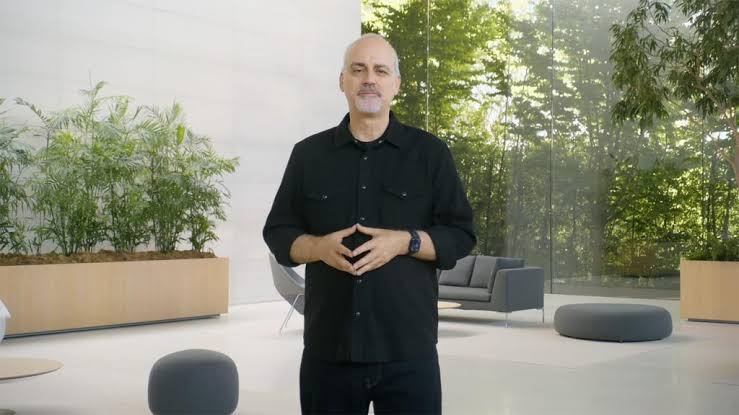
Nothing has been confirmed by Apple. In the November 8, 2026 edition of Power On, Gurman reported that Rockwell continues to seriously consider leaving his role as Siri AI chief, possibly as early as 2027. Whether he formally steps down, moves to another internal post, or exits Apple altogether is, at this stage, one executive's private calculation: the company has not confirmed a departure, and the reporting has not disclosed his reasons.
What is documented is his track record. Rockwell previously led development of the Vision Pro headset, then was moved onto the Siri AI team to run the rebuild of Apple's next-generation voice assistant. The new Siri AI released in 2026 is the main output of that team's work over several years. In other words, the executive whose exit is in question owns the one deliverable Apple has actually shipped in this AI cycle.
How did Apple's AI chain of command shift over the past year?
The exit signal is the latest node in a running reorganisation, not a stand-alone event. Read as a timeline, the pattern is a steady transfer of accountability from research-branded leadership to shipping-branded engineering.
- March 2025 — Siri was removed from John Giannandrea's remit and handed to Rockwell, reporting to software chief Craig Federighi, while Giannandrea kept AI research, testing and related technology, according to Bloomberg's initial report.
- November 2025 — Apple and Google were reported to be finalising a licensing arrangement in which Apple pays roughly $1 billion a year for a custom Gemini model.
- December 2025 — Apple announced that John Giannandrea would retire in spring 2026 and named Amar Subramanya vice president of AI, reporting to Craig Federighi.
- June 2026 — the heavily rebuilt Siri AI debuted at the Worldwide Developers Conference.
- August 2026 — Apple was reported to be restructuring roles across the Siri and Vision Pro organisations, touching more than 200 positions.
- November 2026 — Rockwell's own exit question went public.
The trigger was execution, not vision. During the personalized Siri project, Apple ran into severe schedule delays, and multiple intelligent features promised alongside iPhone 16 failed to arrive on time. Apple has since kept adjusting how its artificial intelligence teams report, moving parts of the business to Craig Federighi, services chief Eddy Cue and chief operating officer Sabih Khan so that AI development sits closer to software, cloud services and infrastructure.
Talent loss is the second half of the story. Several core researchers and managers were pulled away by rivals including Meta, among them Ruoming Pang, who ran Apple's foundation model development, and Ke Yang, who worked on Apple's AI search project. Bloomberg reported in July 2025 that Meta's package for Pang was worth more than $200 million; Pang then moved to OpenAI after roughly seven months. That bidding market is the reason an exit by Rockwell should be read first as a retention problem and only second as an org-chart problem.
Comparing the handover paths: who would actually own Siri AI?
Leaked accounts say his duties would be split between two executives: Amar Subramanya, a former Google AI researcher who is now Apple's vice president of AI, and Sebastien Marineau, a senior engineering manager inside Apple. The word “split” conceals the real design question, which is which layer of Siri belongs to whom.
| Path | Who ends up owning Siri AI | Strategic bet | Where it breaks |
|---|---|---|---|
| A. Continuity | Rockwell stays through 2027, or a Siri-native deputy is promoted | Keeps the device-plus-assistant product instinct that produced the 2026 rebuild | Authority stays boxed inside Siri while models and system integration sit elsewhere — the friction reported when Rockwell initially sought a broader AI role that Craig Federighi resisted |
| B. Model-first | Amar Subramanya, who spent 16 years at Google and worked on Gemini Assistant engineering before a stint as a Microsoft AI executive | Frontier capability is the binding constraint, so put the model owner on the assistant too | Research cadence is not assistant cadence; the user-facing surface loses a product champion |
| C. Platform integration | Sebastien Marineau, whose teams fold AI into iOS and who some at Apple see as a future successor to Federighi | Distribution wins: the assistant matters because it is woven into system surfaces | Deepens single-point dependency in a group with no formal succession plan |
| D. Hybrid (today's default) | Assistant product under a new Siri chief, models under Subramanya, system features under Marineau | Runs capability and experience in parallel and de-risks any one departure | Accountability diffuses; if a feature slips again, three owners means no owner |
Two hard facts sharpen the comparison. During his 16 years at Google, Amar Subramanya contributed to the engineering of Gemini Assistant; in December 2025 Apple named him to replace John Giannandrea with charge of foundation models, machine learning research and AI safety evaluation. Sebastien Marineau likewise reports to Craig Federighi; there is talk inside Apple that he could one day succeed Federighi, but there is no sign that Federighi plans to retire or leave in the near term, and he has run software engineering for more than a decade without building a visible bench. Note that Apple's own event materials identify him as Sebastien Marineau-Mes; the two names refer to the same executive.
Which path fits which situation?
- Read path A as the shipping choice. If you believe the bottleneck is taste and sequencing across hardware, silicon and voice, keeping a product-native chief is the cheapest way to protect the delivery calendar.
- Read path B as the capability choice. If you believe Siri lags ChatGPT-class assistants because of the model underneath it, folding Siri into the AI vice presidency is the coherent move — and it makes the Google arrangement a bridge rather than a crutch.
- Read path C as the distribution choice. If you believe the assistant wins by owning system surfaces — screen context, Mail, Messages, on-screen actions — an iOS integrator is the natural owner, and a handover to Marineau is a promotion of the platform view.
- Read path D as the risk-management choice. It is the most likely outcome because it requires no admission of failure, but it is the least legible to outside analysts trying to assign credit or blame.
Does the Google Gemini deal change the calculus?
At the June 2026 Worldwide Developers Conference, Apple finally shipped the rebuilt Siri AI: more natural conversation, the ability to understand on-screen content, to search the web, and to pull relevant material out of a user's Mail and Messages. Apple also brought in a Google Gemini model to supply part of the intelligence behind the assistant.
Licensing bought time, and it came with a price tag. Bloomberg reported on November 5, 2025 that Apple was nearing an agreement to pay about $1 billion a year for a custom 1.2-trillion-parameter Gemini model, though neither company has confirmed the terms publicly. For comparison readers, that reframes the succession question: whoever owns Siri AI now also owns a supplier relationship with Apple's largest platform rival, on undisclosed and renegotiable terms.
Cost discipline is tightening on the inside as well. According to our CompanyWatch report on Apple's internal AI spending, some teams saw their daily AI budget cut from $300 to $200 in October, with a possible further slide to $100 — a signal that inference spend is now managed as an operating expense line rather than as an innovation subsidy.
Financially, this is a rebuild happening on a rich base. Apple's fiscal 2026 fourth-quarter results posted quarterly revenue of $114.5 billion, up 12 percent year on year, with diluted earnings per share of $2.10, up 14 percent, and record Services revenue. In the release, Apple's management framed the September quarter as capping “a strong fiscal 2026, with all-time record revenue of $479 billion and double-digit EPS growth.” Capital is not the constraint on Apple's AI strategy; continuity of the teams executing it is.
Common misconceptions about the Apple AI reshuffle
- “One person will be appointed head of Apple AI.” Apple has been deliberately moving away from that model since December 2025, spreading work across Craig Federighi, Eddy Cue and Sabih Khan instead of concentrating it in a single AI chief.
- “Rockwell's departure is a done deal.” It is an unsettled consideration reported by Bloomberg and unconfirmed by Apple. Gurman has separately indicated Rockwell was unlikely to walk away before the Siri overhaul shipped, which suggests any exit is sequenced rather than sudden.
- “A leadership change will fix the delays.” The personalized Siri project slipped under multiple leaders. Cadence depends on compute, evaluation pipelines and reporting lines — not on whose name is on the charter.
- “The Gemini partnership is free and temporary.” At a reported $1 billion a year, it is a real cost line and a differentiation problem: rivals can buy the same class of model.
- “Apple is behind because it lacks researchers.” It is behind partly because its best-known model leaders keep getting outbid, which is a compensation and mandate problem, not a talent-supply problem.
What to watch next: an action checklist
- Any official confirmation on Rockwell's status, or a title change announced in the same breath as a product release. Treat a silent handover as path D.
- Reporting lines, not titles. If Siri AI begins reporting to Amar Subramanya, that is path B in substance; if it consolidates under Sebastien Marineau, Apple has chosen path C.
- Retention signals. Watch for counter-offers to model researchers and for whether Apple poaches back from Google or Meta; budget caps point to retention being solved with mandate and equity rather than headcount.
- The Gemini renewal terms. Any widening of what Apple delegates to a partner model, or conversely a shorter licence, tells you which problem Apple thinks it cannot solve internally.
- Feature promises tied to the next iPhone cycle. Apple's credibility gap dates from the features that missed iPhone 16; a clean launch record is the single strongest indicator that the reorganisation worked.
- Succession depth below the top. More than 200 affected roles in August 2026 thinned middle management; the pace of backfills is a better early-warning metric than any press release.
- Competitive spillover. For partners and enterprise buyers, the practical exposure is roadmap volatility: build against documented Siri capabilities, and read OpenAI, Google and Anthropic as the benchmark Apple is being scored against.
FAQ: readers' questions on Apple's Siri AI leadership
Has Apple confirmed that Mike Rockwell is leaving?
No. Bloomberg's Mark Gurman reported in November 2026 that Rockwell is seriously considering his future and may step down as Siri AI chief in 2027 or leave Apple. Neither the timing nor the reasons has been confirmed by the company.
Who are the likely successors?
Reporting points to two executives sharing the scope: Amar Subramanya, Apple's vice president of AI since December 2025 and a veteran of 16 years at Google including Gemini Assistant work, and Sebastien Marineau, a longtime Apple engineering leader. Both report to Craig Federighi.
Why does this matter beyond the org chart?
Because Siri AI is the interface through which Apple sells its AI story to consumers and developers, and because it is now partly powered by a licensed Google Gemini model. Leadership churn affects shipping cadence, supplier terms and the company's negotiating leverage with OpenAI, Google and Anthropic.
Does a possible exit change Apple's financials near term?
Not visibly. Apple's September quarter set records for total revenue, iPhone revenue and earnings per share, with Services at an all-time high. The AI management question is a multi-year product-risk story, not a current-quarter earnings story.
Reference sources
- Apple newsroom, “John Giannandrea to retire from Apple” (December 2025): apple.com/newsroom
- Apple newsroom, “Apple reports fourth quarter results” (November 2026): apple.com/newsroom
- Reuters, “Apple names Amar Subramanya new VP of AI, replacing John Giannandrea”: reuters.com
- Bloomberg, “Apple Nears $1 Billion-a Year Deal to Use Google AI for Siri”: bloomberg.com
- Bloomberg, “Apple Loses Top AI Models Executive to Meta's Hiring Spree”: bloomberg.com
- Securities Times on the March 2025 Siri handover: stcn.com
- MacRumors, “Vision Pro Creator Mike Rockwell Has Considered Leaving Apple”: macrumors.com