
GlobalBizSight CompanyWatch: Apple's Touchscreen MacBook Pro Shows How a Safe Upgrade Can Undermine a Company's Innovation Story
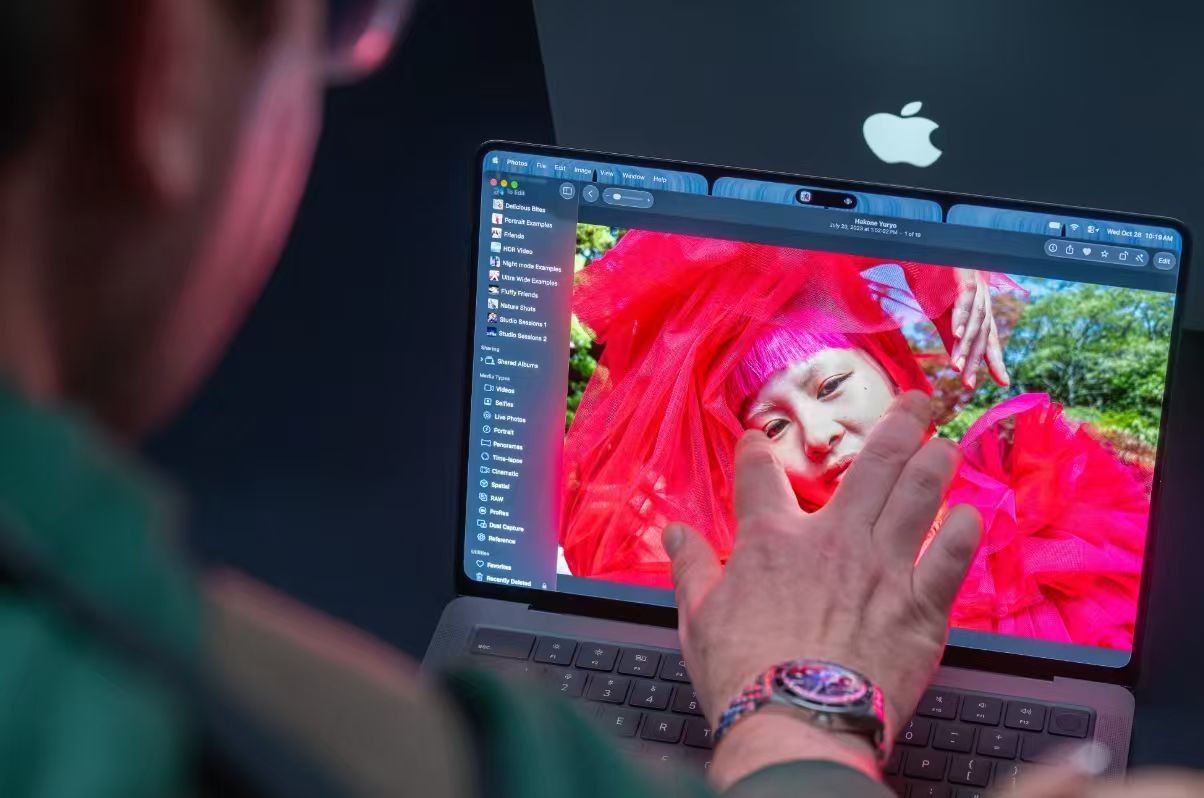
For readers using the GlobalBizSight CompanyWatch lens, the case around Apple's new MacBook Pro is worth studying less for the hardware sheet and more for the decision-making pattern: a company with rare control over silicon, operating system, display and supply chain chose to convert a potentially defining change into a careful iteration. Bloomberg wrote on November 2 that Apple treated the touch feature as a conventional upgrade instead of building a fresh Mac experience, and the result is a product that closes one visible gap while leaving the more difficult question open: what comes after the current Mac and iPad form factors?
What Apple changed, and what it deliberately left alone
The first fact to lock down is the event itself: the new MacBook Pro is Apple's first touchscreen notebook, yet it is not a redesign that abandons the company's proven Mac template. Bloomberg's November 2 article argues that Apple could have presented touch as the most consequential Mac shift in more than five years, but instead presented it as an extension of a familiar package. This matters because a touchscreen Mac has long been blocked less by component availability than by product philosophy; after two decades of resistance, Apple has accepted the feature, but not necessarily the risk of making it central.
The product follows Apple's strengths rather than breaking them: tight chip-software integration, some of the industry's best displays, a keyboard and trackpad users already trust, strong battery life, capable speakers and a high-quality camera. The new models are noticeably lighter, slightly thinner, with improved thermal management and a redesigned heat-dispersal system. They still resemble the 2021 model that users liked, and the chips remain the M5 Pro and M5 Max introduced this spring. By contrast, iPhone Duo moves Apple into less familiar territory, which makes the MacBook Pro look more like an optimization project than a platform experiment.
Why the touchscreen remains a weak commercial hook
Touch is now present, but the customer story is thin. The software is close to what outside observers expected: basic actions such as tapping, swiping, pinch-to-zoom and scrolling. One interesting use is testing iPhone apps being developed on the Mac, yet that is unlikely to persuade mainstream consumers. Some interface elements are also too small to press comfortably. In other words, Apple did not create a new mode of interaction; it reduced the distance between the Mac and the touchscreen habits of people raised on iPhone and iPad. It also gives the company a reason to address buyers comparing Macs with Windows laptops, where touch has been a long-standing option.
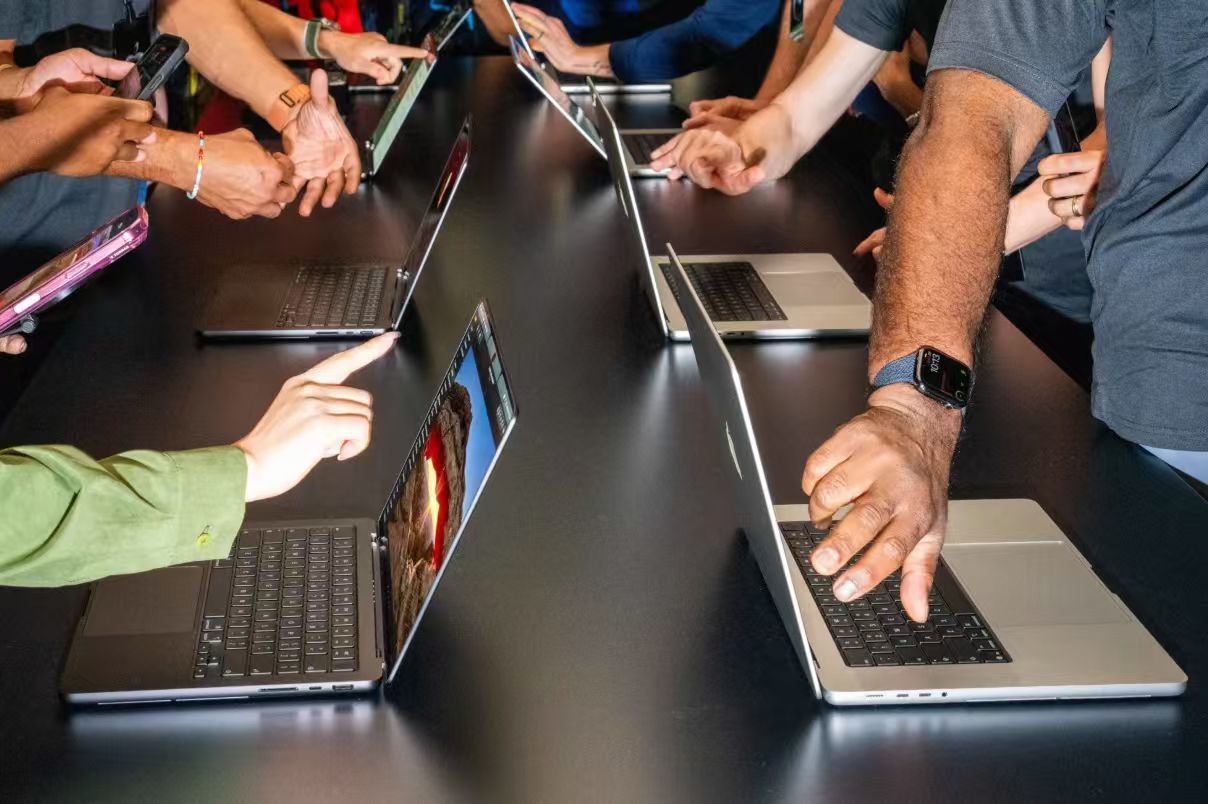
Hardware choices reinforce the cautious framing. The display cannot rotate backward or be positioned like a tablet, and Apple Pencil is not supported. The company focused on a stronger hinge to reduce wobble when tapping, plus software stabilization so camera motion during video calls looks smoother. These are sensible refinements. They are not evidence that Apple is trying to redefine portable computing.
The financial logic: protect iPad, monetize OLED
From a company-watch perspective, the likely demand effect is reassuring for investors. A touchscreen MacBook Pro is unlikely to persuade a buyer to forgo an iPad. The laptop remains anchored to keyboard, trackpad and desk-to-bag use; the tablet remains a different device. Better interaction consistency across Apple products may increase the chance a consumer wants both. Meanwhile, Apple is monetizing the feature set rather than discounting it: in the first generation, touch, OLED and Dynamic Island require an extra $400. Non-touch M5 Pro and M5 Max MacBook Pro models continue to sell. But if the company keeps running two high-end MacBook Pro product lines, engineering, marketing and manufacturing teams carry duplicated load, and because prices are already close, unification eventually becomes plausible.
Case data notes
| Signal | Observed data | Company-watch reading | Source |
|---|---|---|---|
| Feature premium | The first generation requires $400 extra for touch, OLED and Dynamic Island. | Apple is testing whether a visible screen upgrade can carry a higher price without changing the core workflow. | Bloomberg |
| Input mode | Touch is described as an additional input method alongside keyboard and trackpad. | The laptop is not being turned into a tablet-first device. | bloomberg.com |
| Display and endurance | Apple's PROLED XDR materials describe a tandem OLED display and up to 24 hours of battery life. | The strongest upgrade story is display plus endurance, not gestures. | apple.com |
| Price context | Bloomberg has reported a possible $2,899 starting price for the 14-inch touch and OLED model. | Buyers need to judge whether touch is worth the premium, not assume that it automatically is. | bloomberg.com |
OLED does the heavy lifting
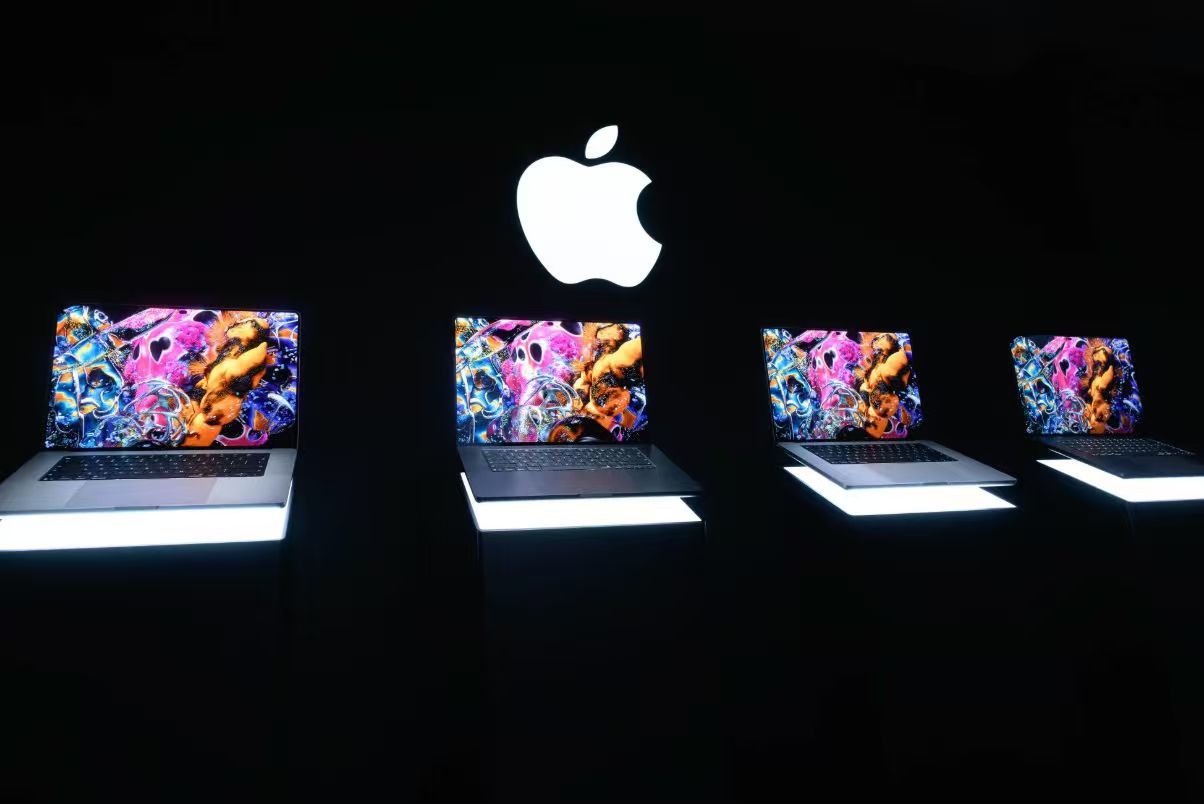
The more compelling part of the launch is OLED. Bloomberg's November 2 assessment says the lighter design will be welcomed, but OLED is the main attraction. The appeal is concrete: OLED, described in Apple's own materials as PROLED XDR, delivers brightness, contrast and color behavior that iPhone users already understand as a screen upgrade; Apple's product pages describe a tandem OLED display and up to 24 hours of battery life in thinner and much lighter designs. The touch layer may be integrated into the OLED panel, another sign that the real product leap is display engineering rather than a new touch paradigm. That also explains why Apple highlights OLED in the naming while giving touch less promotional weight. iPad Pro already sets the reference point for what this kind of panel can do; when the same visual quality appears on a larger professional laptop, the upgrade is easier to appreciate.
What it does not solve
Under CEO John Ternus, Apple has shown early management traction. Yet the launch did not articulate a bold next form factor. The question for CompanyWatch is not whether Apple can make a better MacBook Pro; it plainly can. The question is whether it will define a device that replaces Mac and iPad as separate categories, including a path where the two may merge. Next year may be more informative. A second generation touchscreen MacBook Pro is expected to carry M7 Pro and M7 Max chips, adding new AI hardware support, while an entry-level 14-inch M7 MacBook Pro is planned with the lighter chassis and narrower bezels that appeared earlier this week on higher-end models. If that next cycle uses the new screen not just to make touch possible but to make touch necessary, the current model may look like a bridge rather than a destination.
Common misconceptions
- Touchscreen means a tablet in disguise. It does not. The screen cannot fold into tablet mode, and Apple Pencil is not supported, so the product is still a notebook.
- A touchscreen Mac must cannibalize iPad. Unlikely. Different devices, different postures and different work patterns make the demand less zero-sum.
- A $400 premium proves demand. It does not. It is a price test for OLED, Dynamic Island and touch, not evidence of long-term adoption.
- New M5 Pro and M5 Max models are a chip-generation breakthrough. They are not; the processors continue from this spring, while the visible change is the display and input package.
Analyst checklist
- Track whether buyers shift from non-touch M5 Pro and M5 Max models to the higher OLED touch tier.
- Watch for macOS apps that need touch, not merely support it, because that determines whether the feature becomes sticky.
- Compare iPad attach rates and MacBook Pro upgrade rates to test the cannibalization thesis.
- Follow whether Apple maintains two product lines or converges them when price differences narrow.
- Monitor M7 Pro and M7 Max launches for AI hardware support and for signs that the 14-inch M7 MacBook Pro makes the lighter design mainstream.
Action recommendations
- Investors should treat the launch as a margin and product-line story first, and an innovation story second.
- Enterprise buyers should pilot the model before forcing it into standard fleets, especially if the main value is OLED and battery life rather than touch.
- Developers should test touch targets and gesture paths, but should not redesign Mac apps around touch as the primary input.
- Strategy teams should watch whether Apple can turn a safe upgrade into a platform change, because that is what separates this MacBook Pro from the next category Apple may need to create.
The final company-watch reading is balanced but pointed: the new MacBook Pro demonstrates that Apple remains exceptionally good at improving existing product categories. Whether it can go beyond refinement and define a successor to today's Mac and iPad remains the real test.