
Apple's MacBook Pro Just Split Three Ways: Touch Now, Mini-LED Now, or Wait for M7 in 2027
CompanyWatch enterprise observation · GlobalBizSight · By Marc Hale
Bloomberg reporter Mark Gurman puts Apple's high-end notebook future in one line: the premium MacBook Pro range will eventually be organised around touch, and the non-touch machines now on sale may leave. What drives that shift is not the $400 price gap but the cost of duplicating a product line. For buyers the practical question is narrower — pay now for touch, keep the cheaper mini-LED build, or wait for 2027.
What actually changed in the MacBook Pro range last week
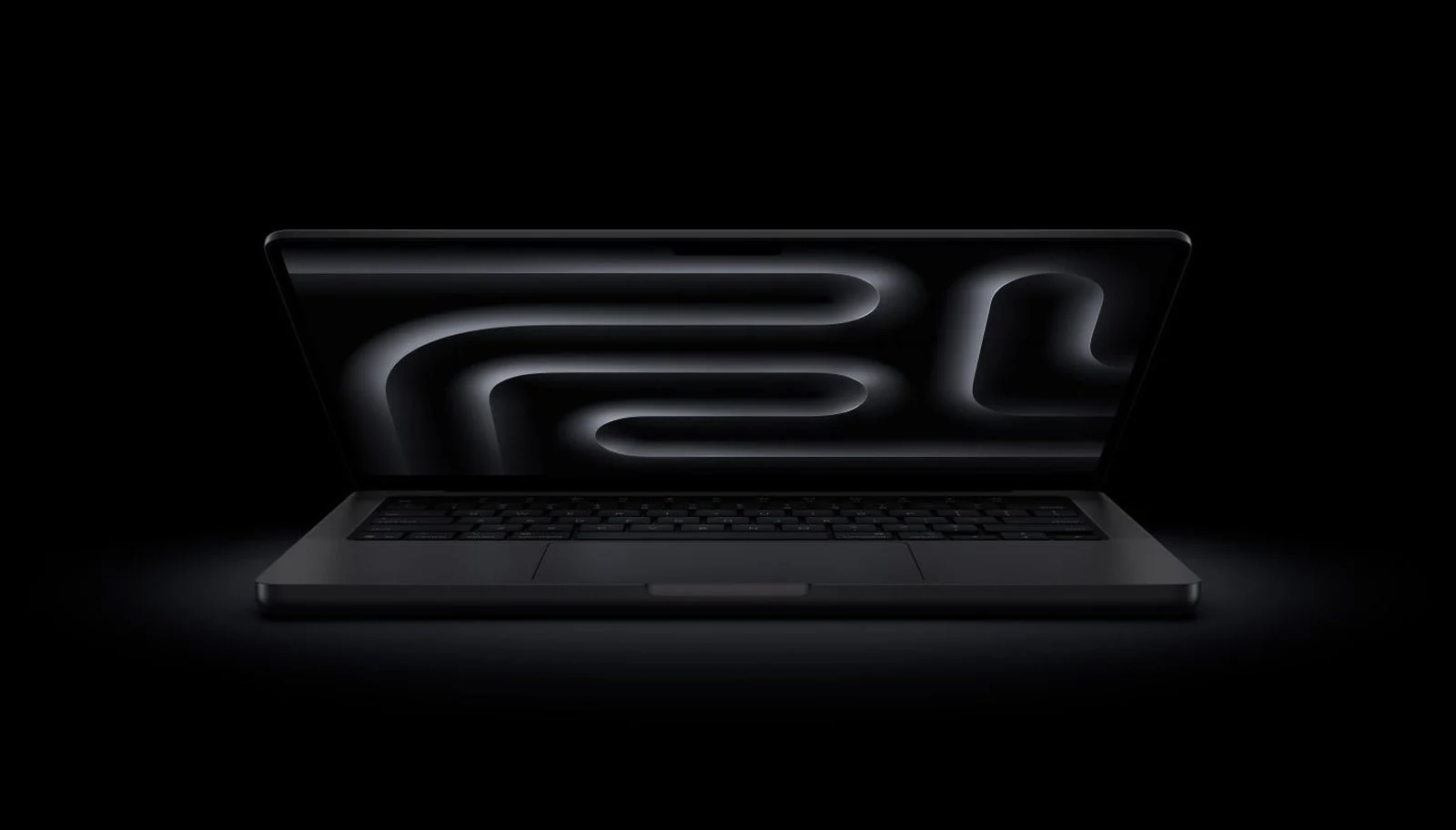
Last week Apple shipped its first touch-enabled MacBook Pro models, and the line did not narrow — it widened. The new machines still run the M5 Pro and M5 Max silicon Apple introduced in March this year, while adding an OLED panel, a Dynamic Island front design in place of the notch, a lighter and thinner body, and a redesigned cooling system that routes hot air away from the display. Alongside them, the traditional MacBook Pro models with M5 Pro and M5 Max and mini-LED displays remain on sale, with the touch versions priced $400 above their non-touch equivalents.
Apple's own launch pricing confirms the size of that step: the 14-inch MacBook Pro with the PROLED XDR touch display and M5 Pro starts at $2,899 in the U.S. and $2,749 with education savings, with the panel rated at up to 2,000 nits of peak brightness for both HDR and SDR content, as listed on Apple's newsroom. Reported pricing puts the 16-inch touch model from roughly $3,399. Two facts frame every comparison that follows: the premium buys a display and interaction overhaul, not a faster chip; and the older architecture has not been withdrawn.
Why a $400 gap is a duplication problem, not a pricing problem
In his latest Power On newsletter, Gurman argues that holding two parallel high-end MacBook Pro lines is expensive: research, production and marketing all have to be paid for twice, which makes consolidation more likely over time from a cost and operations standpoint. He has not indicated when Apple would stop developing the non-touch MacBook Pro.
Translated into buyer economics, the $400 step against the matching non-touch configuration implied by Apple's own list price is close to a 16% increase. GlobalBizSight calculation: on a 1,000-laptop corporate refresh, that premium alone adds roughly $400,000 to hardware spend — before the support, imaging and asset-tracking overhead of managing two visually similar but functionally different fleets. That is the same duplication cost Gurman describes at the factory end, and it is also why a merged lineup would eventually benefit channel and enterprise buyers.
Touch, mini-LED or wait: how the three paths compare
| Decision axis | Touch OLED MacBook Pro (on sale since last week) | Non-touch mini-LED MacBook Pro (still sold) | Second-generation touch MacBook Pro (planned for 2027) |
|---|---|---|---|
| Silicon | M5 Pro and M5 Max, the chips released in March this year | Identical M5 Pro and M5 Max silicon | M7 Pro and M7 Max, with more hardware aimed at AI workloads |
| Display and body | OLED, Dynamic Island, lighter and thinner chassis, reworked heat path | mini-LED display, previous enclosure | OLED direction expected to continue, with added AI capability |
| Price reference | $400 above the matching non-touch build; 14-inch from $2,899 (Apple) | Lowest-cost route to the same high-end chips | Not yet disclosed; consolidation pressure argues against a wider premium |
| Interaction | Direct finger input for scrolling, zooming, rotating and drawing | Trackpad and keyboard only | Expected to extend touch and on-device AI interaction further |
| Fits best | Visual, video, 3D and presentation workflows; screen-first review work | Text, code and spreadsheet work where panels are read, not touched | Teams that standardise on hardware rather than buy ahead of a refresh |
| Main risk | Paying a form-factor premium that may compress once the lines merge | Being left with a device that reads as legacy after 2027 | Timing has already moved once, and supply, not demand, may set the pace |
How Apple's version of touch differs from the convertible playbook
Rival premium laptops have treated touch as a hinge trick: flip the screen, add a pen, accept the weight. Apple's launch description instead leans on embedding the sensing layer in the display stack rather than laying it on top, so interaction feels closer to touching the content itself — with gestures such as scrolling, two-finger zoom, rotation and drawing supported on a fixed clamshell. The engineering cost shows up elsewhere: the same launch package highlights a redesigned thermal path that moves hot air away from the panel, and hands-on coverage describes a stiffened hinge to stop the screen wobbling under a finger. Both are reasons touch cannot simply be switched on in the existing non-touch chassis, which strengthens the case that the two lines converge rather than coexist.
What Apple did not do is reposition the MacBook Pro as a pen-first drawing tablet. Buyers who need stylus workflows should keep treating the iPad plus Mac combination as the incumbent answer until Apple says otherwise; on present evidence, touch here is a navigation and annotation layer, not a tablet replacement (GlobalBizSight analysis based on launch materials).
What the 2027 roadmap reveals about Apple's endgame
Gurman says Apple plans to introduce a new generation of touch-screen MacBook Pro in 2027, carrying M7 Pro and M7 Max processors plus more hardware capability for artificial-intelligence applications. The timing detail matters: he had previously indicated that this chip upgrade was expected in late 2027. In the newer account, the second-generation touch model and the chip step now sit inside the same calendar year, which reads either as an accelerated schedule or as a narrowing of the window in which Apple is willing to keep two high-end lines open.
The same design language is also slated to reach the entry-level 14-inch MacBook Pro. Gurman says Apple plans an M7 version of that model with a lighter body, a thinner enclosure and narrower display borders, aligning it visually with the new high-end machines already released. As far back as July this year he had outlined the redesign of the base MacBook Pro, then estimating a debut in the first half of 2027. Read together, three markers now sit on the board — a base-model redesign in the first half of 2027, a second-generation touch flagship in 2027, and an earlier late 2027 estimate for the chip step — and the direction of travel points to a single touch-shaped product tree.
Supply, not desire, may set the pace of the switch
Analyst data adds a constraint that headline pricing coverage tends to skip. TrendForce estimates shipments of the new OLED touch MacBook Pro at 1.2–1.5 million units in 2027, and notes that Samsung Display is the sole supplier of these panels, with the tandem OLED structure and 254 pixels per inch raising manufacturing difficulty, material cost and yield pressure for any challenger. Against a Mac business that shipped 5.9 million units in the third quarter of 2026 alone, down 11.3% year on year per IDC data carried by MacRumors, a 1.2–1.5 million-unit ceiling means touch models stay a premium slice rather than the default configuration for at least another cycle — which is exactly why the non-touch line cannot disappear overnight.
Where this could go wrong for Apple
- Single-source panel supply concentrates execution risk in one line at one plant; any yield stumble caps the touch rollout and keeps the duplicate line alive longer than planned.
- Discounts on the older models could turn a 16% premium into a self-inflicted price fight inside Apple's own retail tiers.
- Touch is a form-factor story, not a performance story: buyers upgrading for speed still get M5 Pro and M5 Max, which weakens the case for paying the premium among the largest professional cohort.
Where the upside sits
- The upgrade raises average selling prices without requiring a new chip generation, a rare margin lever in a soft PC quarter.
- A cheaper, thinner 14-inch machine on M7 gives Apple a credible step between its fanless laptop and the flagship band, widening the pro funnel.
- OLED plus touch keeps display supplier relationships and future panel capacity aligned with Apple's own roadmap — useful leverage as more premium laptops adopt OLED.
Common misconceptions in this story
- "The $400 buys a touchscreen." It buys a bundled refresh: OLED panel, Dynamic Island front, lighter chassis and a rewritten heat path.
- "The non-touch MacBook Pro is already cancelled." Apple continues to sell it, and Gurman offers no end date for its development.
- "The chip step is a late 2027 story." That was the earlier estimate; the newer account places a second-generation touch model in 2027.
- "Touch means the MacBook Pro replaces an iPad." The launch positioning is finger input on a clamshell, not a pen-first tablet.
- "A spec sheet equals supply." Panel sourcing and yield, not demand, look like the binding constraint through 2027.
Action advice: what to do now, by role
- Individual professionals. Buy the touch OLED model if your day involves scrubbing timelines, annotating slides, manipulating 3D views or reviewing imagery on screen. If your workload is text, code and tabs, the mini-LED build delivers the same M5 Pro or M5 Max performance for $400 less.
- IT and procurement teams. Do not standardise on touch across a fleet for one fiscal year's benefit. Pilot it in creative and field-demo roles, and lock pricing for the non-touch tier while the two lines still coexist.
- Investors and analysts. Watch mix and average selling price rather than unit volume: the interesting question is whether premium OLED models lift Mac revenue per unit even as total PC demand stays weak.
- Component and channel watchers. Track second-source panel qualification and capacity additions, plus resale pricing of the older models — the earliest sign of how fast buyers value the new form factor.
Watch indicators before the 2027 generation lands
- Any Apple statement or store change that removes the non-touch high-end MacBook Pro configurations.
- Whether the 16-inch touch model's price gap stays at $400 or widens, which would signal Apple testing the ceiling of the premium tier.
- Whether Apple dates the second-generation touch MacBook Pro before or alongside the M7 base model planned for the first half of 2027.
- Whether M7 Pro and M7 Max timing slips back toward the previously reported late 2027 window.
- Panel supply news: sole-source status, yield commentary, or the entry of a second OLED supplier.
- macOS adoption of touch-aware controls in professional apps — the real test of whether interaction, not hardware, has changed.
FAQ: Apple's touchscreen MacBook Pro transition
Is Apple definitely dropping the non-touch MacBook Pro?
No. Apple still sells the mini-LED MacBook Pro models with M5 Pro and M5 Max, and Gurman's report describes a likely eventual merger of the two lines on cost grounds, without naming a cut-off date.
How much more expensive is the touch version?
Four hundred dollars above the matching non-touch configuration. Apple lists the 14-inch touch model with M5 Pro from $2,899 in the U.S., roughly a 16% step at the entry point of the high-end range.
When does the next generation arrive?
Apple plans a second-generation touch model in 2027 with M7 Pro and M7 Max, plus an M7 version of the entry-level 14-inch MacBook Pro with a lighter, thinner body and narrower borders; that base redesign was flagged in July this year as a first-half 2027 product.
Should I buy now or wait?
Wait if you upgrade on silicon cycles and can live with the current design until the 2027 generation lands. Buy now if the display and direct interaction change how you work today — that is what the premium actually pays for.
For Apple, the strategic reading is simple: the company has paid to make its flagship laptop look and behave differently, and has left the previous flagship on the shelf at the same time. Whether 2027 delivers one touch-shaped lineup or two increasingly awkward ones will become visible in three places — store configurations, the gap between the M7 base model and the second-generation flagship, and how many OLED panels Apple can actually source.
Reference sources
- Apple newsroom, "Apple unveils groundbreaking MacBook Pro with PROLED XDR Display" — https://www.apple.com/newsroom/2026/10/apple-unveils-groundbreaking-macbook-pro-with-proled-xdr-display/
- Apple MacBook Pro with PROLED XDR display specifications — https://www.apple.com/macbook-pro/proled-xdr-display/specs/
- TrendForce press center, notebook OLED shipment and supply analysis — https://www.trendforce.com/presscenter/news/20261029-13287.html
- MacRumors on IDC third-quarter 2026 Mac shipment data — https://www.macrumors.com/2026-10-09/mac-shipments-fall-but-apple-gains-ground/
- Bloomberg, Mark Gurman, Power On newsletter, as cited in the source report
CompanyWatch by GlobalBizSight — enterprise observations on single-company moves. Author: Marc Hale. Contact: info@globalbizsight.com