
BYD's Yangwang Altior Gambit: A CompanyWatch Read on Chinese Ultra-Luxury Ambitions in the Gulf
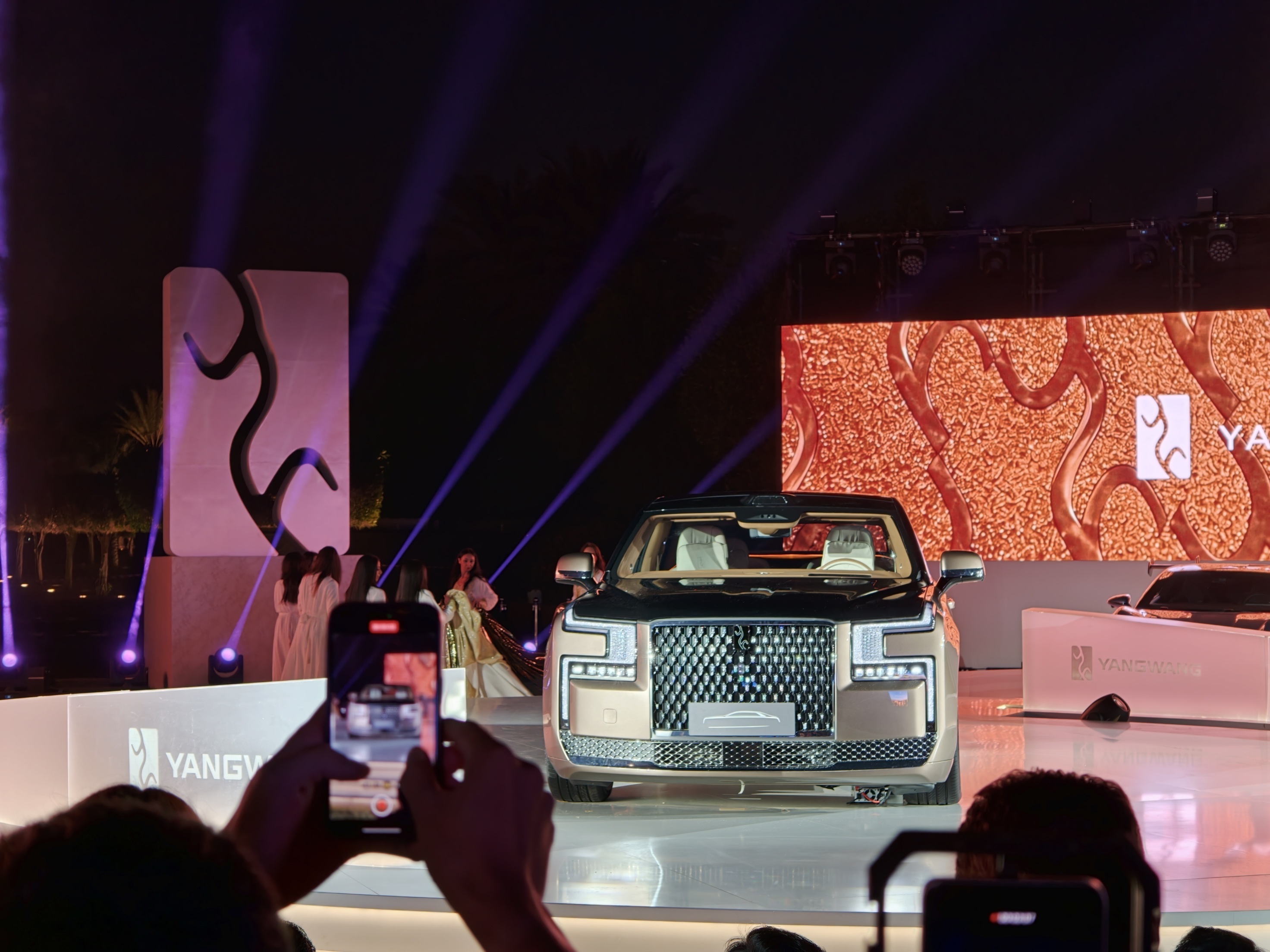
BYD's Yangwang brand unveiled the Dingyao Altior ultra-luxury sedan in Abu Dhabi, using palace-inspired design, custom craftsmanship and the Yi Si Fang e4 platform to target the Rolls-Royce-led segment rather than ordinary EV buyers. For CompanyWatch readers, the launch is less about one model than about BYD converting export growth, Gulf demand and brand elevation into an ultra-premium test case.
What BYD actually put on stage in Abu Dhabi
The short answer: Altior is a halo product, not a volume sedan. It is a D-plus luxury flagship with a projected length above 5.5 meters, two-tone paint, large disc-style wheels and coach doors, with a design language pushed further than on the Yangwang U8. GeekPark's on-site reporting described the front lamps and grille as forming a recognizable "ding" tripod motif, echoing the imperial idea of vying for the throne; the venue, the Emirates Palace hotel, made the palace theme explicit. Public reporting later confirmed the Abu Dhabi debut for November 8, sharpening the event's commercial timeline.
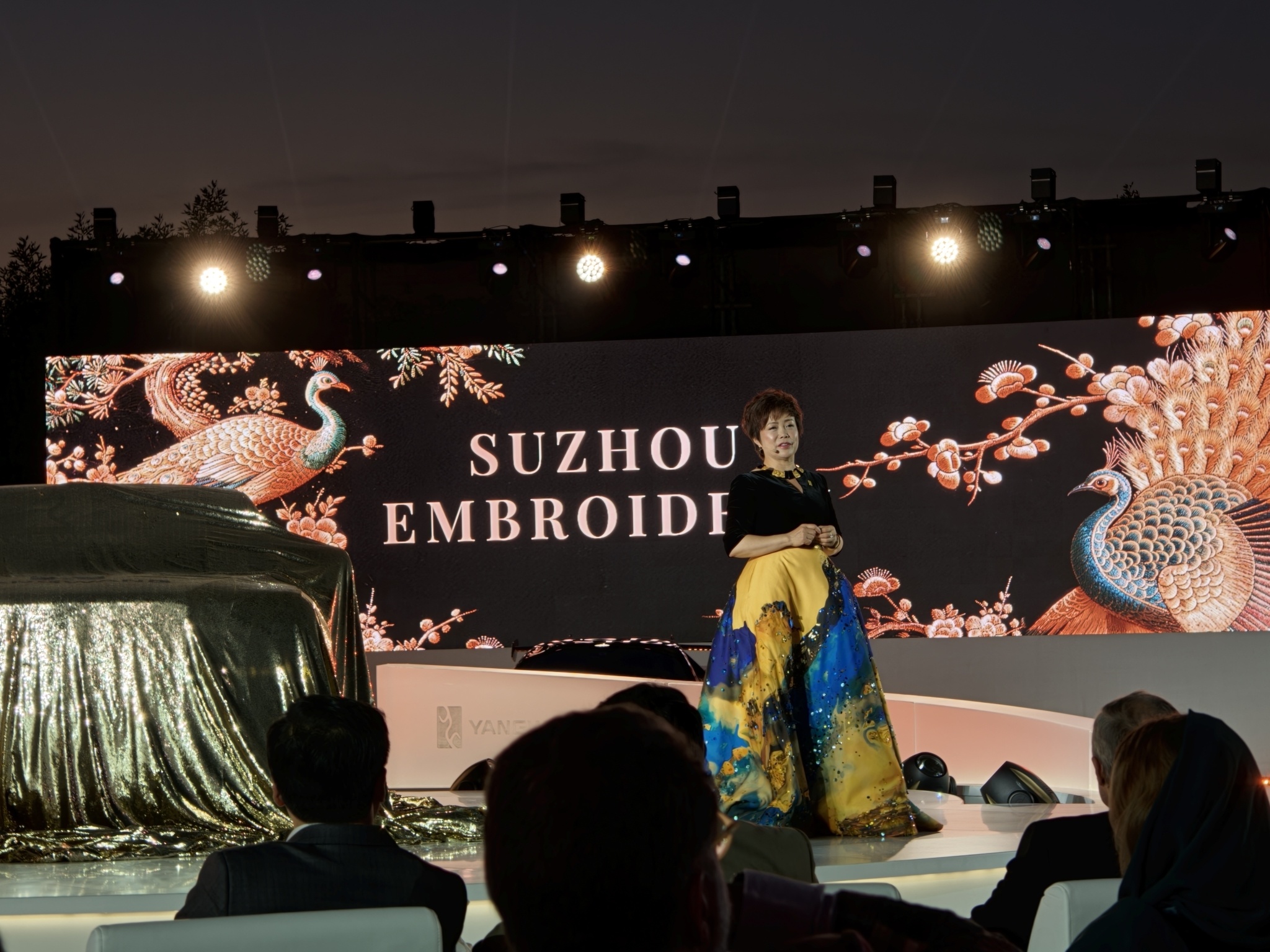
Li Ke, BYD Group's executive vice president, framed the car less around luxury than around a mobile palace, while the name Altior signals "higher". The message is that BYD wants Chinese-style luxury to be read as art before engineering: gemstone-like grille surfaces, bespoke veneer and seat work by top Chinese craft artisans, one-touch rest and privacy modes, and a car that should feel exclusive rather than merely expensive. That creates an exclusive car for a narrow buyer pool, closer to a bespoke commission than a normal flagship upgrade.
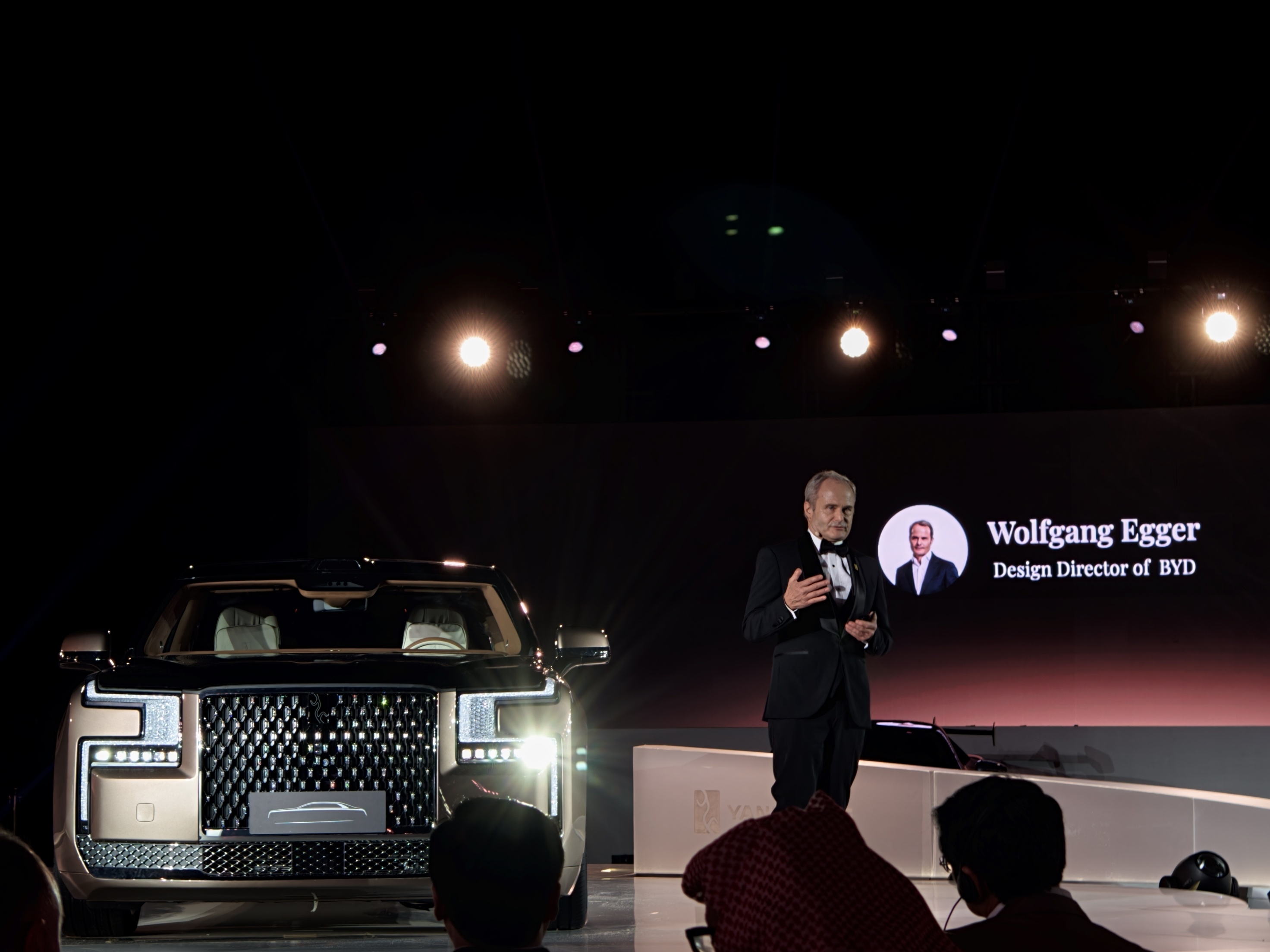
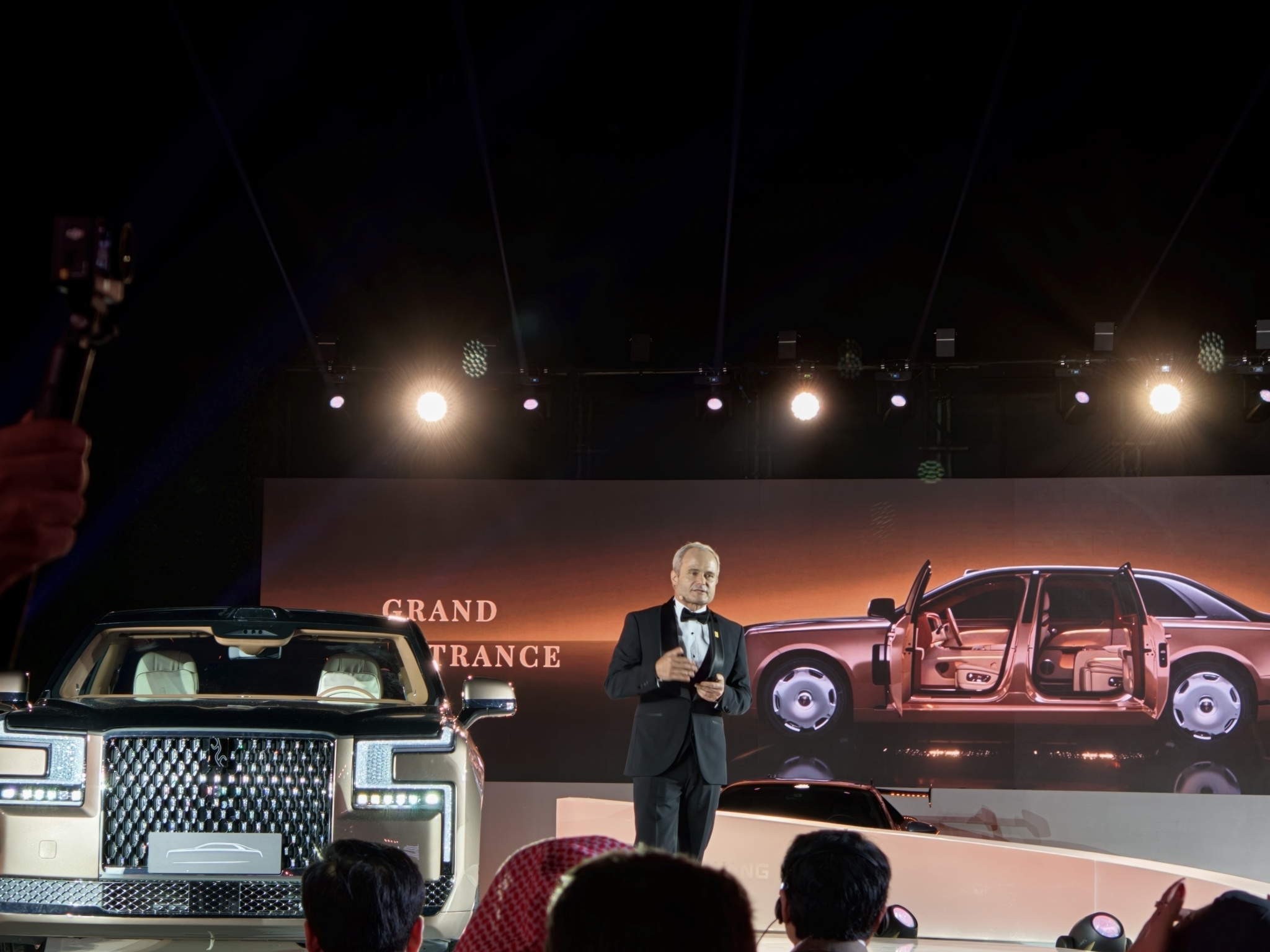
Technically, the company tied the model to Yangwang U8's Yi Si Fang e4 platform, roof-mounted lidar for advanced driving assistance, second-generation battery technology and Flash Charging. But BYD did not publish the full technology list, price or precise specifications that day, leaving the launch as a brand statement rather than a sales brief. The Altior revealed tonight is positioned as the most luxurious Chinese statement yet, not the next ordinary consumer EV.
Why the speed record preceded the luxury debut
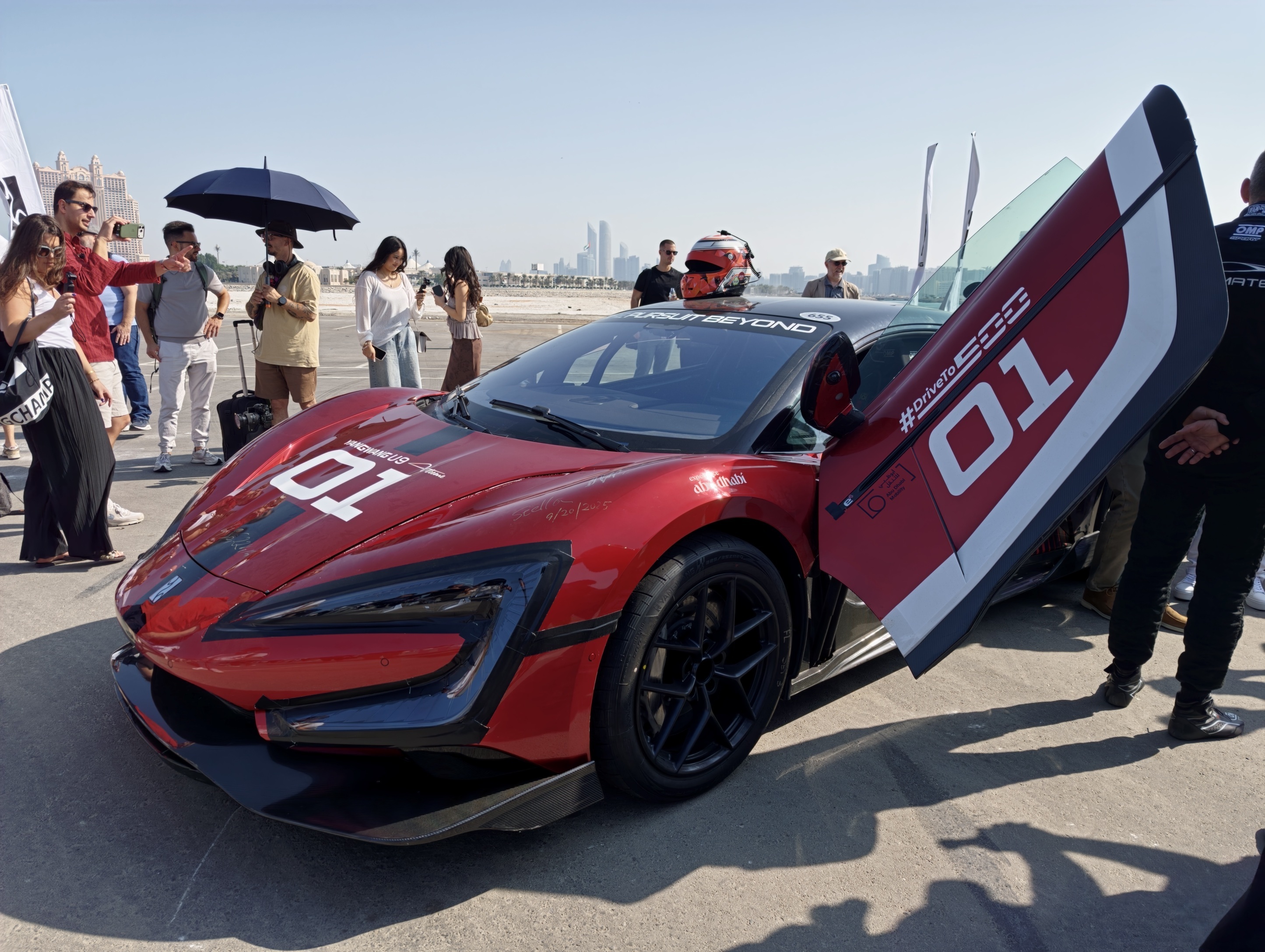
One day earlier, the Yangwang U9 Extreme achieved a FIA-certified top speed above 503 km/h, giving Altior a performance halo before the luxury narrative began. The record was not decorative: for a brand attempting to move into the segment historically guarded by Rolls-Royce, proof of controllable electric power under extreme conditions addresses a core objection about whether Chinese NEVs can deliver durability at the top end. The FIA's record note placed the speed run at 503.17 km/h in Abu Dhabi and linked it to broader recognition, making the sequence look less like coincidental timing and more like a deliberate ladder from China speed to Chinese luxury.
How BYD's Middle East order book funds the premium push
Before Dingyao reached the Dubai stage, BYD had already shifted its growth engine offshore. In Jan-Oct 2026, BYD's global sales were 3.622 million units, while overseas sales rose about 93% to 1.507 million units; October alone shipped 170,000 units overseas, 35% of total volume. The first ten months had already exceeded the original 1.30 million annual overseas target and the March-revised 1.50 million goal, making the Middle East a logical stage for an ultra-premium debut.
The Gulf's prior-year momentum supports that logic: in 2025, BYD sold about 1.05 million vehicles overseas, and the Middle East rose about 120% year on year. In July 2026, exports to the Middle East were 13,164 units, placing the region fifth among BYD's overseas regions. A single-source count also put BYD's sales in the GCC countries above 24,000 units in H1 2026, describing it as the best-selling Chinese brand there.
Logistics and product mix were adjusted to the market. In early August this year, a ro-ro route opened from Shenzhen's Xiaomo Port to the UAE's Khor Fakkan Port, with the first sailing, the Changsha, carrying 6,068 vehicles. Gasgoo Automotive Research Institute shipping data showed that in Jan-Feb 2026 the UAE was second among BYD's top 10 passenger-car export destinations behind Brazil, at 14,885 units, including 14,332 PHEVs, over 96% of that flow. This aligns with the practical constraints described in the launch briefing: low fuel prices, sparse charging, and summer heat reaching 50 degrees Celsius make PHEV a more persuasive entry point than pure BEV.
Two external data points deepen the picture. Forbes Middle East reported that BYD's October global sales rose 11% to 490,168 units, helped by a 102.8% jump in overseas shipments, reinforcing the idea that international demand is now the company's swing factor. Gasgoo's H1 export tracker also showed that BYD sent 17,298 plug-in hybrids and only 848 pure-electric passenger vehicles to the UAE during Jan-Jun 2026, meaning the PHEV-first Gulf playbook remained intact after the first-quarter data point.
Where export growth meets a smaller retail base
The main analytical risk is reading the Gulf as a single destination. Chinese car exports to the Middle East reached about 1.39 million units in 2025, making it one of the second-largest regional markets. But export volume is not local retail volume. The UAE's domestic new-car market is only about 260,000 to 270,000 vehicles per year, yet Chinese exports to the UAE reached 368,000 units in Jan-Sep 2025, up 59%, and in December that year the UAE became China's largest export destination. The explanation is re-export distribution: vehicles land in Gulf hubs and are redistributed to other Middle East markets, Africa, and the Commonwealth of Independent States.
Local retail is more constrained. In the UAE, Chinese brands concentrate around 70,000 to 150,000 dirhams, roughly RMB 140,000 to 300,000, competing with Toyota RAV4, Nissan X-Trail, Hyundai Tucson and Kia Sportage; Jetour has entered the local top 5. Government fleet policy under Net Zero 2050 helps EVs, but the base remains thin: UAE EV registrations rose 26.4% in 2025 to about 8% of the new-car market, BYD EV sales rose about 212%, while Middle East NEV penetration is still under 5% versus over 50% in China. Saudi figures are even more divided: one account puts EV share at about 1%, while another says 2025 NEV sales were about 80,000 with Chinese brands around 70%. The Altior launch should therefore be judged as a brand and ultra-rich play, not as evidence that mainstream Chinese NEVs are replacing Japanese volume cars across the Gulf.
Competitive risks and common misconceptions
- Misconception: Altior is aimed at ordinary luxury-car buyers. Reality: the product language points to a palace-like, bespoke, exclusive car aimed at a narrow ultra-high-net-worth pool.
- Misconception: PHEV export strength proves weak BEV demand. Reality: in a low-fuel-price, high-heat, thin-charging market, PHEV can be the rational wedge even when BEV remains the strategic future.
- Misconception: a FIA-certified speed record automatically converts into Rolls-Royce-level brand equity. Reality: speed builds technical credibility, but ultra-luxury still depends on resale, service trust, dealer continuity and long-held status cues.
BYD is not the only premium brand redesigning how customers meet electric luxury in China and beyond; legacy players are also renegotiating channel logic, as shown in our CompanyWatch analysis of Audi China's dual-brand, dual-partner playbook. For BYD, the Gulf channel choice is different but similarly strategic: partnering with Al-Futtaim in the UAE and Alghanim in Kuwait to borrow distribution, aftersales and local institutional knowledge, while engineering for heat and dust.
| Observed signal | CompanyWatch reading | Why it matters |
|---|---|---|
| Altior revealed after a record run | Technical proof is being used to reduce brand-resistance risk | Ultra-luxury buyers are conservative; performance certification can create talk value without immediately proving loyalty |
| Oct overseas volume at 35% of total | International growth is now structural | The luxury flagship has a more resilient sales base than in previous domestic-led cycles |
| UAE export mix dominated by PHEV | Product entry is adapted to climate and energy economics | A premium EV can be introduced without overestimating charging readiness |
| Re-export hub vs small local retail | Gulf demand must be separated from Gulf throughput | Investors may overread export statistics as permanent brand penetration |
What investors and strategy teams should track next
The practical action advice is not to wait for a price sheet alone, but to watch the gap between spectacle and repeatable commerce. A useful checklist is:
- Confirm whether Altior pricing reaches the 2 million RMB conversation circulating around Gulf ultra-luxury, and whether order books are opened.
- Track how many customization orders are completed by named artisan suppliers, not just announced in concept.
- Measure UAE and GCC delivery times, because logistics through Khor Fakkan and local dealer execution will matter more than launch applause.
- Watch service contracts with Al-Futtaim and Alghanim, since ultra-luxury buyers expect continuity, privacy and concierge-level support.
- Follow the PHEV-to-BEV mix in BYD's GCC exports as a proxy for how fast charging infrastructure is changing buying behavior.
The larger CompanyWatch point is that BYD is moving from selling China technology to selling a Chinese luxury narrative. In Abu Dhabi streets, Chinese NEVs are already common enough to be unremarkable; Yangwang U8 has become a choice beyond Land Rover and Mercedes-Benz for some wealthy buyers. The next test is whether Altior can make "higher" mean more than speed and export volume: whether it can create a desirable status symbol in a market that has spent a century learning what a palace on wheels should look like.
Frequently asked questions about the Altior launch
Is Altior really trying to compete with Rolls-Royce?
Yes, but through a narrow, exclusive positioning. The near 5.5-meter body, coach doors, bespoke craftsmanship and palace framing are aimed at ultra-luxury buyers, not at mainstream premium SUV customers.
Why reveal the car in Abu Dhabi instead of Shanghai?
Because BYD's growth engine has already moved offshore, and the Middle East offers a high-value, low-penetration environment where brand elevation can be tested with wealthy buyers and Gulf distribution partners.
Does the U9 Extreme record make Altior more credible?
It helps. A FIA-certified run above 503 km/h provides technical proof that Yangwang can control extreme electric power, which is useful when asking conservative luxury buyers to reconsider long-held brand assumptions.
What was not announced?
That day BYD withheld price, detailed specifications and the full technology package. That is why the event is a strategic signal first and a product specification second.
Reference sources
- FIA: Yangwang U9 Xtreme surpasses 500 km/h with speed achievement recognised by FIA
- CarNewsChina: BYD's Yangwang Altior to debut in Abu Dhabi on November 8
- Forbes Middle East: BYD October sales rise 11% as overseas shipments more than double
- Gasgoo: Top 10 destinations by BYD passenger vehicle exports, Jan-Jun 2026