
GlobalBizSight CompanyWatch: How to Track Tesla’s Cybertruck Wind-Down and Cybercab Pivot in Texas
Tesla’s Texas Gigafactory is expected to wind down Cybertruck production around the middle of next year to free up capacity for Cybercab, according to a November 6 local-time post by Elon Musk on X. The move converts an underused truck line into a robotaxi ramp, so investors, analysts and suppliers should treat it as a capacity-reallocation event, not simply a product cancellation.
What changed at Tesla’s Texas Gigafactory?
Tesla, through Musk, said Cybertruck production at the Texas Gigafactory would be gradually wound down around the middle of next year to free up capacity for Cybercab. The statement was posted on X on November 6 local time. Musk did not give an exact shutdown date or explain how existing orders would be handled. Because the model’s only production base is the Texas plant in Texas, whether the vehicle ends in a full stop, a line transfer, or a slower phase-out remains unresolved. Reuters reported the same timing, placing the wind-down at the Texas gigafactory around mid-2027 and noting the vehicle’s troubled sales and recall background.
Why this is a capacity-reallocation signal, not just a cancellation
The immediate business logic is line space. Cybertruck chief engineer Wes Morrill said the truck carried an important technology-validation role and that its life would continue in Cybercab. Media reports said Cybertruck’s steer-by-wire system and related technology have been applied to Cybercab. Musk previously set a very different demand expectation: at the May 2023 shareholder meeting, he estimated that after full ramp-up, Cybertruck could sell 250,000 to 500,000 units annually. Actual demand has not approached that range. According to Reuters, Tesla said Cybercab production began at the Texas plant in April 2026, while Musk cautioned in April that early production would be very slow. For CompanyWatch readers, the key is not only that one model may end, but that Tesla is converting scarce factory floor, tooling and validation resources from a weak-truck program to a robotaxi program that still has to scale.
How to read the sales gap behind Cybertruck’s weak position
Tesla does not report Cybertruck deliveries separately; it folds them into “other models” alongside Model S and Model X. Because Model S and Model X stopped production in April, analysts can infer more about Cybertruck’s contribution. Media estimates placed Q3 this year deliveries at 7,000 to 8,000 vehicles, an annualized run rate of about 30,000 units, only about 12% of the planned 250,000-unit annual capacity and around 10% of original ambitions. Cox Automotive, a United States auto-industry data firm, estimated Cybertruck sales in the United States at 20,237 units in 2025, down 48% year over year, and falling to a record low of 3,519 units in Q1 this year.
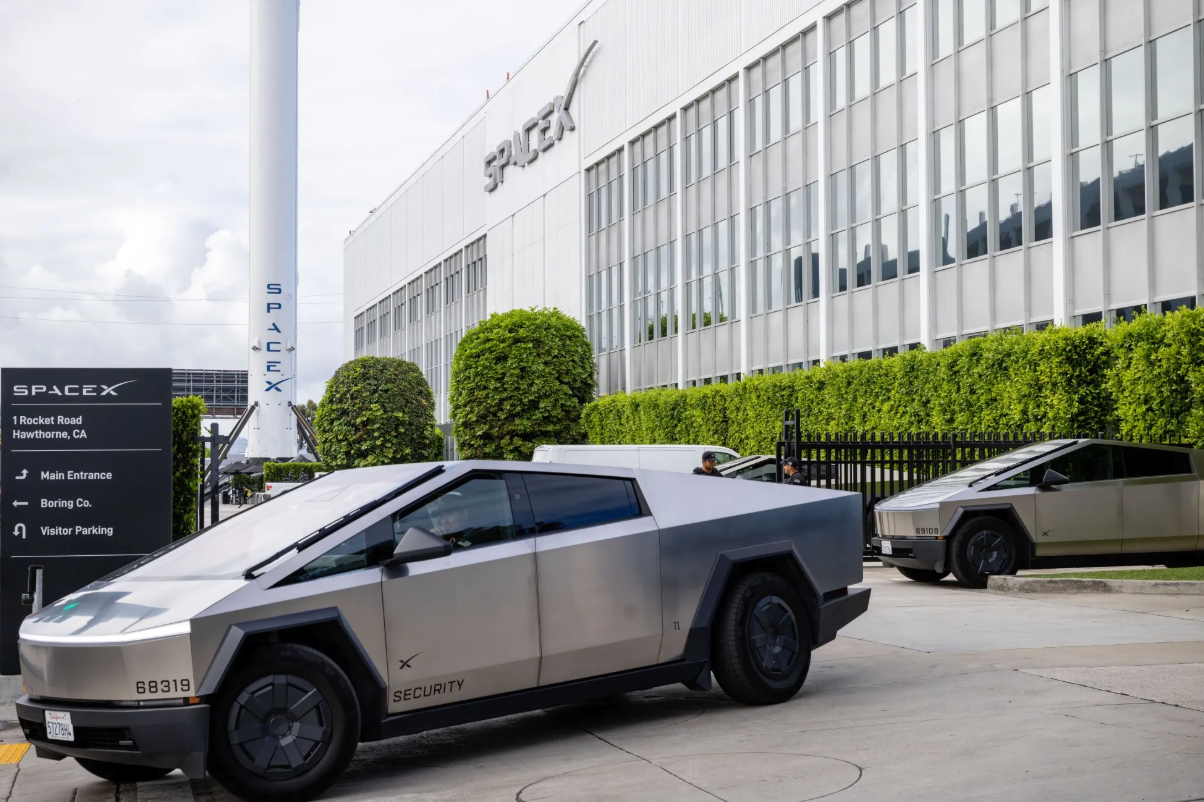
Demand was partly supported by captive purchase rather than public appetite. S&P Global Mobility data showed that in Q4 2025, Musk-owned businesses bought 1,339 Cybertruck units, about 19% of U.S. registrations in that quarter; SpaceX alone purchased 1,279 units.
Why price actions did not reverse the problem
To lift orders, Tesla introduced cheaper rear-wheel-drive and dual-motor versions, but the move produced little traction. Before the wind-down news, Tesla stopped selling the entry model and raised prices. The Premium all-wheel-drive version’s starting price increased by $7,500 to $92,490. That sequence suggests the issue was not simply price: buyers may have resisted the product format, while a captive-corporate mix reduced confidence in open-market durability.
What Cybercab adds to operational and regulatory risk
The “free up capacity” rationale also needs scrutiny. Some media pointed out that much of the Cybertruck line was already idle, and Texas registrations of Cybercab were only 463 as of late October. The successor product is itself in a compliance stress test. After Cybercab began paid rides in Austin in early September, the National Highway Traffic Safety Administration, or NHTSA, opened a compliance review of about 1,000 vehicles. Regulators are checking whether Tesla can rely on self-certification, rather than applying for an exemption, for a car without a steering wheel and pedals while satisfying federal safety standards. NHTSA’s own guidance says U.S. law works through a self-certification system in which manufacturers certify that vehicles comply with applicable Federal Motor Vehicle Safety Standards; the issue is not that no rule exists, but that Tesla’s basis for meeting steering, braking, mirror and occupant-protection requirements can be examined.
Market context: why investors saw a governance and regulatory story
The announcement came right after a sharp share-price decline. On November 5, Tesla closed down 10.77% at $343.69. Democrats’ midterm wins for control of the House and Senate raised market concern that Musk-linked companies could face more regulatory resistance. Those concerns also made the possible merger of Tesla and SpaceX less certain. In a CompanyWatch frame, the Cybertruck phase-out is therefore not just a product-line update: it touches capital allocation, regulatory posture, governance perception and the feasibility of a robotaxi-first manufacturing plan.
Common misconceptions about the Texas Gigafactory pivot
- It already means total discontinuation. Musk gave no exact date or order-handling plan, and because production sits only in the Texas plant, the outcome could be a full stop, a line transfer, or a slower wind-down.
- Weak sales alone explain the move. The switch also reflects technology continuity into Cybercab and the need to scale a new vehicle, although skeptics point to an already idle Cybertruck line and only 463 Cybercab registrations in Texas by late October.
- A lower price fixes demand. Cheaper rear-wheel-drive and dual-motor versions failed to revive orders, while the Premium all-wheel-drive version later rose by $7,500 to $92,490.
- Self-certification means no federal safety scrutiny. NHTSA’s system requires manufacturers to certify compliance with applicable Federal Motor Vehicle Safety Standards, which is why the review of about 1,000 Cybercab vehicles matters.
- Cybercab production timing removes risk. Reuters said production began in April 2026, but Musk warned early output would be very slow, so ramp quality still needs verification.
Action checklist for analysts and business-development teams
- Track the wind-down sequence. Watch for an exact date, order-backlog treatment, inventory depletion, parts supply and warranty commitments. A vague “around the middle of next year” statement needs to be converted into a measurable timeline.
- Separate line space from total capacity. Determine whether Tesla only stops building Cybertruck at the Texas Gigafactory, moves final assembly to another facility, or leaves the line ready for Cybercab tooling changes.
- Monitor Cybercab volume and geography. The relevant early indicators are Austin ride availability, Texas registrations, NHTSA actions and whether output remains very slow after April 2026 production began.
- Reconstruct residual Cybertruck demand. Because Tesla reports it inside “other models,” track “other models” totals, Cox Automotive estimates, S&P Global Mobility registration data and dealer discounts.
- Follow the regulatory pathway. A compliance review of about 1,000 vehicles could produce an information request, an enforcement referral, an exemption requirement or a design-change pressure. Each outcome changes the speed of the pivot.
- Assess supplier and local-economy effects. Suppliers that invested in Cybertruck structures, batteries, motors or exterior parts may face write-downs if the line is converted without a replacement order book.
- Reassess the corporate narrative. The stock reaction on November 5, when Tesla fell 10.77% to $343.69, plus Democratic control of the House and Senate, makes governance and regulatory exposure part of the manufacturing story.
Data snapshot to anchor the CompanyWatch thesis
| Metric | Figure | Why it matters | Next checkpoint |
|---|---|---|---|
| Planned Cybertruck annual capacity | 250,000 units | The base against which the 12% utilization estimate becomes striking. | Whether Tesla restates plant capacity guidance. |
| Estimated annualized Cybertruck sales from Q3 this year | 7,000 to 8,000 units per quarter; about 30,000 units per year | Shows demand at only around 10% of earlier ambitions. | Next quarterly “other models” disclosure. |
| Cox Automotive 2025 Cybertruck sales in the United States | 20,237 units, down 48% | Confirms that the weakness is not a one-quarter blip. | Year-to-date 2026 registration trend. |
| S&P Global Mobility internal purchase share | 1,339 units in Q4 2025, about 19% of U.S. registrations; SpaceX 1,279 | Reveals a high corporate-captive ratio in final quarters. | Post-announcement resale and fleet-registration data. |
| Cybercab footprint and review scale | 463 Texas registrations by late October; NHTSA review of about 1,000 vehicles | The replacement line is still small and under regulatory examination. | Whether registrations accelerate or the review expands. |
FAQ: What the Cybertruck-to-Cybercab switch means
Is Cybertruck confirmed to be fully discontinued?
No. Musk said production would be gradually wound down at the Texas Gigafactory around the middle of next year, but he did not specify the date, whether orders would still be fulfilled, or whether the line would move elsewhere. The Texas plant is the only base mentioned, so the decision may still be incomplete.
Why would Tesla shift a Texas Gigafactory line from Cybertruck to Cybercab?
The stated reason is to free up capacity for Cybercab. Cybertruck chief engineer Wes Morrill also linked the vehicle to technology that continues in Cybercab, including steer-by-wire. That makes the change look like a reallocation of scarce factory space and validation effort, not simply a product failure.
Does NHTSA’s review mean Cybercab is illegal?
Not necessarily. The United States uses self-certification: manufacturers certify that vehicles meet applicable federal safety standards. The review asks whether Tesla’s self-certification basis can withstand scrutiny for a vehicle without a steering wheel and pedals, especially if it does not seek an exemption.
What should CompanyWatch readers watch most closely?
The most useful indicator is not the headline, but the operational proof: a clear shutdown date, Cybercab registration growth beyond the 463 Texas vehicles recorded by late October, and whether NHTSA’s review of about 1,000 vehicles narrows or widens.
Reference sources
- Reuters: Tesla to pull the plug on Cybertruck after years of poor sales
- Reuters: Tesla starts Cybercab rides in Austin, drawing US safety agency interest
- National Highway Traffic Safety Administration: Understanding NHTSA’s Regulatory Tools
- Cox Automotive and S&P Global Mobility data as cited in the original report