
GlobalBizSight CompanyWatch | Case Review: What the EU Lawsuit Against IBM, Atos and Leonardo Reveals About Megaproject Delivery Risk
Direct answer: the EU has sued IBM, Atos and Leonardo because the three-company consortium repeatedly missed delivery deadlines for the Entry/Exit System (EES), the biometric border register covering 29 European countries, and because the partners kept contesting the warnings and penalties issued by the agency EU-Lisa (eu-LISA). The dispute, filed in Estonia in December 2025 and disclosed in the agency's accounts this July, is a textbook megaproject failure: a 2022 launch target slipped to full operation this year, budget lines were re-filled mid-flight, and airports queued for hours this summer.
For CompanyWatch readers, the value of the case is not the litigation headline itself but the trail of contract changes, payment holds and internal correspondence that shows how a fixed-scope public IT programme deteriorates across the buyer, the vendors and the operator. Below we reconstruct the sequence, price the damage that has been disclosed, and separate what is evidenced from what remains contested.
What happened, in dated sequence
Conclusion first: the claim is about the development phase, not about whether EES currently works. The litigation was registered in Estonia, where the agency's headquarters are located, and both the agency and the European Commission have drawn the same line — the action concerns EES delivery delays during the development stage and is unrelated to the actual operation of EES.
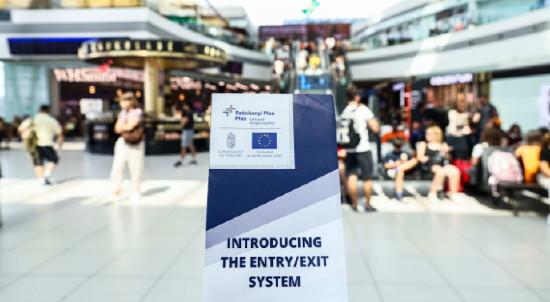
The chronology matters because most coverage compresses it into a single sentence. Assembled from the agency's annual financial reports and correspondence seen by the press, the escalation looks like this:
| Time point | Event | Evidentiary basis |
|---|---|---|
| 2019 | The core EES build contract is awarded to a consortium including IBM Belgium, Atos Belgium and Leonardo, reported at €142 million and structured as a six-year deal | Press reporting of award documents (Reuters, Techzine, Bloomberg) |
| 2021 | Total contract value is lifted from €142 million to €212 million | Agency accounts (as reported) |
| October 2021 | Atos Belgium and IBM Belgium formally object to penalties already imposed, disputing the principle and basis of the penalties and the way they were calculated, and attribute slippage to external factors including the pandemic | Letters between consortium and agency |
| A few months later, February 2022 | The three companies oppose the new delivery dates set by the agency | Letters |
| March 2022 | An IBM representative agrees that the agency may withhold part of the payment until damages are settled | Letters |
| 2022 annual accounts | The agency states it encountered difficulties with the contracting consortium responsible for implementing EES, is evaluating additional costs, and notes delays that also held back other IT systems | Agency financial report |
| A year later (2023) | Accounts record that delays increased the budget required for EES implementation, including higher hardware and software maintenance costs; in 2023 the EES budget is raised nearly double, to €40 million, by re-allocating money from other projects | Agency financial report |
| 12 October 2025 | Phased rollout of EES begins at Schengen external borders | European Commission announcement |
| December 2025 | EU-Lisa files suit against the three companies in Estonia; the original contract expired last year and a new consortium took over implementation | Agency annual report released this July; Harju County Court |
| 10 April 2026 | EES becomes fully operational, replacing passport stamping | European Commission |
| This summer | Fingerprint scanners malfunction when fingers are sweaty; multi-hour queues at airports across Europe; some EU countries are still buying scanners | Agency accounts, on-the-ground reporting |
| August this year | Atos, Leonardo and IBM remain responsible for the project until this month | Agency statement |
| Now | Harju County Court, Estonia's largest district court, confirms the civil case was accepted; no hearing held or scheduled. Leonardo and Atos declined to comment; IBM did not respond | Court spokesperson |
Two dates in that table are the ones to keep: the 2021 re-pricing, which shows the scope was renegotiated four years before delivery, and the 2023 internal transfer, which shows the programme was financed by cannibalising sibling IT projects — a classic sign of a contract that has outgrown its governance.
Why did the buyer and the vendors end up in court?
Conclusion: not because one deadline was missed, but because the two sides never agreed on who owns the slip. Correspondence shows the argument over missed delivery dates and penalties has persisted for years, moving from technical disputes to a direct attack on the agency's overall governance approach.
The consortium's own language is unusually blunt for a contractor under penalty. Writing in early 2022, the three firms told the agency: “It is not sensible to disregard reality, nor does it help the plan. On the contrary, working to an unrealistic plan only frustrates all stakeholders.” Read as a case file, that letter signals a break in the renegotiation mechanism: once a vendor argues that the schedule itself is illegitimate, liquidated damages stop functioning as a corrective and become a claim to be litigated. The agency reached the same conclusion in December 2025, stating: “Given that the contracting consortium repeatedly delayed delivery of the EES system, this agency has initiated the remedies available under the contract and the legal framework, in order to protect its own financial interests.”
The system's purpose explains the rigidity. Under EES rules, travellers from outside the Schengen area must have fingerprints taken and a photograph captured on first entry, so that overstayers and persons wanted by law enforcement can be identified; the Schengen free movement area covers 29 European countries, most of them EU member states. A register that has to work at dozens of border crossings simultaneously is closer to critical infrastructure than to a normal IT order, which is why both sides had incentives to keep the programme alive rather than terminate it — a fact visible in the withheld-payments arrangement agreed in March 2022 instead of a walk-away.
What is the measurable damage so far?
Conclusion: disclosed numbers show cost escalation and opportunity cost, but no damages figure has been made public. The verifiable trail is: contract value lifted in 2021 from €142 million to €212 million; the EES budget raised nearly double to €40 million in 2023 through re-allocation from other projects; hardware and software maintenance costs rising because of the delays; and other information-technology systems held back because the same programme was late.
What is not disclosed is the agency's financial claim, and the defendants have said nothing on the record — Leonardo and Atos declined to comment on the legal proceedings, while IBM did not reply to a request for comment. That silence is itself data for analysts: a company that will not discuss a live contract dispute with a public client is signalling that the reputational exposure in future public tenders outweighs the marketing value of a defence.
There is also a counterparty dimension that the headline misses. Atos, one of the three defendants, has spent the same period restructuring under financial strain: its traditional outsourcing unit, Tech Foundations, was put up for sale in a transaction announced in principle in August 2023, while the group rebranded toward its digital and cybersecurity business Eviden. A consortium partner renegotiating its own balance sheet is a weaker partner on a multi-year fixed-scope programme — evidence that buyers should treat vendor solvency and vendor delivery as one risk, not two.
Is this a vendor failure or a procurement failure?
Conclusion: the record supports both readings, which is why the case is useful as a template rather than as a morality tale. Vendor-side evidence includes repeated missed delivery milestones and technical faults in the field. Buyer-side evidence is in the accounts: a 2021 uplift of 49 per cent over the original €142 million award, and a 2023 rescue financed by pulling funds from other IT systems rather than by rebaselining scope.
The pattern is not unique to this agency. In January 2026, the European Court of Auditors reported that EU co-flagship transport projects — a different asset class, so treat the comparison as an analyst's benchmark rather than a direct equivalent — had slipped by an average of roughly 17 years across the five schemes with comparable schedule data, with auditor Annemie Turtelboom telling a press briefing that outcomes had fallen well short of initial expectations. Public megaprojects fail on approval chains, scope churn and multi-country coordination as much as on contractor execution.
Private-sector delivery risk moves in the same direction on shorter clocks. When the schedule itself is the fragile asset, companies now disclose slippage as a business risk rather than an engineering detail — see our CompanyWatch note on Siri's delayed deep app control, where a feature that requires deep system permissions was pushed to spring 2027 in favour of stability.
What does EES's operational record imply for the case?
Conclusion: the litigation and the live service now sit in separate boxes, and the operator insists on that separation. EU-Lisa declined to comment on the ongoing legal matter while stating that the case “does not affect the operation of the Entry/Exit System, which is currently fully in use across Europe.”
Independently, the operational pressure has not disappeared. EES became fully operational on 10 April 2026 after the phased start of 12 October 2025, and by this August, trade press data showed waiting times doubling at hubs including Frankfurt, Amsterdam and Munich. In October 2026, airport operator association ACI EUROPE and airline group Airlines for Europe (A4E) published a six-point set of proposals — removing double verification, optimising biometric checks, preventing duplicate traveller profiles — arguing that disruption would continue unless structural issues were fixed. For investors, the read-through is that a court victory on delivery delays does not automatically convert into an operational victory at the border.
What is established on the security allegations?
Conclusion: allegations were investigated, but no breach has been reported. Last year media reported that Atos used its Moscow office to buy software for this sensitive border management system; EU-Lisa said no security breach or security incident had been found. The EU Anti-Fraud Office (OLAF) judged that the allegations had sufficient evidence to justify a further investigation and stated that, if claims of Russian involvement were confirmed, they would constitute a breach of contract. Yet according to an internal report, OLAF — while considering EU-Lisa's initial assessment inadequate — ultimately returned the case to the agency for handling. That is the most governance-relevant sentence in the whole file: the security question was escalated and then devolved, while the delivery question was escalated all the way to court.
Five misconceptions that misread this case
- “EES has been switched off.” It has not: the agency says the system is fully in use across Europe, and the Commission frames the suit as being about development-phase delivery, not operations.
- “The €212 million contract is the claim value.” The uplift from €142 million to €212 million in 2021 is the contract's value, not a damages figure; no claim amount has been disclosed.
- “This is an American-company-versus-Europe story.” The consortium spans a US technology company, a French IT group and an Italian defence contractor, and the case is being heard in Estonia under a civil claim about performance.
- “Fines settled the dispute.” Penalties were contested in writing as early as October 2021, including on the principle and basis of the penalties and the way they were calculated; withholding payment was agreed in March 2022 as an interim fix.
- “The court date will resolve it.” Harju County Court has accepted the case with no hearing held or scheduled; contract-litigation timelines of this type typically run years.
FAQ: what a professional reader asks next
Why was the case filed in Estonia?
Because EU-Lisa's headquarters are in Estonia; the agency confirmed in its latest annual accounts that it filed there in December 2025, and Harju County Court, the country's largest district court, has accepted the civil claim.
Does the lawsuit interrupt border checks?
No, on the operator's account: the agency states that litigation “does not affect the operation of EES”, and the Commission says the case is unrelated to actual EES operation. Travel delays reported at airports stem from the system's own throughput and hardware issues, not the court case.
Who carries the financial risk now?
Both sides. The consortium faces an undisclosed contractual and legal claim plus reputational risk in public tenders; the agency faces costs already documented in its accounts — a nearly doubled 2023 EES budget of €40 million drawn from other projects, higher hardware and software maintenance costs, and knock-on delays to other IT systems.
Why are some countries still buying scanners?
Because field hardware remains uneven: the accounts note that scanner faults, including failures when fingers are sweaty, produced queues lasting hours, and that some EU countries are still procuring the equipment — a supply-chain gap that typically closes one border crossing at a time.
Action recommendations: what to copy from this failure
Conclusion: treat this as a checklist for your own large multi-party IT programmes.
- Rebaseline in public, not in silence. A contract value that rises 49 per cent mid-programme (€142 million to €212 million) should trigger a fresh scope-and-schedule decision by the board, not just an accounts footnote.
- Cap internal cross-financing. Fund rescue of a delayed programme by decision, not by default; the 2023 transfer that nearly doubled EES's budget to €40 million came out of sibling IT projects and pushed their timelines.
- Make penalties a bridge, not a destination. Design liquidated damages with an attached rebaselining step; here the fines became a multi-year argument over the principle and basis of the penalties and the way they were calculated.
- Test the vendor's balance sheet annually. A partner in restructuring is a delivery risk; run solvency and key-person checks alongside performance reviews.
- Assume biometric edge hardware will fail under real conditions. Sweaty-finger scanner failures are environmental test gaps that should appear in acceptance criteria, not in airport queues.
- Escalate security allegations consistently. A case OLAF escalated on sufficient evidence but then handed back to the agency as an inadequate assessment is a governance asymmetry: delivery claims went to court while the supply-chain allegation stayed inside.
- Build an operational playbook before the switch date. If you must run a disrupted live process, plan the fallback capacity in advance — see the incident-response approach in our practical recovery checklist for a comparable disruption.
Tracking indicators for the next two quarters
- Court calendar: any hearing date set by Harju County Court (currently none held or scheduled).
- Agency accounts: whether the damages claim or provision is quantified in the next annual report.
- Defendant disclosure: any provisioning or risk-factor language from IBM, Atos and Leonardo; both European defendants have declined to comment, and IBM did not respond.
- Contract transition: the new consortium's takeover after the original contract expired last year, and the end of the outgoing partners' responsibility in August this year.
- Border throughput: queue times at major hubs, scanner procurement still under way in some EU countries, and progress on the airport and airline associations' structural fixes.
- Security file: whether the Moscow-related allegations are reopened.
References
- eu-LISA annual financial accounts (disclosure of the December 2025 filing, contract and budget figures), as cited by Reuters: https://www.reuters.com/legal/litigation/eu-sues-ibm-two-european-companies-over-troubled-border-system-ft-reports-2026-11-09/
- European Commission, “The Entry/Exit System will become fully operational on 10 April 2026”: https://home-affairs.ec.europa.eu/news/entryexit-system-will-become-fully-operational-10-april-2026-2026-03-30_en
- Techzine, background on the 2019 award to IBM Belgium, Atos Belgium and Leonardo: https://www.techzine.eu/news/applications/145652/eu-sues-ibm-and-atos-over-delays-in-border-control-system/
- Biometric Update on the consortium and the €142 million contract: https://www.biometricupdate.com/202412/atos-and-partners-blamed-for-ees-delays
- ACI EUROPE and A4E, structural fixes for EES disruption: https://www.aci-europe.org/press-release/620-no-end-to-schengen-ees-disruption-unless-the-commission-and-member-states-fix-structural-issues.html
- Euronews, airport waiting times after full operation: https://www.euronews.com/2026/08/12/europes-new-border-system-is-causing-huge-airport-queues-as-ees-wait-times-double
- Reporting on the European Court of Auditors' January 2026 megaproject audit used as a benchmark (different asset class, treated as analysis): https://www.oushinet.com/static/content/europe/other/2026-01-20/1463222632924193942.html
- Atos restructuring background (Tech Foundations sale and Eviden transition): https://www.uctoday.com/unified-communications/atos-in-discussions-to-sell-tech-foundations-rebrand-as-eviden/
CompanyWatch is GlobalBizSight's corporate-tracking desk. This case review is analysis of publicly reported facts; nothing here is investment advice. Editorial contact: Marc Hale, GlobalBizSight — info@globalbizsight.com.