
CompanyWatch: Reading Ferrari's Luce Order Book — A Working Checklist for a Controversial EV Launch
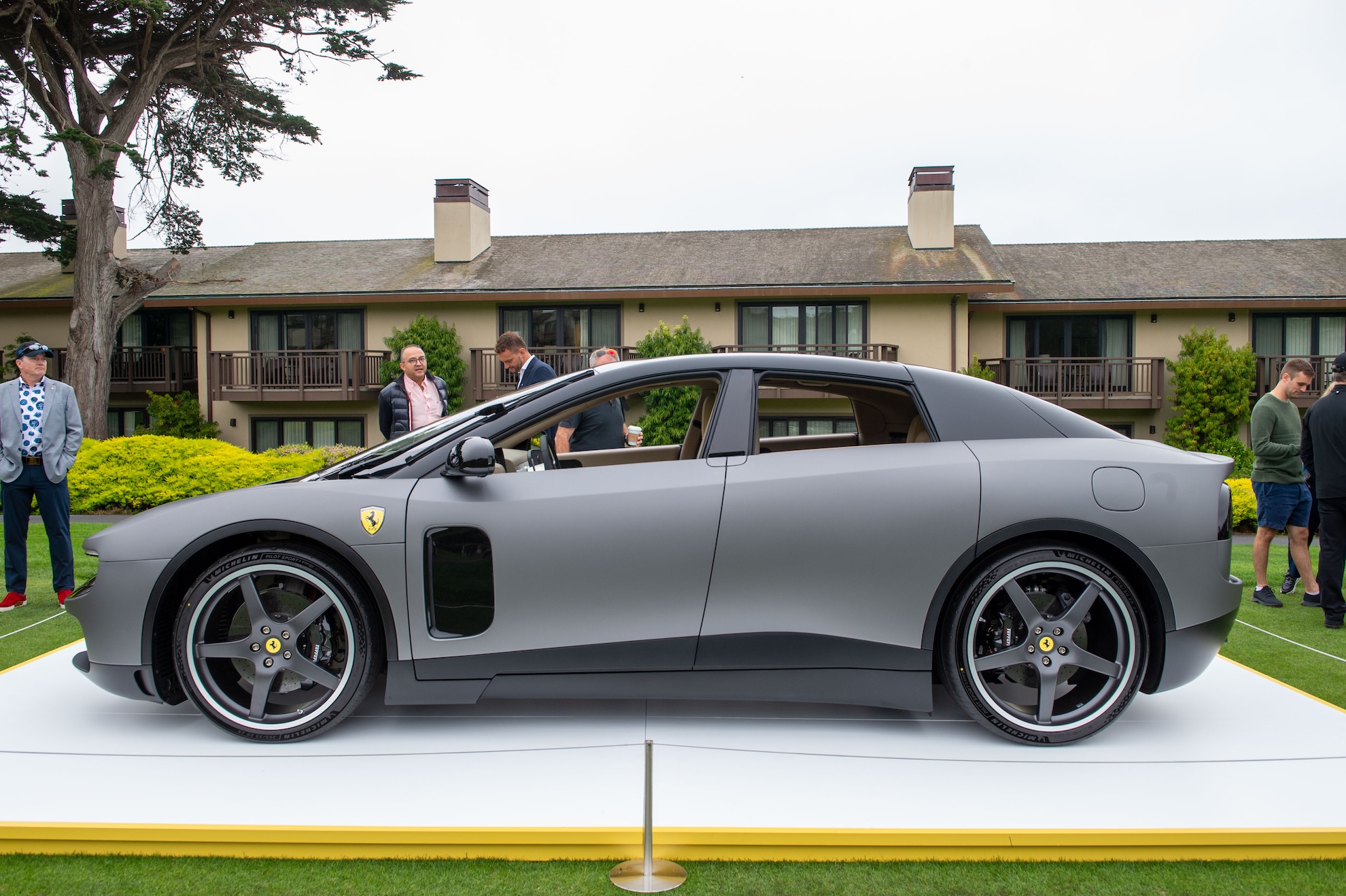
Almost every piece of coverage around Ferrari's first battery-electric model reads like a styling argument. For investors, sell-side and buy-side analysts, or corporate-development teams tracking one company rather than the whole sector, the more useful question is procedural: which parts of a "sold out" headline are verifiable, which are simply the arithmetic of a deliberately capped allocation, and what has to be confirmed over the next two quarters before it is written into a model. The workflow below starts from the confirmed record, then flags the numbers that still lack a denominator.
1. The event chain, step by step
- Luce was unveiled this May as the brand's first fully electric model, a five-seat car whose design work involved Jony Ive, the former Apple design chief.
- The reveal produced unusually hostile commentary on styling and positioning, and the negative reaction briefly pressured the share price.
- Vigna has since said the criticism did not dent commitment: with an entry price of approximately US$615,000, every allocation has been distributed, and every car Ferrari plans to build in 2027 is already booked by a customer.
- The operational consequence for anyone ordering today is a wait of at least a year, with first deliveries scheduled to begin in the fourth quarter of this year.
- The sold-out statement carries no official volume, because Ferrari has never disclosed Luce's production scale. The Financial Times, citing people familiar, reported a plan to sell close to 500 units this year and to reach 2,500 units cumulatively sold by 2030, an average of about 600 units a year; trade coverage of the first-year quota put the sell-through at roughly two months after the reveal.
- None of Luce's deliveries had started yet when the third-quarter books closed, so the reported growth came from the existing range plus customization: management put personalization at more than 21% of car and parts revenue, pointed to F80 deliveries, and raised the full-year adjusted profit target to at least €3.0 billion from €2.97 billion.
2. Snapshot: what the quarter actually contains
| Line item | Reported value | Reading note |
|---|---|---|
| Net revenue, third quarter | €1.9 billion, up 7% year on year | Growth despite a delivery cadence the company manages deliberately |
| Net profit, Q3 | €431 million, up 13% | Profit growing faster than revenue — mix, not volume |
| Operating profit, Q3 | €563 million | Ferrari's own release puts it up 12% year on year |
| Operating margin | 29.7% | For every US$1 of revenue, roughly 30 cents becomes operating profit |
| Units delivered, Q3 | 3,368 cars | Reported alongside results on Ferrari's corporate site |
| Diluted EPS, Q3 | €2.44 vs €2.14 a year earlier | Per the same company release |
| Personalization | more than 21% of car and parts revenue | Highest-visibility margin lever in the model |
| Full-year guidance | adjusted profit at least €3.0 billion, from €2.97 billion | Second upward revision of this year |
| Luce price basis | approximately US$615,000 entry; €550,000 European list | Reuters reported the European figure at the reveal, with deliveries to start in the fourth quarter |
3. Five checks before calling the order book a demand signal
- Ask what the denominator is. "Sold out" is only informative once the ceiling is known. Until Ferrari publishes a Luce volume plan, the closest third-party sizing remains the Financial Times figure of close to 500 units this year and about 600 units a year thereafter.
- Check the price basis. A US entry figure and a European list figure are not the same car priced twice; taxes, options and freight move the comparison by tens of thousands of dollars. Quote one basis consistently in any model.
- Separate price and mix from volume. Revenue rose 7% year on year while profit rose 13% — evidence that the quarter was carried by what is specced, not by how many cars left Maranello.
- Trace the margin to its source. An operating margin of 29.7% means that for every dollar of revenue, roughly 30 cents converts into operating profit, a level no volume automaker approaches; the customization share above 21% is doing a large part of that work.
- Watch the horizon, not the headline. A backlog that covers 2027 production gives two years of visibility and lets Ferrari pace output, but it also caps upside: extra demand cannot be monetized without breaching the scarcity discipline the pricing depends on.
4. Common misreadings to rule out
- "Sold out" equals a closed order book. Regional dealer commentary has disputed absolute sold-out claims for early quotas, and deposits quoted in the Chinese market — reported at roughly ¥400,000–500,000, about a tenth of the vehicle price — were described as non-refundable yet transferable between parties. Allocation exhaustion and order refusal are different statements.
- Luce is a switch to electric. Ferrari has framed it as an addition to the range. At the October 2025 Capital Markets Day the company guided the 2030 line-up to roughly 40% internal combustion, 40% hybrid and 20% electric, a lower electric share than the 40% ambition in its earlier plan.
- Buying Luce buys priority elsewhere. Bloomberg reported in June that Ferrari was treating Luce orders as a loyalty signal that could influence waiting-list position for limited models; Chinese trade reports the following week said the company told dealers not to pressure traditional collectors into the EV. Either way, no published rule ties the two, so the claim should not be underwritten as fact.
- There is a known Luce buyer profile. Vigna declined to describe the customer mix, saying only that buyers are well diversified by region and by client type, and that no specific profile or spending pattern has emerged. Even the widely repeated "50% new clients" split circulates without company confirmation.
- Design backlash is a demand risk. The negative commentary hit the shares, not the backlog. The two-year order horizon is what currently supports the guidance.
5. Where the incremental economics come from
The customization line is the item worth re-underwriting each quarter. Analysts tracking the disclosure history place personalization at roughly 15–16% of the equivalent revenue line four years ago, versus more than 21% today; market write-ups citing company data have put average option spend in the bespoke programme in the region of €110,000 per car, with average selling prices above €350,000 before any limited-series mix effect. Because options carry very low incremental material cost, this is the cleanest margin lever in the model — and it is the mechanism that lets a capped model such as Luce, at an average of about 600 units a year, still move reported profitability. F80 deliveries push in the same direction. Read against the plan, Luce is a small-volume, high-value validation asset, not a volume engine: roughly 600 cars a year is a few percent of output.
6. Action list: what to verify next quarter
- Confirm the first deliveries landed in the fourth quarter of this year, and note which market received them first — European reporting has indicated Italy would lead, with US customer deliveries following.
- Track whether Luce appears in the reported delivery count at all, and whether the mix narrative shifts from "existing range plus personalization" to "new model contribution".
- Re-check the backlog horizon: management currently says 2027 production is fully booked. Movement toward 2028 would signal either demand strength or cadence reset.
- Test margin durability as the new powertrain ramps — an operating margin near 29.7% is the benchmark to beat or defend.
- Monitor the personalization percentage against the current more than 21% of car and parts revenue.
- Watch residual values and transfer activity on early cars; flipping is the first observable stress point on an allocation model.
- Reconcile full-year guidance again: adjusted profit of at least €3.0 billion, and a net revenue target that market coverage has put near €7.6 billion after the mid-year raise.
- Separate Chinese and US tech-sector demand signals from the headline, since the company itself refuses to break out the customer mix.
7. Risk register for the tracker
- Disclosure gap: the single most-quoted figure in the story — a fully allocated, sold-out model — is one Ferrari has never sized publicly, so any volume assumption is third-party.
- Brand-equity risk: the loudest opposition comes from the collector base that historically anchors waiting-list credibility, which is why the no-pressure instruction to dealers matters commercially.
- Execution risk: an all-new 800-volt architecture, four-motor drivetrain and first-year ramp in the same quarter as a guidance raise leaves little room for schedule slippage.
- Capacity cap: with 2027 already committed, upside requires either price/option increases or a slower release of slots — both are margin-positive but allocation-sensitive.
- Grey-market noise: premium resale listings and claims of "internal slots" around a model that has not yet delivered in volume are a recurring reputational exposure.
The company-level conclusion is narrow but usable: Ferrari has converted a contested launch into two years of visible demand while its existing range lifted margins, and it has done so without disclosing the volume that makes the headline verifiable. For a single-name watchlist, the next four to six quarters turn on three observable items — whether deliveries start on schedule in the fourth quarter of this year, whether the backlog horizon extends beyond 2027, and whether the personalization share keeps rising. Those three, not the design debate, decide whether Luce was a demand discovery or a scarcity demonstration.