
Google's Orbital Compute Question: A CompanyWatch Q&A on the 100x Price Tag, the $200 per Kg Trigger and What to Track
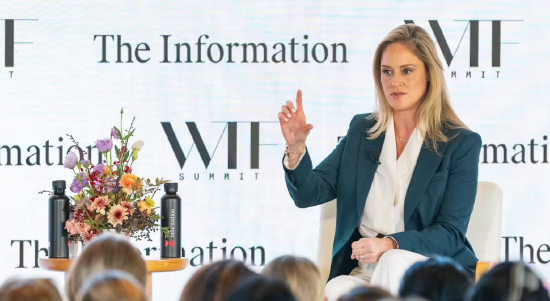
CompanyWatch reads a company through its events rather than its reputation. The company here is Google; the event is a number. At the WTF Summit this week, Amanda Peterson Corio, the executive in charge of energy for Google's data centres, put the cost of doing the same compute work in orbit at as much as 100 times the cost on the ground, and framed the order of operations bluntly: "Before we race to space, we should first explore every viable option on the ground." What makes this worth its own corporate file is that the scepticism and the experiment come from the same organisation: this month Google's research team confirmed a partnership with satellite-imaging company PlanetLabs to study large orbital AI clusters, while a prototype server built around an AI TPU co-designed with Broadcom is already flying. The seven questions below give short answers first; the checklist at the end states which signals would force us to change them.
The answers, before the arguments
| Frequent question | Short answer | What it changes for you |
|---|---|---|
| Is orbital compute cheaper than a terrestrial campus? | No. Google says up to 100 times; Barclays' bottom-up model says about three times on a five-year basis. | Do not underwrite any business case that assumes orbit beats ground on cost before 2030. |
| What single variable would flip the verdict? | Launch price falling to $200 per kilogram or below. | Treat per-kilogram pricing, not satellite announcements, as the leading indicator. |
| Why is Google still launching hardware? | Because it plans on a long horizon: "think about what happens 10 years, 20 years, 30 years from now." | Separate Google's research budget from Google's deployment guidance. |
| Is electricity the constraint on AI capacity? | Corio says no: "Is there enough power? Of course it is enough." Approvals and grid studies are the choke point. | Model interconnection timelines, not generation capacity, when sizing near-term supply. |
| Who is more bullish than Google? | Elon Musk says as early as next year; Jeff Bezos says within ten years for a 1 GW facility. | Discount roadmaps that are not accompanied by flown hardware or published operating data. |
Q1. How expensive is "expensive", and why does an outside model land at 3x rather than 100x?
In Peterson Corio's account the penalty is structural, not marginal: putting compute hardware into orbit carries launch costs that are "extremely expensive, up to 100 times the cost of building on the ground." Cost is only half her list. Operators must also solve maintenance and upgrading of equipment in orbit. On the ground, data-centre staff can swap a server, re-cable a rack and re-debug a system whenever they like; in orbit, a failed board stays failed.
Independent modelling is less severe but points the same way. In a research note titled "Ashburn, then Abilene, then Space", Barclays analyst Brendan Lynch estimated orbital facilities at roughly $50 million per megawatt — more than three times a comparable ground build — and around $51 billion per gigawatt across a five-year full lifecycle, against about $16 billion for an equivalent terrestrial campus, even when sunlight in orbit is treated as free. The 100x versus 3x spread is not a contradiction: one number is dominated by the physics of lifting mass and by hardware that cannot be repaired, the other spreads capital across a lifecycle that assumes an aggressive launch cadence. Both leave the same conclusion, and Barclays goes further, arguing orbital facilities do not threaten incumbent data-centre operators over the next decade and would, if they arrive, complement rather than replace ground deployment.
The threshold Google itself published
Last autumn, researchers involved in the project, joined by Google's chief researcher James Manyika, published a paper stating that if launch cost falls to $200 per kilogram or below, the compute cost per unit of power in orbit could come roughly level with the ground. Google's researchers expect that gate to be reachable around 2035, with the timing hinging on the development progress of SpaceX's Starship and how quickly launch frequency rises. Against today's market, where industry trackers price SpaceX launches at roughly $1,400 per kilogram, the assumed trigger sits at a small fraction of current cost — which is precisely why per-kilogram pricing, not launch spectacle, is the number to follow.
Q2. If the maths is that hostile, why does Google keep sending chips upward?
Google's research team answers with optionality. Despite the caution, the company's Suncatcher programme is real: a small orbital server prototype has been launched carrying the Broadcom co-developed TPU, and the PlanetLabs partnership is meant to use satellites to probe the feasibility of large orbital data-centre clusters. Google's own public materials describe the physical prize: a satellite in a dawn-dusk sun-synchronous low-Earth orbit can capture near-constant sunlight and generate up to eight times more usable solar energy than a comparable panel on the ground.
The scale of the experiment is deliberately tiny. According to NPR, the prototype carries four TPUs; Ars Technica reported that it is designed to run for only about 15 minutes at a stretch, and Google said at the end of October that it had received the satellite's first response from orbit. The point is not throughput but survival data — how the accelerator handles launch shock, radiation dose and thermal cycling. One engineering variable that has attracted little pricing attention is heat: in vacuum there is no convection, so waste heat can only be thrown away by radiation, which makes radiator area and radiator mass first-order cost drivers rather than an afterthought.
Peterson Corio does not dismiss the idea, calling the direction "very interesting", and explains that Google keeps funding high-risk frontier work because the company is used to "thinking about what happens 10 years, 20 years, 30 years from now." Her qualifier is equally explicit: commercial deployment of this technology is "nowhere near".
Q3. Who disagrees, and what has actually been flown?
SpaceX Chief Executive Elon Musk says his company could build a space-based data centre as early as next year. Amazon founder Jeff Bezos, who steers Blue Origin — a competitor of SpaceX — expects facilities consuming 1 GW of power in orbit within ten years. There are also reports that Google and SpaceX have discussed jointly building an orbital data centre.
For investors, the useful test is whether optimism has hardware behind it. It does, in narrow form: Nvidia-backed Starcloud launched a satellite carrying an Nvidia H100 on a SpaceX rocket in early November 2025 and says it trained the first AI model in orbit, according to CNBC. That is a single-accelerator demonstration, not a cluster, and it does not yet publish utilisation, thermal margin or unit economics. OpenAI Chief Executive Sam Altman is blunter than either space entrepreneur, calling the idea of relocating data centres to orbit "highly unrealistic" under present conditions and questioning Musk's aggressive schedule.
Q4. Is the binding constraint electrons, or paperwork?
This is where Peterson Corio parts company with the "we have run out of power" narrative used to justify going orbital. Asked whether electricity is sufficient, she answered: "Is there enough power? Of course it is enough." In her telling the real bottleneck is the approval process for grid connection and the long environmental and technical studies attached to it. Alphabet's X Lab has launched the Tapestry project and is working with PJM, the largest grid operator on the U.S. East Coast, to apply AI to accelerate those studies. Public data supports the diagnosis: Lawrence Berkeley National Laboratory's interconnection-queue dataset shows a national backlog jump of roughly 40 per cent, average wait times of about five years for projects energised in 2022, and only 19 per cent of requests filed between 2000 and 2018 in operation by 2023.
Regulators are already reacting. In Texas, the state electricity regulator has slowed approval of some data-centre projects and tightened oversight so that new compute facilities do not strain the grid and push up tariffs. Meanwhile other industry executives argue the network is under-used rather than exhausted. Brian Janous, co-founder of data-centre land and power provider Cloverleaf Infrastructure, said recently that around 45 per cent of grid capacity sits idle to cover peak demand, and that for the vast majority of hours in a day the system holds spare headroom that data centres could absorb.
Google also claims an internal advantage here. On power usage effectiveness (PUE), the metric that captures how much compute a given watt can carry, Google sits ahead of its cloud peers — the cheapest kilowatt-hour is the one converted into the most silicon work, which strengthens the "fix the ground first" argument.
Q5. Who does Google blame for the backlash against ground data centres?
Peterson Corio argues that part of the rising opposition to ground data centres in U.S. society today comes from inexperienced new companies, and that these firms should be held to a higher regulatory bar. Before this AI compute boom, she notes, the companies that had worked in data-centre construction for many years "have been doing things in a fairly proper way", and their projects rarely became controversies. She attributes the current mood to "a large number of new entrants that, when acquiring land and building compute projects, lack the industry depth and mature experience" — without naming any company.
The record fits the framing in one respect and complicates it in another: a flood of first-time developers has entered the AI data-centre race in recent years, but established names have been caught too — projects by Oracle, a well-known incumbent, have also drawn local resident resistance.
Q6. What would "higher standards" concretely require?
She backs rules and a higher bar for the industry. She offered no clause-by-clause proposal, but described practices Google is adopting: deeper investment in the host community, and pre-set contingency plans so that a stalled project does not leave the locality exposed.
- Committing to keep paying for grid upgrades for 15 to 20 years, so that a project that stops does not leave the local community "forced to pick up the bill"; this model of pre-committing to grid infrastructure cost is already live in more than nine U.S. states and is "expanding extremely fast".
- Paying electricity bills and property taxes in full.
- Posting bonds, to fund land restoration if a project is abandoned.
- Dropping confidentiality agreements signed with local governments.
Q7. What does the interview reveal about Google's own position?
The remarks landed while investors reprice a cohort of young AI cloud vendors, most of them heavily backed by Nvidia, which have borrowed aggressively and pushed forward data-centre builds without long operating records. The kind of companies Peterson Corio says should face tighter standards probably include those vendors.
At the same time, Google has disclosed that its own compute demand will increasingly rely on third-party capacity, without naming partners — SpaceX being one of them. The reason given is straightforward: Google is not building data centres fast enough to match demand. Read together, the two signals are coherent: buy external compute and secure power where it is available today, while keeping the orbital bet as a small, instrumented research line.
Four misconceptions worth correcting
- "100x means it will never work." The 100x figure is a cost statement about launching and servicing hardware, not a physics verdict; Google's own paper assumes the barrier falls around 2035.
- "Free sunlight means free compute." Energy is only one line item; radiator mass, bandwidth and the inability to repair equipment in orbit decide the bill.
- "Google's caution means Google is exiting." This month's PlanetLabs confirmation and the Suncatcher prototype show continued spending on the long horizon.
- "The space story is caused by a power shortage." Corio's account reverses it: power exists, approvals are the constraint — which is why accelerating studies, not rockets, is the nearer lever.
CompanyWatch checklist: five indicators to track next
- Quoted launch price per kilogram, and whether Starship development progress and flight frequency move it toward $200 per kilogram or below.
- Suncatcher telemetry milestones: cumulative TPU uptime in orbit, measured radiation degradation, and the mass ratio of radiator to compute.
- Whether any proponent publishes audited operating data for an orbital cluster, rather than a single accelerated card.
- PJM and other regional study timelines, plus adoption of the Tapestry project, as the real gate on ground capacity.
- Spread of the 15 to 20 year grid-cost commitment model beyond the current more than nine states, and whether peers copy the bond and no-confidentiality standards.
Action notes by reader
| Reader | Read the signal as | Next action |
|---|---|---|
| Investors | A capex story, not a technology race | Separate launch-cost beneficiaries from compute vendors; demand unit economics before crediting orbital timelines. |
| Industry analysts | Two competing cost models (100x versus three times) with different scopes | Rebuild your own assumptions and state which you use for launch pricing, radiators and refresh cycles. |
| Strategy and BD teams | Ground permitting is the near-term constraint | Bid into jurisdictions where grid-cost commitments and bonds are becoming the default expectation. |
| Market researchers | A governance signal from an incumbent | Track whether standards language spreads to newcomers facing local opposition. |
Google's orbital programme is best filed not as a plan but as a priced option: cheap enough to instrument, honest enough about the price tag. The company that first publishes an orbital rack's real cost per delivered watt — not its render of a gigawatt in the sky — is the one that changes this assessment.