
iPhone Duo's First Two Weeks: What 100,000 Adapted Apps Reveal About Apple's Foldable Ecosystem Bet
GlobalBizSight · CompanyWatch · By Marc Hale
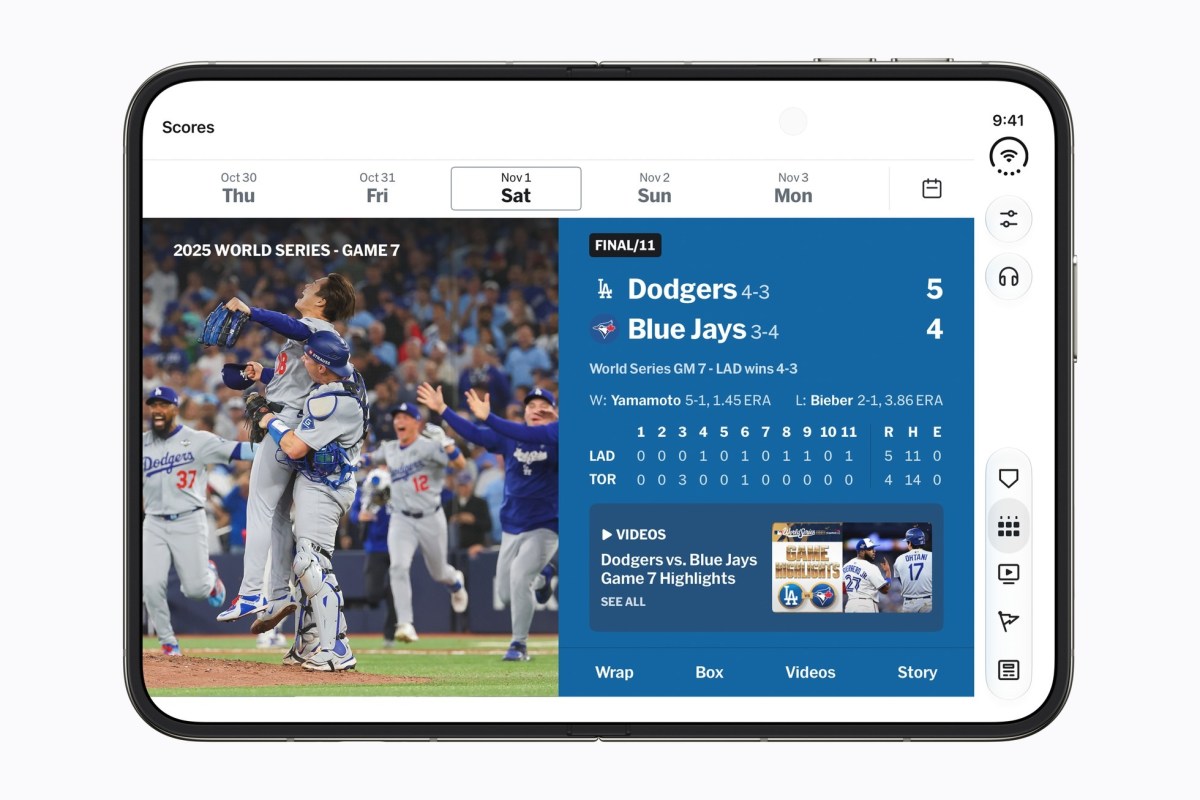
Short answer: on software, Apple is running ahead of its own hardware. In the about two weeks since iPhone Duo started shipping, Apple says more than 100,000 apps have been rebuilt for the device and that fresh optimised releases land every day. Measured against an App Store that holds millions of apps, that is real momentum rather than saturation — and it is the single clearest signal of whether Apple's first foldable can become a platform or stays a premium hardware experiment.
What has actually changed for Apple since launch
The ecosystem scoreline, not the hinge, is the number that matters. Susan Prescott, Apple's vice president of worldwide developer relations, has said the developer response to iPhone Duo beat internal expectations: currently more than 100,000 apps engineered specifically for the device are live on the App Store, and a large batch of titles finishes its optimisation update every day.
The composition of that recent cohort deserves more attention than the raw total. Microsoft Word, Excel, OneNote and PowerPoint appear among the software updated for the inner display, together with Zoom, Instagram, WhatsApp, YouTube, Netflix, Amazon Prime Video, Goodnotes, Fantastical, Flighty, Etsy, Halide Mark III, NBA, NHL and SmartGym. Those are office, video-calling, streaming, sports and travel tools — precisely the categories in which a folding phone either justifies a premium price tag or fails to.
Apple is also turning coverage into a discoverable asset. On the device's App Store page, titles optimised for the foldable now display a "Made for iPhone Duo" badge, which converts a technical upgrade into a merchandising cue and, in practice, gives Apple a way to measure how much of the traffic-driving long tail it has actually converted.
Why the adaptation curve bent upward so quickly
Three levers explain the speed, and each carries a different cost for developers.
- Free lift from the framework layer. Applications written with standard SwiftUI and UIKit components adapt automatically to the inner and outer display environments, so a large share of modern apps needed little more than a rebuild.
- New capability APIs. Apple has added interfaces that let builders design around folding angles, hinge poses and multiple display modes, which is where genuinely differentiated layouts — not stretched phone screens — come from.
- Boots on the ground. In the past month Apple hosted more than 50 in-person developer events across 19 cities, drawing more than 2,000 developers who handled the hardware and rebuilt interfaces under guidance.
- A policy stick. Apple's own developer news states that starting April 2027, any app or game submitted to the store must include iPhone Duo screenshots; recompiling against Xcode 27.1 and previewing behaviour in Device Hub shortens the path to compliance.
Read as an analyst would read a governance signal, this is Apple's recurring playbook: open the hardware to partners late, absorb the initial experience gap, then force closure through submission rules. The iPhone X notch transition in 2017 and 2018 followed the same shape. That analogy is our interpretation of the pattern rather than a claim from the company, but it frames the next six months as a compliance race rather than an open-ended one.
How wide is the gap that still sits on Apple's side of the ledger
Legacy software is the visible cost. Older titles that have not been reworked still launch and still run, yet they cannot exploit the internal large screen and frequently fail to reach their best presentation when the device is unfolded. Some of the most-used names only joined the supported list recently, and Google Maps, for one, shipped its Duo-tuned version not long ago.
The denominator is the harder point. A 100,000-app figure sounds commanding, but the store catalogue is measured in millions of apps. Independent trackers estimate the live iOS listing count anywhere between roughly 1.9 million and 2.8 million, depending on methodology — 42matters, for example, reports a count near 2.8 million — so even on the most conservative arithmetic the adapted set represents a low single-digit share of everything available.
What ecosystem readiness does to the company numbers
Demand data suggests the experience gap is currently hidden by scarcity. Bank of America analyst Wamsi Mohan put the global average iPhone Duo delivery lead time at 79 days as of Oct. 26, 2026, with shipments stretching into January 2027, while Asymco's tracker of Apple's own configurator showed about 53 days for the 256GB model and 48 days for the 512GB model. Buyers waiting two and a half months are unlikely to judge a banking app by its letterboxing; buyers shopping at a carrier counter in a year will be.
The financial backdrop amplifies the stakes. In Apple's first earnings report under CEO John Ternus, the September quarter produced record revenue of $114.5 billion, up 12% year on year, but CNBC reported that the accompanying gross margin outlook disappointed Wall Street as memory component costs climbed. A high-ASP foldable with a rich app experience is one of the few obvious mix-upgrade levers management has; a foldable that feels like a stretched phone is a margin-dilutive curiosity.
| Metric | Latest reading | Source | What it signals |
|---|---|---|---|
| Apps built for iPhone Duo | More than 100,000, growing daily | Apple (Susan Prescott) | Framework-level adaptation is working |
| Total store catalogue | Millions of apps; ~1.9M–2.8M in third-party estimates | 42matters / Business of Apps | Converted share is still low single-digit |
| Developer field programme | 50+ sessions, 19 cities, 2,000+ developers in the past month | Apple | Coverage is being pushed, not waited for |
| Delivery lead time | 79 days average (Oct. 26, 2026) | Bank of America via Benzinga | Supply, not software, is the binding constraint |
| Compliance deadline | April 2027 submission screenshots | Apple developer news | A hard clock on the long tail |
| Category runway | Foldable shipments forecast +30% in 2026 | IDC, Dec. 9, 2025 | Apple joins a market that is still small but re-rating |
Context on the addressable prize: IDC said on December 9, 2025 that worldwide foldable smartphone shipments were expected to grow 30% year on year in 2026, lifted by the arrival of the first Apple foldable, and that the category would account for more than 10% of total smartphone market value by 2029. Apple is therefore not defending an existing foldable position — it is trying to decide whether the category is worth the wait.
Common misconceptions to retire now
- "100,000 apps means the ecosystem is finished." It means the toolchain worked; the catalogue is orders of magnitude larger and the daily-updated apps are still a thin slice.
- "Unadapted apps are broken." They run. The penalty is presentation on the unfolded screen, which is a perceived-quality issue rather than a functional one.
- "This is an Apple-only problem." Every new form factor has opened with an adaptation vacuum, which is exactly why the badge, the workshops and the 2027 deadline were designed to compress it.
- "Wait times prove weak interest." The opposite reading is supported by the lead-time data; scarcity is currently buying Apple goodwill that it will have to earn back once inventory normalises.
- "Developers adapt for free because SwiftUI does the work." Standard components remove the floor cost, not the design cost; the differentiated experiences require the new pose and hinge APIs.
Action recommendations: what to track within the next few months
- For investors, track coverage quality rather than headline counts: whether the top 100 apps by usage in a given market carry the Made for iPhone Duo badge, since the badge is now the only public proxy for Apple's own definition of "ready".
- Watch the ratio of delivery lead time to software maturity. If lead times compress faster than adaptation does, next-quarter reviews should skew negative even with strong shipments.
- Bookmark the April 2027 submission requirement. The most reliable forecast signal is not Apple's marketing but the volume of updates from mid-tier publishers in the first quarter of 2027.
- For app publishers, run the cheap path first: rebuild in Xcode 27.1, validate layouts in Device Hub, and prepare Duo screenshots now instead of bundling them with a redesign.
- For enterprise and channel teams, treat office, video-calling and travel software as the readiness benchmark — Microsoft Word, Excel, OneNote and PowerPoint, plus Zoom, Flighty and Goodnotes, are the workloads that decide whether the device earns a fleet place.
- Track gross margin alongside unit mix. Apple's own guidance commentary suggests component costs, not demand, are the variable management cannot control.
CompanyWatch verdict
Treating this as a single-company observation rather than a product review: Apple has demonstrated that its ecosystem machinery still functions as a moat, converting a brand-new hardware category into a compliant software base in weeks instead of the quarters the Android foldable camp needed. The unresolved question is not developer willingness but durability of the experience once scarcity ends. Apple's own position is that ecosystem velocity keeps improving, and that within the next few months many more titles will exploit the folding design fully. The 2027 deadline is what turns that confidence into a testable claim.
Frequently asked questions
How many apps work on iPhone Duo today?
Apple states that more than 100,000 apps have been built for the device, with a large number of optimised releases landing every day. Set against millions of apps in the store, that remains a small fraction of the total catalogue.
Do older apps stop working on the foldable?
No. Unoptimised titles still launch and run, but they cannot take full advantage of the inner large screen and often miss their best layout when the phone is unfolded. Google Maps is one example of a mainstream app whose Duo-tuned version appeared only not long ago.
Is there a deadline forcing developers to adapt?
Apple's developer news says that from April 2027, every app or game submitted to the App Store must include iPhone Duo screenshots. That is a submission gate rather than a removal order, but in practice it is how Apple has historically closed layout gaps.
Does the software gap threaten Apple's revenue now?
Not visibly. Average delivery wait time was measured at 79 days as of Oct. 26, 2026 by Bank of America, so demand is currently rationed by supply. The exposure appears later, when buyers can walk into a store and judge the experience directly.
References
- Apple Developer News — "Prepare and submit your apps for iPhone Duo": https://developer.apple.com/news/?id=kkphp5qo
- Apple Human Interface Guidelines — "Designing for iPhone Duo": https://developer.apple.com/design/human-interface-guidelines/designing-for-iphone-duo
- IDC press release, December 9, 2025 — worldwide foldable smartphone market forecast: https://www.idc.com/resource-center/press-releases/worldwide-foldable-smartphone-market-to-grow-30-yoy-in-2026-boosted-by-the-first-apple-foldable-iphone-according-to-idc/
- CNBC, November 3, 2026 — Apple earnings, John Ternus' first report and memory costs: https://www.cnbc.com/2026-11-03/apple-earnings-john-ternus-faces-first-test-amid-high-memory-costs.html
- Benzinga, October 26, 2026 — Bank of America estimate of iPhone Duo wait times: https://www.benzinga.com/markets/tech/26/10/62599048/apples-iphone-duo-buyers-face-a-wait-that-could-stretch-into-january
- Asymco, October 28, 2026 — capacity-level delivery tracker: https://asymco.com/2026-10-28/bank-of-america-finds-a-way-to-buy-the-iphone-duo/
- 42matters — iOS App Store catalogue statistics: https://42matters.com/ios-apple-app-store-statistics-and-trends
- Reporting on Susan Prescott's comments to CNET, carried by Sina Finance: https://finance.sina.cn/stock/jdts/2026-11-07/detail-inixwhsk8409004.d.html