
CompanyWatch: Apple's iPhone Duo Trade-Offs: Supply, Durability, Price and Decision Signals
Apple's first foldable smartphone has turned into a compact test of corporate execution. For GlobalBizSight's CompanyWatch, the iPhone Duo is not simply a device buyers may or may not want; it is a live read on demand management, manufacturing yield, after-sales readiness and premium pricing under a leadership transition. The central tension is unusual: the product appears to be attracting orders faster than the company can promise delivery, while Apple is simultaneously trying to reassure the market that early reliability problems are contained.
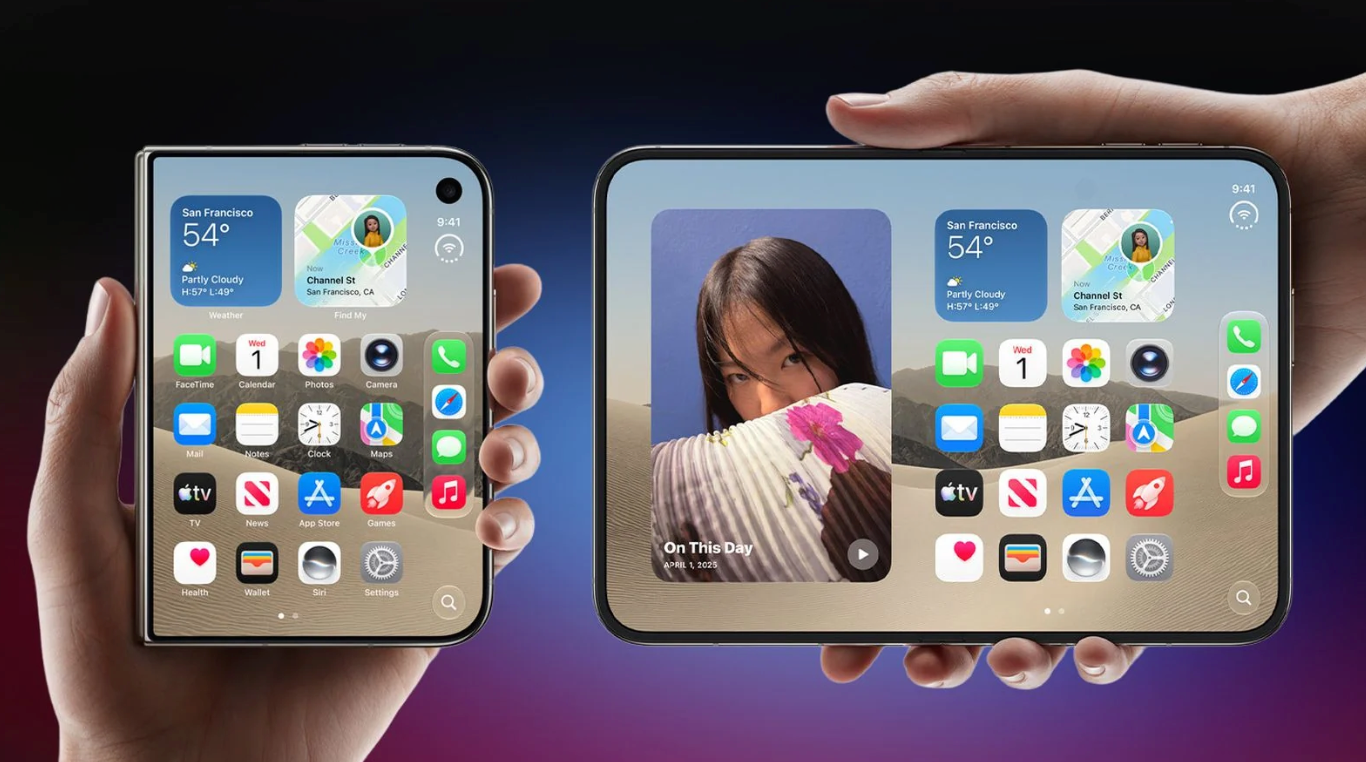
The Monday Disclosure: Demand Is Strong, But Apple Cannot Name a Fix Date
According to Reuters, Apple CEO John Ternus said after Monday's earnings release that the company is still unable to meet demand for iPhone Duo. In the quotation he gave, Apple positioned the constraint as both a sign of commercial strength and an unresolved operating issue: "As of today, iPhone Duo remains supply constrained. The ramp is going well, and we are working hard to get it to as many customers as quickly as possible. But we are unable to predict when supply and demand will reach balance."
Ternus also addressed screen-related returns, saying units affected by display problems represent a very small percentage and that Apple is replacing them. For buyers, the practical consequence is a wait rather than a cancellation: now ordering may mean delivery until next January, while stock available for online reservation at Apple retail stores is sparse. Last week, Apple had already said it was aware of internal display issues on some iPhone Duo devices and advised affected users to contact AppleCare for a replacement.
Why This Is a Company Event, Not a Gadget Review
The value of the disclosure is that it converts a product story into a company watch item. A sellout headline can be read as demand strength. A statement that there is no predictable balance between supply and demand reveals something else: Apple has chosen to bring a first-generation foldable to market while the manufacturing system is still proving itself. That choice has financial, operational and brand consequences at the same time.
| Comparison dimension | iPhone Duo signal | Comparable reference or risk | What decision-makers should infer |
|---|---|---|---|
| Supply versus demand | Apple cannot predict when supply and demand will balance. | Mature foldable rivals usually have more visible channel allocation, although category-wide component constraints still exist. | Short-term revenue visibility may be lower even when demand is strong. |
| Price positioning | Reuters has reported the U.S. starting price at $1,999 and framed the device as a difficult audience question. | Technology.org's comparison places the iPhone Duo at $1,999 and 254 grams, versus the Galaxy Z Fold 8 at $1,899 and 201 grams, with hinge supply constraints as a launch variable. | Apple is asking buyers to pay more and wait longer than in some competing foldable options. |
| Early reliability | Apple says affected returns are a very small percentage and replacement is available through AppleCare. | Foldable screens and hinges remain a durability-sensitive category for consumers and analysts. | A small percentage can still shape first-generation trust if replacement logistics become slow. |
| Market size | Counterpoint Research expects up to 6 million iPhone Duo shipments in 2026, giving Apple about 25% share of global foldable shipments. | That is meaningful for a new category entrant but also implies a constrained near-term ramp rather than mainstream replacement volume. | Do not treat early scarcity as proof of either permanent advantage or permanent weakness. |
Three Data Points That Change the Interpretation
- Delivery window: orders placed now are associated with a next January delivery window, and Apple retail stores have limited stock available for online reservation. This suggests demand is not the problem; throughput and channel allocation are.
- Premium benchmark: a widely compared foldable competitor sits about $100 lower and more than 50 grams lighter, according to Technology.org. Apple is competing on ecosystem and brand, not on pure weight advantage.
- Cost backdrop: TrendForce has warned that memory and storage can become a much larger share of premium smartphone bills of materials, with a roughly 38% year-on-year bill-of-materials increase estimated for a 256GB iPhone 18 Pro configuration. That does not prove Duo-specific cost data, but it reframes the supply issue as one that may affect gross-margin tolerance as well as wait time.
Common Misconceptions to Avoid
- Constrained supply means weak demand. It usually means the opposite. Apple said the ramp is going well while acknowledging that it cannot name a balance date.
- A very small percentage means there is no reputational risk. A low return rate reduces immediate financial materiality, but it does not erase the perception problem attached to early-generation foldables.
- January delivery means a lost sale. It can also mean deferred revenue, a better mix in a later quarter, and a possible inventory-management advantage while Apple scales production.
- Premium price equals margin protection. If replacement volume, yield loss or memory-cost inflation rises, Apple's pricing power helps but does not make the category costless.
Actionable Reading for Three Audiences
For investors and equity analysts
- Watch whether Apple repeats "unable to predict" supply-demand balance in the next earnings call or replaces it with a measurable ramp milestone.
- Track gross-margin language, because premium component inflation can offset the revenue benefit of a sold-out product.
- Separate iPhone Duo demand strength from iPhone Duo contribution: strong preorders and constrained shipments are not the same thing as confirmed quarter-level earnings power.
For buyers and enterprise decision-makers
- If the device is needed for a specific cycle or deployment calendar, the current wait through next January is a practical limitation, not just a scarcity signal.
- If the use case depends on AppleCare responsiveness, confirm replacement availability before treating the product as a primary device.
- For organizations evaluating mobile form factors, Apple's first foldable is a strategic test case, not a proven replacement for standard devices.
For supply-chain and competitive strategists
- Monitor hinge, flexible display, yield and replacement logistics. Those are the operational choke points implied by Apple's supply-constrained wording.
- Benchmark against mature foldable suppliers and rivals, not only against iPhone. The comparison that matters is how long it takes Apple to move from constrained availability to predictable retail allocation.
- Use Counterpoint's 6 million forecast for 2026 as a sizing anchor, then compare actual quarters against it rather than treating it as a hard company guidance figure.
Bottom Line: The iPhone Duo Is an Execution Story, Not a Demand Story
Apple's statement to Reuters leaves the market with two facts that point in different directions. On one side, iPhone Duo demand appears strong enough that the company still cannot forecast when supply will catch up. On the other, Apple is managing a first-generation form factor where display-related returns, replacement expectations and delivery times can all affect confidence even when the percentage of affected devices is small. The decision frame for CompanyWatch readers is therefore not whether iPhone Duo is popular, but whether Apple can make scarcity predictable fast enough to protect its premium new-category narrative.