
Apple iPod at 25: How a 1,000-Song Player Became Apple's Platform Gateway
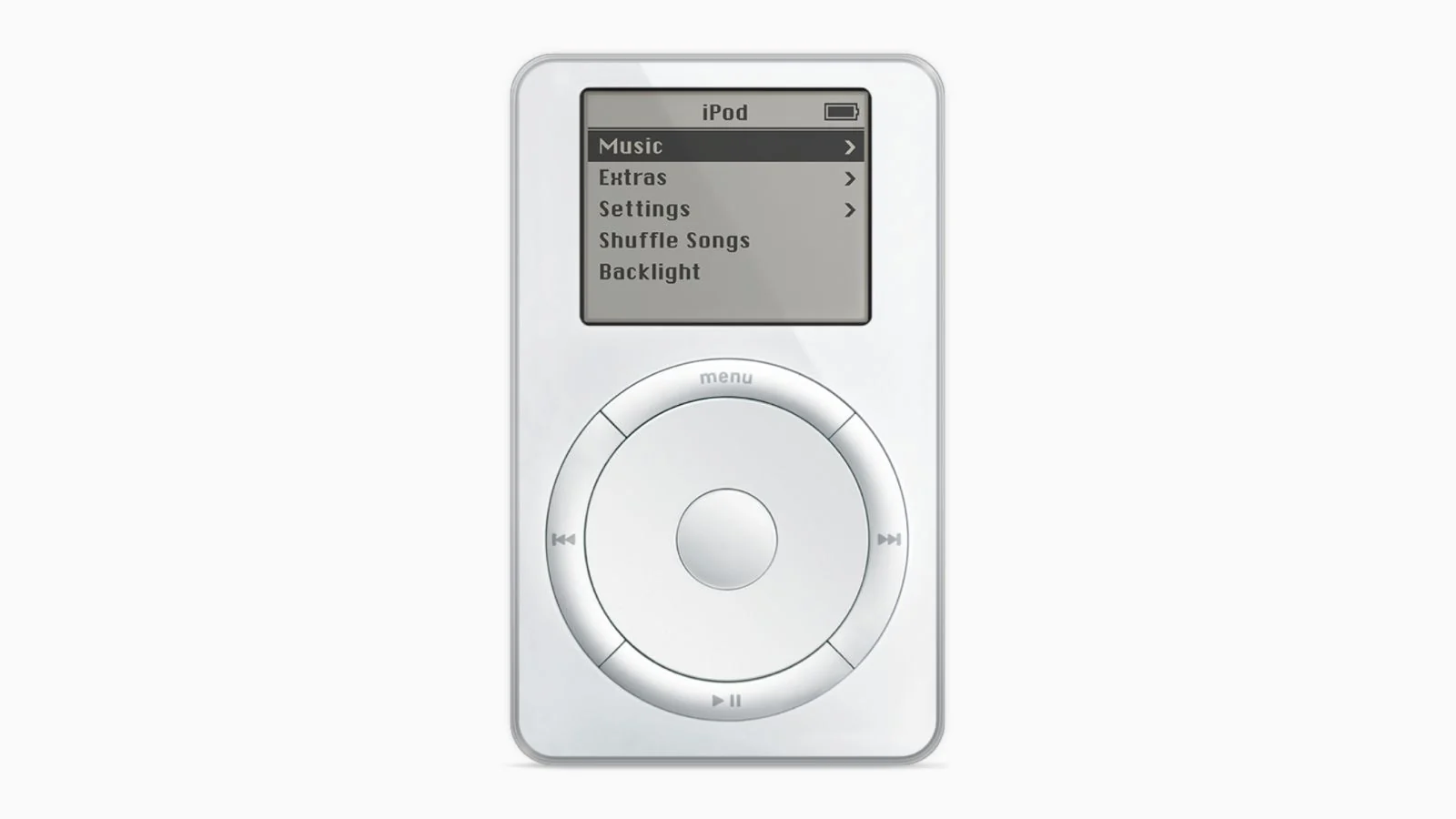
Apple's first iPod reached the market on November 10, 2001 with a 399 dollars price tag, 5GB storage, 10 hours of battery life and a simple promise: put 1,000 songs in a pocket. Its importance now is not nostalgia, but the platform loop it created around iTunes, FireWire syncing, paid music and cross-device services that later shaped iPhone, Apple Music and iPad.
The 25th anniversary is a clean way to read Apple's corporate turn. On October 23, 2001, Steve Jobs, then Apple chief executive, presented the device at a small headquarters event. The company packaged a hard-drive player, a single-color LCD, a mechanical wheel, a $399 price and the line '1,000 songs in your pocket'. The hardware was not simply a gadget; it was the first mass artifact that made Apple's Mac-software habits travel away from a desk.
Why did the opening year feel unconvincing?
Initial adoption was uneven. The first iPod worked only with Mac computers, not Windows, and many buyers considered $399 expensive. Some reviewers doubted whether it was truly transformative, even though Apple claimed a CD could load in under 10 seconds and that transferring one thousand songs would take less than 10 minutes. Those transfer numbers mattered because FireWire allowed music transfer and battery charging on one interface, while iTunes automatically synced libraries and playlists.
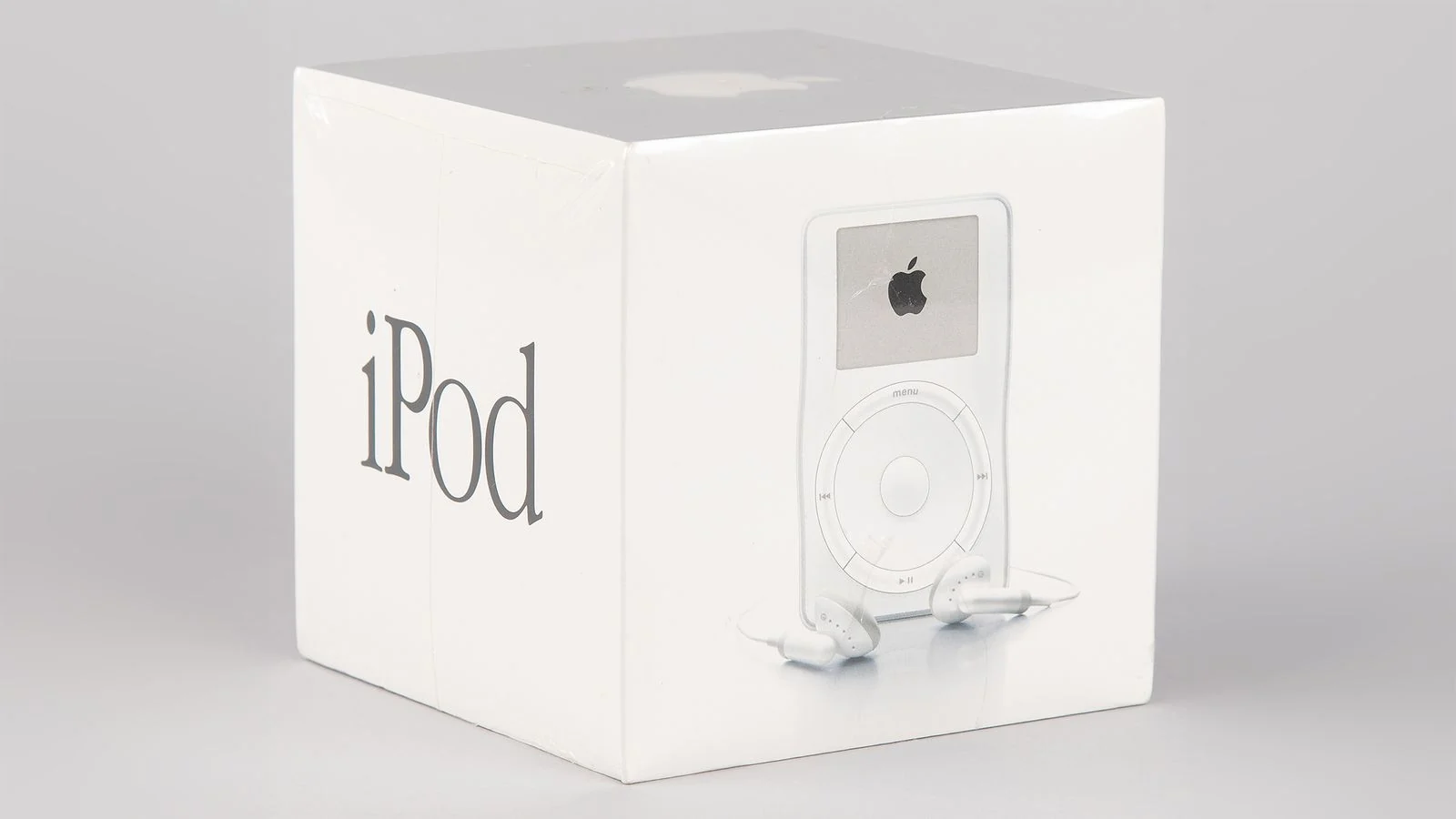
This early gap explains why Apple moved quickly on two fronts: compatibility and product-line segmentation. The device could only become a platform if it stopped being a Mac accessory and started behaving like a consumer electronics franchise.
What product changes turned a niche player into a franchise?
Apple's second-generation iPod replaced the mechanical wheel with a touch-sensitive wheel. In 2003, the third-generation model introduced the 30-pin Dock connector, later used across accessories, charging stands, car docks and enterprise devices. In 2004, a color display arrived on the standard-size iPod; in 2005, video playback was added. Each change widened use cases beyond music, while preserving the familiar wheel-and-menu grammar.
- 2004 iPod mini: smaller anodized aluminum shell, silver gold pink blue green colors, and the first Click Wheel, which combined touch scrolling and playback buttons.
- 2004 U2 special edition: Apple introduced a black-body, red-Click Wheel iPod in October 2004, holding up to 5,000 songs, according to Apple Newsroom. The case shows Apple was already treating the player as a cultural object, not just storage.
- 2005 iPod shuffle: a no-screen model designed for simple, low-friction listening.
- 2005 iPod nano: flash memory replaced the mechanical drive, reducing thickness and weight; later versions added video, a camera and a touchscreen.
- 2010 sixth-generation iPod nano: a square shape that could be worn on the wrist with a third-party band.
The product tree mattered for CompanyWatch: Apple did not defend one SKU. It used size, price, memory and form factor to create separate entry points while keeping the same software logic.
How did iTunes turn hardware into recurring behavior?
The original iPod made syncing pleasant, but the store made the device indispensable. Apple launched the iTunes Music Store on April 28, 2003 with more than 200,000 songs. Apple later said it sold over one million songs in the first week, as reported by Apple Newsroom. That data point is important because it shows iPod's real asset was not 5GB or 10 hours. It was a customer habit: choose a song, pay, sync it, and return.
The same loop later fed Apple Music. A user who learned to keep a curated library on a portable player could accept a streaming service as a logical next step. This is where hardware becomes infrastructure: the device is replaced, but the relationship remains.
What financial and ecosystem signal did iPod create?
Commercial success arrived quickly. By April 2007, Apple announced cumulative iPod sales had passed 100 million units, less than six years after the first model went on sale. By October 2011, cumulative sales had surpassed 304 million units. Apple's own fiscal fourth-quarter 2006 preliminary results reported 8,729,000 iPods shipped alongside 1,610,000 Macs, according to Apple Newsroom. Statista's chart of the product's rise also estimated that iPod accounted for as much as 40 percent of Apple's revenue in 2006, the year before the first iPhone reached the market.
| Milestone | What it revealed |
|---|---|
| October 23, 2001 | Apple could sell a non-Mac consumer device with a clear message |
| November 10, 2001 | Initial sales began at a 399 dollars price, 5GB storage, 10 hours battery and FireWire sync |
| 2003 | iTunes Music Store turned device ownership into repeat content purchases; third-generation model added 30-pin Dock connector |
| 2004 | Color screen, iPod mini, Click Wheel and U2 edition expanded design and lifestyle demand |
| 2005 | Video support plus iPod shuffle and iPod nano broadened price and size tiers |
| September 2007 | iPod touch, with 3.5-inch Multi-Touch screen, Wi-Fi and Safari, moved the interface toward modern smartphones |
| September 2014 | Apple stopped selling iPod classic, signaling the hard-drive line was no longer central |
| July 2017 | iPod nano and iPod shuffle ended, leaving iPod touch as the last SKU |
| May 10, 2022 | Apple discontinued iPod touch, closing 21 years of the product line |
The table is not a nostalgia device. It compresses the corporate logic: one product can finance another product, train another interface, and legitimize another service.
Why did smartphones end the category but keep the design logic?
The iPod touch was Apple's clearest bridge to the later iPhone. Introduced in September 2007, it carried a 3.5-inch Multi-Touch display, Wi-Fi and Safari. It lacked cellular calling, but it taught millions of users the app-centric, touch-first behavior that smartphones later made ordinary. As iPhone adoption spread, a separate music player became harder to justify. Apple ended iPod classic in September 2014, ended nano and shuffle in July 2017, and introduced the seventh-generation iPod touch in May 2019 with A10 Fusion and up to 256GB. Then Apple announced on May 10, 2022 that production had stopped, ending 21 years and the full iPod family.
Apple framed the exit not as abandonment but as redistribution. Music playback remained available through iPhone, Apple Watch, HomePod mini, Mac and iPad. Greg Joswiak, Apple senior vice president of Worldwide Marketing, said the spirit of iPod lives on in other Apple products. That statement appears in Apple's 2022 note about the end of iPod touch.
What are common misreadings of the iPod story?
- Misreading one: The first iPod was an instant success. It was Mac-only, priced high, and questioned by media and buyers.
- Misreading two: The decisive feature was storage capacity alone. FireWire, 10-second CD transfer, 10-minute one thousand songs sync, automatic iTunes playlists and later the store created the habit.
- Misreading three: iPod only sold players. Its scale, including 100 million units by April 2007 and 304 million units by October 2011, helped Apple move from computer maker to device-platform company.
- Misreading four: Discontinuation erased the lesson. The product family ended, but the hardware-software-services pattern remains visible in current Apple launches such as HomeView and fourth-generation Apple TV 4K.
What should a professional reader watch next?
The iPod case gives a practical checklist for watching Apple or any consumer hardware company:
- Watch interface grammar, not only specs. Mechanical wheel, Click Wheel, 30-pin connector and Multi-Touch each outlasted their first device.
- Watch software lock-in. iTunes sync and the music store converted a gadget into repeat behavior.
- Watch product-tree pruning. Apple did not kill the idea when classic, nano and shuffle disappeared; it moved the behavior to iPhone, Apple Music and other devices.
- Watch financing relationships. iPod revenue and user growth reduced the risk of later, more expensive bets.
- Watch successor products. Current iPhone, iPad, Apple Watch, HomePod mini and Apple Music moves show whether the company can keep content relationships while hardware categories fade.
For decision-makers, the long-term lesson is simple: durable advantage often starts with a narrow device that makes an everyday habit easier, then spreads into services, accessories and platforms. Apple's 25-year iPod arc remains a compact case study in that sequence.
FAQ: What does the iPod 25th anniversary still answer?
Was iPod the reason Apple became a platform company?
It was a central reason. iPod proved Apple could sell consumer devices beyond Mac, gave iTunes a mass audience, and created a template where hardware, software and content services could support one another.
Why did iPod end if it had been so successful?
Phones absorbed its function. After iPhone grew, Wi-Fi, Safari and app behavior moved to iPod touch first and then became ordinary on mobile devices, leaving little room for a standalone music player.
What should investors and analysts track after iPod?
Track services that carry forward old hardware habits, especially Apple Music and the device mix around iPhone, iPad, Apple Watch and HomePod mini, and watch whether new launches extend or fragment that base.
References
- Apple Newsroom, Apple Launches the iTunes Music Store, April 28, 2003: https://www.apple.com/newsroom/2003/04/28Apple-Launches-the-iTunes-Music-Store/
- Apple Newsroom, iTunes Music Store Sells Over One Million Songs in First Week, May 5, 2003: https://www.apple.com/newsroom/2003/05/05iTunes-Music-Store-Sells-Over-One-Million-Songs-in-First-Week/
- Apple Newsroom, Apple Introduces the U2 iPod, October 26, 2004: https://www.apple.com/newsroom/2004/10/26Apple-Introduces-the-U2-iPod/
- Apple Newsroom, Apple Reports Preliminary Fourth Quarter Results, October 18, 2006: https://www.apple.com/newsroom/2006/10/18Apple-Reports-Preliminary-Fourth-Quarter-Results/
- Statista, Farewell iPod: The Rise and Fall of an Icon: https://www.statista.com/chart/10469/apple-ipod-sales/
- Apple Newsroom, The music lives on, May 10, 2022: https://www.apple.com/newsroom/2022/05/the-music-lives-on/