
CompanyWatch: Macronix Exits ROM — a Working Playbook for Nintendo Cartridge Supply and Flash Exposure
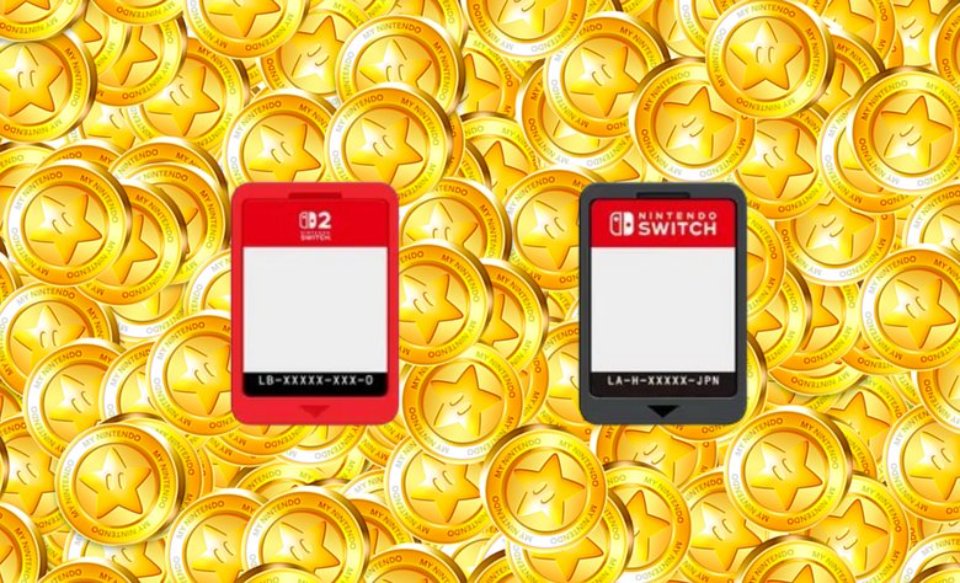
Macronix, the Taiwan-based non-volatile memory maker, recently confirmed that it will phase out mask ROM and stop developing new ROM products, moving wafer space and capital into NAND and NOR flash. The practical bottom line for buyers, publishers and investors: cartridge supply will not snap, but three things do change — access to flash capacity, the price of niche memory, and the quality of the disclosure you can track. Below is a working checklist covering the decision, the exposure test, the traps and the indicators to follow over the next four quarterly reports.
What exactly did Macronix announce?
Short answer: a product-family exit, not a fire sale. Speaking on the third-quarter earnings call, Macronix said it will step back from ROM production and will not design new ROM parts; from the company's own vantage point, the business no longer has a future. ROM — a chip that stores fixed data, written once at the mask stage — is the memory inside physical game cards for the original Nintendo Switch, and Macronix has been a key supplier to Nintendo for that use.
The mix data explains why the decision was easy. ROM now accounts for 5% of Macronix revenue, versus roughly 26% previously. Read that carefully: the 26%-to-5% shift is a revenue-share change, not proof that ROM shipments collapsed. When NAND and NOR sales expand quickly, the ROM percentage falls even if unit volumes drift down only modestly.
Two further details reported from the call matter for anyone modelling the company: chairman Miin Wu said resources are limited and the focus has shifted to NOR flash and eMMC, adding that the link to gaming applications is no longer significant; and Macronix will stop reporting ROM as a separate line in the next quarterly disclosure, per Cailian Press coverage dated 5 November 2026.
Where did the freed-up capacity go?
Into the two lines that are printing money. Macronix posted a quarterly net profit of NT$10.95 billion with an overall gross margin of 70.5%, and its own investor deck for the same quarter states that high-density NOR demand driven by data centres remains robust while customers compete for allocation. Coverage of the call reported NOR flash revenue up 158% year on year at 46% of sales, and NAND revenue — carried by embedded eMMC parts — up 768% year on year at 47%, so the two flash families together already account for 93% of revenue.
| Line | Typical home | Demand driver | Status after the pivot |
|---|---|---|---|
| Mask ROM | Physical game cards for the original Nintendo Switch | Shrinking physical-game niche, thin margin per wafer | Phased out; no new ROM development, no separate reporting |
| NOR flash | Firmware code storage; now high-density parts for servers and AI infrastructure | Data-centre build-out; customers bidding for capacity | Priority line; 46% of third-quarter revenue |
| NAND flash and eMMC | Storage, embedded devices, and Nintendo Switch 2 game cards | Order re-allocation as bigger makers leave low-capacity niches | Growth engine; 47% of third-quarter revenue |
The pricing backdrop strengthens the case for staying in flash. TrendForce, cited by the Taipei Times on 15 September 2026, said NOR capacity expansions remain scant and that the supply-demand mismatch would carry through the second half of 2026, with Macronix's own NOR growth limited as it re-shuffles 12-inch capacity. The same newspaper reported on 30 July 2026 that the company expects gross margin to climb toward 80% in the foreseeable future, in line with DRAM makers.
Does this threaten physical cartridges for Nintendo players?
On the evidence, the shock is small. Macronix supplies ROM mainly for game cards on the original Nintendo Switch handheld, and Nintendo works with several different suppliers, so the exit should at most cause light friction in the physical-game supply chain rather than a shortage. Nintendo has continued to offer physical game cards.
The technology also moved underneath the question. Game cards for the Nintendo Switch 2 handheld use NAND flash rather than traditional ROM, and NAND has multiple sources — including Macronix itself, which sells NAND as well. A supplier that quits ROM is not automatically a supplier that quits your next-generation cartridge.
Cost, not availability, is the real channel. Manufacturing and selling physical cards has become more expensive, and more publishers keep choosing digital releases. Sony has already decided to stop producing physical game discs, with future titles shipped as digital downloads; its July 2026 announcement put the disc phase-out at January 2028, according to Polygon's reporting. Analysts expect the same drift at Nintendo to become mainstream.
David Gibson, senior analyst at MST Financial, frames it as a gradual re-mix rather than a cliff: Macronix is one vendor inside Nintendo's card supply chain, so he expects physical cards to keep flowing, while warning that more publishers may migrate to digital distribution or to compromise formats such as game key cards.
How should you work the change? A seven-step checklist
- Map the exposure first. Pull your bill of materials and flag every part that depends on mask ROM, then separate true ROM from NOR and NAND variants that share the same board footprint.
- Convert revenue-share signals into volume signals. Ask suppliers for units and wafer starts, not percentages — a line can look dead in revenue mix while still shipping.
- Open a last-time-buy window now. Niche lines are usually served by long-term agreements, annual allocations and an end-of-life notice; budget for one oversized order plus spare masks.
- Qualify a second source before you need it. Re-taping-out for a card-format memory takes quarters; certification lead time, not shelf inventory, is the binding constraint.
- Re-price the digital-versus-physical trade-off. With flash allocation tight, compare cartridge bill of materials and manufacturing against a digital-only release plus key-card SKU.
- Track the disclosure, not the press release. Once a segment stops being reported separately, switch to product-roadmap removals, capacity capex guidance and gross-margin trend as your proxies.
- Watch the substitution chain. When large makers abandon low-capacity NAND or MLC niches, a supplier's order book can re-rate within two quarters.
What are the common misconceptions?
- "ROM volume collapsed 80%." The 26% to 5% move is share of revenue, and can be produced entirely by the growth of other product lines.
- "Nintendo cartridges are about to run dry." Nintendo has multiple suppliers, and the Nintendo Switch 2 card is a NAND part with several sources.
- "Quitting ROM means quitting flash customers." Macronix is the opposite of exiting the game-card chain: it is moving to the memory type the new cards actually use.
- "Physical games are finished." Disc and card timelines differ by platform holder, and Sony's disc phase-out is dated to January 2028 rather than today.
- "Higher margins are permanent." Niche pricing is capacity-dependent; a supplier that expands allocation can hand the pricing power back.
What to watch over the next four reports
- Whether the new quarterly report still discloses ROM at all, and what language replaces it.
- Gross margin direction against the company's own guide toward 80%.
- NOR and SLC NAND quote trends and any announced data-centre design wins.
- eMMC and 3D NAND capacity additions, plus lead time from construction to output.
- Nintendo's card supplier roster and the share of third-party releases issued as key cards or digital-only.
Frequently asked questions
Is Macronix still making ROM at all?
It is winding the line down rather than switching it off overnight: the company said it will gradually leave ROM and will not develop new ROM products, which means service to existing part numbers shrinks as long-term agreements expire.
Why did the company quit a business it once led?
Wafer economics. Products with stronger demand and better margins — NOR, NAND and eMMC — compete for the same 12-inch capacity, and ROM revenue had fallen to 5% of the mix while the flash families reached 93% of sales.
Will physical Nintendo Switch games get more expensive?
Expect pressure on cost and allocation rather than outright scarcity. Nintendo uses several suppliers, and the shift to NAND-based cards on the Nintendo Switch 2 reduces dependence on the legacy ROM format.
What is the single best indicator to track?
Disclosure. A segment disappearing from the report is an early, verifiable sign that management has reallocated capacity, and it can be cross-checked against gross margin and capex guidance.
Where can I read the primary numbers?
Macronix publishes quarterly results and investor decks on its investor-relations pages, including the third-quarter 2026 materials that show a 70.5% gross margin and robust data-centre NOR demand; its company overview describes the NOR, NAND and ROM portfolio behind this pivot.
Sources and further reading
- Macronix International, third-quarter 2026 results presentation: https://www.macronix.com/Lists/QuarterlyResults/Attachments/662/2026q3%20webcast_ppt_en.pdf
- Macronix company overview: https://www.mxic.com.tw/en-us/about/Pages/company-overview.aspx
- Cailian Press, coverage of the Macronix third-quarter call and the ROM wind-down (5 November 2026): https://www.cls.cn/roll/2526221
- Taipei Times on flash pricing and NOR supply-demand, citing TrendForce (15 September 2026): https://www.taipeitimes.com/News/biz/archives/2026-09-15/2003864264
- Taipei Times on Macronix gross-margin outlook (30 July 2026): https://www.taipeitimes.com/News/biz/archives/2026-07-30/2003861604
- Polygon on Sony ending physical PlayStation disc production from January 2028: https://www.polygon.com/sony-playstation-physical-discs-ending/
About this report
CompanyWatch is GlobalBizSight's single-company tracking desk: we follow one organisation's disclosures, then translate the change into exposure tests, checklists and watch-lists for investors, analysts and corporate development teams. This report was written by Marc Hale. Corrections, tips and requests for the underlying data table: info@globalbizsight.com.