
GlobalBizSight CompanyWatch · Comparative Review: Madison Huang, Spencer Huang and the Three Candidate Profiles Vying to Define Nvidia's Next Decade
Nvidia has no named successor, and Madison Huang's rising internal voice does not make her an anointed heir. Comparing the candidate profiles against the company's governance reality points to a three-way choice — a family insider with go-to-market influence, a lower-profile family operator, and an external technologist — with the real question being what kind of company Nvidia wants to be for the next decade.
That is the useful way to read the cluster of reports that appeared in November 2026. The personality coverage is loud; the structural signal is quieter and more consequential. Seen through a ten-year lens, the appointment matters less as one person's résumé than as a decision about where authority over the technology roadmap will sit once the founder's direct grip loosens.
What follows is a comparative review: the facts as reported, the profiles side by side, the governance backdrop, and a short list of signals that investors and partners can track. The frame used throughout is "key-person risk" — the degree to which a company's value depends on one individual's judgement rather than on repeatable institutions.
What actually happened inside Nvidia?
Conclusion: Madison Huang's influence is real, has been building since 2020, and rests on go-to-market work around physical AI rather than an engineering title.
According to Business Insider, as Nvidia began searching for a successor to Jensen Huang, the internal weight of his daughter Madison Huang was steadily increasing. Nvidia's former employees told Business Insider that Madison Huang joined the company in 2020 and rose quickly, becoming senior director of product marketing for physical AI, with actual influence far exceeding what the title implies. According to one of the former employees — one former employee, in the account given to Business Insider — by late 2023, by the end of 2023, the widening of her remit had become visible to outside observers.
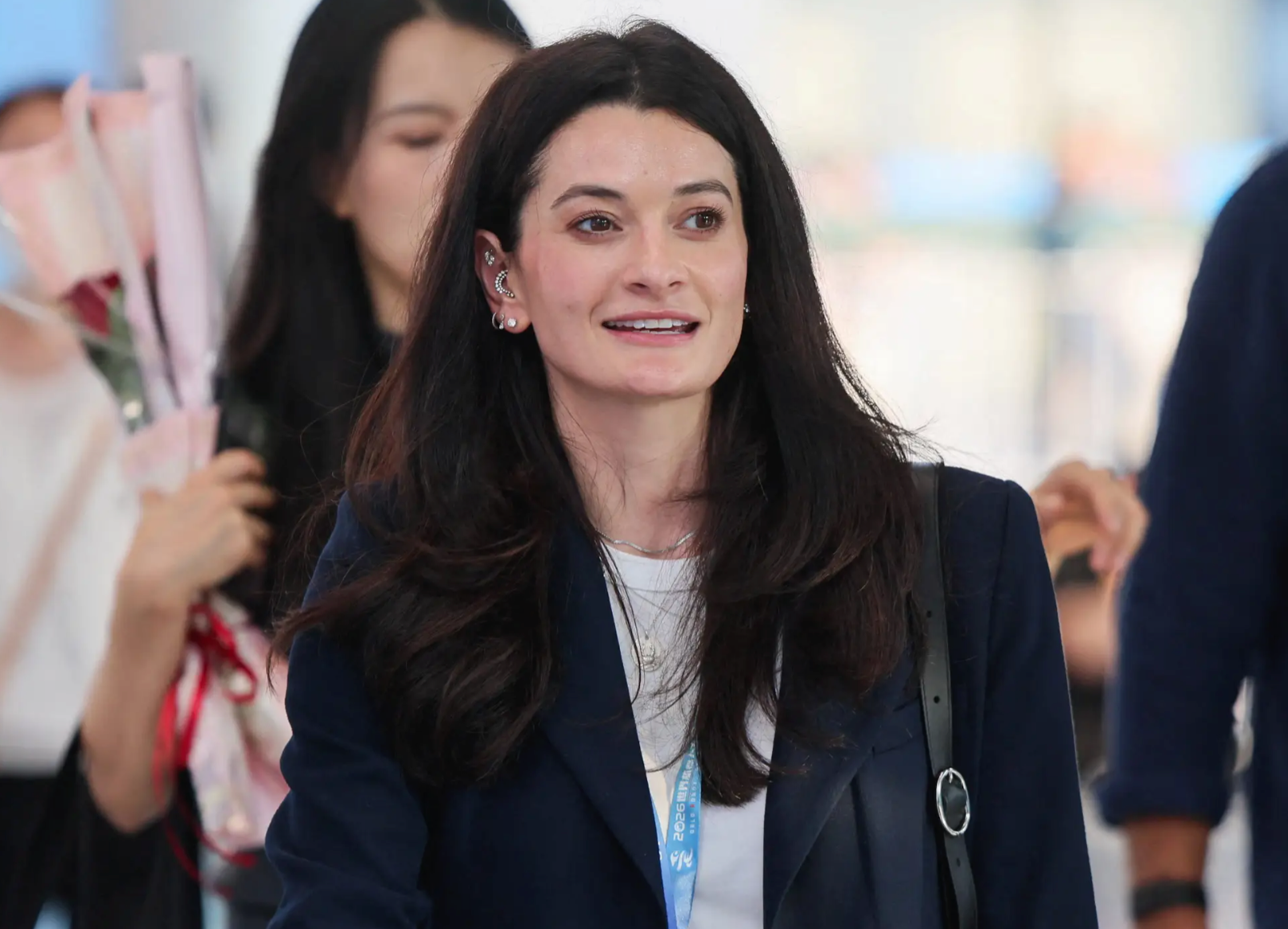
Madison Huang.
The character sketch is consistent. As a former Nvidia employee described her — as one of Nvidia's former employees told the reporter — "Madison Huang is very much like her father: firm in character and sharp in mind, certainly not the kind of marginal figure who is content to remain unknown. She will charge to the very front to raise questions and drive change."
Yet two former Nvidia employees cautioned — two former employees of Nvidia, that is — that although she could take on a heavier leadership role later, at a moment when the company urgently needs to settle succession she lacks the technical depth to inherit her father's responsibilities, her career having concentrated in business and marketing. One of them, one of the two, said he could imagine Madison Huang leading Nvidia in ten years, ten years from now, but that her present experience is not yet enough to direct the company's technology roadmap in the near term. A more favourable view came from a current Nvidia colleague, a colleague currently at Nvidia: even without an engineering background, she can express her views fully in technical discussions, and her role includes shaping the strategy for taking Nvidia's technology to market.
The family footprint extends beyond her. Jensen Huang's son Spencer Huang works in the robotics business unit as a director of product management; two former employees describe him as lower-profile than his sister.
Why does Madison Huang's influence matter more than her title?
Conclusion: influence here is a function of proximity to the product narrative, and physical AI is precisely where Nvidia is placing its next major bet.
Physical AI — AI systems that perceive and act in the physical world, such as robots and autonomous vehicles — is a stated strategic pillar, not a side project. Nvidia's own investor release on March 16, 2026 described an open, integrated platform for designing, training, testing and deploying physical AI together with robotics partners. Whoever shapes how that story is told to customers and partners shapes expectations, and that is the terrain Madison Huang occupies.
This is why the marketing-versus-engineering debate largely misses the point. Influence over the narrative can travel further than a formal title, but it does not automatically convert into the ability to call a technology roadmap. Those are two different assets, and the succession choice is really a decision about which asset Nvidia places at the centre.
Who are the candidate profiles, and how do they compare?
Conclusion: there is no single front-runner; each profile solves a different problem and manufactures a different risk.
| Candidate profile | Core strength | Main gap | Best-fit scenario | Primary risk |
|---|---|---|---|---|
| Madison Huang — family insider, go-to-market | Deep product-marketing influence, fluent in technical debate, narrative control | No engineering background; business/marketing résumé | Market-facing growth and ecosystem role in the near term | Credibility gap on the technology roadmap; lingering questions from peers |
| Spencer Huang — family operator, product management | Inside track on robotics and product execution; lower-profile style | Less public validation as a leader | Continuity in the physical-AI and robotics unit | Limited mandate beyond a single business unit |
| External technologist — outsider | Technical depth and a clean break from founder politics | No internal context; integration cost | A period demanding technical re-architecture | Cultural friction and a possible senior-exit wave |
Read horizontally, the table shows that the choice is not about who is "best" in the abstract but about which problem Nvidia believes it is solving: defending a narrative, maintaining execution, or rebuilding the technical core.
What does the governance backdrop tell us?
Conclusion: the succession debate is happening inside a governance vacuum, and that vacuum — not any individual candidate — is the company's most material exposure.
Nvidia has been described as a roughly $4 trillion company with no formal, public CEO succession plan, a point repeatedly made in November 2026 coverage of key-person risk. Its own Form 10-K, filed February 25, 2026, flags the failure to ensure effective succession planning and smooth leadership transfer as a risk. For readers who have followed our earlier work on tracking Nvidia's governance test under Jensen Huang, this is the structural thread running beneath the headlines; the board-level Wachtell review of Jensen Huang, covered in our practical guide to the Wachtell investigation, reinforces how personal and institutional risk have become intertwined.
The scale of personalisation is unusual. Reporting has described a founder who historically managed a very large group of direct reports, with roughly 60 leaders reporting to him in an earlier structure and about 33 as of November 2026. When decision rights are concentrated this tightly, removing one node is not a like-for-like replacement — it is a redesign.
What do the numbers say about family successions?
Conclusion: the empirical record warns that succession itself is a value-destroying event unless it is prepared well in advance — and gives no automatic advantage to family heirs.
Two data points anchor this. First, research cited by Fortune in May 2026, drawing on more than 200 family-owned businesses across 50 countries and ten sectors, found that such companies underperformed on revenue, shareholder returns and earnings for five years after a leadership transition, with returns falling by an average of 5.7 points. Second, studies on insider versus outsider CEO selection show outcomes depend heavily on context: one line of research finds forced departures are followed by outsider appointments far more often, while family-firm studies report that internal successors can outperform when power is dispersed rather than concentrated.
The expert view aligns. Georgetown University's Jason Schloetzer, who studies CEO succession, argued in MarketWatch that Nvidia investors were about to get a crash course in key-man risk, and that the board had made a mistake by not having a clearly outlined succession plan. His broader point is structural: when a successor is chosen from a large pool of equally capable lieutenants, others may question why they were passed over, opening the door to an exit wave.
Case in point: the Huang family as a live experiment
Conclusion: Nvidia is itself the cleanest case study of the trade-off, because two family members occupy adjacent but very different positions.
Madison Huang's rise — from a 2020 entry to senior director of product marketing for physical AI — shows how narrative influence compounds without a technical title. Spencer Huang's quieter product-management role in robotics shows the alternative: operational credibility with a smaller public footprint. Placing both against the same succession question is a natural experiment in which kind of family capital, marketing-facing or product-facing, the board chooses to reward. The answer will tell the market more about Nvidia's priorities than any mission statement.
Common misconceptions
Conclusion: three assumptions recur in the coverage and each is misleading.
- "Influence equals succession." A senior director with outsized sway is not a designated heir; the two are different things.
- "Ten years from now means soon." One former employee's suggestion that Madison Huang could lead ten years from now is a long-horizon view, not a near-term endorsement.
- "An external CEO fixes everything." Outsiders bring technical depth and independence, but also integration cost and the risk of senior departures.
Action recommendations: what to watch from here
Conclusion: track signals, not speculation — the following checklist turns the debate into observable tests.
- Whether the board names a permanent successor and specifies decision rights over the technology roadmap.
- Whether technical and product leaders stay, and whether any senior exits follow the appointment.
- How the physical-AI and robotics units are positioned in the new structure — a signal of which family profile is being elevated.
- Any revision to succession-related risk language in the next 10-K or proxy statement.
- Whether go-to-market and engineering leadership are separated or merged in the final design.
For decision-makers — investors, partners and enterprise buyers — the practical stance is to price continuity as a variable, not an assumption.
Frequently asked questions
Is Madison Huang Nvidia's chosen successor?
No. Reporting describes growing influence, not a formal designation. Nvidia has no publicly named successor, and former employees explicitly note her technical-experience gap for the near term.
Could a family member still lead Nvidia?
It is possible over a long horizon. One former employee framed Madison Huang as a plausible leader ten years from now, and Spencer Huang holds a product role in robotics — but neither is presented as the immediate answer.
Why is physical AI central to this story?
Because it is a declared strategic pillar, with a platform for designing, training, testing and deploying physical AI announced in March 2026. Both family members work in areas connected to it, which is why their profiles draw attention.
What is key-person risk in this context?
It is the exposure created when a company's value and decisions are concentrated in one person. Analysts and academics have applied the term directly to Nvidia's reliance on Jensen Huang.
Reference sources
- Business Insider — "Inside Madison Huang's Growing Influence at Nvidia": https://www.businessinsider.com/madison-huang-growing-influence-at-nvidia-jensen-daughter-2026-11
- Fortune — McKinsey research on 200 family-business successions: https://fortune.com/2026/05/22/family-business-ceo-succession-mckinsey-research/
- MarketWatch / Morningstar — Jason Schloetzer on Nvidia key-man risk: https://www.marketwatch.com/story/there-is-no-one-at-nvidia-who-would-be-ready-to-replace-jensen-huang-816cc405
- Nvidia Investor Relations — physical AI platform announcement, March 16, 2026: https://investor.nvidia.com/news/press-release-details/2026/NVIDIA-and-Global-Robotics-Leaders-Take-Physical-AI-to-the-Real-World/
- Yahoo Finance — $4 trillion valuation, no formal succession plan: https://finance.yahoo.com/markets/stocks/articles/nvidia-worth-4-trillion-no-173458109.html