
CompanyWatch: How to Read Mars Snacking's AI Discovery Push and Commerce Reorg
Mars Snacking is spending real money on a sales channel that cannot yet produce a receipt. The snacking unit of Mars is testing how its brands appear in AI-generated shopping recommendations and rebuilding its commerce teams around the answer — while publishing no measured sales lift from the work. That gap between organizational effort and attributable revenue is the story worth tracking.
The details come from Neil Reynolds, Mars's global chief customer officer, who described exploratory partnerships with emerging technology companies aimed at understanding how products surface in large language models and which information sources sway those results. The effort is still about establishing a baseline; it is not a declaration that AI assistants are already buying groceries for Mars customers.
The initiative builds on October research by Mars into the future of shopping, developed with Kantar and Synthesis. That earlier work projected two parallel developments: routine purchases handled automatically, and physical stores becoming more experiential. The newer disclosure concerns the organizational and measurement steps Mars is taking in response.
Why AI discovery is becoming the new shelf space
The conclusion first: Mars is treating a brand's position inside model outputs as a commercial asset to be measured, not a technology curiosity. Consumer brands have long vied for search visibility, retail listings and prominent spots in store; AI shopping assistants add another layer between a shopper's request and the products that get considered.
Reynolds put the central question this way: "how do we make sure our brands are discoverable by the LLMs". His answer was not a finished optimization system. The company is working with emerging technology partners to learn how its products currently show up and where that information comes from.
The October research gives that question a commercial frame. Working with Kantar and Synthesis, Mars described three pillars for the next decade of shopping — Effortless, Personal and Experiential — and cited a projection that AI-assisted e-commerce could reach $788 billion by 2035. Mars paired that research with store-of-the-future conversations with major retailers. (Source: Mars research summary, October 2026.)
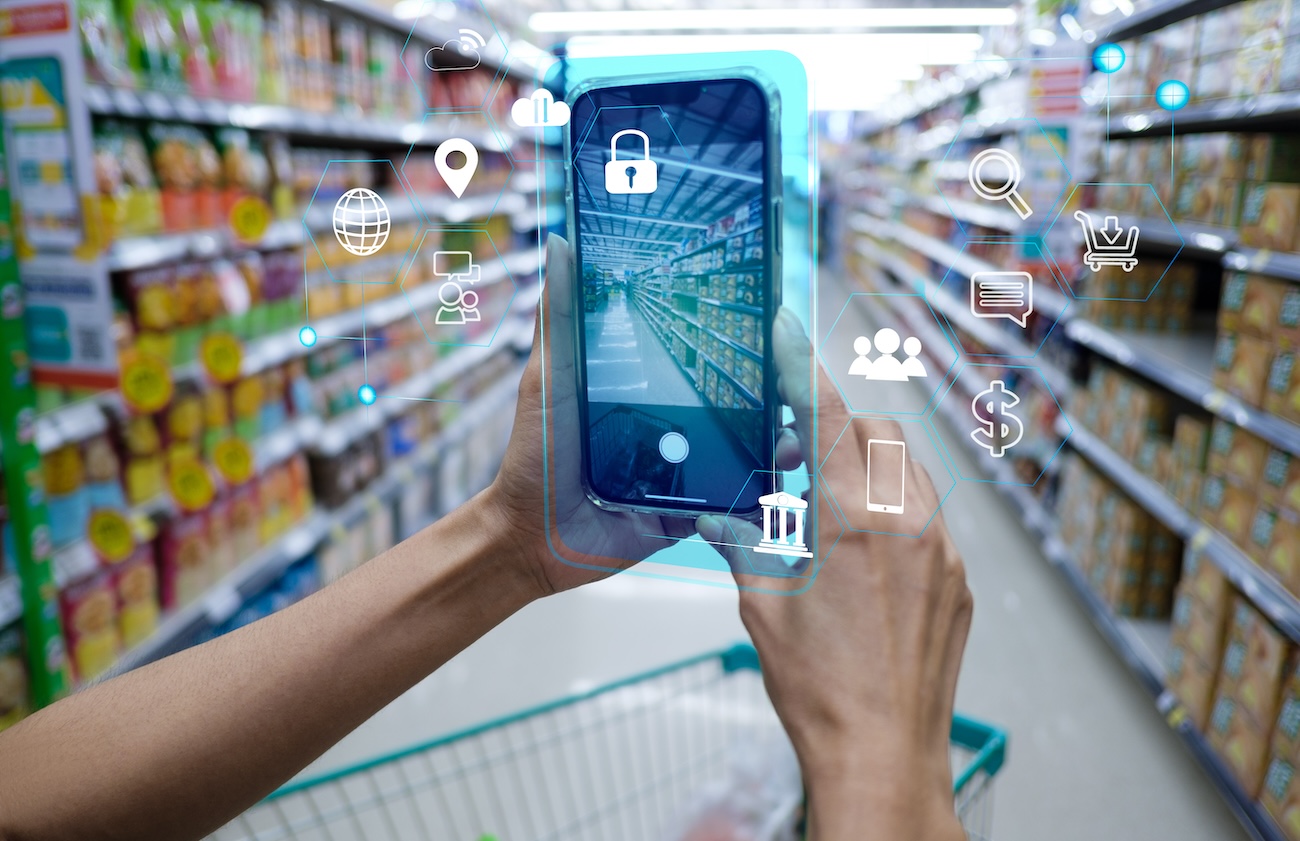
An AI shopping assistant may have no aisle, yet it still shapes which products enter consideration. For marketers, the gap between being mentioned and being purchased matters. A brand could become visible to an assistant without winning a transaction, so Mars treats discoverability and conversion as connected but separate problems rather than assuming better AI visibility automatically produces growth.
That reasoning also makes source quality consequential. Product descriptions, retailer catalogues, availability information and other underlying records can influence how a brand is represented, though the interview does not disclose which sources Mars has found most influential. Claims about an AI-visibility improvement would need measured evidence the company has not yet published.
What One Demand squads change — and what they do not fix
The more durable part of the story is organizational. Mars is forming One Demand performance squads that unite brand management, consumer insights, key accounts, category teams and agency partners, linking the people accountable for consumer demand with those closer to retail execution.
That is a weightier response than handing AI search to an SEO specialist. The brand team may grasp positioning, the account team may grasp retailer requirements, and the data team may spot gaps in product information; an answer generated outside any single one of those teams still rests on decisions made across all of them. The deeper constraint may be coordination rather than a shortage of new tools.
Part of the infrastructure predates this interview. In June 2025, Mars appointed Publicis to lead connected commerce and several other marketing functions; Reynolds now frames the partnership as a route to linking media, commerce and relevant data more tightly. The agency arrangement is not a new deal, and Mars has not attached any new financial or performance result to its AI-shopping work.
There is also a financial-structure reason for the missing metrics. Mars is family-owned, with net sales of more than $65 billion, so it does not answer to quarterly earnings calls or public-market pressure to quantify every pilot. That freedom cuts both ways: Mars can prepare early, but outside observers cannot verify whether the preparation is paying off. (Source: Forbes company profile.)
How to build an AI-visibility baseline: five steps
Mars's own sequence offers a usable template. The logic is to measure the answer before trying to change it.
- Inventory the outputs, not the tools. Sample the questions your shoppers actually ask across the major assistants, and record whether the brand is mentioned, cited, or absent.
- Trace the source of truth. Identify which records — product descriptions, nutrition and attribute data, retailer catalogues, availability feeds — feed the answers you received.
- Separate visibility from conversion. Keep a two-column ledger (mentions versus verified purchases) instead of a single "AI sales" number.
- Stress-test stability. Vendor research indicates only 30% of brands stay visible from one AI answer to the next, and 20% across five consecutive answers, so a single snapshot can mislead. (Source: AirOps, November 2026.)
- Define the decision the data must support. Pricing, assortment, retailer negotiation and media spend each need different evidence.
AI search visibility has an attribution problem — AI search attribution is pushing marketers to combine visibility data, first-party signals, and modeling to estimate how answer-engine presence affects revenue. (ContentGrip)
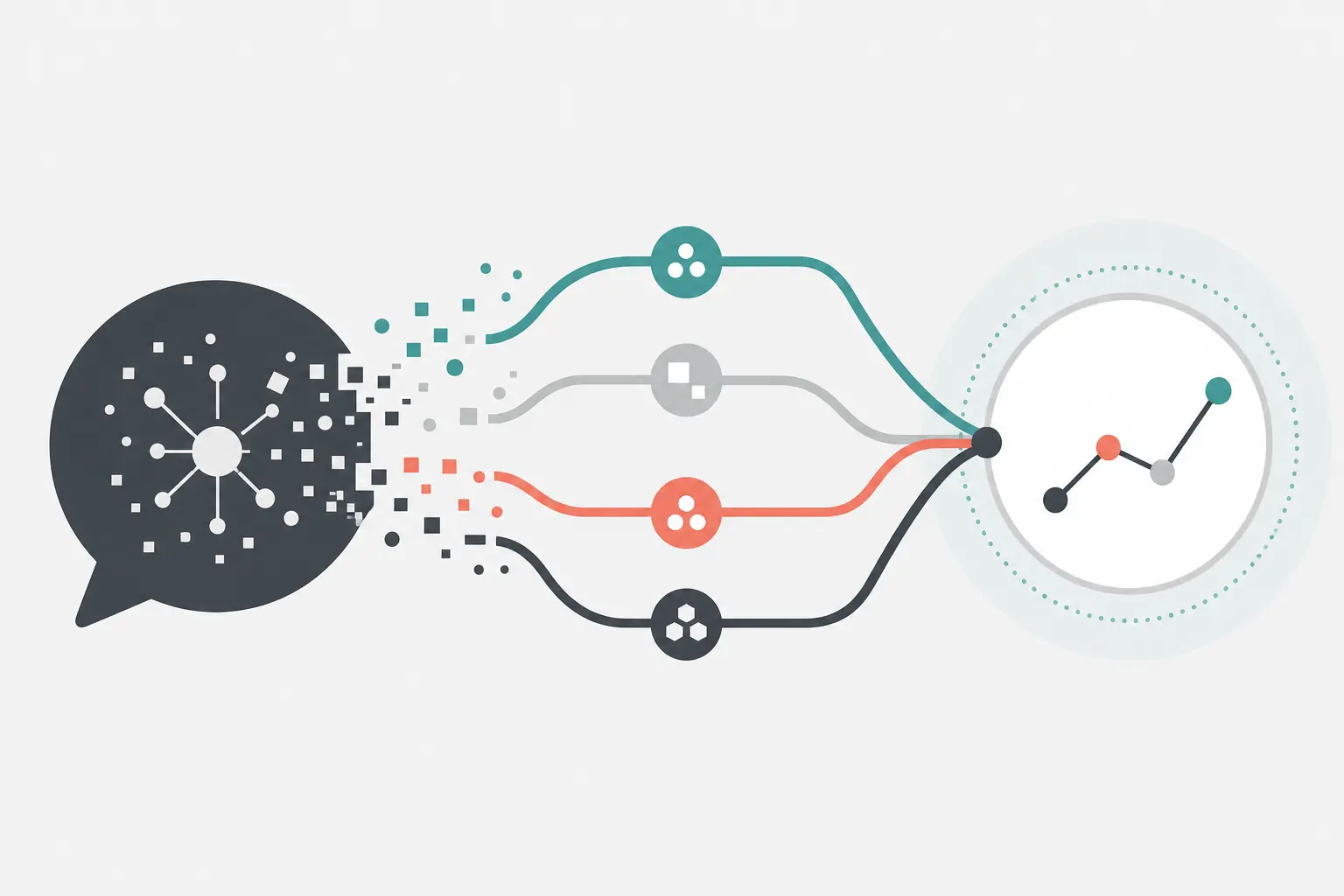
That is why the baseline phase matters more than any tool purchase. A brand could become visible to an assistant without winning a transaction; until Mars publishes a link between recommendation exposure, retail action and the resulting purchase, its AI-shopping work should be read as preparation spending, not proven growth.
Common mistakes when preparing for AI shopping
- Treating visibility as sales. A mention in an assistant answer is not an order; the two need separate evidence chains.
- Handing the problem to one specialist. One Demand squads exist because brand, category, account and agency decisions all feed the same answer.
- Assuming the physical store disappears. Automated replenishment of routine items is not the same thing as product discovery; sampling, merchandising and store experience still carry impulse occasions.
- Declaring victory from one snapshot. Given answer instability, a single measurement is a photograph, not a trend.
- Buying tools before defining the decision. Software does not fix product-information gaps that sit upstream of every assistant.
Where Mars sits in the platform race
Three different layers are often confused. Mars's present focus sits earlier in the advertiser's process than either platform effort below.
| Layer | What it solves | Stage as of late 2026 |
|---|---|---|
| Instacart with ChatGPT | A transaction pathway so assistant-led orders can be placed and fulfilled | Integration approach, oriented to checkout |
| Google's Universal Commerce Protocol | A technical connection standard for AI-led commerce between agents and retailer systems | Launched January 2026; updated March 2026; founding members include Google, Shopify, Etsy, Target and Wayfair |
| Mars's own work | Brand presence inside assistant answers, plus the teams able to respond | Baseline research and internal reorganization; no published transaction role |
The comparison matters because platform integrations and brand readiness are not the same milestone. Retailers can make automated transactions possible without resolving every product-information or measurement challenge that advertisers face — which is precisely the gap Mars is working on.
FAQ: what to ask about Mars Snacking's AI-commerce push
Is Mars Snacking already selling through AI assistants?
No. The company is establishing a baseline for how its brands appear in model outputs and which sources feed those answers. It has not published a measured sales result.
Why has Mars published no AI-visibility performance data?
Attribution is unsettled — a recommendation exposure, a retail action and a purchase are three different events — and as a family-owned business Mars faces no quarterly deadline to quantify the pilot.
Does the plan make physical stores irrelevant?
No. The October research projected two tracks: automated replenishment of routine purchases and stores that carry discovery, experiences and impulse occasions. For snacks, the two are different marketing problems.
How does the Publicis appointment fit?
Mars appointed Publicis in June 2025 to lead connected commerce and several other marketing functions. Reynolds now describes it as the route to linking media, commerce and data more tightly, though no new financial terms have been disclosed.
What should a brand team do first?
Run the baseline: audit how the brand renders across major assistants, trace which records feed those answers, and build a two-column visibility-versus-sales ledger before spending on optimization.
Action checklist for commerce and brand teams
- Audit the top shopper questions in your category across three major assistants; record brand presence and cited sources.
- Fix upstream records first — product descriptions, attribute data and availability feeds.
- Stand up a cross-functional squad modeled on One Demand: brand, insights, key accounts, category and agency in one room.
- Build the two-column ledger and reconcile mentions against first-party sales data.
- Re-measure across consecutive answers to establish stability before reporting any lift.
- Classify each SKU by occasion — replenishment or impulse — and align store and data investment accordingly.
What to watch next — and what it means for investors
Four signals would tell you the preparation is turning into performance: a published AI-visibility baseline or benchmark; named retailer pilots from the store-of-the-future conversations; a shift in Publicis-linked commerce spend toward AI discovery; and wider adoption of Google's Universal Commerce Protocol, which would lower the coordination cost for everyone.
Until one of those appears, the honest reading is that Mars is buying optionality in a channel whose revenue cannot yet be reconciled. For investors, the watch item is not whether a Mars brand shows up in an AI answer — it is whether Mars can turn that appearance into a measurable commercial result. Treat the spend as preparation until the company proves otherwise.
References
- Mars, "Forget the grocery list: Mars predicts the next decade of shopping and retail" (October 6, 2026): https://www.mars.com/news-and-stories/articles/forget-the-grocery-list-mars-predicts-next-decade-shopping-retail
- CNBC, "Google bolsters bet on AI-powered commerce with new protocol" (January 11, 2026): https://www.cnbc.com/2026/01/11/google-launches-universal-commerce-protocol-bets-on-ai-powered-retail.html
- AirOps, "7 AI search metrics to track in 2027" (November 2, 2026): https://www.airops.com/blog/ai-search-metrics
- Forbes, Mars company profile: https://www.forbes.com/companies/mars/
- ContentGrip, "Mars tests AI shopping visibility for snack brands" (November 12, 2026): https://www.contentgrip.com/mars-ai-shopping-visibility/