
CompanyWatch Field Guide: How to Read the Marvell–Lumentum $115 billion AI Connectivity Deal Step by Step
Nobody is asking investors to take this transaction on faith, and that is exactly why it deserves a structured read. Marvell — the AI networking specialist Jensen Huang has labelled the next trillion-dollar company — agreed to take over Lumentum, an optical component maker, in an all-stock transaction valued at $115 billion, joining two Nvidia-backed suppliers whose products together carry enormous volumes of data between AI chips. For a CompanyWatch reader the interesting part is not the headline but the testable mechanics: what the merger consideration actually obliges each side to do, which engineering assets move across the balance sheet, whether the acquirer's own integration record supports the claim, and what has to happen between now and a closing date that sits years away. Below is the checklist we would run before writing a single-company note on this deal.
The event file: what was announced, in numbers
| Item | What the official record shows |
|---|---|
| Acquirer | Marvell, whose record second-quarter fiscal 2027 revenue was $2.739 billion, up 37% year on year, with data center revenue up 46% (Marvell investor relations press release) |
| Target | Lumentum, headquartered in San Jose, California; fiscal 2026 net revenue of about $3.01 billion grew roughly 83% year on year, with the fourth quarter at $1.006 billion, up 109% (Lumentum results and earnings call transcript, via The Motley Fool) |
| Consideration | A fixed exchange ratio of 4.500 Marvell shares for each Lumentum share, with no cash alternative (Marvell press release, investor.marvell.com) |
| Headline value | $115 billion on an enterprise-value basis, including debt (Reuters coverage of the transaction) |
| Implied share price | Roughly $1,132 per Lumentum share, a 23.9% premium to the company's Oct. 28 close (Yahoo Finance) |
| Closing window | Expected in the first half of calendar year 2028, contingent on shareholder and regulatory approvals; the merger agreement carries an outside date of November 1, 2027 that can be extended for pending clearances (Marvell 8-K and press release) |
| Stated thesis | Co-design network processors alongside lasers for optical transceivers, and become a category leader in AI connectivity |
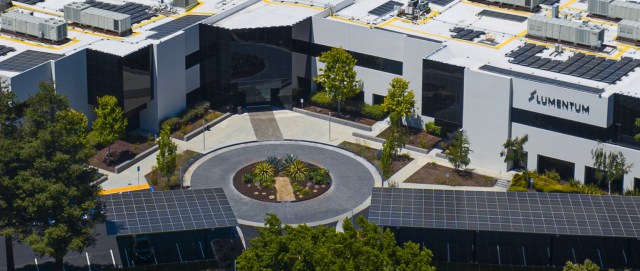 Lumentum supplies the high-performance lasers, optical transceivers and optical circuit-switching capability that this deal places inside a semiconductor company. (Source: Lumentum)
Step 1 — Read the headline number twice
The first trap in a merger of this scale is arithmetic confusion. The $115 billion figure is enterprise value, debt included; other outlets sized the equity leg far lower, with The Wall Street Journal describing a roughly $80 billion all-stock combination. Those two numbers describe different denominators of the same transaction, not competing estimates of it, and a note that quotes only one of them invites the reader into a false debate. The second trap is structural. Because the consideration is a fixed exchange ratio rather than a fixed price, holders of Lumentum stock carry Marvell's share-price risk from November all the way to a closing that both companies expect in the first half of calendar 2028 — the $1,132 per share quoted at announcement is a snapshot, not a promise. For valuation work, that means re-running the implied premium against Marvell's own trading price on any date you cite, not the announcement date.
Step 2 — Inventory what physically changes hands
Marvell already sells electrical and optical interconnect, network switching and XPU attach. What Lumentum adds is upstream and, in the current cycle, scarce: high-performance lasers, optical transceivers, optical circuit switching (OCS), and specialised compound semiconductor manufacturing including indium phosphide (InP). Read as a bill of materials, the combination lets Marvell design a network processor and the light source it drives as a single problem instead of two hand-offs.
The practical stakes sit in near-packaged optics (NPO) and co-packaged optics (CPO), where the laser is the load-bearing component and also one of the tightest constraints in the AI supply chain. Marvell has recently been assembling the same layer from the other direction, having acquired Celestial AI to strengthen its optical interconnect offering. The competitive read is straightforward: a more vertically integrated networking portfolio gives Marvell a credible way to attack Broadcom on system-level design rather than on individual chip SKUs, and gives it leverage over a bottleneck it previously had to buy at market.
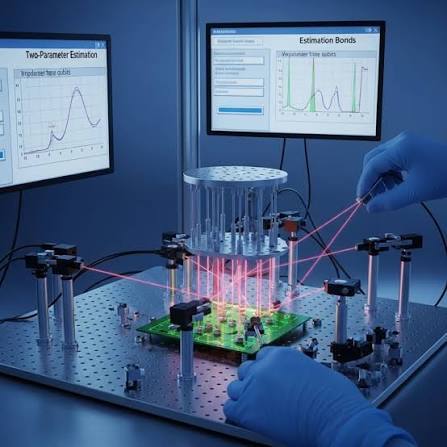 Lumentum manufactures semiconductor lasers, laser sub-assemblies and wavelength management systems — the layer Marvell now controls. (Source: Lumentum)
Step 3 — Stress-test the integration case against the playbook
Marvell is not new to buying photonics. It closed the Inphi transaction in April 2021 — a deal reported at roughly $10 billion in cash and stock that took months to clear Chinese regulators before it could complete, according to CNBC — and that acquisition is widely credited with building the optical DSP franchise now sitting inside the data center business. Two lessons carry forward. First, a large optics purchase has previously worked for this management team, so the strategic claim is not untested. Second, regulatory clearance for optics deals with China-facing supply chains is the slow part, and the 12-to-18-month-plus window the parties themselves describe for this transaction should be read as a floor.
The target is also not a passive asset. Lumentum has spent years rolling up its own photonics portfolio — Oclaro in 2018, then NeoPhotonics and Cloud Light in 2023 — so the buyer inherits a company that is itself mid-integration, with customer commitments and factory transitions already in flight. That is the largest execution risk the deal memo should carry: two integration programmes stacked on top of each other, inside a demand cycle that is doubling quarter by quarter rather than stabilising.
Step 4 — Treat the market reaction as evidence, not as noise
Shares of both companies fell after the announcement, which tells you something about how the market priced the combination rather than the strategy behind it. The timing explains part of it: one of the semiconductor industry's largest takeovers landed after a week of bruising tech sell-off, at a moment when investors are growing skittish about AI economics. Axel Rudolph, chief technical analyst at IG Group, told Reuters that this is an enormous bet and that investors are right to ask whether Marvell is paying too much and taking on too much at once. That is the honest framing of the trade. The counter-evidence sits in the demand data: Lumentum's non-GAAP gross margin reached 50.4% in its fiscal fourth quarter with a 36.6% operating margin, and guidance for the following quarter pointed to $1.23 billion to $1.28 billion of revenue — numbers that describe a component market with pricing power, not a commoditising one.
Step 5 — Trace the Nvidia triangle
Nvidia backs both sides of this deal and invested $2 billion each in Marvell and Lumentum earlier this year, a fact that cannot be left out of any assessment of the transaction's governance optics. Murphy characterised the combination as a double down on supporting Nvidia and dismissed worries about circular dealmaking by the ecosystem's most important customer. "I think having two of the key suppliers come together, that support that ecosystem, is going to be a big benefit for Nvidia," he said. For a company-watch reader the practical implication is a concentration question rather than a loyalty question: the same lead customer is now a shareholder, a supplier financier and the counterparty on both ends of the merged order book, and the way that structure is disclosed in future filings will deserve close reading.
Sizing the prize: what sits behind the $550 billion claim
Michael Hurlston, Lumentum's chief executive, frames the joint addressable market at $550 billion, and the evidence he cites is specific rather than rhetorical. On the company's August 2026 earnings call he pointed to rising demand for ultra-high-power lasers for co-packaged optics, first orders for external light sources and progress on near-packaged designs, alongside a systems segment that grew 123% year on year in the fiscal fourth quarter on the ramp of cloud transceivers and optical circuit switching.
Read structurally, the argument is about the hand-off. In cloud computing, the junction between silicon-based NICs and laser-driven transceivers is one of the principal connectivity bottlenecks, and tightening that electrical-optical signal chain cuts both latency and power draw. Independent research points the same way: LightCounting expects silicon photonics-based designs, including linear-drive pluggables and co-packaged optics, to lift their share of optical transceiver modules from 30% in 2025 to 60% in 2030, and forecasts Ethernet switch chip sales growing at a 43% compound rate from 2025 to 2030 once co-packaged optics content is counted. Against that backdrop, designing the switch and the laser together looks like a market-structure bet rather than a product tweak.
None of this is a surprise to anyone who has covered the sector. Since the early 2020s, industry watchers had been calling for a far tighter co-design of electrical and optical technology, and they describe this deal as a fascinating move and a giant wager that the next generation of AI data will travel mostly on light rather than copper. Matt Murphy, chairman and CEO of Marvell, set the frame at announcement: "AI infrastructure is undergoing a fundamental architectural shift toward optical connectivity, creating an opportunity that comes along once in a generation," he said, adding, "We intend to help shape the next era of AI connectivity."
Common misconceptions to drop before you write the note
- "All-stock means Marvell paid nothing." The consideration is dilutive and priced at a 23.9% premium to the Oct. 28 close; the cost appears in share count and per-share economics instead of in a cash outflow.
- "The valuation doubled overnight." The $115 billion headline is an enterprise-value figure that includes debt, not a fresh equity price agreed in an auction market.
- "Optics will replace copper everywhere." The realistic change through 2028-2031 is location, not elimination: the optical engine moves closer to the package while electrical links keep doing the work inside the rack.
- "This is mainly an Nvidia stock story." Nvidia backs both companies, but hyperscaler procurement of 200G-per-lane and faster transceivers is driven by power budgets and switch-port economics common to every AI build-out.
- "Announcement equals completion." Shareholders of Marvell and Lumentum must still vote, regulators must still clear the deal, and the November 1, 2027 outside date can slip if approvals are outstanding.
Action recommendations by reader role
- Investors: model the combination on a diluted-share basis using the 4.500 fixed exchange ratio, and treat the stretch between the proxy mailing and the first half of calendar year 2028 as a window driven by Marvell's own trading range rather than by Lumentum's fundamentals.
- Industry analysts: build an optics-content curve — transceiver ASP plus CPO attach rate — and compare it with Marvell's disclosed 46% data center growth to test whether the merged revenue mix shifts toward systems or stays in silicon.
- Competitive and strategy teams: use Broadcom as the reference point for system-level bids, and re-check roadmap assumptions about who controls laser supply through the 2027 and 2028 capacity cycles.
- Procurement and business development: map your exposure to indium phosphide laser chips and cloud transceiver supply, because until closing Lumentum continues to serve every customer it has today, including Marvell's rivals.
- Governance and compliance readers: watch how the Nvidia $2 billion each position and any related supply commitments are described in merger documents, including recusal language and customer-concentration risk factors.
The pre-closing dashboard
- Deal risk: shareholder meeting dates, regulatory filings, and any drift in the effective time toward the November 1, 2027 outside date.
- Dilution: Marvell share count once the exchange ratio converts, plus the combined net debt embedded in the $115 billion enterprise value.
- Demand proof: Lumentum's quarterly guidance against its fiscal 2027 first-quarter target of $1.23 billion to $1.28 billion, and optical circuit switching order momentum.
- Mix proof: any disclosure that separates CPO and NPO revenue from pluggable transceiver revenue.
- Competition: Broadcom's response in switch-plus-optics bids, and rival laser supply agreements.
- Customer structure: changes to Nvidia procurement commitments, and whether other hyperscalers diversify optics sourcing.
- Execution: stated integration milestones, fab transfer plans, and the talent-retention disclosure by which Inphi-style deals are judged.
Treated as a corporate event rather than a headline, this is a wager that the binding constraint on AI clusters has moved from compute to connectivity, and that the firm controlling both the processor and the light source will set the terms for the next product generation. The strategy has support in the demand data and a precedent inside Marvell's own history; the numbers attached to it are large, the closing is years away, and the dilution and concentration questions are genuine. Until those are answered, the useful posture is neither applause nor scepticism but a tracked list — and a re-read of this file every quarter until the deal either completes or explains why it did not.