
GlobalBizSight CompanyWatch Case Review: Maserati Design Tests the Huawei, JAC and Stellantis Triangle
On November 9, Yicai reported that the Maserati-Maextro cooperation project is named Maserati Design and is driven by Huawei, JAC and Stellantis as a three-party structure. The case shows a premium carmaker using China's smart-electric supply chain without giving up its overseas badge: domestic sales run through Maextro, while overseas sales keep Maserati's identity. The design is confirmed, and the next fourth quarter is the first production-update milestone.
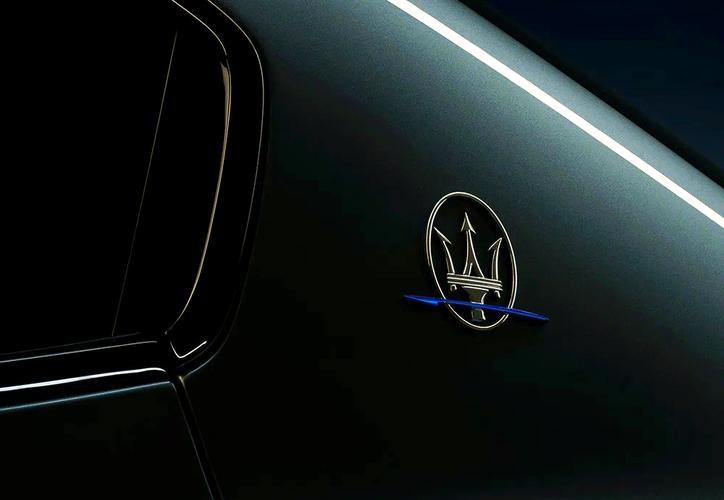
Why did Maserati Design split roles instead of using a traditional joint venture?
Because each partner owns a bottleneck the others cannot instantly replace. The reported arrangement is not a conventional equity joint venture but a capability exchange: Stellantis and Maserati contribute brand identity and design direction; JAC contributes manufacturing capacity and a domestic production path; Huawei contributes smart-vehicle software, cockpit and driving technology under the Zunjie/Maextro ecosystem.
The key quote from people familiar with the project, as reported by Yicai (First Financial), is straightforward: “Due to Maserati's domestic production qualification issue, the project will be manufactured through JAC in a Huawei-empowered form.” That sentence matters because it turns a regulatory and asset question into a supply-chain question: who can actually build the vehicle under China's rules, and who can make it competitive in software-defined electric mobility?
The process was not a one-day announcement. Reuters reported on September 4, 2026 that Stellantis was in talks with Huawei and JAC about a long-term industrial partnership for Maserati. Viewed as a case timeline, September's talks are the negotiation layer, November 9's naming is the project layer, and the next fourth quarter is the first execution checkpoint.
What do the two routes protect, and where could they collide?
The two routes protect brand value and market access at the same time. On the domestic route, Zunjie/Maextro is the sales subject; on the overseas route, the vehicle keeps Maserati's badge and brand presentation. That split reduces one risk—export-market brand confusion—while creating another: pricing and positioning discipline must keep the overseas Maserati identity separate from the domestic technology halo.
- Domestic sales: sold through Zunjie/Maextro, using the local brand architecture Huawei and JAC already operate.
- Overseas sales: still presented under Maserati, preserving the Italian luxury identity for global customers.
- Manufacturing: carried through JAC, because the project is tied to Maserati's domestic production qualification issue.
- Technology: provided by Huawei's smart-vehicle platform, which is the differentiator China-market buyers increasingly expect.
- Design: confirmed under Maserati's design direction, making the project more than a contract-manufacturing placeholder.
This architecture fits Huawei's broader Harmony Intelligent Mobility Alliance, or HIMA, where China Daily has placed Maextro among the brands using Huawei's alliance approach alongside Aito, Luxeed and Stelato. The comparison is useful: Zunjie/Maextro is already a known luxury label inside that system, so Maserati Design is a brand partnership layered onto an existing production and technology stack, not a standalone factory experiment.
What does today's Cailianshe sub-brand report add?
It widens the strategic frame without merging two different projects. Today, Cailianshe reported that Zunjie/Maextro may introduce one new sub-brand, with a likely price range of RMB 400,000 to RMB 500,000 and SUV-led products. The same report said the sub-brand and the Maserati cooperation project are two independent projects, and the specific details of the sub-brand are not yet final.
The implication is analytical, not confirmed: a RMB 400,000 to RMB 500,000 sub-brand could create a second ladder below the higher-priced Zunjie/Maextro products, while Maserati Design may serve as a more globally legible prestige experiment. For a sense of the existing brand's pricing altitude, CnevPost reported that the Maextro S800 luxury sedan started at RMB 708,000 and secured more than 8,000 orders within about 50 days of launch. The new sub-brand rumor should not be treated as a Maserati badge price; it is a separate brand-architecture move that may affect dealer attention, channel conflict and export perception.
What are the common misreadings of Maserati Design?
The most important error is to read the November 9 report as a completed joint venture or a confirmed sales plan. The verified facts are narrower: a project name, a three-party structure, a confirmed exterior design, and a planned production update in the next fourth quarter. From that point, several assumptions are still open.
- Misreading one: “Stellantis is handing Maserati to Huawei.” Evidence says no; the overseas route keeps Maserati's identity.
- Misreading two: “The next fourth quarter is a launch date.” The report describes it as a milestone for further production developments, not a guaranteed retail start.
- Misreading three: “The RMB 400,000 to RMB 500,000 sub-brand is the Maserati project.” Cailianshe described them as two independent projects.
- Misreading four: “JAC is only a contract manufacturer.” The domestic production qualification issue gives JAC's role structural importance, not just assembly work.
What should CompanyWatch track next?
Track evidence of factory readiness, brand controls and channel separation first; ignore speculative styling commentary second. For investors, analysts and business-development teams, the practical scorecard is whether Maserati Design converts a reported agreement into an auditable industrial chain.
- Watch for Stellantis, Huawei, JAC or Zunjie/Maextro statements that confirm or deny the reported three-party project.
- Watch for plant, certification or production-line disclosures before the next fourth quarter, because “manufactured through JAC in a Huawei-empowered form” must become verifiable capacity.
- Watch price lists and configurators: overseas Maserati pricing and domestic Zunjie/Maextro pricing must remain coherent enough to avoid diluting Maserati.
- Watch software claims: Huawei's cockpit, assisted-driving and electrical architecture need measurable delivery, not only marketing language.
- Watch partner sell-through: our internal analysis of Seres' October 2026 sales fall shows how quickly demand cycles can expose weaknesses in a vehicle ecosystem; Huawei-affiliated brand volumes are a useful warning indicator.
| CompanyWatch signal | What to confirm | Why it matters |
|---|---|---|
| Project naming | Use of Maserati Design in official or partner communications | Reduces ambiguity about whether this is an independent cooperation project or a sub-brand rollout. |
| Production path | JAC facility, qualification filings and supply-chain readiness | The project's domestic manufacturing logic depends on JAC's ability to produce compliant vehicles. |
| Brand boundary | Separate sales identity for domestic and overseas routes | Protects Maserati's global equity while allowing Zunjie/Maextro to carry local software and pricing power. |
| Commercial cadence | Next fourth quarter production update | A confirmed update would move the story from rumor to executable roadmap. |
FAQ: What is the practical answer now?
What is Maserati Design?
Maserati Design is the reported name of a cooperation project involving Maserati and Zunjie/Maextro, structured around Huawei, JAC and Stellantis as a three-party arrangement. The exterior design is confirmed, while further production developments are planned for the next fourth quarter.
Why would domestic sales use Zunjie/Maextro while overseas sales use Maserati?
Because the two routes solve different problems: domestic sales can use the local brand and technology identity already accepted by Chinese buyers, while overseas sales preserve Maserati's premium badge for markets where the Italian luxury narrative carries more value.
Is the RMB 400,000 to RMB 500,000 sub-brand the same project?
No. The today Cailianshe report says the sub-brand and Maserati cooperation are two independent projects, and the sub-brand details are not yet final.
What is the biggest risk?
The biggest risk is not a failed design, but a blurred brand architecture. If domestic positioning, software promises and lower-priced sub-brand products are not carefully separated from the overseas Maserati identity, the project could strengthen its supply chain while weakening its luxury price umbrella.
Sources and verifiable references
- Yicai report republished by Sina Finance — names Maserati Design, Huawei, JAC and Stellantis as the three-party project, confirms exterior design and notes the next fourth quarter milestone.
- Cailianshe — reports the possible RMB 400,000 to RMB 500,000 sub-brand, SUV focus, and that the sub-brand and Maserati cooperation are two independent projects.
- Reuters — earlier September 4, 2026 reporting on Stellantis talks with Huawei and JAC over a Maserati partnership.
- China Daily — identifies Maextro as part of the Harmony Intelligent Mobility Alliance brand system.
- CnevPost — provides pricing and demand context for the Maextro S800, a useful reference point for the Zunjie/Maextro brand altitude.
By Marc Hale, GlobalBizSight CompanyWatch.