
CompanyWatch: Microsoft's Rewards Push Tests Whether Windows 11 Users Will Switch to New Outlook
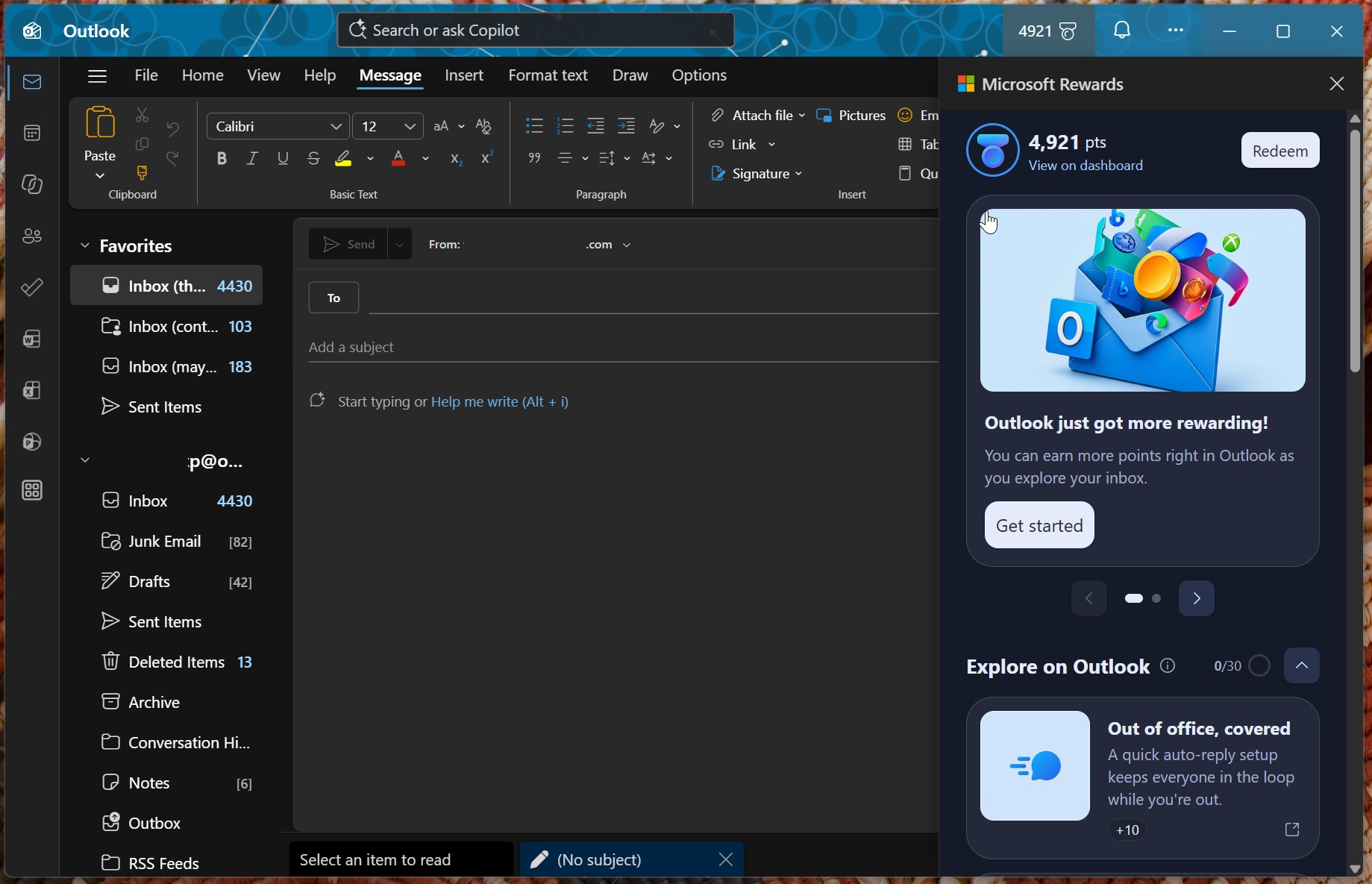
Microsoft is using Microsoft Rewards points to encourage Windows 11 users to try the new Outlook. This reward push signals migration friction. In recent years, Microsoft has wanted the new client to become the default Windows mail experience, while traditional Outlook remains valuable to advanced users. Recently reported task mechanics show the company is paying attention to first-use behavior, not only feature quality.
Why is Microsoft attaching points to the new Outlook?
The short answer is that Microsoft still needs a concrete reason for users to act. The new Outlook is not an isolated experiment: its architecture is closely aligned with the Outlook web app, allowing updates to travel faster across web, Windows and mobile-style experiences. That design choice helps Microsoft ship capabilities consistently, but it does not automatically erase habit. Many users already have mail rules, calendars, add-ins, local archives and delegation patterns built around classic Outlook. A points offer lowers the first barrier: try the client before deciding whether it can replace the one you know.
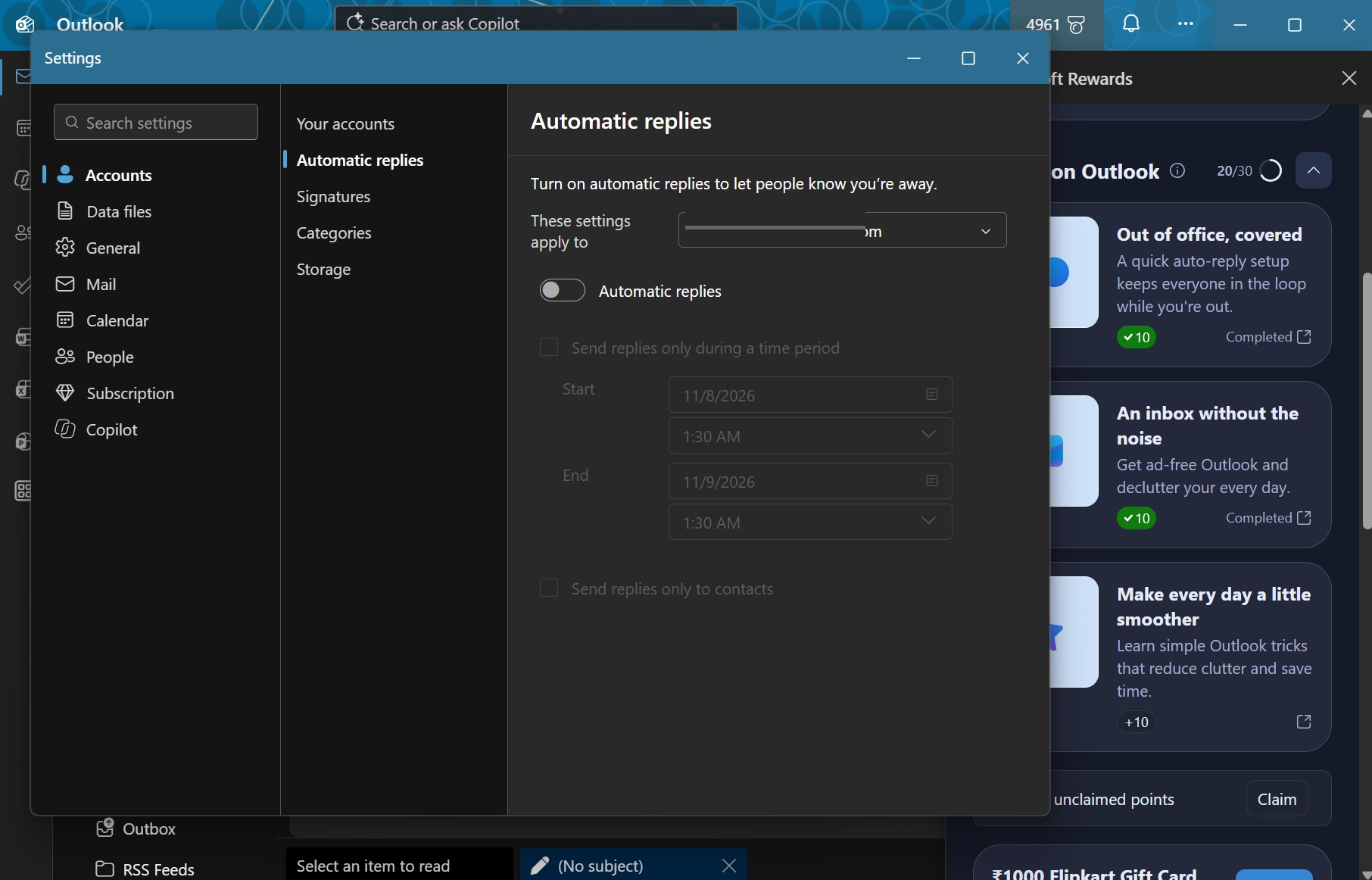
A Windows Latest report dated 8 November 2026 described an updated Rewards icon in the Outlook title bar. The publication said the tasks shown that day could provide up to 30 Microsoft Rewards points, and several activities could be completed by opening settings, visiting a Microsoft 365 pricing page or triggering a Bing search. The article’s own framing was unusually blunt: it said Microsoft was “begging” users to leave Outlook Classic. The quote captures the market question better than the points themselves: the incentive is small, but it reveals that Microsoft still sees user movement as a bottleneck, not simply a feature roadmap.
What does the reward campaign mean for classic Outlook users?
For classic Outlook users, the practical message is not to panic, but to observe the incentive design. If Microsoft must add rewards to generate clicks, the client’s value proposition is still competing against familiar workflows. Advanced users, enterprise administrators and compliance teams usually care about deeper issues: add-in compatibility, local data handling, macro or rule behavior, offline reliability, security policy and administrator control. Those needs are not resolved by a loyalty program. For organizations, the new Outlook may be strategically important, but classic Outlook can remain operationally important until the required functions are matched and tested.
Microsoft 365 adds a commercial dimension. The new Outlook fits more naturally with a subscription model in which features, security, AI services and updates are packaged together. The classic Outlook experience is often judged by different criteria: it can feel more native, more controllable, and less like a web application wrapped inside a desktop window. Recently, Windows Latest also noted that Microsoft is working on faster search for classic Outlook by letting the older client use Windows Search when connectivity is poor. That suggests a dual-track reality: Microsoft still supports legacy user needs while the platform direction increasingly favors the new Outlook.
How to read the shift: background, causes and likely impact
Background first: Microsoft has spent several update cycles trying to make the new Outlook the default mail experience on Windows. The company's web-aligned client can share code, design and telemetry with the Outlook web app, which makes product management easier. The cause of the new reward action is adoption friction. The impact is that more casual users may test the new Outlook, but long-term migration still depends on feature completeness and user trust.
Analysts should separate three layers. The first layer is acquisition: did more users open the new Outlook after seeing a points prompt? The second layer is retention: did they return after the reward was consumed? The third layer is substitution: did their mail, calendar and add-in workflows survive the move without support tickets? Only the second and third layers determine whether Microsoft can accelerate the transition without creating avoidable customer dissatisfaction.
| Signal | Evidence | Commercial interpretation |
|---|---|---|
| Points become a migration tool | Windows Latest reported 8 November 2026 tasks worth up to 30 Microsoft Rewards points | Microsoft is using small incentives to overcome inertia, not to introduce a major capability |
| Web architecture remains central | new Outlook is built around experience parity with the Outlook web app | cross-platform consistency can speed feature delivery, but may expose gaps in classic workflows |
| Classic Outlook is still being improved | Windows Latest reported faster search using Windows Search for classic Outlook | the company has not abandoned legacy users, but investment priority is likely uneven |
Common misconceptions about the new Outlook rewards push
- “Points equal forced migration.” They do not. A reward may generate curiosity, but it does not compel an enterprise or a long-time personal user to abandon a workflow that still works.
- “A simple click proves the new Outlook is ready.” It does not. The more useful metric is whether users keep the new Outlook after completing tasks and whether support costs rise.
- “Classic Outlook is immediately obsolete.” The evidence says the opposite: it retains advantages in mature customization, local control and some enterprise scenarios, and Microsoft is still adding improvements.
- “Microsoft 365 subscription automatically improves Outlook choice.” The subscription can provide integration, but the client decision remains a question of workflow fit, performance expectations and admin governance.
Action recommendations for readers tracking this story
- Measure retention, not clicks. If a product team adds incentives, it should track whether new Outlook users remain after seven and thirty days, not whether they start.
- Pilot, then compare. IT teams should test classic Outlook and new Outlook side by side for add-ins, mail rules, delegation, offline access, security policies and mobile behavior.
- Watch the support signal. If rewards prompts increase ticket volume around migration, that indicates users are seeing an incentive but not a complete replacement.
- Check the platform risk. Migration is also a data-control issue. A related CompanyWatch case on platform sunsets and lost user history shows why abrupt changes can become governance problems rather than simple interface choices.
FAQ: What the rewards push does and does not show
Is Microsoft using points because the new Outlook is failing?
Not necessarily. The points campaign indicates that migration has not become self-sustaining enough for Microsoft to rely only on product promotion. The new Outlook is strategically central to Windows and the Microsoft 365 ecosystem, but failure is too strong a word before measuring long-term retention and enterprise adoption.
Should traditional Outlook users switch immediately?
No. Users should switch only after testing the features they depend on. For simple mail and calendar use, the new Outlook may be enough. For users with advanced rules, offline needs, add-ins or compliance-sensitive workflows, classic Outlook may still be the safer daily driver for now.
Why does the architecture matter?
Because the new Outlook is aligned with the Outlook web app, Microsoft can update it more consistently across surfaces and can push features through web-style delivery. That can speed innovation, but it may also change the performance and local-control experience that traditional Outlook users expect.
What is the most useful next metric?
Retention quality. The interesting question is not how many users earn points; it is how many keep using the new Outlook after the reward stops and whether their critical business workflows remain intact.
Final assessment
In the coming period, Microsoft’s approach should be read as an experiment in behavior change rather than proof of product superiority. The new Outlook is the company’s preferred destination; classic Outlook remains a practical present for many users. The rewards push matters because it shows Microsoft is willing to invest small incentives to reduce friction. It also shows why the transition may remain contested: points can trigger a first step, but they cannot by themselves settle the larger question of whether the new Outlook fully replaces traditional Outlook in advanced and enterprise settings.
Reference sources
- Windows Latest, “Microsoft is begging you to ditch Outlook Classic, and now it’s handing out Rewards points to try New Outlook on Windows 11,” 8 November 2026: https://www.windowslatest.com/2026/11/08/microsoft-is-begging-you-to-ditch-outlook-classic-and-now-its-handing-out-rewards-points-to-try-new-outlook-on-windows-11/
- Microsoft Support, “Feature comparison between new Outlook and classic Outlook”: https://support.microsoft.com/en-us/outlook/getstarted/feature-comparison-between-new-outlook-and-classic-outlook
- GlobalBizSight CompanyWatch, “CompanyWatch Case Review: Tencent's Sogou Wenwen Shutdown Shows How Platform Sunsets Erase Points, Histories and User Control”: https://globalbizsight.com/companywatch/tencent-sogou-wenwen-service-shutdown