
Microsoft's AI PC Ladder: How Tiered Windows Hardware Could Redefine the Company's Platform Edge
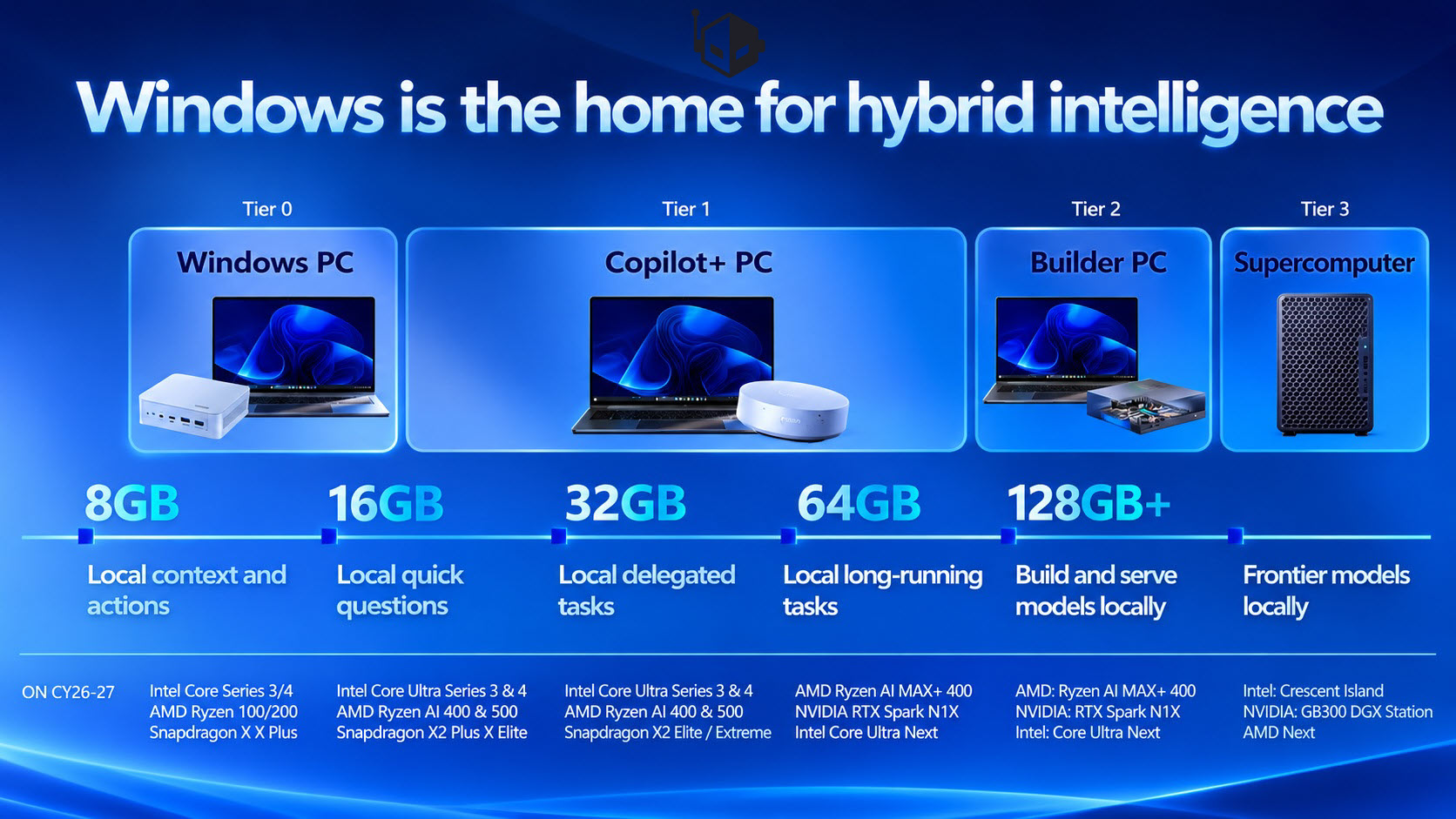
Microsoft's newly mapped AI PC plan looks like a hardware table, but the company signal is stronger than a table. The roadmap centers on the phrase "Windows is the home of hybrid intelligence": the company's next platform advantage is not just putting AI inside Windows, but dividing workloads between local devices and cloud services. In this setup, the personal computer becomes a managed inference endpoint, while AMD, Intel and Qualcomm become partners that supply silicon for different price points, performance levels and use cases.
For a CompanyWatch view, the roadmap is useful because it reveals how Microsoft may try to standardize a fragmented market before a dominant PC design emerges. The company is not merely promoting one laptop or one assistant. It is trying to make memory tiers, NPU capability, Copilot functions and model routing part of the commercial grammar of the Windows ecosystem.
Why the company is mapping memory tiers before naming a flagship
The roadmap's entry category, Tier 0, is the clearest sign that Microsoft is treating AI PC adoption as a volume problem. Tier 0 devices use 8GB memory and are aimed at entry-level demand. Their role is not to prove that Windows can run frontier workloads locally. Their role is to absorb light AI tasks: email processing, office document editing, video conferencing and moderate web browsing. The logic is simple: if a low-cost machine can understand basic context and execute simple operations, AI becomes a normal Windows feature rather than a premium label.
That logic has a practical limit. In today's PC market, 8GB is already close to a minimum line, and heavier applications or multitasking can turn memory into a bottleneck. The roadmap therefore presents Tier 0 as an adoption floor, not a productivity ceiling. It can bring users into the AI experience, but it should not be mistaken for a future-proof platform.
At Tier 0, Microsoft's planned silicon coverage is broad: Intel Wildcat Lake series processors, AMD Ryzen 100 and Ryzen 200 series products, and Qualcomm Snapdragon C, Snapdragon X and Snapdragon X Plus platforms. Some related products are already in the market, with prices generally around $500. The strategic reading is that Microsoft needs cheap Windows AI endpoints first; without them, the Copilot+ ecosystem cannot build a large installed base.
Tier 1 as the commercial center of gravity for the Windows AI PC plan
Tier 1 is where Microsoft's roadmap moves from accessibility toward mainstream capability. The memory range runs from 16GB to 64GB, and devices in this range are positioned to meet the Copilot+ PC standard. The difference from Tier 0 is not only headroom. It is task type: local problem understanding, local agent tasks, and AI workloads that need longer execution time.
This tier is important because it converts a user-visible story into an infrastructure story. If tasks that previously had to be uploaded to the cloud can be completed locally, the user may gain faster response, better privacy handling and less dependence on connectivity. Microsoft's plan implies that the PC is no longer only a display terminal for AI; it is becoming a routing node that decides which work belongs on the device and which work belongs in the data center.
The roadmap names several platforms for this mainstream tier: Intel Core Ultra 3 Panther Lake, AMD Ryzen AI 400 Gorgon Point, Snapdragon X2 Plus and Snapdragon X2 Elite. Later options, including Intel Nova Lake and AMD Ryzen AI 500 Medusa Point, are shown in longer-range planning. The message to chip partners is direct: Microsoft's mainstream AI PC standard will be a multi-vendor race, not a single-supplier arrangement.
The top of the ladder: builder machines and local frontier workloads
Above the mainstream range, Microsoft's roadmap becomes more aggressive. As local model size increases, the company expects devices with memory above 64GB, and some professional platforms to reach 128GB or higher. This is the part of the plan where AI PC stops being a consumer refresh story and starts becoming a developer and enterprise story.
Microsoft labels this segment with terms such as builder PCs and supercomputer-class AI PCs. The target users are developers, research institutions, content creators and enterprise buyers who need larger local models, complex reasoning, code generation, content production and specialized computing workloads. In chip terms, the roadmap points beyond the next generation of AMD and Intel AI processors to stronger graphics computing platforms, including Nvidia high-performance solutions.
Here the company's strategic tension is visible. A high-end AI PC can support more local intelligence, but local intelligence still needs software, power, thermals, price acceptance and an application ecosystem. The roadmap's Nvidia reference suggests Microsoft is no longer relying only on NPU-centric definitions; the company may be preparing a mixed hardware future in which CPU, GPU, NPU and unified memory all participate in Windows AI scheduling.
What the tier plan means for competition and supply chain
Microsoft's public promotion of the Copilot+ ecosystem may have cooled compared with earlier hype, but the roadmap says the opposite: the company has not weakened its AI PC strategy. Instead, it is assembling a full stack from 8GB to more than 128GB. The practical competition in the coming years may move away from clock speed and raw CPU performance alone, and toward local AI compute, NPU throughput, model-loading capacity and the quality of the Windows runtime that schedules models.
For partners, the plan creates both opportunity and constraint. Chipmakers can win sockets if they cover the right tier, but they also inherit the burden of proving that AI features are more than marketing labels. Device makers may face a new design discipline: memory and NPU are no longer optional specs to brag about; they are entry tickets into a Windows AI class. For cloud partners, the message is nuanced: local execution does not erase Azure's role, but it may shift some workloads toward hybrid orchestration.
Microsoft AI PC data points worth quoting
The following table separates facts from the approved roadmap and supplemental public data that help investors and analysts judge how real the tiering is.
| Data point | Reading | Source |
|---|---|---|
| 8GB for Tier 0; 16GB to 64GB for Tier 1; above 64GB and 128GB or higher for premium targets | The roadmap turns memory size into a segmentation tool for Windows AI adoption. | Approved Microsoft AI PC roadmap |
| Copilot+ PC public requirements include an NPU of at least 40 TOPS, 16GB RAM and 256GB storage | This anchors the mainstream tier and shows that Microsoft's definition is more than a brand label. | Microsoft Copilot+ PC learning center |
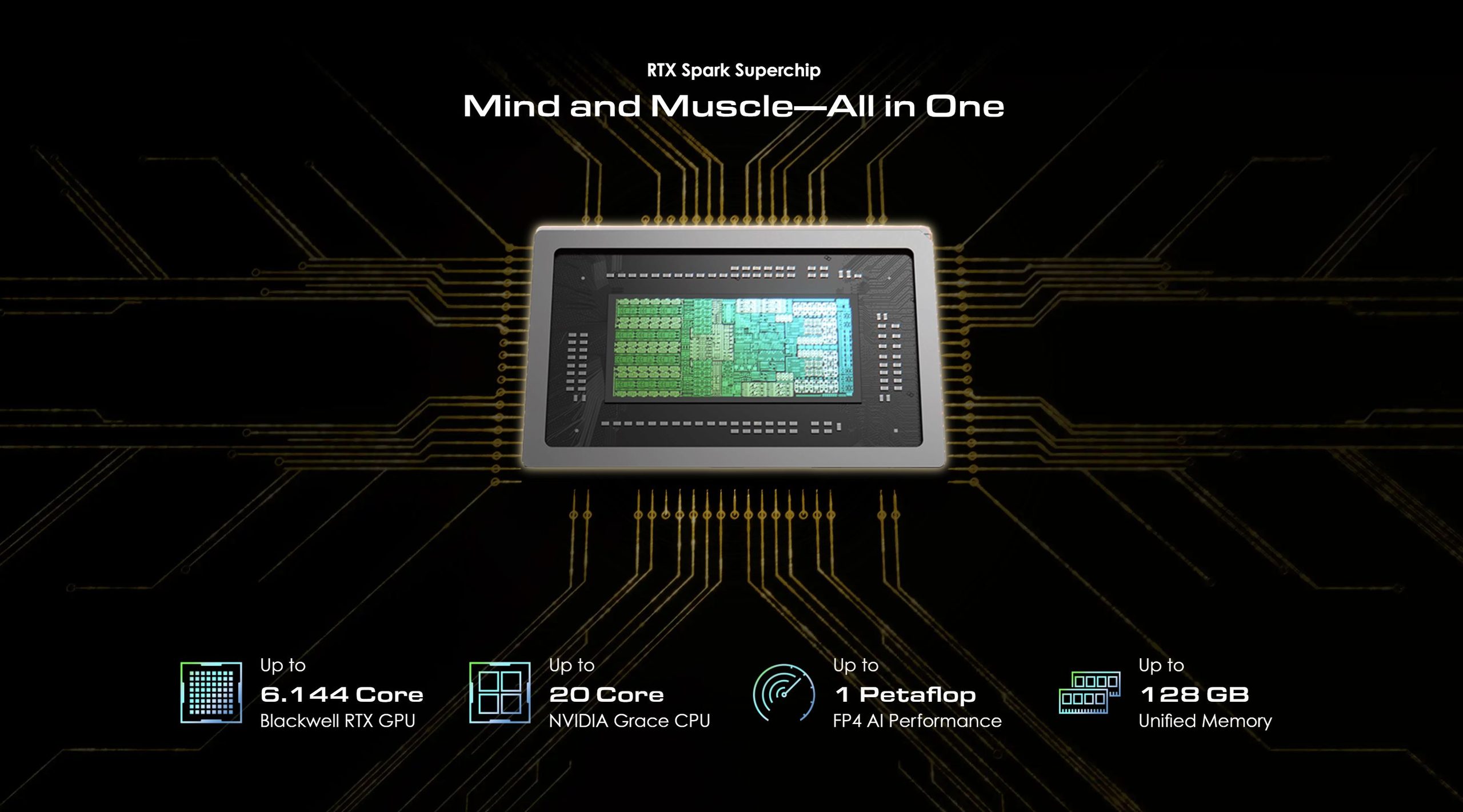
| Nvidia describes RTX Spark as offering up to 1 petaflop of AI compute and up to 128GB of unified memory | It gives the roadmap's 128GB or higher target a concrete hardware example. | Nvidia newsroom |
| Microsoft's Surface Laptop Ultra is listed from $2,599.99 and can reach the $5,899.99 configuration | It shows the premium edge of local AI PCs is already pricing at workstation level, not commodity PC level. | Microsoft Surface Laptop Ultra page |
Three common misconceptions in the AI PC narrative
- More memory means a better AI PC by itself. The roadmap's 8GB Tier 0 shows that memory can be enough for light tasks but inadequate for heavy production. A useful AI PC needs memory, NPU or GPU capability, storage, latency and software integration together.
- Copilot+ PC is a guarantee that the cloud will lose importance. It is better read as a capability floor for local AI. Microsoft's own framing, "Windows is the home of hybrid intelligence," still depends on cloud coordination.
- Builder PCs and supercomputer-class AI PCs are the immediate mainstream. They are a leading edge, not a broad market. The volume case still rests on Tier 0 and Tier 1.
Action recommendations for CompanyWatch readers
For investors, analysts, enterprise technology teams and channel managers, the roadmap should be tracked through a short checklist rather than a single product announcement.
- Watch whether Tier 0 devices priced around $500 can sustain basic AI tasks without causing negative user reviews tied to memory limits.
- Track the share of shipped PCs that meet the 16GB to 64GB Tier 1 band and satisfy Copilot+ PC requirements.
- Monitor Intel Core Ultra 3 Panther Lake, AMD Ryzen AI 400 Gorgon Point and Qualcomm Snapdragon X2 platforms for launch timing, pricing and benchmark credibility.
- Check whether Nvidia-powered builder PCs and supercomputer-class AI PCs create a separate developer-led market, or remain premium demonstrations.
- Follow the pace at which Windows routes tasks between local models and cloud models, because that determines whether hybrid intelligence becomes an operating-system feature or only a marketing concept.
Bottom line: Windows is being positioned as the operating layer between local models and cloud models
Microsoft's AI PC plan is, at company level, a standard-setting move. By defining tiers from 8GB to more than 128GB, naming AMD, Intel, Qualcomm and Nvidia as ecosystem forces, and framing Windows as the place where hybrid intelligence lives, Microsoft is trying to make the next PC cycle less about CPU generations and more about local AI readiness. The Windows ecosystem can benefit if the tiers are clear and measurable. It can also be damaged if buyers discover that Tier 0 machines disappoint, Tier 1 devices overpromise, or high-end builder PCs cannot find enough local workloads to justify their cost. For now, the roadmap is the company's answer to a difficult question: how to turn AI from a cloud-only service into a hardware-graded part of Windows.