
CompanyWatch | NVIDIA China GPU Pivot: Can the RTX 5080 24GB Version Become the New Ceiling?
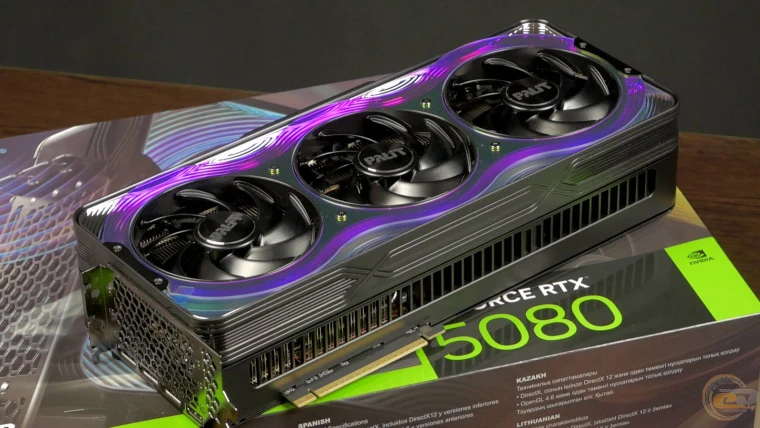
Event snapshot: a channel-led reset in the China market
CompanyWatch first places this story in its proper frame: it reads less like a product announcement and more like a regional shelf reset. Supply-chain accounts say NVIDIA may be moving toward a narrower lineup for the China market, with RTX 5090 D V2 and RTX 5080 16GB version supply ending or heavily wound down, while RTX 5080 24GB version becomes the leading high-end option. If that plays out, the key change for buyers and channel partners is not the number of cores or a benchmark chart; it is the disappearance of one familiar price-performance tier and the arrival of a larger-memory, fewer-choices configuration.
Because the information still comes from channel reports, analysts should separate what is confirmed from what is inferred. NVIDIA has not, in this narrative, unveiled a formal discontinuation schedule. But the reports are consistent enough on three points to merit watch: the 16GB card is being cleared, the 24GB card may arrive sooner than expected, and the top-end ladder in the China market may be simplified.
What the reports say about inventory, timing and top-end choice
- RTX 5080 16GB inventory is described as effectively cleared on the NVIDIA side, leaving downstream stock for about two months. The tail-end sell-through is expected to run while a successor reaches shelves.
- RTX 5090 D V2 is described as the China-oriented RTX 5090 variant with 24GB memory. If its supply is withdrawn, the consumer-card chain loses its most obvious regional halo model.
- RTX 5080 24GB version may then become the top visible NVIDIA gaming card in that market, despite not being a full RTX 5090-class product.
- Timing is the first original data point outside the master report: TweakTown reported that the replacement path could arrive as early as December 2026 and more widely by January 2027, according to the same supply-chain narrative.
Why this is a business adjustment, not simply a spec bump
The logic becomes clearer when memory is read as a supply-chain variable rather than a marketing number. Existing RTX 5080 products use 16GB GDDR7, commonly configured with 8 2GB modules. A 24GB version can be built in theory around 8 3GB modules, preserving the card family while increasing capacity. That is the kind of change a board partner can execute without redesigning the entire product stack, provided the memory modules, testing, and certifications align.
For end users, more memory may be valuable if workloads are capacity-bound: high-resolution texture sets, large creative files, and some local AI tasks benefit from room to place model weights and buffers. For buyers whose applications are already limited by compute rather than memory, the same 5080 class will not suddenly behave like a 5090-class product.
The adjustment also fits a cost backdrop. TechSpot, in a mid-2026 pricing analysis, noted that rising memory prices were already affecting cards with larger VRAM configurations. That does not prove why NVIDIA would make this move, but it helps explain a plausible business motive: when component cost and availability move, a company may consolidate around fewer, higher-value configurations rather than maintain a wide but fragile SKU map.
Configuration table: what changes, and what is still speculative
| Model | Memory / module picture | Read-through |
|---|---|---|
| RTX 5080 16GB version | 16GB GDDR7, mainly 8 2GB modules | The familiar card; current supply and channel stock are the short-term constraint. |
| RTX 5080 24GB version | 24GB; theoretically 8 3GB modules | The likely successor in this regional story, but module configuration is not confirmed. |
| RTX 5090 D V2 version | 24GB memory | A China-market-oriented 5090 variant; its reported exit reshapes the top tier. |
The table keeps the facts separate from inference: 24GB capacity and module counts are plausible engineering paths, not promises. Until NVIDIA or add-in-card partners publish final board layouts and memory vendor specifications, the exact module configuration should be treated as provisional.
Pricing logic: premium above 16GB, discount below RTX 5090 D V2 version
Price is the cleanest way to judge whether this is a good product update or a narrower market strategy. The report's basic inference remains reasonable: in a high-price GPU market, RTX 5080 24GB version should be expected to carry a visible premium over RTX 5080 16GB version. At the same time, because it is still an RTX 5080 rather than a true RTX 5090, its ceiling should sit below RTX 5090 D V2 version. If the gap between the 24GB version and the withdrawn 5090 variant is too small, the market may simply see less choice at a higher average selling price.
For financial analysis, the relevant question is margin mix. A larger-memory model can lift revenue per unit, but it also raises exposure to memory pricing. For channel analysis, the relevant question is substitution: will existing 16GB buyers accept a 24GB card at a higher entry price, or will some defer purchases? The answer will influence how quickly inventory clears and whether the new SKU becomes a volume product or a scarcity-priced alternative.
Key data references
- Inventory runway: about two months for downstream RTX 5080 16GB stock, according to channel descriptions carried in the same report chain.
- Capacity options: 16GB versus 24GB, with memory architecture potentially moving from 8 2GB modules to 8 3GB modules.
- Launch window: December 2026 to January 2027, as summarized by TweakTown.
- Cost backdrop: memory price pressure on larger-VRAM cards, noted by TechSpot.
Common misconceptions: what the rumor does not mean
- More memory is not automatic performance. 24GB can reduce capacity limits, but it does not turn RTX 5080 into RTX 5090.
- China-market reporting is not global policy. The supply-change story is tied to the China market, so other regions may keep different RTX 5080 configurations.
- The exit of RTX 5090 D V2 is not necessarily the end of 24GB gaming cards. The 24GB version can still serve users who need capacity, even if the flagship halo changes.
- Clearance of inventory does not prove low demand. It can also indicate that channel partners are avoiding carrying two adjacent variants through a transition.
- Channel timing is not confirmed retail timing. The December or January window is useful for planning, but certification, logistics, and retail allocation can move launch dates.
Action recommendations for analysts, resellers and buyers
- For investors and equity analysts: watch SKU mix and average selling price, not a single rumor. If NVIDIA sells a higher-memory 5080 as the top regional card, ask whether revenue per unit rises because of demand or because cheaper configurations were removed.
- For hardware resellers: track how quickly 16GB inventory clears against the about two months estimate. A faster sell-through may support premium pricing; a slower one may expose weak replacement demand.
- For creators and local AI users: validate workflows by memory limit before choosing 24GB. Projects that fail because 16GB is insufficient will gain value; projects that fail because compute is insufficient will not.
- For buyers waiting for a China-market card: avoid paying near 5090 prices for a 5080 24GB card unless the price premium is modest and the memory capacity is genuinely needed.
- For supply-chain analysts: monitor GDDR7 module quotes and board-partner listings. The shift from 8 2GB modules to 8 3GB modules matters more if memory costs continue to rise.
CompanyWatch verdict
The real story here is a company trimming choices, not simply adding bytes. A rumored pullback of RTX 5090 D V2 and RTX 5080 16GB version in the China market would make RTX 5080 24GB version the most important data point to track: it determines whether the high-end ladder becomes more expensive, more constrained, or genuinely better suited to modern memory-heavy workloads. The next useful signals are official SKU confirmations, board-partner product pages, actual retail pricing, and whether the 24GB version becomes a mainstream replacement rather than a scarce, price-led alternative.