
GlobalBizSight CompanyWatch Q&A: OpenAI's Suspension Wave — Who Is at Risk, What Breaks on November 20, and What to Do Before December
By Marc Hale | GlobalBizSight CompanyWatch
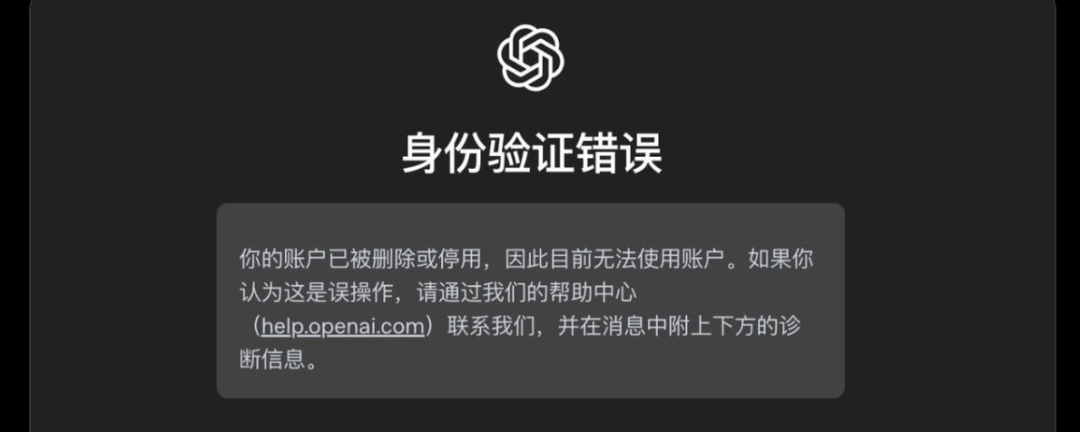
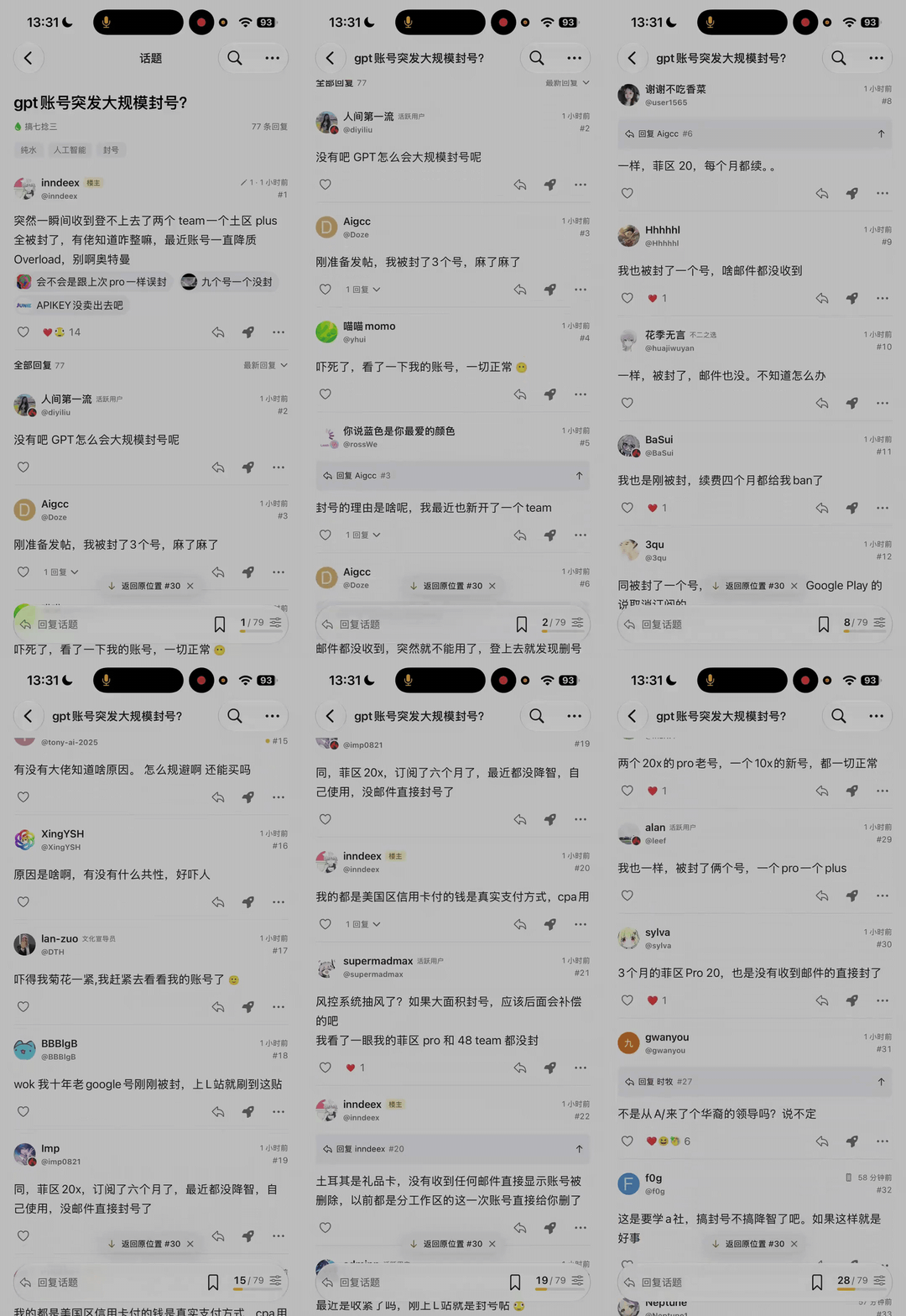
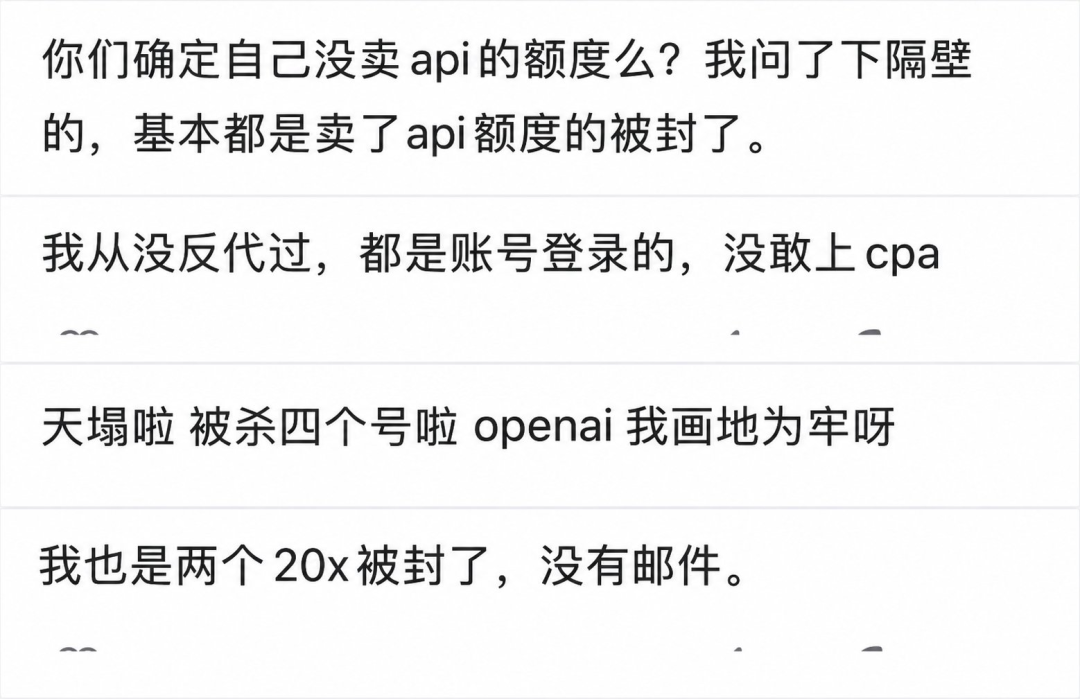
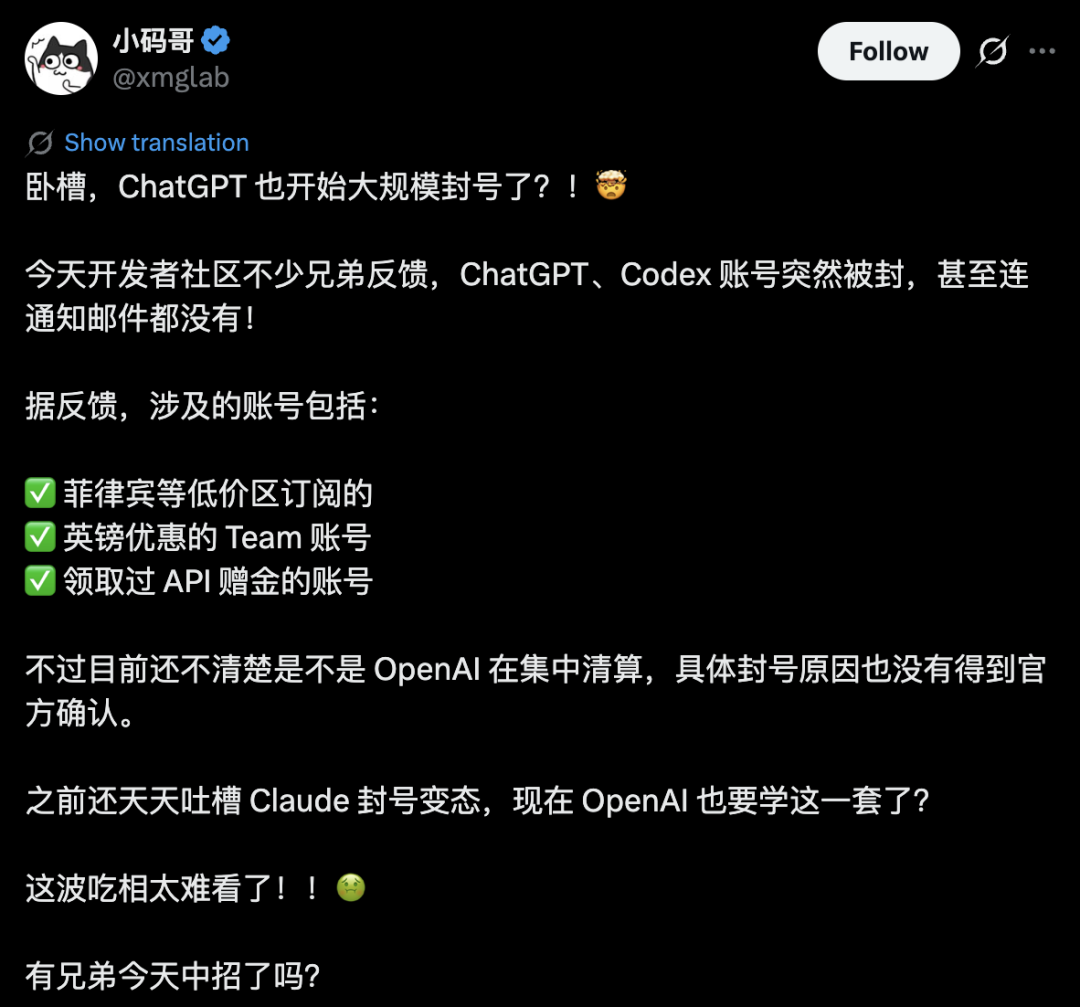
Short answer: exposure now comes less from what you ask the model than from how your account is billed, shared and reached. Free API keys, low-priced Team seats, Philippines-region and Turkey-region accounts and accounts riding unofficial reverse-proxy relays are being cut first — and paying users are collateral damage, including normal old accounts renewed for four or five months.
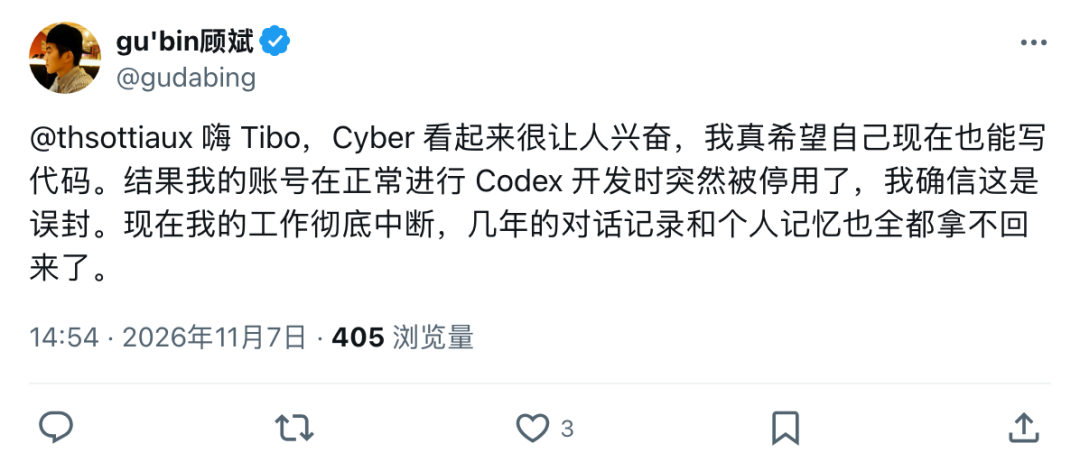
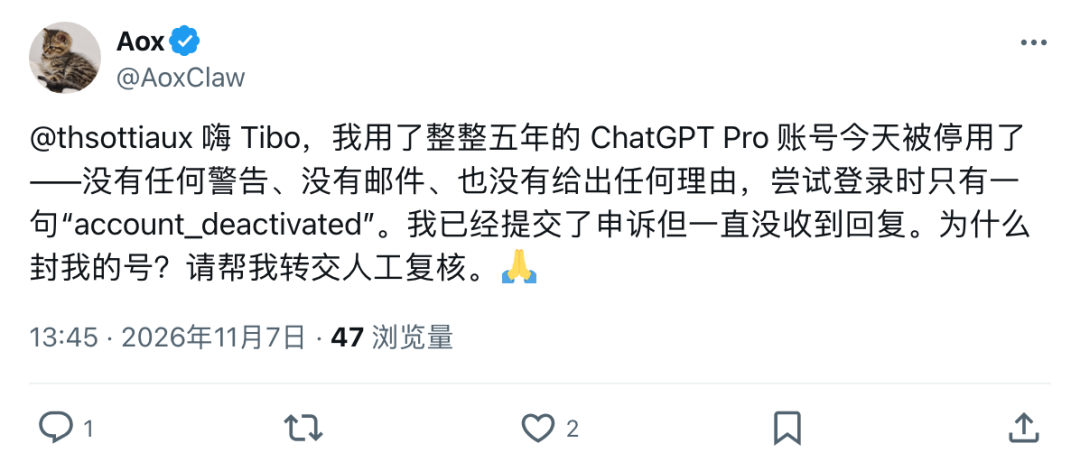
CompanyWatch reads this as a monetisation and governance decision rather than a content-moderation sweep. The timing sharpened the story: Cat Wu had just moved from Anthropic to OpenAI when ChatGPT switched on a mass suspension wave. The community reaction was blunt — "please, spare us" — and the complaints landed in the X comment threads of Tibo, OpenAI's former Codex lead, where developers mid-code-run found themselves locked out.

Which accounts is OpenAI actually cutting off?
Conclusion first: the sweep is tier-blind and geography-blind. Unlike the earlier purge Anthropic ran, OpenAI's clean-up covers free API accounts, shared car-pool team logins and the $200-a-month Pro tier in the same net. Confirmed hits so far include Pro 20x, Pro, several Team accounts, Plus accounts and student-verified accounts. Users in the United States and other countries report that plainly ordinary, single-owner accounts were disabled too.
The damage most users complain about is not the subscription — it is the accumulated asset behind it. One developer described several years of conversation history and personal memory locked in the cloud and unrecoverable; another reported a five-year Pro account disabled with no warning, no email and no stated reason, and said the appeal went nowhere.

Is a payment outage the same thing as a ban?
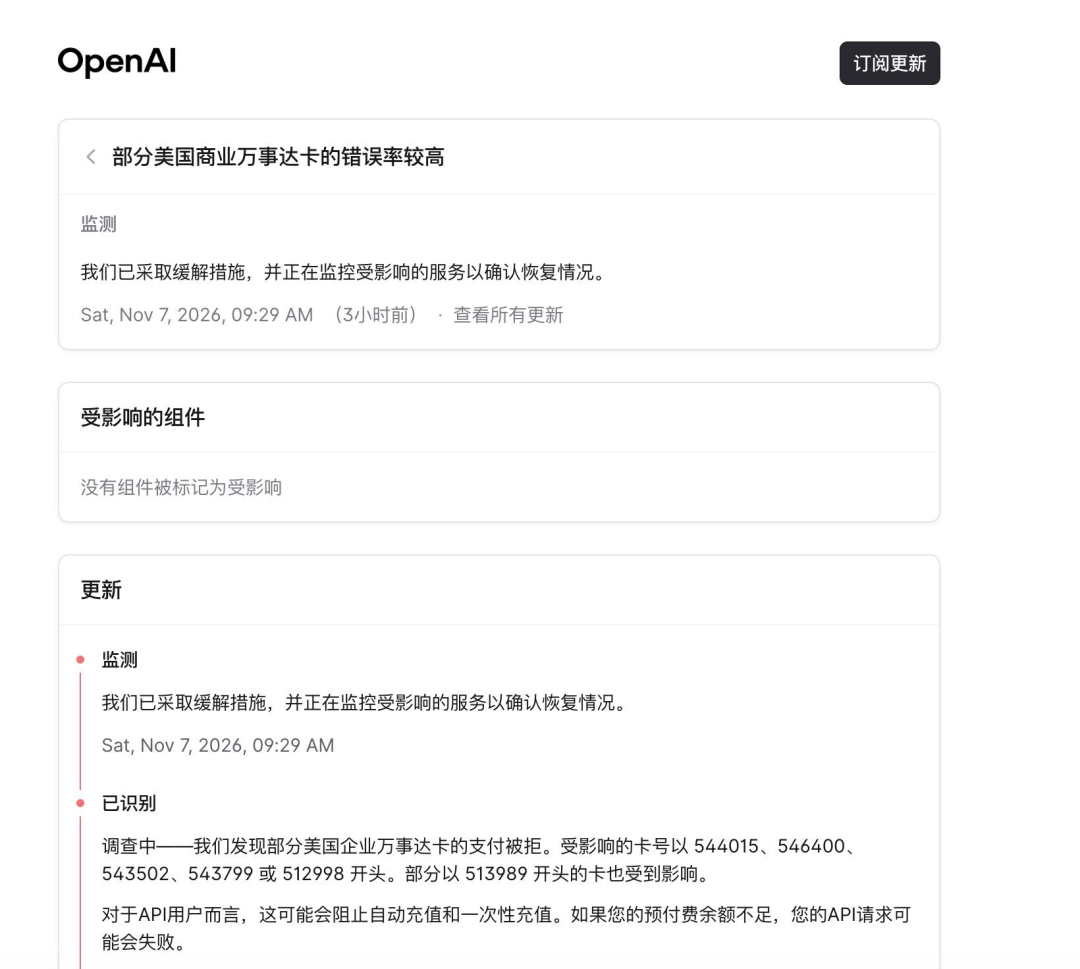
No — and confusing the two is the most expensive mistake in this cycle. Some users suspect OpenAI is simply capping how many accounts sit on one device to stop free-riding. Others point at billing, and there is a verifiable billing incident: OpenAI's status page showed a high error rate for some US business Mastercard cards.
In the investigation circulating among affected subscribers, the affected first six digits of the card numbers were 544015, 546400, 543502, 543799 and 512998, with some cards beginning 513989 also affected. OpenAI characterised that event as a payment-channel problem and did not mention account bans. If your renewal failed on one of those BIN ranges, treat it as a billing fault first and document it before filing a policy appeal.
Why now? The three-step plan behind the suspensions
Conclusion: the bans are step two of a sequence OpenAI has been laying since it started cracking down on reverse proxies and merged ChatGPT and Codex into a single token pool. Nothing about this was sudden.
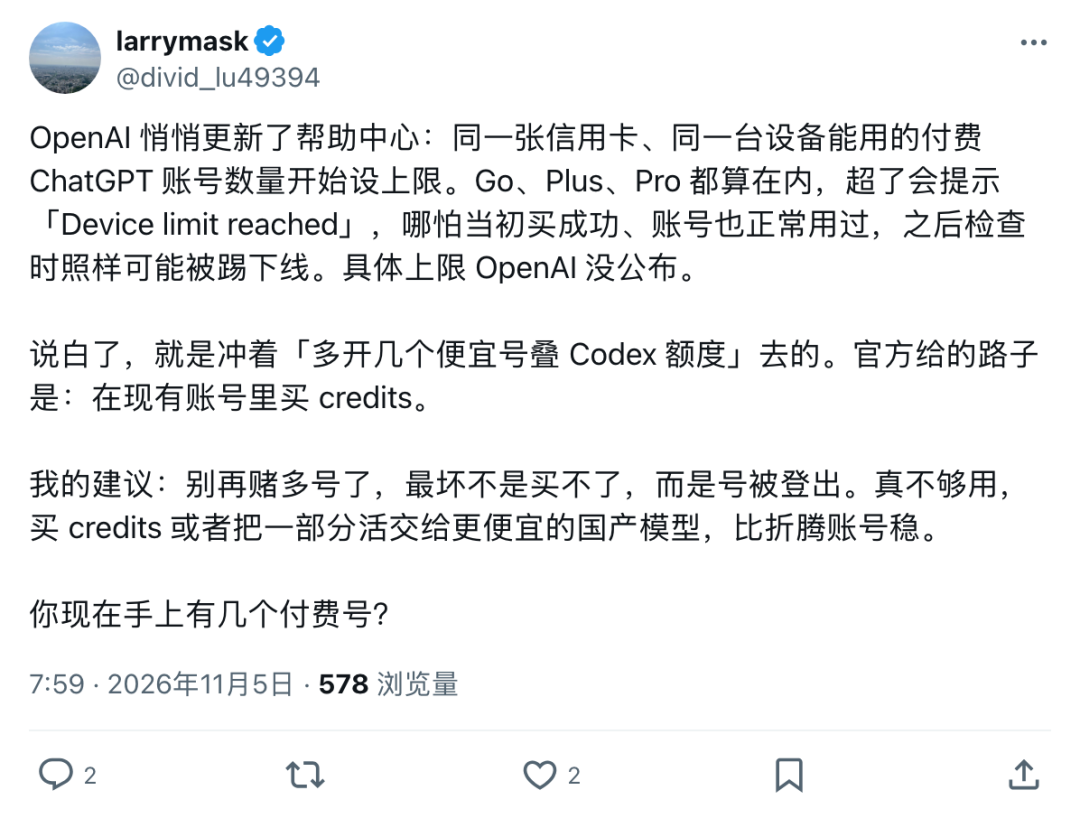
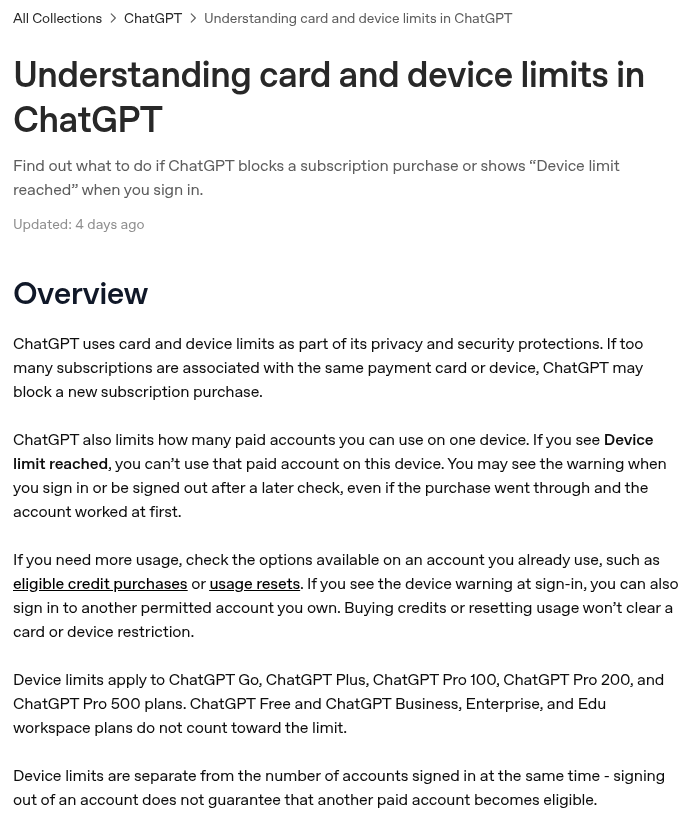
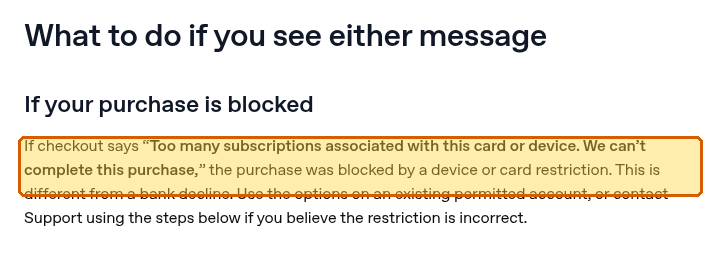
Step one landed five days ago in the form of a help-centre document, "Understanding card and device limits in ChatGPT", while the hardware-and-card lock took effect on November 2. That document puts the Go, Plus and Pro 100, Pro 200 and Pro 500 tiers under hard quota management: if one payment card or one device is linked to too many paid subscriptions, checkout throws "Too many subscriptions associated with this card or device" and blocks the purchase. Paid accounts per device are capped as well, and once "Device limit reached" appears, logging out of old accounts or spending extra on Credits does not release the slot on that device — OpenAI's own wording is that Credits pay for eligible usage but do not combine subscriptions. The aim is straightforward: make account stacking impossible.
The second step is today: the mass clean-up of car-pool accounts, catching users who tried to stitch multiple logins together through the API.
The third and most consequential step is the squeeze on compute exits, scheduled between late November and early December. From November 20, OpenAI's revised usage policy takes effect and requires third-party API gateways and model-routing intermediaries to hold official written authorisation, shutting unofficial relay stations out at contract and interface level. From December, Plus, Pro and Business plans share one quota across ChatGPT and Codex, fully metered by token consumption. Once that token pool runs dry, there is no smaller account to switch to: you upgrade, or you buy official credits.
| Stage | Effective | Plans touched | What it kills |
|---|---|---|---|
| Card and device caps | November 2 (documented five days ago) | Go, Plus, Pro 100, Pro 200, Pro 500 | Account stacking, multi-seat resale on one card |
| Second step: car-pool purge | Today | Free API keys, shared Team, $200 Pro, Plus, student-verified | Car-pool and API-aggregated logins |
| Third step: compute choke | From November 20, then December | Relays, then Plus, Pro, Business | Unofficial gateways; quota carried between ChatGPT and Codex |
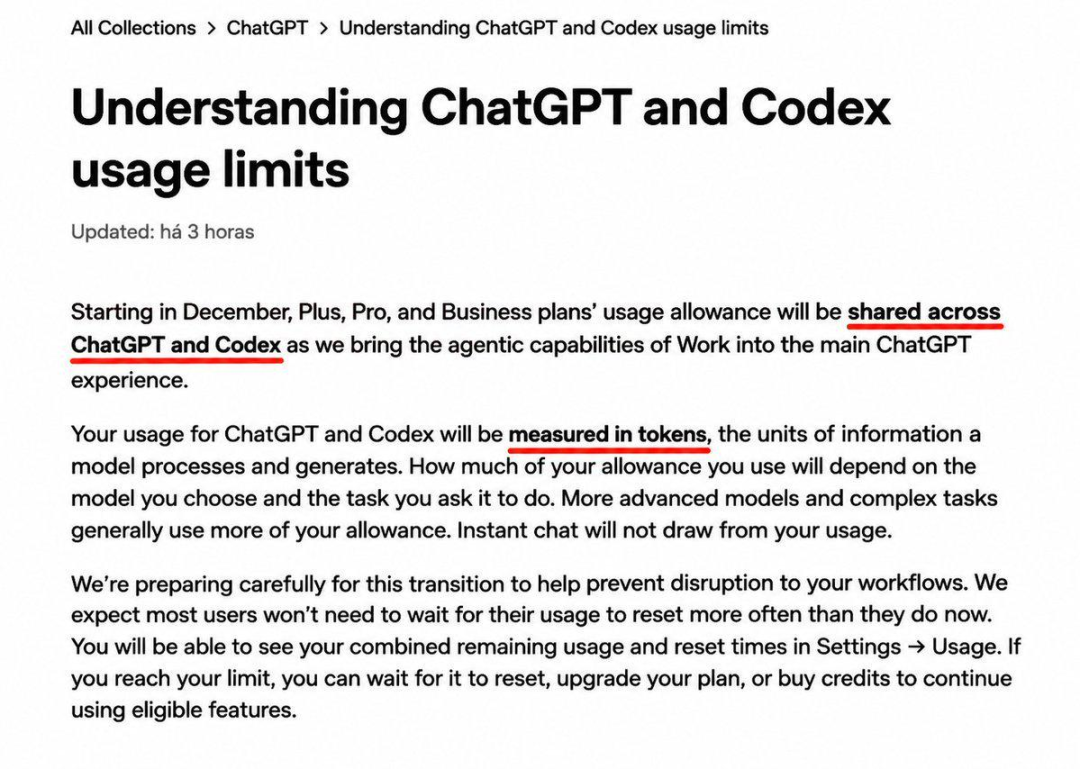
Our CompanyWatch decision Q&A on OpenAI putting ChatGPT and Codex on one quota breaks the December metering change down seat by seat; the personnel angle is covered in our case file on Cat Wu's move from Anthropic to OpenAI, which documents how she turned Claude Code from an internal tool into a developer product — the same AI-coding margin this purge is built to defend.
What should you do in the first 72 hours of a lockout?
Conclusion: appeal through the intake form, protect the data you can still reach, and stop paying for shared access. Users who have got accounts back describe a specific workflow.
- File through the official appeal form. A registration email is not mandatory — community guidance points to OpenAI's appeal intake form, and the help centre confirms the same fallback when no notification email arrives (see openai.com/form/appeal).
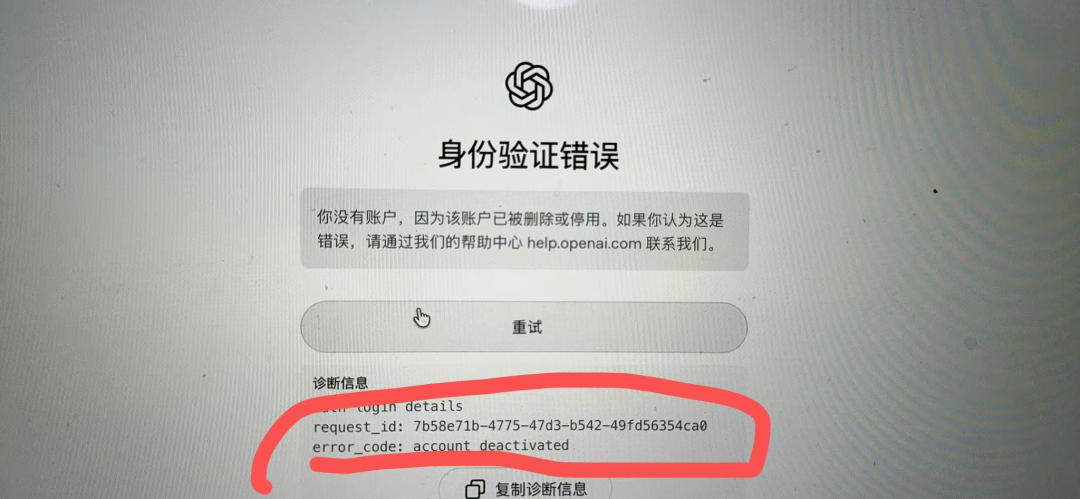
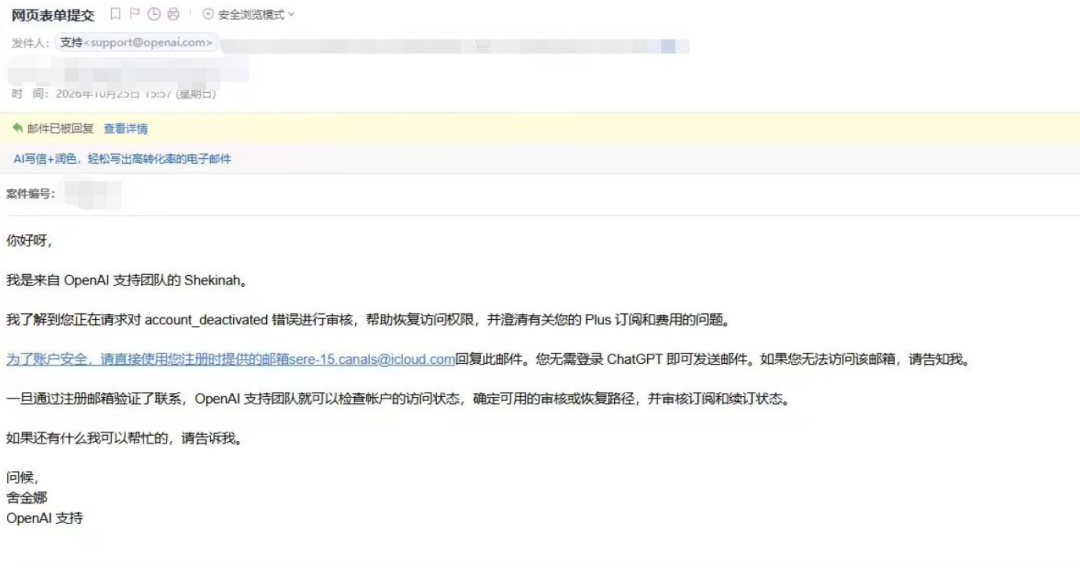
- Supply identifiers, not emotion. Write out the disabled account's details plus the Request ID (highlighted in the red box in figure 1 below), and, per OpenAI's warning-appeal guidance, the User ID and Org ID. One user who sent a single emotional line was rejected outright; a factual follow-up is what got human review.
- Expect reversals to exist. One member of the community recovered a student-verified Plus account through exactly this route; another received a second email in which OpenAI said a cyber-abuse warning had been issued in error and apologised.
- Export what is still yours. Pull cloud conversations on a schedule and sync Codex projects locally. Web-side history is the asset at risk; local documents and code are not.
- Stop the exposure, not just the symptom. Top-up services, shared carpools and unofficial relays are all being closed off — moving to a second shared login recreates the same risk profile.
How far can enforcement go before OpenAI blinks?
Conclusion: the record shows a wrong-number risk that is real, and a correction path that is slower than users need. In late October the security researcher known as @log4j was suspended on a cyber-abuse charge for using ChatGPT to analyse the firmware of his own 2025-model Samsung television; roughly $500 of balance was wiped with it. Eleven days later OpenAI restored the account and acknowledged the mistake in email, and a core OpenAI researcher publicly stated that reverse engineering had never been prohibited and that false positives were being fixed (36Kr's English desk, November 5).
The contrast with Anthropic is instructive for anyone picking a platform on governance rather than benchmarks: OpenAI reversed on the research-boundary question while tightening enforcement at the billing layer; coverage of Claude Code points the other way, with guardrails expanding. The Decoder framed OpenAI's card and device caps as a push "toward more paid usage" dressed in security language — which is exactly how procurement teams should read the November 2 change: a pricing decision, not a fraud fix.
Common misconceptions about this suspension wave
- "Only rule-breakers are affected." Normal, individually owned accounts renewed for four or five months were hit, and OpenAI's status page incident hit US business Mastercard cards regardless of conduct.
- "Buying Credits frees the device slot." It does not — Credits pay for eligible usage after limits are reached and do not combine subscriptions; per the help centre, Credits also expire 12 months after purchase and are non-transferable, so stockpiling is a poor hedge.
- "Support can reset my quota." OpenAI's own documentation states that the support team does not reset ChatGPT or Codex usage limits.
- "A payment failure is a ban." The BIN-range outage was labelled a payment-channel problem, with no mention of account suspension.
- "The relay deadline is December." The gateway and router authorisation requirement starts on November 20, ahead of the December token-pool change.
Which decision should each user type make?
| Profile | Exposure | Recommended move |
|---|---|---|
| Student-verified Plus | Caught in the sweep; appeals have worked | Keep one device, one card; appeal with User ID and Request ID before re-subscribing |
| Solo $200 Pro power user | December token pool, Codex-heavy workloads | Export history weekly; budget for one higher tier rather than Credits |
| Team and Business buyer | Seats, shared cards, third-party gateways | Verify vendor authorisation before November 20; consolidate to a single billed workspace |
| Reseller, relay or router operator | Business model is the target | Seek written authorisation or exit; do not assume grandfathered terms survive the rewrite |
| Safety and firmware researcher | False-positive cyber-abuse flags | Keep a local mirror of prompts; escalate with dated evidence — this class has been reversed before |
FAQ: the questions investors and buyers keep asking
Is this a crackdown on abuse or a pricing move?
Both are claimed, but the sequence says pricing. Free-riding was already falling as ChatGPT and Codex merged into one token pool; the caps on Go, Plus and the Pro 100, Pro 200 and Pro 500 tiers convert quota avoidance into upgrade pressure.
Can a suspended account come back?
Yes, sometimes. A student-verified Plus account has been recovered via the official form, and OpenAI apologised and restored the @log4j account after 11 days. But the five-year Pro case shows appeals can also return nothing, so plan for permanent loss of cloud history.
What happens to my API integration after November 20?
Anything that resells direct model access to third parties — routers, gateways, relay dashboards — needs official written authorisation. Calling the model inside your own product is a different question, and it is the line most contracts misread today.
Should I hedge by opening a second cheap account?
No. Account stacking is precisely what the November 2 device and card rules were built to stop, and the second step of the plan — executed today — is the clean-up of exactly those logins.
What is the single best defensive habit?
Export. Conversations, custom instructions, prompt libraries and Codex project state kept locally survive an outage; nothing in the cloud does.
Watch list: five signals CompanyWatch is tracking
- Whether OpenAI publishes per-device and per-card quota numbers, or keeps them discretionary.
- Any published list of authorised gateways and routers before November 20.
- Closure of the US business Mastercard incident, and whether affected users see refunds or re-billed seats.
- Whether December token metering is applied retroactively to already-consumed Codex usage.
- Appeal turnaround times — the difference between the 11-day reversal and the silent five-year Pro case is the real measure of governance quality.
For readers benchmarking budgets against peers, CompanyWatch's note on how Apple cut its internal daily AI budget from $300 to $200 per team is the other half of the same story: enterprises are repricing tokens at the same moment OpenAI is repricing access.
Sources
- OpenAI Help Center, "Understanding card and device limits in ChatGPT" — https://help.openai.com/en/articles/20001559-understanding-card-and-device-limits-in-chatgpt
- OpenAI Help Center, "OpenAI account closures and safety suspensions" — https://help.openai.com/en/articles/10562188-openai-account-closures-and-safety-suspensions
- OpenAI Help Center, warning-appeal guidance and intake form — https://help.openai.com/en/articles/10562178-why-did-i-receive-a-warning-about-my-account and https://openai.com/form/appeal/
- OpenAI Help Center, Credits on personal plans — https://help.openai.com/en/articles/12642688-using-credits-for-flexible-usage-in-chatgpt-personal-plans
- The Decoder, "OpenAI is steering ChatGPT users toward more paid usage" — https://the-decoder.com/openai-is-steering-chatgpt-users-toward-more-paid-usage/
- 36Kr English, "OpenAI Reverses Ban and Apologizes 11 Days After" — https://eu.36kr.com/en/p/4055087925253249
Contact GlobalBizSight editorial: info@globalbizsight.com