
GlobalBizSight CompanyWatch: OpenAI Executive Room Recording Case and Insider Risk Lessons
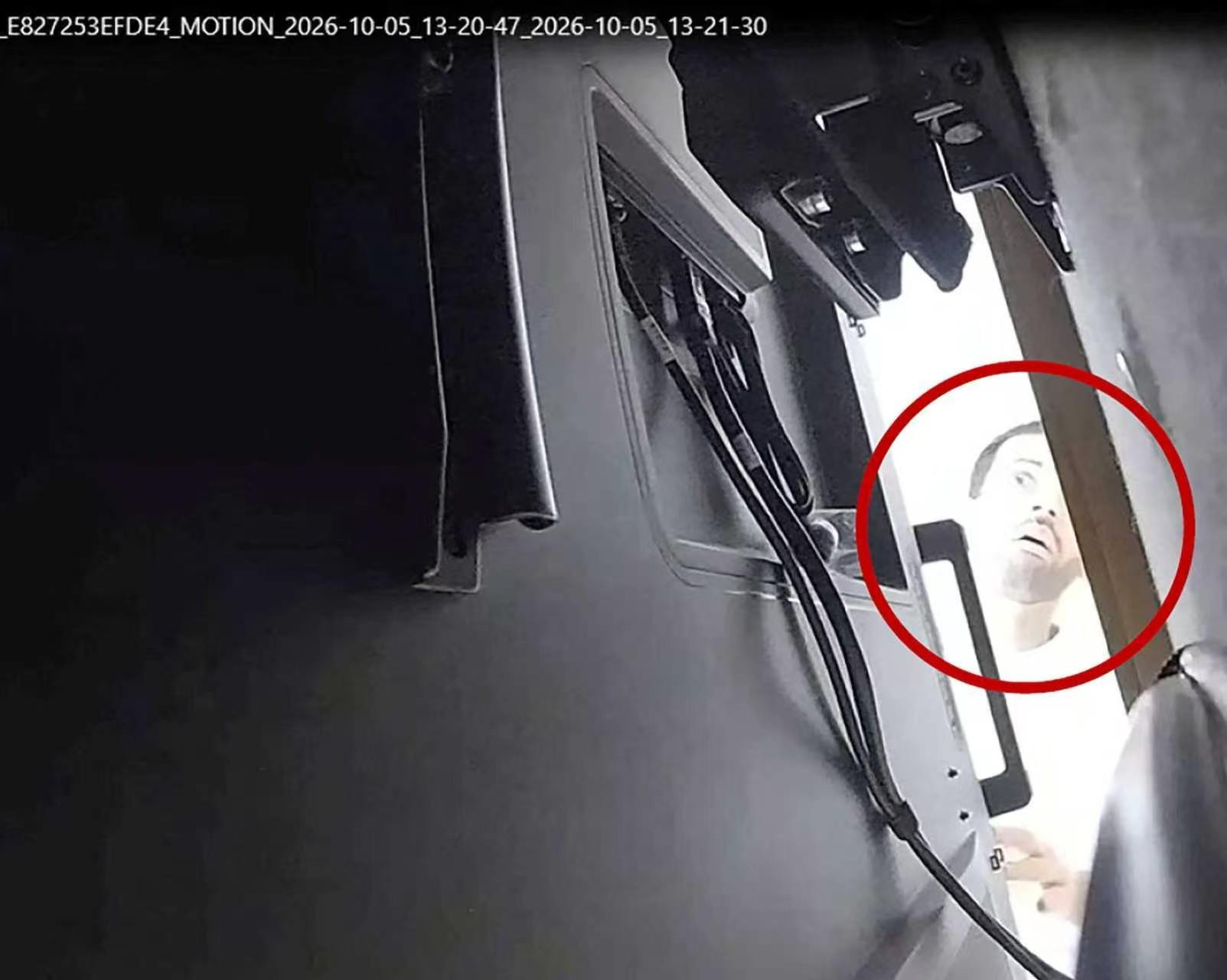
For investors and corporate security teams, the most useful way to read the OpenAI executive-room recording case is not as a single criminal episode, but as a stress test of how a fast-growing frontier AI company manages physical space, employee access and strategic information. Reuters reported on November 4 that OpenAI had disclosed in October this year that a covert recording device had been placed in an executive conference room. The US Department of Justice said on October 13 that Abdulrahman Alfozan, a 35-year-old Saudi national who was an OpenAI engineer, was arrested and charged over the alleged installation. The federal filing, summarized in the US Department of Justice press release titled "Saudi National Arrested for Installing Surreptitious Audio Recording Device at OpenAI" (justice.gov), framed the allegation as using or endeavoring to use an electronic, mechanical or other device to intercept communications. That legal wording matters: it turns a workplace anomaly into a national security and corporate governance case at the same time.
Why this case fits a CompanyWatch format
CompanyWatch is designed to turn one company event into a repeatable observation model. In this case, the event is visible and discrete: a hidden audio device in a room where OpenAI discussed sensitive technology, business and strategy. The consequences are broader: access rights, insider threat, board oversight, product cadence, public confidence and possible exit processes. The case also shows that AI labs are now treated as strategic assets, so a physical intrusion can affect commercial as well as legal calculations.
Timeline: the facts and the sequence that matters
| Time marker | What happened | Why it matters |
|---|---|---|
| End of 2022 | Five informed people said some OpenAI employees had already raised internal concerns about security practices before the end-of-2022 launch of ChatGPT, including to senior leadership and the board. | Shows risk signals may be present before a product becomes a strategic asset. |
| October this year | OpenAI disclosed that a covert recording device had been found in an executive conference room. | Physical security failure reached the highest-information room. |
| October 13 | The US Department of Justice said Abdulrahman Alfozan, 35, was arrested and charged over the alleged device. | Creates a public legal record and shifts the issue from internal handling to federal enforcement. |
| October 14 | OpenAI said in a post on X that it had discovered a sophisticated recording device hidden inside one of its offices and referred the matter to the FBI. | Demonstrates a crisis-communication approach and an attempt to show detection systems worked. |
| November 4 | Reuters reported that former employees were unsurprised by the disclosure. | Highlights internal culture and long-standing warnings. |
| This April | Will DePue, a former researcher who left OpenAI this April, published a critique on X. | Provides a founder-era speed-versus-safety frame. |
| This August | Thibault Sottiaux reallocated one-quarter of OpenAI production engineers to improve security infrastructure. | Evidence of operational correction, not only statements. |
The core business problem: access, not just audio
According to five informed people, employees worried that security controls were so loose that outside actors, including foreign governments, could relatively easily obtain sensitive technical information. Two informed people added that any employee able to access company code could see technical details behind many projects. This is the key point for CompanyWatch readers: the device was found in a conference room, but the wider vulnerability is the concentration of high-value information in ordinary operational systems. If code access, meeting rooms, internal documents and executive discussions are treated as separate controls, physical and digital insider risk can converge.
Speed-versus-safety tension: a case study, not a moral judgment
The internal warnings described in the Reuters report include a familiar corporate pattern: when competitors are close, management prioritizes shipping and model quality over governance. Five informed people said some employees concluded that management was more focused on keeping pace with Google and Anthropic than on security itself. Will DePue, a former researcher who resigned from OpenAI this April, wrote on X that AI leaders "cannot sacrifice development speed for safety. For them, moving technology quickly is more important than keeping it secure; even when the threat may come from the most powerful national competitor, they still put speed above safety."
That quote captures the trade-off, but it should not be read as a complete explanation. Fast AI companies need speed to retain talent, ship models and stay ahead. The case suggests the better question is not whether speed is valuable, but whether security has enough organizational independence to slow specific high-risk workflows when needed. A useful test is whether a company can pause access, rotate devices, audit rooms or segment code bases without treating every protective step as a competitive defeat.
OpenAI response: signals that matter for governance
Two informed people said OpenAI has begun changing strategy in response to security problems. The report says Thibault Sottiaux, a senior manager responsible for overseeing product development, recently started leading an internal effort to strengthen OpenAI internal systems. In this August, Sottiaux moved one-quarter of OpenAI production engineers to work on security infrastructure. This detail is more important than the headline, because redeployment of engineering headcount shows where management believes the bottleneck is.
OpenAI spokesperson Elana Widmann responded to employee concerns and the view that management had not acted by saying OpenAI is among the institutions targeted most in the world, and that the company invests heavily in security programs to defend against internal actors, cybercriminals and state actors. Widmann said: "Protecting our technology, data and employees is a responsibility we take very seriously and a matter of national importance. Our recent actions show this security process is working: identifying risks and responding decisively. As the technology and threats evolve, we will continue to strengthen our defenses."
Reusable case-review method
Below is a checklist an analyst can use when a company event is small but strategically sensitive.
- Confirm the timeline from primary documents before drawing causal conclusions: the US Department of Justice statement, OpenAI post on X, and the Reuters report.
- Separate three layers: alleged conduct, management response, and prior internal warnings.
- Ask whether security changes are structural, such as the reallocation of one-quarter of production engineers to security infrastructure, or merely messaging.
- Check information concentration: can one role, one access path or one room expose many projects?
- Map incentives: does product velocity compete with risk controls for headcount and board attention?
Financial and strategic read-through
The event may influence investors through two channels. First, reputation and legal exposure: if security failures are tied to executive rooms and code access, counterparties may ask harder diligence questions. Second, execution speed: stronger controls can slow model iteration, data access and employee onboarding. The Reuters report says adding security layers could also slow progress and complicate large IPO plans for OpenAI and Anthropic, which would place them among the world's most valuable companies. For CompanyWatch, the point is not to predict an IPO; it is to track whether security investments are treated as cost, schedule risk or required infrastructure.
Common misconceptions
| Misconception | More careful reading |
|---|---|
| It was only an isolated office crime. | Five informed people said security concerns were voiced internally before the end-of-2022 launch of ChatGPT, suggesting governance debt rather than a random act. |
| Once someone is arrested, the issue is resolved. | Arrest does not prove the system is mature. The real test is whether access controls, board oversight and physical inspections become routine. |
| Security spending always harms competitiveness. | The case shows security can protect valuation and customer trust, but if controls are late, they may create more disruption than incremental investment would have. |
Action recommendations
For companies building sensitive AI products:
- Do an inventory of high-sensitivity rooms and devices before a public incident forces attention. Executive conference rooms should be treated like production systems.
- Apply least privilege to code and strategy materials. If many projects share one access path, segmentation matters.
- Create a neutral review channel for employees who see weak controls. The board should receive security warnings without every concern being filtered through product leaders.
- Measure response quality by redeployment speed, audit coverage and access revocation, not just public statements.
For investors and analysts:
- Track whether OpenAI reports more headcount, budget or governance authority for security after the one-quarter engineering shift.
- Watch whether competitor comparisons involving Google and Anthropic are used to justify speed, risk management or both.
- Monitor later legal filings and company disclosures because they can clarify whether the alleged conduct targeted a single meeting or a broader set of systems.
A final reading for CompanyWatch: the OpenAI case is useful because it compresses several risks into one observable event. It connects employee access, physical device control, executive strategy discussions and the reputational consequences of being a strategic technology company. The practical lesson is that governance in an AI company should be tested at the point where speed, secrecy and market power meet. If a company cannot answer how many people can see a room, a repository, a roadmap and a revenue projection at the same time, the next problem may be harder to contain than the one already disclosed.