
GlobalBizSight CompanyWatch Playbook: Randy Duax's Regional President Role at Stagwell APAC — What It Signals and How to Track It
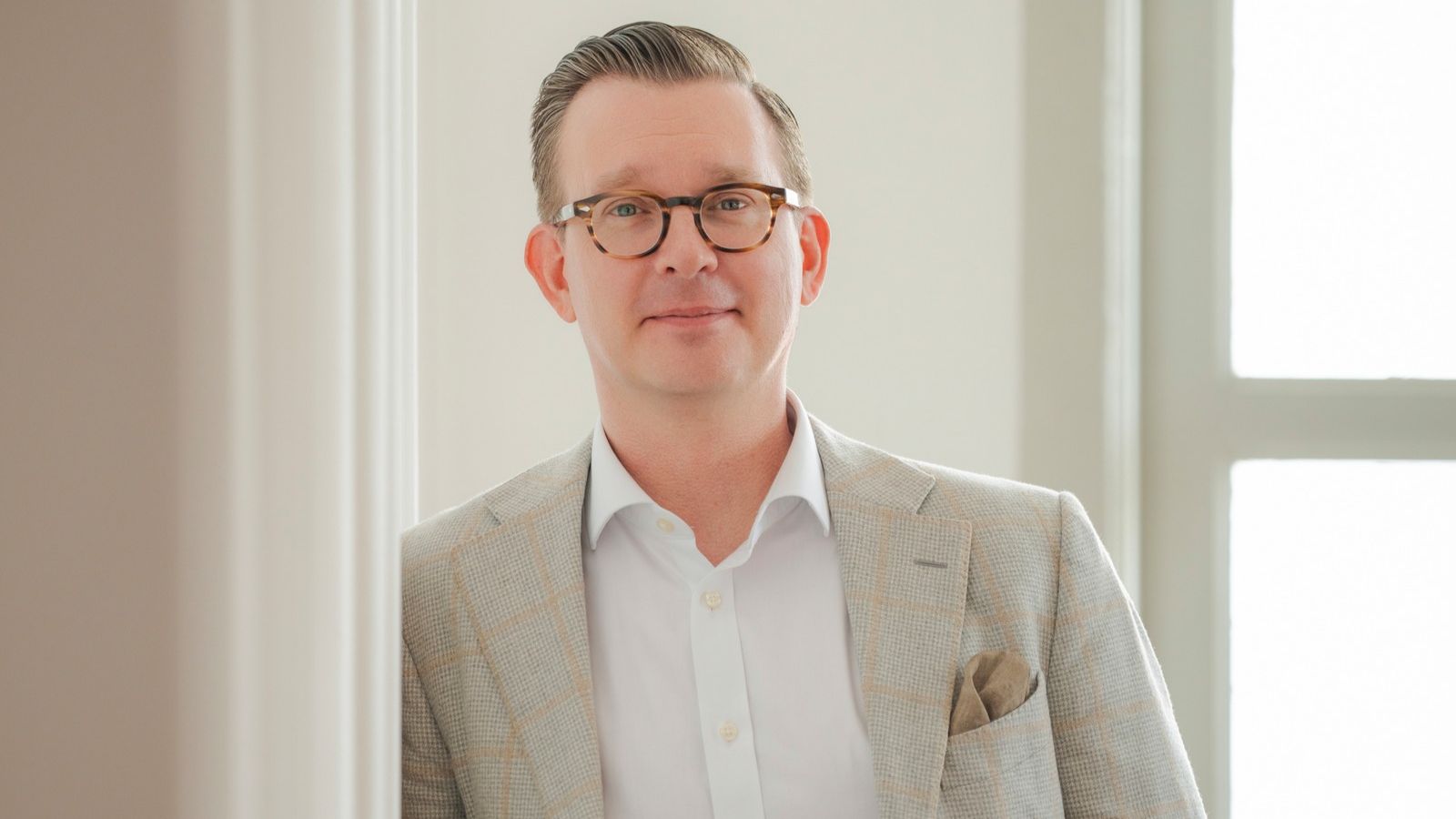
Stagwell has created a regional president seat for its Asia Pacific business and handed it to Randy Duax, who stays on a direct reporting line to chairman and CEO Mark Penn. The productive way to read this: five years of market-by-market assembly across APAC is being formalised into one governed regional platform, and that conversion now has a named owner with a measurable agenda.
Step back for the long arc. For a decade, agency groups have been shifting spend decisions and senior client relationships out of country silos and into regional platforms, because advertisers increasingly buy connected solutions rather than market-by-market services. The durable advantage belongs to whoever turns technology into infrastructure clients cannot route around — not to whoever demos it first. This appointment is that logic hardening into an org chart, and it deserves a tracking plan rather than a headline skim.
What changed — and what deliberately did not
Three things are new. The title itself: regional president of Stagwell APAC, a position that did not exist before. The codification: Duax's widened regional remit now rests on a formal footing instead of an informal stretch of his managing director job. And the unchanged reporting line, which is the loudest signal of all — he continues answering directly to Mark Penn, meaning APAC is run from the top of the house rather than through a regional buffer.
The substance underneath is continuous. Duax already oversees the region's operations and its Singapore-based headquarters, and he has been with Stagwell Global since 2016, when he signed on as SVP, talent and recruiting, responsible for recruitment across the worldwide portfolio. A promotion of this kind converts proven scope into documented authority — for analysts, that is the start of a measurement window, not the end of a story.
Why now: three drivers behind the timing
Driver one is scale already banked. The company's case rests on delivery: over the past five years, Duax is credited with assembling a highly decentralised region into a working network, tightening collaboration between markets and agencies, and extending Stagwell's presence across APAC. The region now stands at roughly 2,500 employees across 15 markets, per his AmCham Singapore profile from May 2025.
Driver two is the financial logic. Group-level results set the bar this role must beat: Stagwell posted net revenue growth of 6% year over year in Q3 2025 — 10% excluding advocacy — with net new business of $122 million in the quarter (wins minus losses) and $472 million on a trailing-twelve-month basis (PR Newswire, November 2025). A growth curve like that needs regions with owners empowered to integrate, and a formal promotion is how you signal that internally and to clients.
Driver three is the product spine. Stagwell launched The Machine, marketing's first agentic operating system, in January 2026 (Stagwell), and Duax's stated agenda includes scaling how widely clients adopt its AI-powered Machine OS operating system, alongside deeper integration, market share and revenue growth, and more services and forward-deployed engineers — vendor-side engineers embedded inside client teams to ship live use cases rather than slideware. Platforms do not cross fifteen markets on their own; they need an accountable regional executive. That is what the new title supplies.
Who is Randy Duax — and why a talent-first background runs a region
The career path is the tell. Before joining Stagwell, Duax built his career at WPP, where he served as talent director of Asia Pacific, running senior executive recruitment across WPP's company holdings and teams in Singapore, Shanghai, Sydney and Tokyo. From there he joined Stagwell Global in 2016 in a talent role, then was tapped in November 2021 as managing director to open the group's new global office in Singapore (PR Newswire, 18 November 2021). Recruiter to regional president inside a decade is not a fluke: in a people business mid-consolidation, the leader who knows where the talent sits is the one who can wire markets together.
It also matches the company's self-description. Duax has argued the leadership bench leans on people who arrive from tech firms and build marketing solutions from the ground up, rather than "retrofitting off-the-shelf tech onto an agency model that predates television." Peers are moving the same direction — WPP Media has promoted dedicated APAC leadership for creator commerce, and Burson is building an APAC influence hub under Yuliani Setiadi in Singapore — so regional codification now looks like table stakes across networks, not a Stagwell quirk.
Inside the mandate: four accountabilities to hold him to
The formal remit has three prongs: setting the growth agenda for the region's markets and agencies, wiring them into one collaborative system, and turning Stagwell's combined media, creative, communications, data and AI capabilities into something clients can actually buy. The forward agenda is more concrete, and every item on it is measurable:
- Deeper integration — collapsing duplicated market functions into shared regional ones.
- Market share and revenue — APAC should outgrow the group's blended numbers, not just match them.
- Machine OS adoption — converting pilots and demos into named client deployments.
- Feet on the ground — more services and forward-deployed engineers actually based in-market.
Duax frames the demand side plainly: "Clients have always wanted simpler, more connected solutions. Their customers don't think in terms of media, creative, communications or technology silos. Why should we? We're in the business of solving problems. Plain and simple," he added. On method: "The future of marketing isn't built in conference rooms by committees making decks about transformation, instead it's built by solving real business problems in real time, with the right combination of creativity, media, technology and AI," he added.
Case study: the Singapore campus as the operating template
The clearest preview of what this role is meant to run already exists. In November 2025, Stagwell unveiled a new Singapore campus placing creativity, media, communications, data and AI under one roof, with Duax describing Singapore as the network's growth engine in Asia (Branding in Asia, 24 November 2025). It followed the acquisition of ADK Global earlier in 2025 and the Future of News initiative extending to Singapore in October — a build-out cadence that handed the new title something concrete to consolidate.
Read the campus as a template, not a real-estate story: it is the physical version of the platform model, one address where a client can buy connected capabilities instead of stitching together five agency relationships. The test over coming quarters is utilisation — whether client work, engineer deployments and cross-market staffing genuinely flow through it.
How to track it: a six-item monitoring checklist
- Leadership disclosures — the next regional announcements should show whether the president title carries budget authority, not just coordination duty.
- Regional versus group growth — the group delivered 6% net revenue growth (10% ex-advocacy) in Q3 2025; APAC's contribution should become visible in results commentary.
- Machine OS deployments — count named APAC clients going live after The Machine's January 2026 launch, and watch the demo-to-contract conversion.
- Engineer headcount — forward-deployed teams in-market are the cheapest visible proof of an infrastructure strategy.
- M&A and affiliate cadence — after ADK Global, watch whether the region keeps adding capacity through deals and affiliate signings rather than organic hiring alone.
- Net new business attribution — $472 million trailing-twelve-month at group level is the denominator; APAC's share of it is the number that matters.
Common misconceptions about this appointment
- "Just a title." In platform transitions, codified titles precede authority moves; a newly created role reporting to the CEO is the codification step, and budget consequences usually follow within a few quarters.
- "APAC is a cost play." The company's own positioning argues otherwise: Duax ranks APAC among the most competitive and innovative regions in the world and calls its relentless pace of change the environment Stagwell thrives in.
- "The operating system replaces agency teams." The campus model points the other way — software wrapped with services and embedded engineers, sold as one integrated offer.
- "A recruiter cannot run a region." Five years of documented consolidation results make this the weakest objection on the list.
FAQ
What is the regional president role at Stagwell APAC?
A newly created position held by Randy Duax, consolidating his regional leadership under one title with reporting kept at CEO level.
Who is Randy Duax?
He joined Stagwell Global in 2016 as SVP, talent and recruiting, became managing director for Asia Pacific in November 2021, and previously led Asia Pacific talent at WPP across Singapore, Shanghai, Sydney and Tokyo.
What is Machine OS?
Stagwell's AI-powered operating system for marketing work. The group launched The Machine, its first agentic operating system, in January 2026, and scaling client adoption of Machine OS across APAC is one of Duax's stated priorities.
How big is Stagwell's APAC business?
Roughly 2,500 employees across 15 markets, headquartered in Singapore, per Duax's May 2025 AmCham Singapore profile — a footprint expanded by the ADK Global acquisition in 2025.
What decision-makers should do next
Clients with APAC scope should map which of their workflows could move onto the platform and run one pilot with a defined baseline. Competitors should audit their own regional reporting lines before Stagwell's campus-and-engineers model converts integration into speed. Analysts should put the six checklist items above into their coverage calendar.
Duax's closing argument applies to everyone watching: "We don't need to speculate about where the industry is heading—we're building it," he said. "You can let things happen to you, or you can make things happen. From Mark Penn to every member of the Stagwell team, we're here to make things happen."
One line for the decision layer: the moment clients start buying the operating system instead of the campaign is the moment this promotion stops being an HR event and becomes the balance-sheet story — price your exposure accordingly.
Reference sources
- Stagwell — Randy Duax profile
- PR Newswire — Stagwell opens new global office in Singapore (18 November 2021)
- PR Newswire — Stagwell Q3 2025 results (November 2025)
- Branding in Asia — Stagwell unveils new Singapore hub (24 November 2025)
- Stagwell — The Machine launch (January 2026)
- AmCham Singapore — Randy Duax profile (May 2025)