
Raspberry Pi's $385 16GB Board: A CompanyWatch Analysis of the UK Maker's Memory-Cost Squeeze
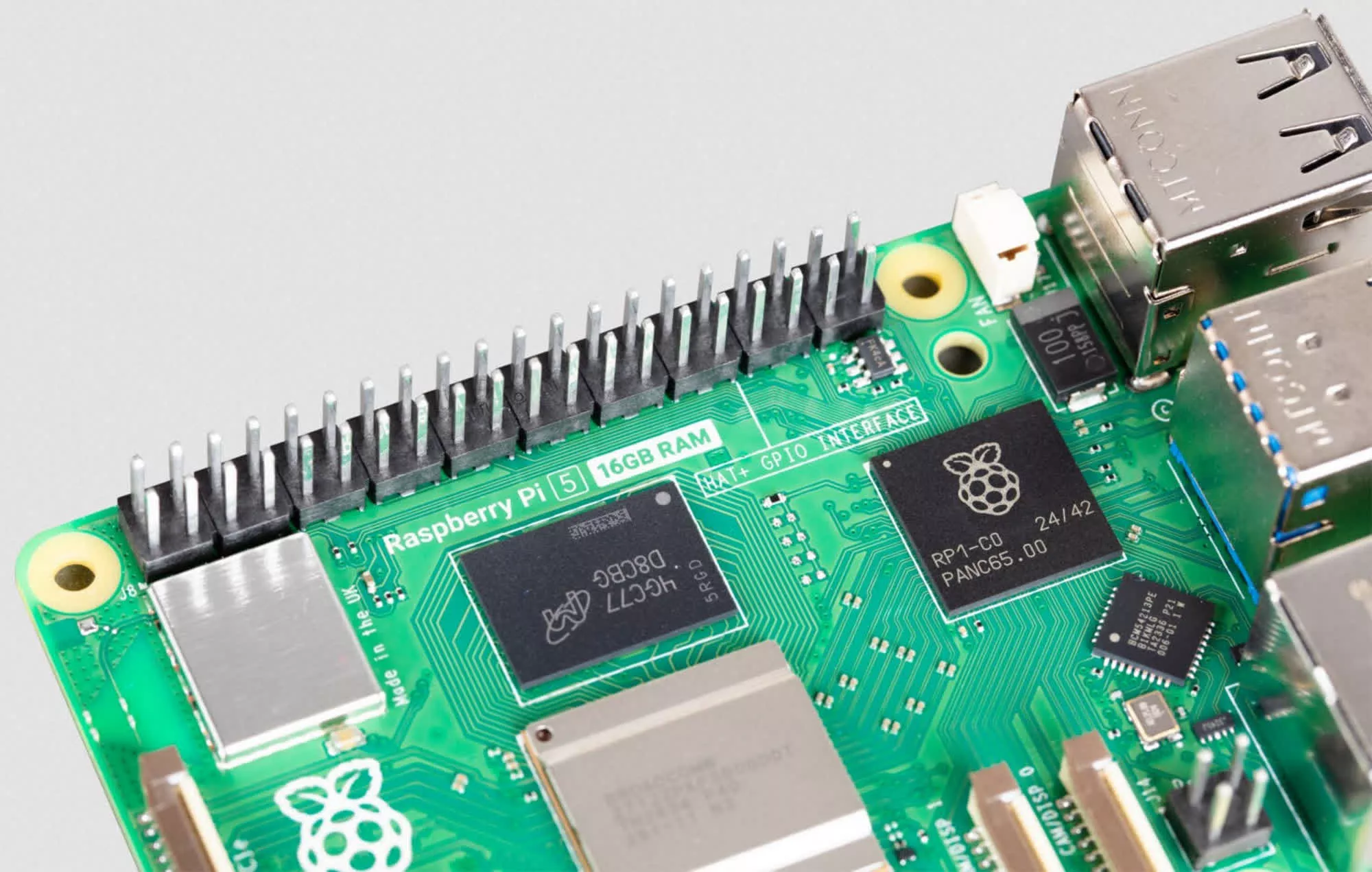
The short answer: Raspberry Pi, the United Kingdom's best-known single-board computer company, recently raised the price of the 16GB Raspberry Pi 5 by $80 to $385. Chief executive Eben Upton blames a shortage of 16GB DRAM and the absence of an alternative supply source. The change is deliberately narrow: the 16GB Compute Module 5 rises by $40, while the 16GB Raspberry Pi 500+ keeps its price.
GlobalBizSight's CompanyWatch reads this as a corporate signal rather than a gadget headline. A company built on the "$35 computer" promise is now selling a board for $385, and it has chosen surgical repricing over a catalogue-wide lift — a decision that says as much about Raspberry Pi's supplier position and its cost absorption capacity as it does about memory markets.
What exactly changed at the UK company?
Conclusion first: this is a memory-tier-specific repricing, not a general inflation of the product line.
- Raspberry Pi 5 with 16GB RAM: +$80, new list price $385 (tech outlet Tom's Hardware reported the prior level as $305).
- Raspberry Pi Compute Module 5 with 16GB: +$40, aimed squarely at industrial customers who build the module into finished equipment.
- Raspberry Pi 500+, the all-in-one desktop with a 16GB configuration: price held, no increase.
- Lower-capacity variants: not touched in this round, which keeps an exit ramp open for cost-sensitive buyers.
| Product | Memory | This round | Signal |
|---|---|---|---|
| Raspberry Pi 5 | 16GB | +$80, to $385 | Highest-capacity SKU absorbs the DRAM shock |
| Compute Module 5 | 16GB | +$40 | OEM exposure priced through, not hidden |
| Raspberry Pi 500+ | 16GB configuration | Unchanged | Flagship retail bundle shielded for brand reasons |
| Raspberry Pi 5 | 8GB | Untouched in this round | $80 launch-era price point remains the volume anchor |
Why is 16GB DRAM the single pressure point?
Conclusion first: Raspberry Pi has no second source for the specific memory it needs, so it cannot negotiate or substitute its way out.
Upton's explanation, published on the company's own news page, is that the firm still lacks a substitute supply channel for 16GB DRAM chips, and that the wider IT industry faces tight availability of memory and several key components. Soldered LPDDR on a single-board computer cannot be sourced per build the way a PC assembler buys DIMMs, so a capacity-specific bottleneck lands directly on one SKU family.
The market backdrop makes the squeeze concrete. J.P. Morgan Global Research estimates that DRAM prices will have risen by more than 400% between the start of 2024 and the end of 2026 as memory makers prioritise high-margin AI products. TrendForce's late-September 2026 outlook still projected DRAM contract prices to climb 10-15% quarter on quarter into the fourth quarter of 2026, with NAND flash up 15-20%. A small UK hardware firm with a fraction of hyperscaler purchasing power is a price-taker in that market.
How does this fit into a year of repeated repricing?
Conclusion first: the $385 figure is the endpoint of a trend, not an isolated event — and the trend is measurable.
- 2023: Raspberry Pi 5 debuts; the 8GB version is priced at $80.
- 2025: the 16GB version arrives at $120.
- February 2026: in a post titled "More memory-driven price rises", the company said costs of some parts had more than doubled within a quarter, forcing another round of increases.
- Late 2026: the latest step takes the 16GB Raspberry Pi 5 to $385.
Measured against its 2025 launch price of $120, the increase itself is more than two times that original figure. The cumulative effect matters more than any single step: the company that scaled a global market on the "$35 computer" idea has watched its low-cost premise erode as supply-chain conditions changed, and the pressure grows with installed memory, which is why the top of the range moves fastest.
What does the repricing say about the listed company behind the brand?
Conclusion first: demand is not the problem; margin structure and brand promise are.
Raspberry Pi Holdings plc, listed in London, reported in its FY2025 results published on 31 March 2026 that revenue rose 25% year on year to $323.2 million, with gross profit at $77.8 million, adjusted EBITDA at $46.4 million and pre-tax profit up 63% to $26.5 million. The same disclosures noted that chip shipments overtook board and module volumes for the first time — a portfolio shift that matters when board pricing becomes volatile.
Three corporate implications follow:
- Pricing power is real but narrow. The company raised prices twice in one quarter earlier in 2026 and demand for the 16GB Raspberry Pi 5 stayed strong enough that it kept buying parts to meet it.
- Cost absorption has a limit. Upton described the decision as unavoidable, language that signals the buffer between component cost and balance sheet had been spent.
- Reputational exposure is asymmetric. Each dollar added to the top SKU erodes a value identity that carries the company's education and hobbyist goodwill.
Who feels the cost: hobbyists, OEMs and classrooms
Conclusion first: the impact is felt least by individual builders and most by product programmes already locked into a bill of materials.
- DIY and developer users can drop from 16GB to a lower-capacity model or tune software to use less memory — the two levers Upton himself recommends.
- Industrial and IoT OEMs using the 16GB Compute Module 5 face a $40 unit-cost step in a finished product where they cannot reprice mid-contract, which is where the margin damage concentrates.
- Substitution is already visible. Tom's Hardware reported that Raspberry Pi's own makers are steering small projects toward Pico boards or ESP32-class parts and pushing heavier workloads to mini PCs. The $385 board now costs more than many complete mini PCs — though those machines have been repriced upward by the same memory cycle, so the swap is not a costless escape.
- Education programmes buying in bulk lose the cheapest entry argument, but the untouched low-capacity tiers keep the classroom path intact.
Common misconceptions in this Raspberry Pi story
- "The whole catalogue just got more expensive." It did not: only 16GB DRAM-heavy items moved, and the Raspberry Pi 500+ was deliberately left at its old price.
- "This is a permanent new pricing strategy." Upton framed the memory situation as abnormal rather than permanent, and said prices could come back down if chips normalise — GlobalBizSight reads the current step as a hedge, not a repositioning.
- "Users can just buy their own RAM and fit it." Memory is soldered on, so the only user-side lever is choosing a smaller capacity or reducing memory use in software.
- "Cheap hardware is dead everywhere, so this is nothing." The reverse is the point: Raspberry Pi was the benchmark for open, low-cost computing, which is precisely why its repricing curve is the most informative single indicator in the sector.
What CompanyWatch suggests watching and doing
For OEM and industrial buyers
- Re-run your bill of materials at $385 for the board and $40 more for the 16GB Compute Module 5; ask whether the workload actually needs 16GB.
- Lock quantities and pricing with distributors now if a 16GB design ships before 2027, and pre-qualify an 8GB fallback in firmware and memory budgets.
- Treat the held price of Raspberry Pi 500+ as a useful data point: it hints where the company is still willing to protect volume.
For investors and analysts
- Track the official Raspberry Pi price list, not press reports; the company now reprices in public, in small increments.
- Watch gross margin per half-year against DRAM contract prints — TrendForce's quarterly guidance is the cleanest proxy.
- Test whether low-capacity tiers stay unchanged; a widening price ladder suggests a supply problem, a uniform lift suggests a structural cost reset.
- Follow the board-versus-chip revenue mix flagged in FY2025, since it hedges the company against SBC price volatility.
For educators, developers and hobbyists
- Right-size memory first: a 16GB project may run on 8GB after a swap and workload audit.
- Use the Raspberry Pi official forums, where company engineers answer support questions; that is the cheapest cost-control tool available to an existing user.
- Separate the platform from the part. The software ecosystem, documentation and community remain the reason to stay, even as one SKU behaves like a commodity.
FAQ: the questions CompanyWatch readers are asking
Why did the 16GB Raspberry Pi 5 jump $80 while other models did not?
Because the constraint is capacity-specific. The company says it cannot find an alternative source of 16GB DRAM, so the cost increase is pushed onto the SKUs that carry that chip rather than spread across the line.
What is the total change since the 16GB board launched?
The 16GB version was priced at $120 in 2025 and now stands at $385, meaning the increase is more than two times its original price and makes it one of the most expensive products the company has ever sold.
Will prices fall again?
Possibly. Upton describes the memory shortage as temporary and has indicated that Raspberry Pi may cut prices again if chips become easier to obtain. The risk to that outlook is a memory cycle that stays tight well into 2027, which is what the latest contract-price forecasts still imply.
Is a $385 single-board computer still rational?
For a buyer who needs the Raspberry Pi ecosystem, the answer may now be no, and the market is voting accordingly: the same reporting describes makers moving to Pico-class parts or ESP32 for small jobs and to complete mini PCs for heavier work.
References
- Raspberry Pi, "Price rises for some 16GB Raspberry Pi products" — raspberrypi.com/news/price-rises-for-some-16gb-raspberry-pi-products/
- Raspberry Pi, "More memory-driven price rises" (February 2026) — raspberrypi.com/news/more-memory-driven-price-rises/
- J.P. Morgan Global Research, "The AI-Driven Memory Shortage: DRAM Prices, Inflation and Market Risks" — jpmorgan.com/insights/global-research/artificial-intelligence/dram-memory-shortage-from-ai
- TrendForce press center, AI server demand and 4Q26 DRAM/NAND contract price outlook — trendforce.com/presscenter/news/20260930-13258.html
- Raspberry Pi Holdings plc, FY2025 Results, released 31 March 2026 via Investegate — investegate.co.uk; listing details at londonstockexchange.com (ticker RPI)
- Tom's Hardware, "16GB Raspberry Pi 5 hiked to $385, more than triple its launch price" — tomshardware.com