
CompanyWatch | Raspberry Pi’s 16GB Price Shock: Inside the UK Maker’s Memory-Driven Margin Test
GlobalBizSight’s CompanyWatch lens turns a Raspberry Pi price bulletin into a company-level signal: the UK single-board computer maker is no longer absorbing component inflation quietly. Its latest move lifts the 16GB version of Raspberry Pi 5 by $80, to $385, while Raspberry Pi Compute Module 5 — also referred to as Compute Module 5 — rises by $40 in the same high-memory configuration. The change is selective rather than blanket. The desktop-oriented Raspberry Pi 500+ keeps its previous price, and the company is telling customers to buy the memory tier they actually need. For investors, analysts and hardware buyers, the question is not only whether one board costs more, but what repeated adjustments reveal about Raspberry Pi’s cost base, pricing power, channel discipline and product mix in recent years.
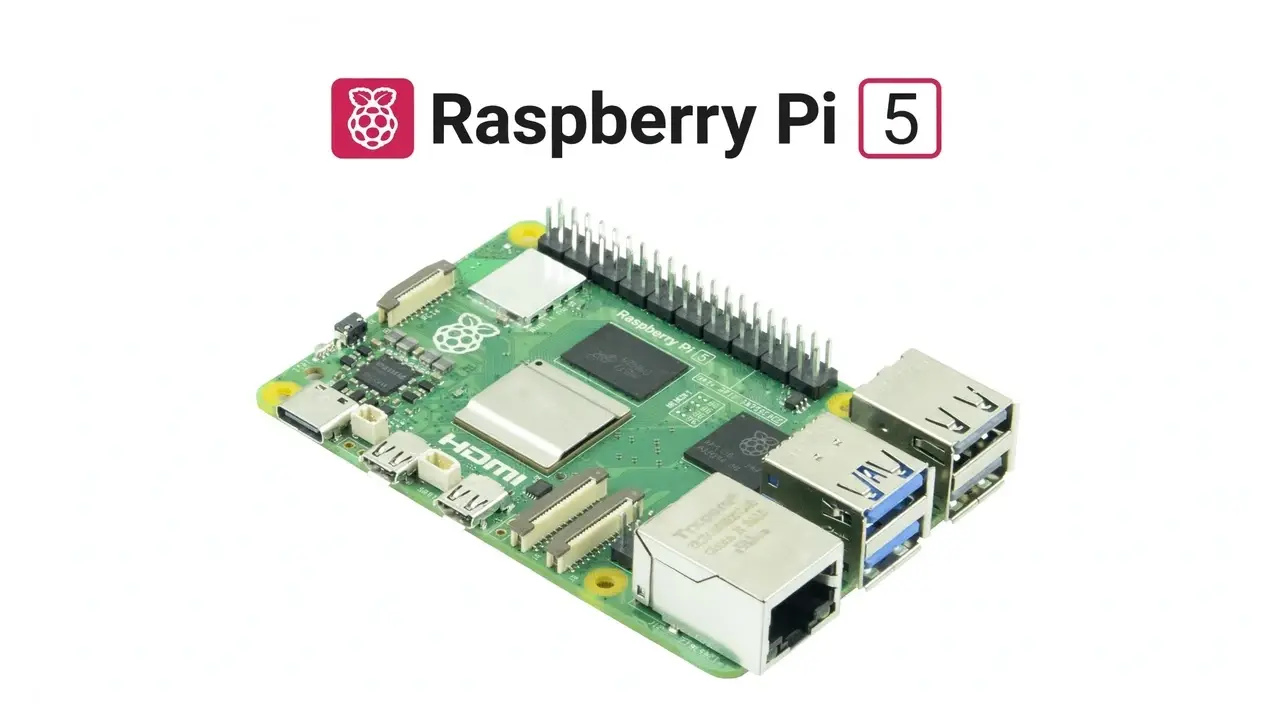
Event snapshot: a narrow hike with a wide implication
The first thing to separate from the noise is scope. Raspberry Pi did not say every product is more expensive. It raised the 16GB version of Raspberry Pi 5 by $80 to $385 and lifted Raspberry Pi Compute Module 5, also referred to as Compute Module 5, by $40. The Raspberry Pi 500+ remains unchanged. That pattern suggests a component-specific squeeze rather than a general price reset.
| Product or SKU group | Latest change | What it signals |
|---|---|---|
| Raspberry Pi 5, 16GB version | Up $80 to $385 | The most memory-heavy consumer board carries the clearest cost pass-through. |
| Raspberry Pi Compute Module 5, 16GB | Up $40 | Embedded and industrial buyers are also exposed to the same component pressure. |
| Raspberry Pi 500+ | Price unchanged | The desktop keyboard computer remains a stabilising product anchor. |
| 2GB version of Raspberry Pi 5 and Raspberry Pi 4 | Raised last month | Even lower memory tiers are no longer fully protected from repricing. |
| Earlier adjustments | February 2026 and December 2025 | The company has repriced multiple times within the past year as memory costs moved. |
Source note: the core price facts are aligned with Raspberry Pi’s official announcement for some 16GB Raspberry Pi products, published at https://www.raspberrypi.com/news/price-rises-for-some-16gb-raspberry-pi-products/.
Why the company moved: no easy substitute for the 16GB memory tier
Raspberry Pi attributes the increase to persistent memory price escalation, a pressure tied to rapid expansion of artificial-intelligence infrastructure. The company says it has searched for replacement components where possible, but for the 16GB capacity there are few alternative supply routes. This is where the story stops being a hobbyist complaint and becomes a supply-chain observation: a small, open-hardware company is being squeezed by a global component market that is prioritising data-centre demand.
Industry coverage reinforces that framing. IEEE Spectrum’s reporting on the DRAM shortage describes AI demand for high-bandwidth memory as a central driver of tighter conventional memory supply, which has rippled through consumer and embedded hardware categories. The result for Raspberry Pi is asymmetric: boards with less memory can sometimes be defended through design choices, channel guidance or older platforms, while the highest memory variants face the most direct cost exposure.
One original market detail sharpens the magnitude. Publicly reported coverage from Hackster, https://www.hackster.io/news/raspberry-pi-hikes-prices-again-with-the-raspberry-pi-5-16gb-hitting-an-eye-watering-385-0d0018c8df23, places the earlier official price of the 16GB Raspberry Pi 5 around $120. If that reference point is used, the new $385 price is more than a simple inflation adjustment; it is a repricing of a flagship configuration.
Financial read-through: pricing pass-through is not the same as profit uplift
For a company watch analysis, the key is to avoid a binary interpretation. A higher sticker price can protect gross margin when component costs are rising, but it can also accelerate substitution. Raspberry Pi itself is encouraging users to match configuration to need: if a 2GB version, another lower memory variant or an older Raspberry Pi 4 is sufficient, customers should not pay for 16GB capacity they will not use.
This creates two plausible paths. In the first, demand for high-memory boards remains sticky enough that the higher price simply compensates for DRAM cost inflation. In the second, price-sensitive developers, educators and small manufacturers migrate down the stack, or Raspberry Pi promotes older devices and entry desktop products as substitutes. The unchanged Raspberry Pi 500+ matters because it gives the company a way to keep a consumer-facing product stable even as compute-heavy variants get more expensive.
Another useful reference point from Raspberry Pi’s own launch coverage is that Raspberry Pi 500+ was introduced on sale at $200, according to https://www.raspberrypi.com/news/the-ultimate-all-in-one-pc-raspberry-pi-500-plus-on-sale-now-at-200/. Holding that desktop product’s price while raising 16GB boards suggests a mix-management strategy rather than a blunt across-the-board increase.
Channel governance: official pricing versus speculative markup
Raspberry Pi is also managing a second problem: price perception. The company warns that scarcity has invited speculative sellers who list products far above recommended prices, sometimes with descriptions that do not match what buyers receive. That is a governance and brand-trust issue, not merely a retail inconvenience.
The company’s position is straightforward: buy through authorised or approved reseller channels, where official pricing and product legitimacy are expected to be preserved. Raspberry Pi’s own production and supply-chain guidance emphasises that approved resellers are held to official pricing, with taxes and shipping as the usual additions. This channel discipline helps the company separate unavoidable factory-cost inflation from secondary-market distortion.
Common misconceptions
- This is not a whole-catalogue price hike. The most important distinction is that Raspberry Pi 500+ is unchanged while 16GB versions of Raspberry Pi 5 and Compute Module 5 move higher.
- The company is not claiming the 16GB price increase reflects a stronger business position. The official explanation centres on unavoidable memory cost and the lack of substitute components for 16GB capacity.
- A higher list price does not automatically mean a healthier profit pool. It may still reduce units sold if customers switch to lower memory variants or older platforms.
- Seeing an inflated listing online does not necessarily prove Raspberry Pi changed its own price again; it may reflect speculative resale. Buyers need to check official or approved reseller channels.
Action recommendations for buyers, integrators and analysts
- Match memory to workload before buying. If the use case is a simple terminal, light scripting, network appliance or classroom build, a lower memory option may avoid paying for capacity that adds no practical benefit.
- Requalify embedded designs early. Developers using Raspberry Pi Compute Module 5 or Raspberry Pi 5 should test whether the system can tolerate lower memory, older boards or redesigned cost targets before locking in a $385 bill of materials.
- Buy from approved channels. The cheapest listed price may carry warranty and authenticity risk; official pricing through approved resellers is the safer baseline.
- Track four forward indicators: DRAM supply news, Raspberry Pi official pricing pages, 16GB stock levels at approved resellers, and whether Raspberry Pi 500+ eventually gets repriced too.
- Read pricing as company strategy. The selective move suggests Raspberry Pi is trying to absorb pressure where possible, protect its consumer desktop story, and pass through costs only where alternatives are scarce.
What GlobalBizSight will watch next
The next signal is whether Raspberry Pi treats this as another temporary repricing or begins rebuilding its product ladder around more expensive memory. If the company’s stance — that the memory crisis is ultimately temporary and that prices could fall later — holds, the next meaningful update would be a restoration of previous prices on 16GB boards. If it does not, the more durable change may be structural: Raspberry Pi’s historical identity as a low-cost UK computer maker may increasingly coexist with a higher-cost, capacity-priced hardware catalogue.