
GlobalBizSight CompanyWatch: Eight Questions on Nvidia RTX 5080 24GB and the January 2027 Window
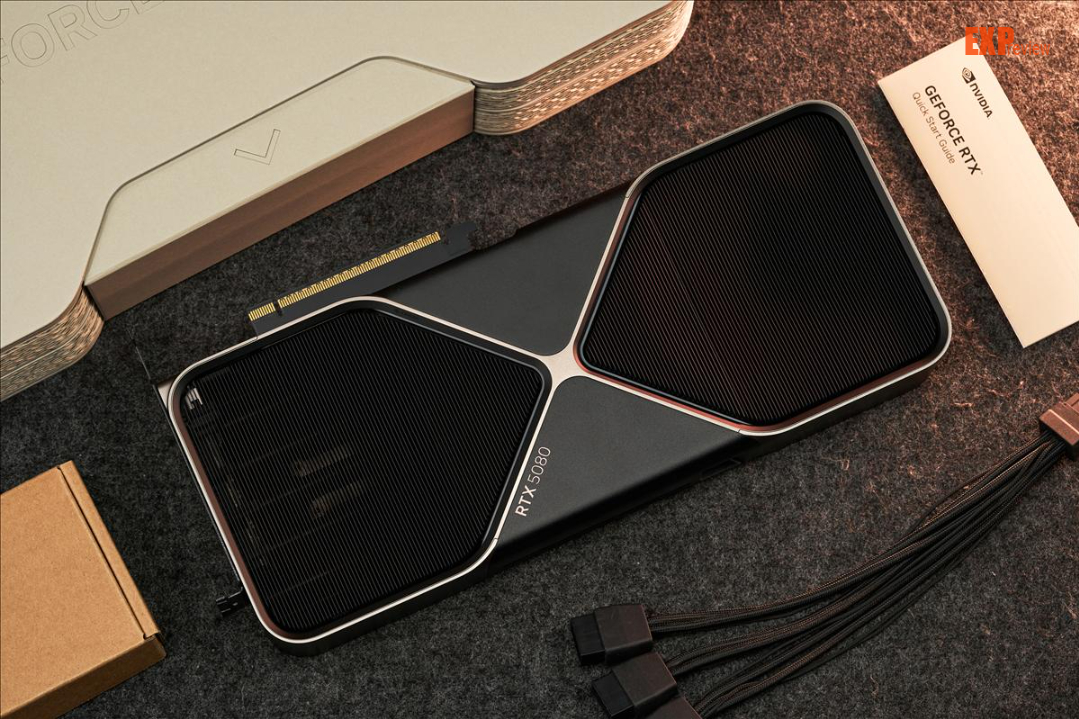
A bundle of documents that never left Santa Clara is currently the most reliable indicator of where Nvidia's gaming roadmap stands. Not a missed keynote, not a leaked benchmark — simply the non-delivery of the design kit for the GeForce RTX 5080 24GB, promised to board partners around October and still outstanding. That one gap has turned a tidy product-ladder story into a live question about how a single company schedules hardware when the component market is against it. For readers who follow Nvidia as a business rather than as a review lab, the episode is unusually instructive: it shows how memory scarcity, a PCB queue and a deliberate hand-over of silicon to the professional segment interact to decide when a flagship reaches shelves.
Below, the CompanyWatch desk answers the eight questions that channel managers, buyers and analysts keep asking about this one company event.
Quick read: what is settled and what is not
- Settled direction: Nvidia intends the RTX 5080 24GB to take over the slot occupied by the current RTX 5080 and to become the new top of the GeForce RTX 50 series for gamers; the GB202 behind the RTX 5090 series is said to be reserved exclusively for RTX Pro series workstation graphics cards.
- Not settled: the calendar. Benchlife reports that the design data had not reached AIC partners as late as the end of October, which makes a debut in January 2027 — that is, January of next year — very difficult.
- Base case: the product still lands in the first quarter of 2027 (Q1 2027), with retail availability trailing any announcement by weeks.
Question 1 — What exactly changed this time?
The plan was to hand design documents to add-in-card vendors in October; partners had reportedly been told verbally that the package was on its way, and it never arrived. Benchlife, the Taiwan-based supply-chain outlet closest to the graphics board industry, said on 2 November that the kit was still undistributed, and that once PCB material preparation and other component shortages are factored in, an official launch in January 2027 is unlikely. The consensus fallback remains the first quarter of 2027.
Question 2 — Why can one missing file decide a launch date?
A board partner cannot start without a reference design. The drawings and timing parameters drive the PCB layout, the power stage, the cooler and the BIOS, all of which must be validated before volume production. Supply-chain interviews relayed by Chinese tech media citing Benchlife put the minimum interval between receiving design information and a sellable card at roughly six weeks — an estimate that now looks optimistic, because it assumes no second delay and normal component access. Timing has partly left Nvidia's hands: it now belongs to whoever ships the PDFs, and to the PCB suppliers behind them.
Question 3 — What does the upgraded specification actually buy?
| Item | RTX 5080 24GB (incoming) | Change versus the outgoing card |
|---|---|---|
| Memory modules | 24Gb (3GB) GDDR7 | Total capacity lifted to 24GB |
| Graphics processor | GB203-450 | Higher core frequency |
| Memory rate | 30Gbps to 32Gbps | Faster signalling per pin |
| Corresponding bandwidth | 960GB/s to 1024GB/s | Crosses the 1TB/s line |
| TDP | 360W to 415W | 55W more; new cooling and PSU headroom |
Read commercially, the last row matters as much as the first. A 415W part built on what was a 360W class design means new coolers, new power-supply recommendations and a fresh bill of materials for every partner — at precisely the moment components are hardest to source.
Question 4 — Does a CES appearance equal a launch?
No. CES 2027 is scheduled for 6–9 January 2027 in Las Vegas, according to the CTA's published show dates, and Benchlife's own scenario is that Nvidia could unveil the model on that stage and ship it to retailers later. A reveal satisfies a marketing calendar; it does not fill carts. Anyone modelling revenue or planning a build should treat announcement and availability as two separate events, potentially a full quarter apart.
Question 5 — What happens to the outgoing 16GB card meanwhile?
It is being wound down. VideoCardz reported in October that end-of-life for the RTX 5090 and the RTX 5080 had been set for January 2027, with the final allocation of the current RTX 5080 reaching partners around the end of October and expected to sell through the US Thanksgiving period in late November 2026. Consistent with that read, the 16GB model has quietly disappeared from Nvidia's own US online marketplace, while street prices moved well above the original suggested price, according to VideoCardz and Tom's Hardware. Scarcity today is the reason the successor will not be cheap.
Question 6 — Will it cost more, and what sets the price?
Yes — every account has the RTX 5080 24GB priced above the RTX 5080 it replaces. The cost pressure is upstream and measurable: TrendForce's forecast of 30 September 2026 put conventional DRAM contract prices up 10–15% quarter-on-quarter in the fourth quarter of 2026 and NAND flash up 15–20%, with a later TrendForce update putting the blended DRAM rise near 20% once high-bandwidth memory demand is included. When data-centre AI orders compete with GDDR7 for the same wafer capacity, the least damaging response for a chip vendor is to push volume into a higher-priced SKU rather than absorb the cost — which also explains why a mid-cycle refresh, not a cut, is the likely answer.
Question 7 — What does this reveal about Nvidia's strategy?
Two things a spec sheet does not show. First, silicon allocation: routing GB202 exclusively to RTX Pro series workstation graphics cards converts a consumer halo product into a professional, higher-margin line — a mix decision, not a technical necessity. Second, ladder management: filling the gaming flagship position with a refreshed GB203-450 lets Nvidia answer the loudest 2026 complaint about its GeForce RTX 50 series line-up — 16GB of video memory under modern titles and local AI workloads — without opening a brand-new manufacturing ramp. For a company whose growth engine is data-centre revenue, that is the lowest-risk way to defend the consumer franchise while supply is rationed.
Question 8 — So wait, buy now, or just watch?
Short answers: if you own a 16GB card and your workload is memory-bound, plan for a wait measured in quarters, not weeks. If your current card still fits your needs, do not park cash against a date that a third party is inferring from an undelivered document. If you are buying on price, the outgoing RTX 5080 is now the riskier asset — thin supply, inflated street pricing and an official end-of-life month that removes any warranty of driver-and-support framing the company may later revisit.
Checklist: five signals that will settle the question
- Any Nvidia confirmation that design kits have been distributed to AIC partners — the earliest hard signal, ahead of every benchmark.
- Partner board listings and regulatory filings for 24GB custom models; certifications appear before retail stock does.
- Whether CES 2027 opens pre-orders or merely shows a reference card.
- TrendForce quarterly memory contract-price data, which effectively sets the floor for the new model's ticket.
- A reappearance of 16GB RTX 5080 stock on Nvidia's store — evidence that the end-of-life plan slipped and the successor is later than expected.
Common misconceptions
- An unveiling means you can buy it in January. Announcement and availability are different events in this case.
- 24GB means a doubling of performance. It relieves a memory ceiling; the silicon uplift is incremental — 30Gbps to 32Gbps, 960GB/s to 1024GB/s.
- Nvidia's silence means the card is dead. Benchlife's reporting indicates the plan stands; only the schedule is under strain.
- A delay means cheaper pricing. The successor arrives at a premium, not a discount, and memory inflation is the reason.
- The RTX 5090 series will be restocked for gamers. GB202 output is being steered toward RTX Pro workstation products.
Action advice by reader type
| Reader | Suggested move | Trigger to revisit |
|---|---|---|
| PC builder or 3D/AI workstation user | Size the decision by video memory, not by model number: if your workload already spills past 16GB, budget for the higher ticket the RTX 5080 24GB is expected to carry, and check that your power supply covers 415W-class cards. | Design-kit distribution confirmed, or an announced price. |
| System integrator or reseller | Do not quote delivery dates to clients on a card whose development files are still with Nvidia; lock component orders against the outgoing model only if stock is physically in hand. | Partner reference designs published; PCB and GDDR7 lead times normalising. |
| Investor, analyst or business-development reader | Treat this as a mix and margin signal: consumer flagship capacity is being rationed by memory supply while workstation silicon absorbs the largest die. Watch inventory turns, not hype. | Next TrendForce memory quarter, plus Nvidia's first explicit statement on the SKUs replacing the 16GB card. |
Data points referenced
- Design kit undistributed to AIC partners as of the end of October; January launch judged difficult — Benchlife (benchlife.info), relayed by IT Home (ithome.com) on 2 November.
- CES 2027 show dates, 6–9 January 2027, Las Vegas — CTA, ces.tech.
- Conventional DRAM contract prices projected up 10–15% QoQ in 4Q26, NAND up 15–20% — TrendForce press release, 30 September 2026 (trendforce.com); the 20% blended DRAM estimate is TrendForce's later October note.
- End-of-life timing for the RTX 5090 and RTX 5080 reported as January 2027, and removal of the RTX 5080 from Nvidia's US marketplace — VideoCardz (videocardz.com), with street-price context from Tom's Hardware.
Bottom line
Read this as a company signal rather than a product leak. Nvidia is juggling three constraints at once — scarce memory, a flagship ladder it has decided to move further upmarket, and partners who cannot manufacture what they have not been given. The outcome is a window that slips while the plan itself does not. Watch the documents, not the keynotes: the day the design kit ships, the January 2027 argument ends and the pricing argument begins.