
CompanyWatch Q&A: Does the Samsung SDI – Boston Dynamics Atlas Battery Deal Move the Needle?
Short answer: not in this year's numbers, but yes in positioning. South Korean tech outlet The Elec reported in recent days that Samsung SDI will supply the battery pack for Boston Dynamics' humanoid robot Atlas and is expected to hold the dominant early share, with LG Energy Solution also qualified. Atlas runs on 70 cylindrical 2170 cells for roughly 1.3 kWh in total, so robot demand is immaterial beside Samsung SDI's multi-trillion-won battery business, while the option value on a brand-new demand category is very much not.
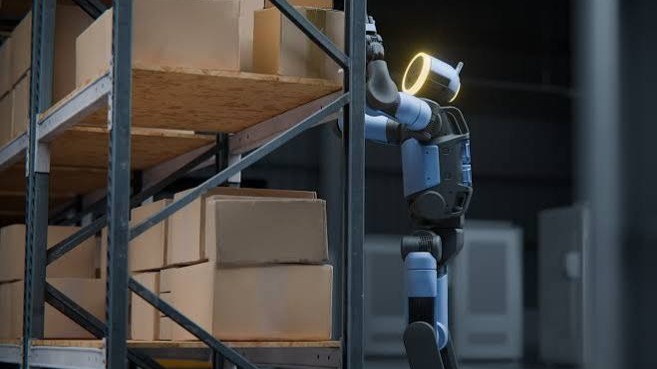
Q1. What has actually been settled about the Atlas battery supply?
The reporting describes a supplier lineup and an early-share split, not an exclusive contract. Read it as a design-in decision, and the four confirmed pieces fall neatly into place.
- Samsung SDI is set to supply Atlas batteries and, with programme demand still small at the start, is expected to take the overwhelming majority of early shipments, The Elec said recently.
- LG Energy Solution was also selected, but its limited capacity means it effectively waits on the bench, leaving Samsung SDI the primary source for a period.
- The pack itself is compact and conventional: 70 cylindrical 2170 cells per robot, each 21 millimetres in diameter and 70 millimetres tall, rated at 5000mAh. Assembled, the pack totals about 1.3kWh — roughly 1.6% of the 84kWh battery fitted to Hyundai's IONIQ 5 long-range model.
- Beyond the cells, Hyundai Mobis supplies actuators and other critical components, Atlas product-version production has begun, and Hyundai Motor Group plans to phase the robot into car-making steps such as parts sequencing from 2028.
Q2. Why read a 1.3 kWh pack as business news at all?
Because pack size is not a performance boast here — it is a duty-cycle decision, and duty cycles are what turn a robot into a purchasable capital good.
| Operating parameter (per Boston Dynamics' published figures) | Value | Commercial reading |
|---|---|---|
| Runtime, general duty | up to 4 hours | Covers one half-shift without intervention |
| Runtime, heavy material handling | about 2 hours | Highest-power tasks burn through the pack roughly twice as fast |
| Autonomous battery swap at a workstation | about 3 minutes | Robot services itself; no operator downtime |
| Recharge of a depleted pack | about 1.5 hours | Charging is 30 times slower than swapping, so packs — not chargers — become the scaling unit |
The arithmetic behind the 1.3 kWh choice follows from that last row. If a depleted pack needs about 1.5 hours on the charger but a swap takes about 3 minutes, a factory running two or three shifts does not buy a bigger battery — it buys spare packs and swap stations. That shifts spend from cell volume per robot into cell volume per fleet, which is exactly the kind of demand a cylindrical-line supplier such as Samsung SDI can serve without retooling. It is also why the heaviest lifting tasks, the ones that cut runtime to about 2 hours, get scheduled around the swap window rather than the charge window.
Q3. Where will the cells be made, and why is geography the real story?
Both selected suppliers are South Korean, but neither Korean home plant is the routing answer. An earlier report by Electronic Times — the South Korean supply-chain title behind The Elec's coverage — indicated Samsung SDI intends to serve Atlas from its Malaysia plant, while LG Energy Solution would supply from its factory in Georgia, United States.
Here is a point the initial coverage left out. Samsung SDI's Malaysian cylindrical capacity is sunk, not speculative. The company invested KRW 1.7 trillion in expanding cylindrical battery lines in Malaysia; the second plant at Samsung SDI Energy Malaysia began mass-producing PRiMX 21700 cells — the same 21 millimetre by 70 millimetre format — in 2024, according to the company's own announcements and Reuters' coverage of the Seremban site. Three consequences follow for anyone tracking this deal:
- No qualification step. Atlas is being fed from a banked, already-shipping SKU family rather than a bespoke cell, so the programme adds volume instead of adding a development project.
- Capacity headroom sits outside the EV cycle. Malaysian cylindrical lines are not fully absorbed by North American EV programmes, which is exactly the flexibility a low-initial-volume robot programme needs.
- LG's constraint is structural. A Georgia route ties LG Energy Solution to sites whose slack is already earmarked for automotive and storage work — the practical reason the second supplier stays secondary.
Q4. How does an Atlas pack compare with rival humanoid robots?
Atlas lands in the lower-middle of the current field, and that looks deliberate rather than limiting. The figures below are vendor or industry-press disclosures, not audited specifications, so treat them as order-of-magnitude context.
| Robot | Reported pack energy | Stated strategy |
|---|---|---|
| Boston Dynamics Atlas | about 1.3kWh (70 × 2170 cells) | Self-swap in about 3 minutes, up to 4 hours general duty |
| Tesla Optimus (Gen 2) | about 2.3 kWh | Leverages an automotive-derived cylindrical line |
| Figure 02 / F.03 | about 2.25–2.3 kWh | Larger pack plus high-rate conductive or inductive charging |
| Unitree H1 | about 0.864 kWh | Lightweight, low-cost platforms for research and pilot duty |
Two readings matter for CompanyWatch. First, biped geometry caps how much lithium a robot can carry before its balance control costs spiral, so a smaller pack with a swap loop is a rational engineering trade — the identical weight-versus-runtime squeeze that drives handset redesigns, as we documented in our iPhone 18 battery redesign case. Second, choosing an off-the-shelf cylindrical format keeps humanoid batteries inside the power-tool, data-centre and robotics supply chain rather than the automotive prismatic chain, which reshuffles who competes for these orders.
Q5. So what is the contract actually worth to Samsung SDI?
Run the numbers before accepting the headline. Samsung SDI's battery business generated revenue of KRW 4.41 trillion in the third quarter of 2026, up 55.3% year on year, with operating profit swinging positive to KRW 361.9 billion, per the company's 28 October earnings release. Its storage order book for 2026 alone already exceeded 60 GWh, as energy-storage.news reported on 30 October. Hyundai Motor Group, for its part, has said publicly that it wants a US robot production facility with annual capacity of up to 30,000 units by 2028.
GlobalBizSight analysis: 30,000 robots at about 1.3 kWh each equals roughly 39 MWh of pack demand a year — around 0.06% of the GWh volume Samsung SDI has booked for storage in a single year. Robotics will therefore not move reported volumes at least until the 2030s. The reason the slot still deserves a line in a company file is different:
- Specification authorship. Being the supplier at the moment a flagship humanoid's battery spec is frozen means future robot programmes inherit Samsung SDI's format assumptions, customer by customer.
- A third demand leg. The same high-power cylindrical portfolio that serves Atlas is being pulled hard by AI data-centre backup power units; Samsung SDI has showcased 21700-class cylindrical cells built for rack-level BBU duty, and The Elec has reported its cylindrical supply into US data-centre customers.
- Brand proof for a category still being sold to CFOs. A qualified battery on a robot that runs up to 4 hours and services itself in about 3 minutes is a reference case, and reference cases are how component makers win the next contract cycle.
External analysts are not yet pricing robots into the story. Morningstar's post-results note declared earnings in line while raising its Samsung SDI valuation by 24% on the demand outlook and profit recovery — a demand outlook framed around storage and data-centre applications, not humanoids.
Common misreadings to avoid
- "Exclusive supplier." No. LG Energy Solution is also selected; Samsung SDI's lead reflects limited initial demand and LG's capacity, not a contractual monopoly.
- "Small pack, weak robot." Runtime, capacity and availability are separate variables; Atlas's about 3-minute self-swap converts a 1.3kWh pack into near-continuous plant availability.
- "Robots will offset EV softness." At full stated robot capacity, the energy volume is a rounding error against the ESS order book.
- "Batteries are Atlas's bottleneck." The gating items are actuators and integrated motion, which Hyundai Mobis covers inside the group, plus per-unit economics — not the cells.
- "Malaysia means Korea-built packs in Georgia." The routing is deliberately outside South Korea: Samsung SDI from Malaysia, LG Energy Solution from Georgia, United States.
Five signals that will tell you whether this turns into a business
- Slot durability. Watch whether Samsung SDI's primary share survives the first volume step-up, or whether LG Energy Solution's Georgia capacity frees it to take real orders.
- Plant activation dates. Atlas is being trained inside Boston Dynamics' application centre at Hyundai's Metaplant America campus near Savannah, Georgia, opened in September 2026; the robot's arrival in parts-sequencing duties from 2028 is the first hard schedule test.
- Cell content per robot. Any move from 70 cells of the 2170 format toward larger cylindrical or solid-state packs would reopen the design-in and reset the supplier pecking order.
- Spare-pack economics. Ratios of packs sold per robot, and swap-station deployment counts, are the honest proxy for fleet utilisation — and the true driver of cell demand.
- Disclosure discipline. Samsung SDI naming robotics as a separate revenue or shipment line in future results would be the first auditable confirmation; silence keeps this a qualitative option, not a forecast.
Action guidance, by reader
- Investors: keep humanoid exposure as a valuation option, not an earnings input; test every bull case against the 1.3 kWh-by-30,000-unit arithmetic above.
- Industry analysts: reposition Korean cylindrical capacity trackers to read three overlapping demand streams — power tools, data-centre backup power, robotics — since all three draw on the same 21700 asset base.
- Strategy and business development teams: the fastest route into this supply chain is format alignment, not price. Standardising on an already-qualified cylindrical cell is what let Atlas lock a supplier before volume existed.
- Procurement and plant planners: model robot fleets the way you would model forklifts — packs and swap stations as consumables, availability as the KPI.
Reader questions, answered briefly
Which company supplies Atlas batteries?
Samsung SDI and LG Energy Solution are both selected; South Korean reporting indicates Samsung SDI will carry almost all of the early shipments because initial demand is limited and LG's capacity is constrained.
How much energy does one Atlas pack hold?
About 1.3kWh, assembled from 70 cylindrical 2170 cells — 21 millimetres in diameter and 70 millimetres tall, 5000mAh each. That is roughly 1.6% of the 84kWh battery in Hyundai's IONIQ 5 long-range variant.
How long does Atlas run, and how fast does it recover?
Up to 4 hours in general duty and about 2 hours in heavy lifting. A depleted robot can drive itself to a workstation and swap in about 3 minutes, while recharging the pack takes about 1.5 hours.
Does this deal change Samsung SDI's earnings outlook?
Not on any current horizon. The energy volume is roughly 0.06% of one year's storage orders under the group's own 2028 capacity target; Samsung SDI's earnings recovery is being reported against storage and data-centre demand.
What could still break the supply story?
A capacity recovery at LG Energy Solution, a robot-side switch to higher-energy formats, or a slower-than-announced start of Hyundai Motor Group's US deployment from 2028 would each erode the primary-supplier assumption.
References
- The Elec, on Samsung SDI's expected primary share in the Atlas programme — based on the original South Korean Electronic Times reporting.
- Samsung SDI, third-quarter 2026 earnings release: news.samsungsdi.com
- Samsung SDI, KRW 1.7 trillion investment in Malaysian cylindrical lines and PRiMX 21700 mass production: news.samsungsdi.com; groundbreaking at the Seremban site, Reuters, July 2022: reuters.com
- energy-storage.news, Samsung SDI's 60 GWh-plus storage orders in 2026: energy-storage.news
- Hyundai Motor Group newsroom, US robot facility targeting up to 30,000 units a year by 2028: hyundai.com
- Boston Dynamics, robotics application centre opening at Hyundai's Metaplant America campus: bostondynamics.com
- Morningstar, Samsung SDI earnings note and 24% valuation increase: morningstar.com
- Korea Herald on cylindrical 21700 cells for AI data-centre backup power: koreaherald.com; The Elec on cylindrical cells supplied to data-centre operators: thelec.net