
GlobalBizSight CompanyWatch: Sequencr AI Seats Paul Soon as Strategic Advisor — How to Read the Stratum Bet on Marketing Operating Models
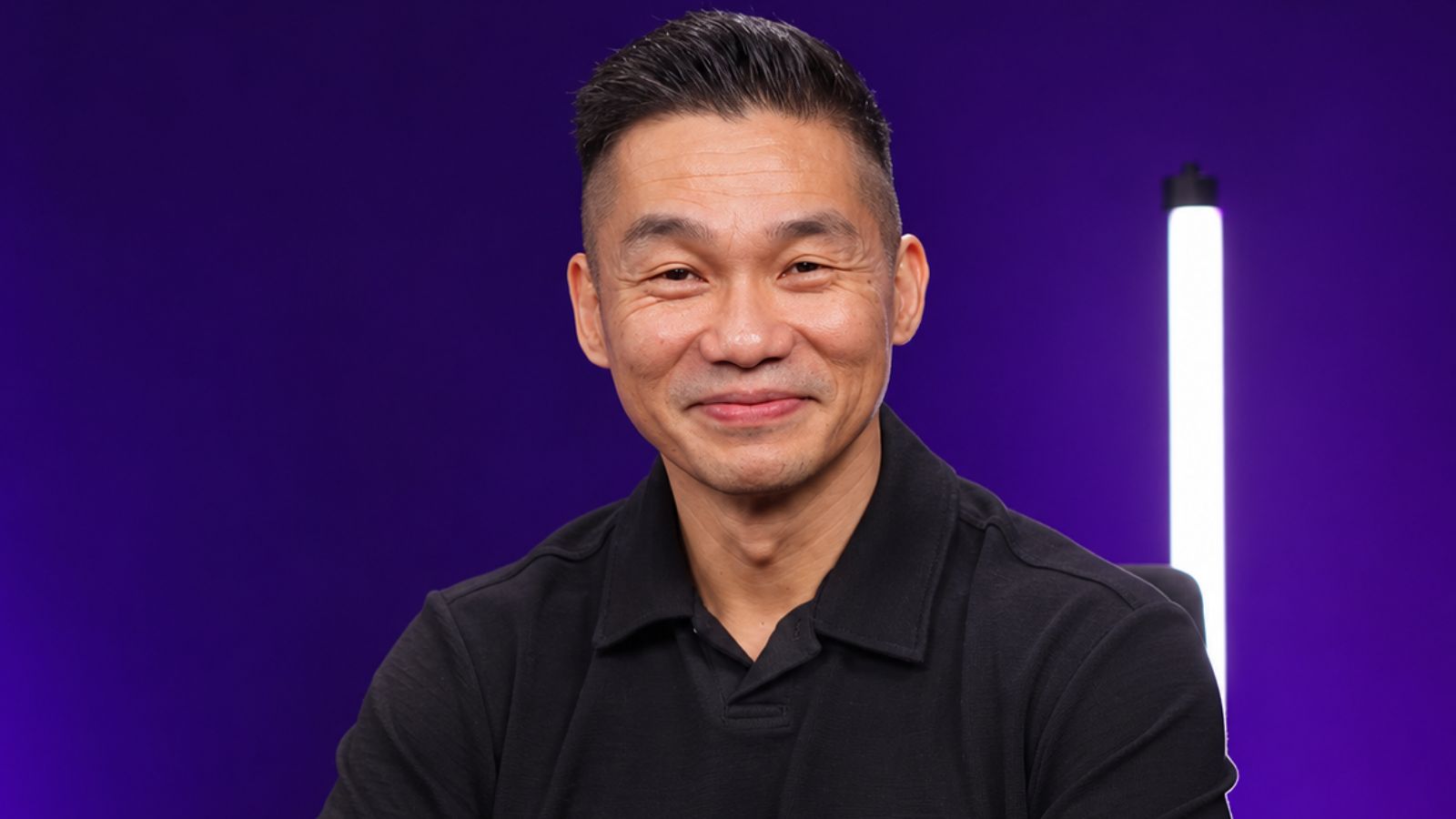
The durable shift in this industry is not better models; it is budgets moving from tools toward systems that execute work unattended. Sequencr AI is buying into that directly: it has appointed Paul Soon, former McCann SG chief executive, as strategic advisor, drawing on more than 25 years in creative and digital businesses to shape the Stratum platform, its consulting services and its engagements with brands, agencies and partners. Read it as a purchase of operating-model credibility, and judge it on delivery rather than on the title.
For a decade the communications industry sold effort by the retainer; the next decade will sell outcomes by the workflow. This CompanyWatch note separates what Sequencr AI disclosed from what an outside reader can infer, then turns the appointment into a working checklist.
Why would an AI platform company hire an agency chief executive?
Because the binding constraint on agentic AI is organisational rather than technical. Gartner's 2026 CMO Spend Survey, published 11 May 2026 from fieldwork between January and March 2026 among 401 CMOs and other marketing leaders, found that CMOs allocate 15.3% of marketing budgets to AI while only 30% are ready to scale AI capabilities. The money has moved; the delivery model has not.
Sequencr works inside exactly that gap. The company helps communications and marketing organisations integrate agentic AI into their operations, develop new capabilities and rethink how teams are staffed and governed. In the LinkedIn post announcing the appointment, Sequencr framed the rise of agentic AI as a change to how communications and marketing teams work, raising questions around organisational structures, capabilities and the role of technology in business operations. Sequencr said Soon's experience will contribute to helping organisations adopt AI across their communications and marketing functions, with a focus on developing practical capabilities and operating models.
Independent research matches the diagnosis. Deloitte's August 2026 survey of 501 US leaders at organisations at least piloting agentic AI found 52% considered themselves prepared on vision and strategy — the only readiness dimension above half — while just 16% said their processes were ready and 5% called them highly prepared. Confident intent, thin process: that spread is the sellable problem a platform plus advisory combination targets.
What does Paul Soon actually bring to Sequencr AI?
Judgement built across both the buying side and the delivery side of the industry, in one career.
| Role held | Period | Relevance for an AI vendor |
|---|---|---|
| McCann Singapore | Chief executive until the May 2026 handover | Led the combined business after the McCann–MullenLowe integration; expanded digital work, government clients and AI capabilities |
| MullenLowe Singapore and China | 2020 to 2025, after taking the Singapore CEO role in 2018 | Ran a network across two markets under one profit-and-loss line |
| POSSIBLE Singapore | 2015 to 2018 | Transformation-era digital business, nearest to where agent platforms compete |
| Mirum Agency | 2011 to 2015 | Digital agency operations at network scale |
| JWT, XM Asia Pacific, Arc Worldwide, Saatchi & Saatchi and AKQA | Earlier roles | Brand, commerce and interactive disciplines across regional markets |
Two details sharpen the read. First, timing: trade coverage in Campaign Asia and Marketing-Interactive in May 2026 reported Gonzalo Olivera's promotion from president to chief executive of McCann Singapore under a planned succession that took Soon out of the operator seat, so Sequencr recruited him only months after he stopped running day-to-day agency delivery. Second, the line on his record that matters to a software company is not creative reputation but integration experience — post-merger consolidation, public-sector contracting and the early build-out of AI capability inside a holding-company structure.
How should you read a "strategic advisor" title? Six questions to ask
Advisory seats are the least standardised instruments in corporate governance, so treat them as claims requiring verification — the following is analysis, not disclosure.
- Is there a named mandate? Sequencr states Soon will help shape the continued development of the Stratum platform and consulting services — product and go-to-market scope, not an endorsement.
- Is there a reporting line or budget? No executive title, function or P&L is described.
- Is judgement being bought, or a network? Both: the roadmap needs client-side realism, and brand, agency and partner engagements need a credible counterpart.
- How recent is operator experience? Inside one cycle — his running role ended in 2025–2026, which materially raises the value of the seat.
- Does it sit alongside an executive build-out? It does, and sequence matters: advisers attached to a fresh leadership team usually signal a commercial push.
- Any governance detail — equity, board seat, term? None published, so assume low accountability until disclosure changes.
For contrast with a fully governed transition, see our parallel read on how Advantech split the chairman and CEO roles.
Where do Stratum and the wider leadership bench stand?
Stratum is the asset Soon is asked to sharpen. Sequencr describes it in its own materials as an AI-native communications intelligence platform built around agents, multi-signal monitoring, narrative analysis and private models; launch coverage filed with the National Law Review adds domain-specific models and real-time data, positioned for communications and marketing teams and agencies.
The bench around it widened first. The appointment follows Sequencr AI's expansion of its leadership team last month, when it named Jeremy Seow as president and co-founder to support growth in agentic AI solutions for communications and marketing teams. Seow oversees client strategy, growth and AI-enabled operating models across the Stratum platform and consulting business, alongside founder and CEO Matt Collette, CTO and head of product Jay Hatch, head of client success and projects Sue Ann Teo, CFO Dave Scott and director David Gallagher.
| Person | Role | Accountability to watch |
|---|---|---|
| Matt Collette | Founder and CEO | Strategy and capital direction |
| Jeremy Seow | President and co-founder (named last month) | Client strategy, growth, operating models across platform and consulting |
| Jay Hatch | CTO and head of product | Whether advisory input becomes shipped roadmap features |
| Sue Ann Teo | Head of client success and projects | Delivery capacity as deployments scale |
| Dave Scott | CFO | Revenue mix between licences and services |
| David Gallagher | Director | Governance and oversight |
| Paul Soon | Strategic advisor | Platform shaping plus brand, agency and partner engagements |
The structural question is mix. Sequencr sells a platform and consulting simultaneously, and firms attaching advisory depth to one technology stack attract capability questions and channel questions at once — the tension we examined in advisory groups built around one platform stack. If services revenue outruns subscription revenue, the platform label becomes a distribution story.
What should marketing leaders and agencies do next? A five-step playbook
- Baseline the operating model before piloting. Map which tasks in planning, production, monitoring and reporting an agent can execute, and which need a named human approver.
- Write readiness into the contract. Specify data-quality remediation, review loops, escalation paths and post-go-live workflow ownership. A 16% process-readiness rate is a contracting problem as much as a technology one.
- Interview the advisory bench, not only the roadmap. Ask which client operating-model decisions an adviser has actually reversed.
- Instrument adoption in money terms. Cost per approved asset, human edit rate, signal-to-response cycle time, retention of accounts touched by AI-enabled workflows.
- Decide who owns agentic work. Marketing operations, corporate communications or a cross-functional hub; the third usually survives the budget cycle best because it prevents duplicated tooling spend.
Which signals make this hire testable over the next four quarters?
- Stratum features traceable to operating-model input rather than raw model capability.
- First case studies pairing a brand client with an agency client, converting relationships into pipeline.
- Disclosed revenue split between software and consulting — product company with services, or services company with product.
- More agency principals joining the advisory bench, which would confirm a category-wide talent migration rather than a single hire.
What are the most common misreadings of this appointment?
- Treating an adviser as an executive hire. No stated reporting line, budget or accountability structure.
- Assuming creative reputation transfers to roadmap judgement. The scarce skill is post-integration org design.
- Counting one hire as proof of AI revenue. Gartner's 30% scale-readiness figure shows how wide adoption-to-monetisation remains.
- Expecting neutrality from a platform-plus-consulting model. Advisory input from a former agency chief can tilt a roadmap toward large networks and away from in-house teams.
Frequently asked questions
What exactly will Paul Soon do at Sequencr AI?
He will help shape the continued development of the Stratum platform and the consulting services, and support engagements with brands, agencies and partners, per the company's announcement.
Why hire an operator instead of another engineer?
Because failures cluster around process. Deloitte's 2026 survey puts vision readiness at 52% and process readiness at 16%; Gartner's 2026 CMO survey shows 15.3% of budgets allocated with only 30% ready to scale. People who have rebuilt agencies after integrations are scarce against that gap.
Is Soon an employee or an external advisor?
The disclosure names a strategic advisor role with no reporting line, equity stake or term. GlobalBizSight's analysis: treat it as influence without direct accountability until disclosure changes.
What would change this assessment?
Either a named product mandate with shipped roadmap features, or services-led revenue growth that reframes Sequencr as a consultancy running its own tooling.
Sources and further reading
- Gartner newsroom, 11 May 2026: 2026 CMO Spend Survey on AI allocation and scale readiness.
- Deloitte press room, August 2026: survey on AI readiness and agentic AI success factors.
- Sequencr AI: Stratum platform description.
- Campaign Asia, May 2026: McCann Singapore chief executive transition.
- National Law Review: Stratum launch description.
- CompanyWatch by GlobalBizSight — trackable enterprise readouts. Contact the desk: info@globalbizsight.com.