
CompanyWatch Playbook: Reading the SKIMS US$148 Advent Calendar Pull — Steps, Traps and Indicators
SKIMS took its limited-edition holiday advent calendar down from its own website after buyers said the US$148 set bought hair accessories, keychains and other "playful items" that felt cheaper than the price. Bloomberg reported the removal, confirmed by a person familiar with the situation; the brand apologised to purchasers and opened two exits — a full refund, or store credit. The useful read is not "bad product". It is a price-value architecture failure inside a rapid expansion phase.
Set against the longer trend line, this is the moment celebrity-capitalised fashion brands are forced to defend unit-level arithmetic in public. Over the past three years SKIMS has been converting attention into distribution — collaborations with Nike, The North Face and Fendi, a beauty launch signalled by Kardashian for 2027. The calendar week showed what attention does not automatically deliver: a value story that survives a comment section.
What happened, step by step
- SKIMS listed a limited-edition holiday advent calendar at US$148, presented as an accessories set in countdown packaging.
- Buyers and onlookers dissected the contents on Reddit and TikTok; the benchmark invoked most often was the dollar-store shelf, not the shapewear rack.
- Criticism compounded because the calendar format carries an inherited promise — a 24-day ritual object, not a hair-clip multipack.
- On 9 November 2026 Bloomberg reported the item had disappeared from the brand's site, with the removal confirmed by a person familiar with the matter.
- SKIMS apologised to customers who had already bought it, acknowledging the item did not meet expectations.
- Two remedies followed: return for a full refund, or keep the product in exchange for store credit. A spokesperson told Bloomberg the company treats customer feedback seriously and that the response will directly shape future product launches.
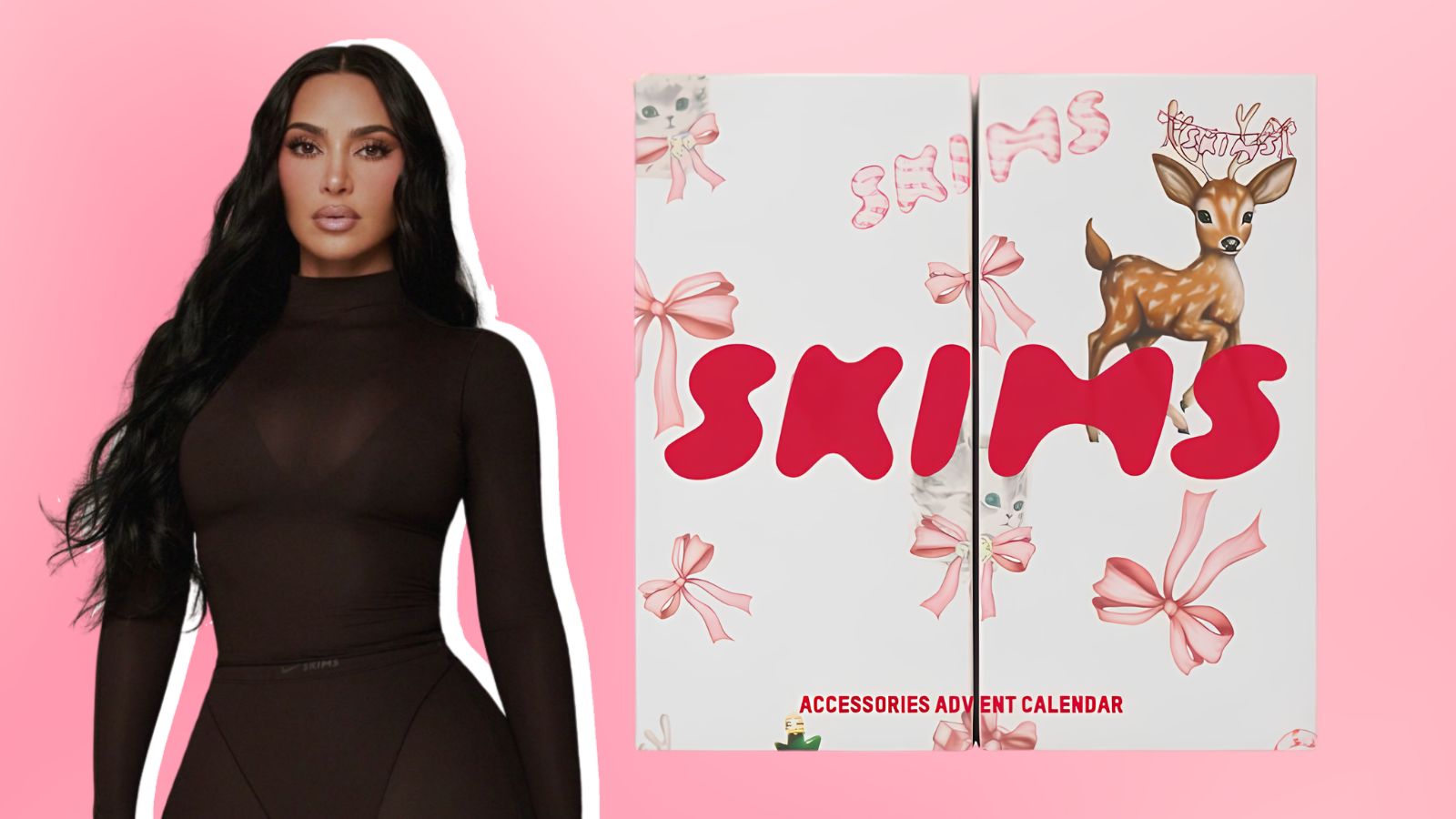
Why the US$148 price met resistance
Conclusion first: the objection was arithmetic before it was sentiment. Once the contents are hair accessories, keychains and additional "playful items", the buyer stops comparing against a brand's core price ladder and starts comparing against the accessory aisle, where each piece retails in single dollars. A premium number attached to a low-unit-value basket turns an attention brand into a value defendant.
Category convention makes the gap measurable. Gift calendars normally ask to be judged on a stated value multiple. In ReallyRee's September 2026 round-up of the beauty calendar shelf, Sephora Collection's Premium calendar is listed at £99.99 against a £249.39 stated value, and Benefit's 24-day set at $168 against a $330 value — roughly 2.5× on the ticket. On our read, the SKIMS calendar invited judgment on the contents themselves rather than on a published value multiple, which is the weaker defensive position.
| Dimension | Category convention | The SKIMS episode | What an analyst takes from it |
|---|---|---|---|
| Value proof | Itemised contents plus a credible stated-value multiple | Contents were disclosed, but low unit value: hair accessories, keychains, "playful items" | Disclosure is necessary, never sufficient |
| Price ladder fit | Gift SKU sits at or below the brand's entry ticket | US$148 in one basket of accessories | Premium number, accessory-grade basket |
| Format promise | Calendar equals a countdown ritual | Accessories box in calendar packaging | Format expectations cannot be priced away |
| Post-launch posture | Silent deletion or a markdown | Apology, full refund or store credit, feedback promised into future launches | Fast remedy protects trust, and is paid for twice |
Timing raised the temperature further. Circana's read of the 2025 US season found that 48% of consumers shopped before Thanksgiving, with the early-November share up three points year over year. A limited drop released into that window meets the most price-scrutinised, most return-friendly buyer of the year — and the pull reported by Bloomberg landed inside it, on 9 November 2026.
What SKIMS is building beyond shapewear
The setback sits inside a widening mix. The brand has built visibility through collaborations with Nike, The North Face and Fendi, is exploring beauty, and has capital behind it: Reuters and CNBC both reported on 12 November 2025 that SKIMS completed a US$225 million raise led by Goldman Sachs Alternatives at a valuation of about US$5 billion. Money at that scale changes the meaning of a withdrawn SKU — the revenue hit is immaterial, the credibility hit is not, because the next category entries are priced on trust.
Trust has one open wound. Kardashian's standalone skincare venture, SKKN by Kim, published a notice that it wound down operations and closed on 29 June 2025, just over three years after launch — which is why the beauty line Kardashian has signalled for 2027 now carries a comparison record rather than a clean slate. The lesson the calendar week hands that plan is narrow and practical: a brand extension is judged on the least defensible item in the range, not the flagship.
That is the same delivery gap between an idea and an ordinary consumer product that GlobalBizSight has tracked in other company files, including Amazon's rebuilt home robot effort.
The celebrity engines still running
The demand-generation machine was not paused. SKIMS used actor Will Ferrell's fictional golfing alter ego, Lonnie "The Hawk" Hawkins, for a menswear campaign connected to Netflix's comedy series The Hawk; Ferrell stays in character as a washed-up professional golfer trying to return, promoting the men's essentials collection through a tongue-in-cheek film narrated by Kim Kardashian.
NikeSKIMS enlisted BLACKPINK's Lisa for its Spring '26 campaign, performing alongside professional ballerinas to a reimagined version of Mozart's Queen of the Night. Directed by Sergio Reis and filmed in Paris, it foregrounds footwear, apparel and accessories inspired by the movement of modern ballerinas — performance credibility borrowed from a classically trained frame.
Five traps readers fall into
- Calling it a public-relations accident. The complaint was a price-content mismatch, which is a merchandising decision, not a comms decision.
- Treating "the description listed everything" as a defence. Comment threads correctly pointed out that the product page itemised an accessories set; disclosure settles the honesty question and leaves the value question untouched.
- Assuming a refund is a clean cost. Store credit keeps the cash inside the business but converts a sale into a liability and re-books the same marketing spend on a sceptical customer.
- Reading one limited SKU as category health. A calendar is a low-volume, high-visibility test item; it tells you about framing discipline, not about shapewear demand.
- Equating celebrity reach with willingness to pay. Will Ferrell and Lisa widen the funnel; they do not price the basket at the bottom of it.
The playbook: six checks before a premium gift SKU ships
- Run the per-unit test. Divide the price by the countable items. If any single piece can be found on a mass shelf at equal or lower cost, write down why the brand version is worth the multiple.
- Publish a stated value the buyer can audit. Full sizes, travel sizes, retail prices. This is the standard the beauty calendar shelf already applies.
- Match format to promise. A countdown format inherits ritual expectations; a multipack format does not. Choose the packaging after choosing the promise.
- Price against the entry ticket, not the aspiration. A gift SKU above the brand's normal single-item price needs a visible reason to exist.
- Seed the objection handling in the copy. State what is inside, who it is for, and what it is not.
- Pre-authorise the retreat. Decide the refund or credit posture before the first viral post, so the response is policy rather than panic.
Indicators to watch over the next four quarters
- Whether a holiday calendar returns at all, and at what price-content ratio — the cleanest test of whether the spokesperson's promise to let feedback shape future launches was literal.
- Discount depth and markdown timing across SKIMS's gift assortment this season; heavy early markdown on the remaining holiday range would say the launch problem is broader than one SKU.
- Beauty timeline discipline: does the 2027 launch date hold, move or fragment, and does the range open with a stated-value story or with a celebrity film.
- Collaboration price ladder after Nike, The North Face and Fendi — a new partner at a higher ticket tests whether the perceived-value repair has happened.
- The wider price-credibility cycle in consumer, comparable to what we tracked in the UK farmgate milk price cut: when price moves meet public resistance, watch the remedy design, not the apology.
FAQ: what the SKIMS calendar episode actually tells you
Did SKIMS refund buyers?
Yes. Coverage of the aftermath, including Bloomberg's report and the BBC's, described two paths: send the calendar back for a full refund, or keep it in exchange for store credit, after the brand apologised to purchasers.
Was the product misrepresented?
On the evidence available, no: the contents were listed as an accessories set. The failure was expectation design — a calendar format and a US$148 ticket attached to hair accessories, keychains and "playful items".
Does this change the investment story?
Not the revenue line. A limited holiday SKU is immaterial against a company reported at a US$5 billion valuation in November 2025. It matters as a governance signal: how fast price decisions are reviewed when a customer base organises on Reddit and TikTok.
What is the single best indicator to track next?
Return posture and re-release design. If the next launch publishes an auditable value list and prices inside the core ladder, the episode was a merchandising correction. If it does not, the brand has told you attention still outranks arithmetic.
Sources
- Bloomberg, "Skims Pulls $148 Advent Calendar Over Complaints", 9 November 2026 — https://www.bloomberg.com/news/articles/2026-11-09/kardashian-s-skims-pulls-148-advent-calendar-over-complaints
- Reuters, "Kim Kardashian's Skims raises new funding at $5 billion valuation", 12 November 2025 — https://www.reuters.com/business/kim-kardashians-skims-raises-new-funding-5-billion-valuation-2025-11-12/
- BBC News, "Kim Kardashian's Skims offers refunds for $148 advent calendar" — https://www.bbc.com/news/articles/cqp8g8p53x6ko
- Circana, "Holiday 2026 Media Planning: Where to Spend and How to Measure the Season" — https://www.circana.com/post/holiday-2026-media-planning-where-to-spend-and-how-to-measure-the-season
- SKKN by Kim customer notice on closure effective 29 June 2025 — https://skknbykim.com/password
- Cosmetics Business, "Kim Kardashian confirms Skims Beauty launch date" (2027) — https://cosmeticsbusiness.com/kim-kardashian-confirms-skims-beauty-launch-date
- ReallyRee, "Sephora Advent Calendar 2026 — Full Contents and Details" (price/value benchmark) — https://reallyree.com/sephora-collection-beauty-advent-calendar-review/
For decision-makers, one closing line: a refund buys back a season, but only a published value architecture buys back the next price increase.