
GlobalBizSight CompanyWatch: SpaceX Boost Mobile Deal — Buy, Roam or Build?
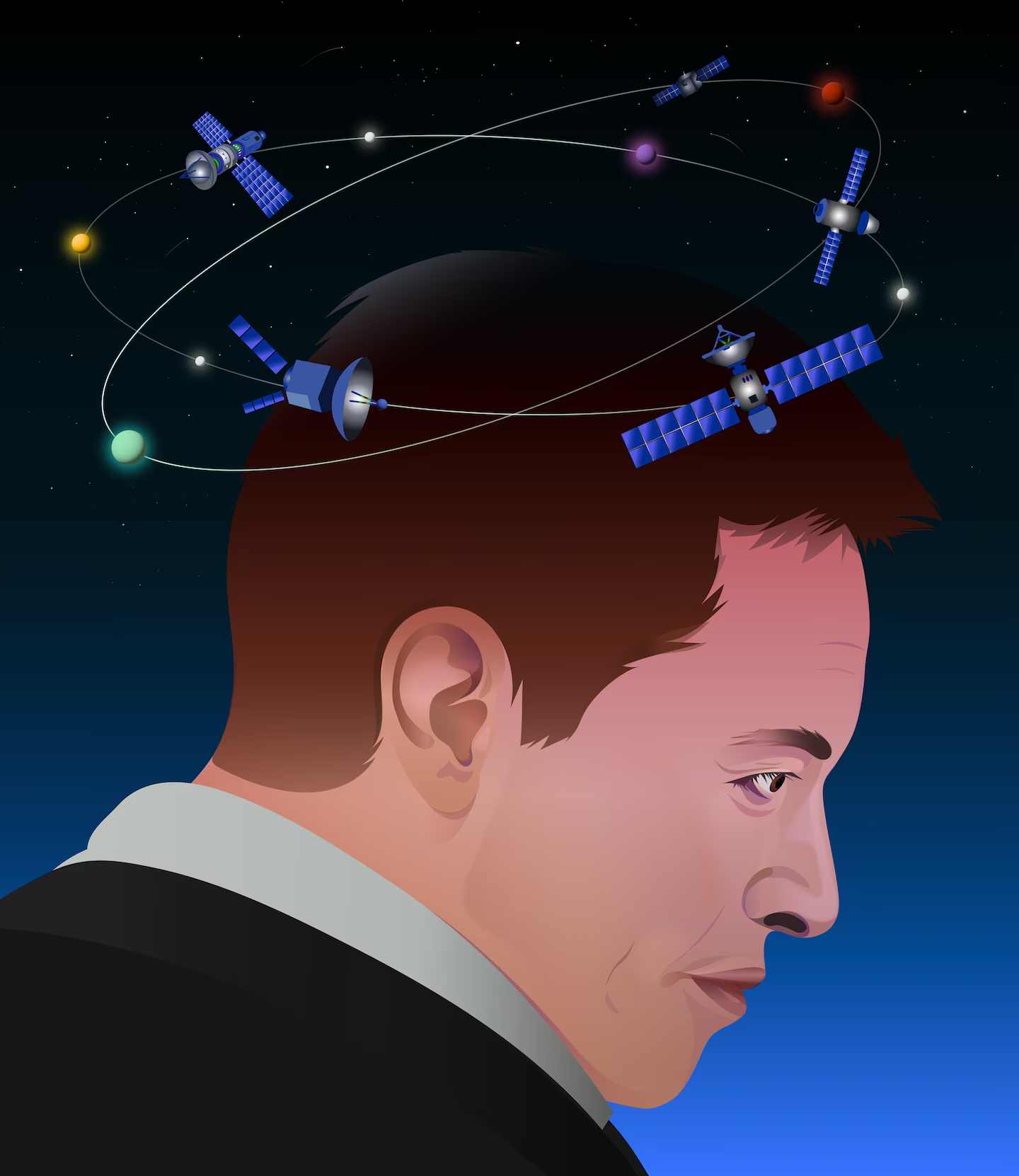
For readers tracking a single company rather than macro telecom trends, the reported SpaceX-EchoStar conversation is a control-and-capacity case. The Washington Post says Elon Musk is trying to move SpaceX into the United States mobile market after Verizon, T-Mobile and AT&T declined to open their networks. The company is now discussing either acquisition of Boost Mobile or use of its network. The $235 billion prize is easy to quote; the harder question is whether Musk can buy speed without inheriting dependency.
What the reported talks actually change
Over the past few months, Musk personally approached senior executives at major U.S. telecom carriers, seeking a SpaceX-branded mobile service built on existing networks. Verizon, T-Mobile and AT&T did not agree, according to the Washington Post. The practical consequence is a change in route rather than a change in ambition.
Two people familiar with the discussion said SpaceX has spent the past few months examining how to use EchoStar's wireless position. In recent months the options narrowed to two: buy Boost Mobile outright, or obtain rights to use its network. Musk himself has participated in the negotiations, and last month he met EchoStar chairman Charlie Ergen.
Boost Mobile is aimed at price-sensitive customers, and its service depends on wholesale network agreements with AT&T and T-Mobile. If SpaceX could use those agreements, it could launch a mobile offer before completing its own ground infrastructure. The constraint is ownership: those contracts are generally not transferable without the original carrier's approval. That makes the reported deal less a clean asset purchase than a request for permission from companies that already refused Musk.
Buy, roam, build: the trade-offs are not interchangeable
| Path | What it buys | Main trade-off | Useful scenario |
|---|---|---|---|
| Acquire Boost Mobile | A consumer brand, subscriber base, wholesale contracts and EchoStar's spectrum-related options. | Needs carrier consent, regulatory review and integration of a low-ARPU business. | SpaceX wants a fast go-to-market offer and can tolerate MVNO-style limits. |
| Network usage only | Faster entry with less balance-sheet exposure than a full purchase. | Lower control over quality, pricing and customer experience. | A pilot or bundled offer for Starlink users while satellites improve. |
| Build a national ground network | Long-term carrier-grade control and enterprise-grade service levels. | High capital intensity and slow deployment. | Only if SpaceX commits to become a full facilities-based carrier. |
| Satellite-only Starlink Mobile | Excellent remote-area reach. | Dense urban and indoor service remains difficult, according to TMF Associates president Tim Farrar. | Rural, maritime, public-safety and backup coverage. |
Data anchors, with added evidence
The reported facts cluster around four numbers. First, SpaceX has more than 12,000 satellites in orbit, giving it a distribution asset no traditional U.S. wireless carrier has. Second, the market it wants is the $235 billion United States wireless market. Third, last month SpaceX agreed to spend $8 billion on spectrum licenses intended for areas where satellite signal alone is difficult to use inside phones; Musk later said on X that this was the final key spectrum piece needed for nationwide phone coverage. Fourth, the timing debate is not abstract: a Verizon chief executive said it could take four to six years to build a national ground network, while Musk argues it would take about half that time.
Two extra reference points sharpen the investment read. According to EchoStar's investor-relations disclosures, the company has been reshaping its wireless model around spectrum sales and a hybrid MVNO arrangement, rather than operating as a broad self-owned national network. That context matters because Boost Mobile is not simply a plug-in carrier; it is a bundle of brand, spectrum rights, wholesale access and customer relationships that can be reparented. Separately, CTIA's annual survey said U.S. wireless operators invested nearly $35 billion in 2021 to grow, improve and run networks, a reminder that a satellite entrant still faces terrestrial capex economics.
Strategic logic, not just consumer pricing
The larger objective is not another prepaid phone brand. SpaceX wants to convert its satellite network into a new revenue source by combining satellite communications with traditional ground mobile networks and offering broader phone services to American consumers. Chief financial officer Bret Johnsen said on an earnings call that the company wants to become a major U.S. mobile carrier.
That ambition fits Musk's wider commercial plan. He is trying to expand SpaceX from a satellite and launch business into a multi-service company that can support long-term growth through many revenue streams. Musk has even linked satellite communications capability with future Mars plans, because any Mars settlement would require reliable communications infrastructure.
Drew Cupps, a portfolio manager at Polen Capital, argues that U.S. telecom incumbents may be underestimating Musk's ability to build large infrastructure outside their industry. He points to Tesla's global supercharging network, with about 80,000 chargers, as evidence that Musk can execute ground-level projects at scale. Cupps also suggests that operators have both reasons to fear him and reasons to seek a partnership advantage. His core quote, as described by the Washington Post, can be rendered as: "At the highest level, Musk is essentially saying that he can provide data services to hundreds of millions of users in a better way than the existing industry does." Cupps said that over the next five years, either all major U.S. carriers wait, or one is first to align with SpaceX and potentially win.
Common misconceptions to discard
- Misconception: owning Boost Mobile means owning a nationwide carrier. Reality: Boost's service depends on AT&T and T-Mobile agreements, and transfer is not automatic.
- Misconception: satellites can replace urban base stations. Reality: Tim Farrar says SpaceX's satellite signals are not yet adequate for stable indoor and dense-city phone service.
- Misconception: the $8 billion spectrum deal solves the last-mile problem. Reality: spectrum is necessary but not sufficient; devices, backhaul, interconnection and urban capacity remain.
- Misconception: the negotiation is a completed transaction. Reality: as of now, Verizon and EchoStar declined to comment, AT&T and T-Mobile did not respond to media inquiries, SpaceX and Musk made no immediate public comment, and there is no evidence of a final deal.
Action advice by reader type
- Investors and analysts: treat this as an options contract, not a revenue event. Track whether AT&T or T-Mobile approve network transfer, whether FCC filings show spectrum or service-provider changes, and whether EchoStar discloses deal terms or subscriber impacts.
- Enterprise and telecom strategists: avoid assuming a Starlink-Mobile bundle can replace a contractual mobile carrier for branch, roaming or IoT traffic. The practical scenario is hybrid coverage for rural, mobile workforce and resilience use cases.
- Competitive teams: monitor price-sensitive customer segments. Boost Mobile's brand is built around lower-cost plans, so a SpaceX-backed bundle could test how much value incumbents derive from wholesale MVNO relationships.
As a single-company watch item, the case is clearer than the outcome. SpaceX has the satellite base, the spectrum ambition and the executive intent to enter mobile service; it does not yet have the carrier relationships that would make a nationwide offer credible. A Boost Mobile acquisition may be the fastest route to a real market, but it converts a satellite innovation story into a telecom integration story. The market should watch the consent chain, not only the headline price of the market opportunity.