
GlobalBizSight CompanyWatch Playbook: How to Read TE Connectivity plc's New York State Optics Build — Checks, Pitfalls and Watch Items
Start with the long arc, not the ribbon-cutting: as AI clusters widen, optical interconnect is drifting from a supporting part toward the gating constraint on scale. Read TE Connectivity plc's New York State build as a supply-capacity signal you can diligence — not a product launch. The real question is what to verify, when, and which numbers move first. Below: the checks, the misreads to avoid, and the indicators worth tracking.
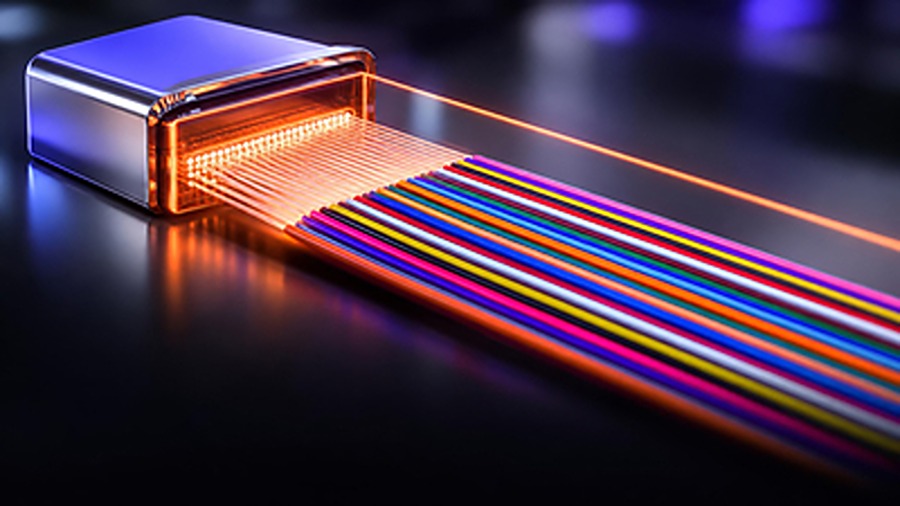
The baseline is worth restating before any interpretation. TE Connectivity plc is committing more than $60 million to an advanced research and development and manufacturing facility in New York State, aimed at next-generation fiber optic solutions for hyperscale AI data center operators and cloud providers. At the center sits a 135,000 square foot site in Henrietta, New York, built to accelerate development and production of high-density fiber array units TE recently acquired from RAM Photonics. Those units are designed to let operators shift to higher-density, lower-power architectures essential to AI and cloud computing.
What exactly did TE Connectivity plc commit to in New York State?
Conclusion first: this is a combined research-and-manufacturing campus on a staged timeline, not a single production line that switches on all at once. The 135,000-square-foot facility is expected to open in spring 2027 and ramp up manufacturing through 2031. TE plans to employ more than 800 people across engineering, manufacturing and management in the greater Rochester region — an area long described as a global epicenter for fiber optics. TE's OFC 2026 material describes a high-density fiber array unit capability enabled by the RAM Photonics acquisition, which is the checkable technical claim behind the press release.
The location is not incidental: the Rochester optics cluster, organized under the NY SMART I-Corridor with local college optics programs, is the talent backdrop that makes filling more than 800 technical roles credible. Treat that as a hypothesis to test through hiring data, not a guarantee.
Why does a fiber array unit matter so much for AI optics?
Conclusion: the fiber array unit (FAU) is where fibers are physically aligned to a photonic chip, and that alignment — not the laser or the switch silicon — is the yield bottleneck deciding whether co-packaged optics can scale. TE says the technology helps operators move to higher-density, lower-power architectures and addresses bottlenecks around performance, density and scalability of fiber attachment for co-packaged optics (CPO, the practice of placing optics beside the switching chip instead of in a removable front-panel module).
The physics supports the claim. NVIDIA's engineering blog reports that co-packaged optics cuts electrical signal loss from about 22 dB to roughly 4 dB, a 3.5x improvement in power efficiency — the concrete reason hyperscale operators care about FAU precision. Unlike an edge AI accelerator engineered to keep inference under a few watts, hyperscale optics deliberately spend power to buy aggregate bandwidth.
In the transaction note on RAM Photonics' sale to TE, advisor Mirus Capital Advisors called the company's high-density fiber array technology "a key enabler of co-packaged optics (CPO)," underlining that the deal targeted a bottleneck component rather than a commodity connector. Active-alignment research presented to SPIE and by automation vendors describes serial alignment as no longer viable for the sub-micron, multi-axis tolerances CPO demands — precisely why a dedicated FAU capability warrants a dedicated facility.
Is the demand really there? A data check before you believe the ramp
Conclusion: the demand curve supports a long build, but the payoff is back-loaded. LightCounting's January 2026 "Optics for AI" update puts optical connectivity at 2.7% of the top five cloud providers' capital expenditure in 2025, rising to 3.1% in 2026 and 4.1% by 2031, and flags that CPO adoption in scale-up networks could outrun the forecast and drive stronger market growth in 2028–2031. The ramp through 2031 therefore lines up with the window analysts expect the CPO curve to steepen.
A comparison frames the bet:
| Dimension | Pluggable optics | Co-packaged optics (CPO) |
|---|---|---|
| Electrical path | Long, front-panel to ASIC | Short, adjacent to the ASIC |
| Signal loss | Higher, with more re-timing | About 4 dB versus 22 dB (NVIDIA) |
| Field serviceability | Hot-swappable | Not removable; needs redundancy design |
| Fiber attachment | Standardized connectors | High-density FAU, sub-micron alignment |
| Maturity | Mature, multi-vendor | Early; volume expected from 2027 onward |
The strategic read is not that CPO replaces pluggable optics. Both are expected to coexist, with CPO concentrating in short-reach scale-up links where distance is small and density is everything.
Which misreads should you strip out first?
Conclusion: most errors come from treating a component program as a finished system, or a staged ramp as a single date. Five recurring pitfalls:
- Equating the FAU with a transceiver. It is the fiber-attachment subassembly, not the finished optical engine.
- Reading spring 2027 as full capacity. Manufacturing ramps through 2031; first-year output is not fourth-year output.
- Assuming more than 800 arrives at once. The roles span engineering, manufacturing and management, and will phase with the ramp.
- Treating more than $60 million as total program cost. It is the committed facility investment, not a fully loaded figure through 2031.
- Declaring the standard settled. Pluggable and CPO are expected to coexist, so one supplier's FAU lead is not a market-wide verdict.
What should you actually do with this? A diligence checklist
Conclusion: track execution variables, not headlines. Steps to run on a quarterly cadence:
- Baseline the hiring curve against the more than 800 target, split by engineering, manufacturing and management.
- Log the spring 2027 opening as one milestone and the through-2031 ramp as the real capacity clock.
- Verify design-wins: watch whether the OFC-shown FAU capability converts into named customer qualifications.
- Monitor FAU yield and alignment throughput — the sub-micron alignment step is the likeliest bottleneck.
- Cross-check demand against the capex-share trend of 2.7% to 4.1% and any CPO scale-up design wins across the industry.
- Re-run the comparison with pluggable suppliers each cycle; both architectures compete for the same bandwidth budget.
The supply-chain discipline mirrors what mature programs require: shared forecasting and firm volume commitments fixed before a multi-year ramp, not after a shortfall appears.
A worked read: turning an announcement into a modelable timeline
Conclusion: the practical value here is a set of dated checkpoints to attach to a forecast. Take an analyst's case. No material FAU revenue from this site before the spring 2027 opening; a qualification window through 2027–2028 as the facility scales; first meaningful volume aligned to the 2028–2031 stretch when LightCounting expects CPO scale-up to accelerate. That is analysis, not guidance — the anchor facts are the opening and ramp dates, while everything after is a scenario to test. This GlobalBizSight CompanyWatch desk applies the same checkpoint method to other multi-year build-outs, from grid corridors to factory-automation targets.
FAQ
What is a fiber array unit (FAU)?
A precision subassembly that aligns multiple optical fibers to a photonic chip; in co-packaged optics it is the fiber-attachment step governing density, loss and yield.
How much is TE Connectivity plc investing, and how many jobs?
More than $60 million in the facility, with more than 800 people planned across engineering, manufacturing and management in the greater Rochester region.
When does the Henrietta, New York site open and reach full ramp?
It is expected to open in spring 2027, with manufacturing ramping through 2031 — a staged, multi-year build rather than one start-up date.
Does this mean CPO wins and pluggable optics lose?
No. The two are expected to coexist: CPO concentrates in short-reach, high-density scale-up links, while pluggables remain serviceable and multi-vendor.
What is the single best indicator to watch next?
Hiring and qualification progress against the spring 2027 opening and the through-2031 ramp, cross-checked against cloud capex share moving toward 4.1% by 2031.
Bottom line for decision-makers
The real hierarchy will be decided not by who breaks ground, but by who turns fiber attachment into infrastructure the AI supply chain cannot route around. Watch the hiring curve and the ramp through 2031, not the spring 2027 ribbon.
References
- TE Connectivity, OFC 2026 optical infrastructure announcement — https://www.te.com/en/about-te/news-center/te-ofc-2026.html
- NVIDIA Developer Blog, "Scaling AI Factories with Co-Packaged Optics for Better Power Efficiency" — https://developer.nvidia.com/blog/scaling-ai-factories-with-co-packaged-optics-for-better-power-efficiency/
- LightCounting, "Optics for AI Clusters," January 2026 — https://www.lightcounting.com/newsletter/en/january-2026-optics-for-ai-clusters-366
- Mirus Capital Advisors, RAM Photonics sale to TE Connectivity — https://merger.com/transaction/mirus-capital-advisors-advises-ram-photonics-on-its-sale-to-te-connectivity/
- University of Rochester, NY SMART I-Corridor — https://www.rochester.edu/university-research/initiatives/ny-smart-i-corridor/