
GlobalBizSight CompanyWatch: Terafab Q&A — What If TSMC Runs the Texas Chip Factory?
For a CompanyWatch reader, the new Terafab report is less about whether Elon Musk wants advanced chips and more about who will hold the controls when the lights come on. According to DigiTimes, supply-chain sources say the parties are preparing to renegotiate how TSMC may participate in the Texas chip-fab project, with construction responsibility and day-to-day operation moving back to the center of the discussion. The issue is not a generic partnership headline. It is the first concrete test of whether Musk's chip-autonomy plan can survive the industrial reality of yield learning, equipment qualification, packaging coordination and long construction timelines.
High-Frequency Questions: What the Change Actually Means
Q1. What is being renegotiated?
The renegotiation is a control-and-capital question. Earlier, Terafab was framed as a project in which SpaceX and Tesla would own the fab's purpose, schedule and operating discipline, while TSMC might use or rent part of the facility. The newer account reported by DigiTimes suggests the opposite direction: TSMC could become the main builder and operator, with joint investment, technology cooperation and production responsibility entering the same package. Equity stakes, investment ratios and task division are still unresolved, which is why the story remains an observation item rather than a closed deal.
Q2. Why did the early October and October 15 signals conflict?
Early October, Musk said Terafab discussions with TSMC existed. Then he clarified that Tesla and SpaceX would build and operate the plant, leaving TSMC with at most a partial-tenant role. On October 15, TSMC Chairman and CEO C.C. Wei told analysts that the company had sent teams to Texas to evaluate the opportunity and had discussed capacity cooperation, but he also set a red line: if TSMC is involved in a wafer fab, TSMC must operate it. Those two positions made the disagreement legible. One side wanted customer-controlled fabrication; the other side wanted process-controlled operation.
Q3. Why does operating control matter more than a single investment headline?
A wafer fab is an operating system, not a building. Control over staffing, maintenance routines, defect learning, supplier certification, software-defined tool management and process integration determines how fast a new line can turn architecture into volume parts. If TSMC operates the facility, it can import proven practices from its own fabs. If Tesla and SpaceX operate it, they must compress years of manufacturing learning into a new United States site while serving internal demand for Optimus robots, Cybercab, satellites, space data centers and AI training workloads.
Q4. Is this about saving money or saving time?
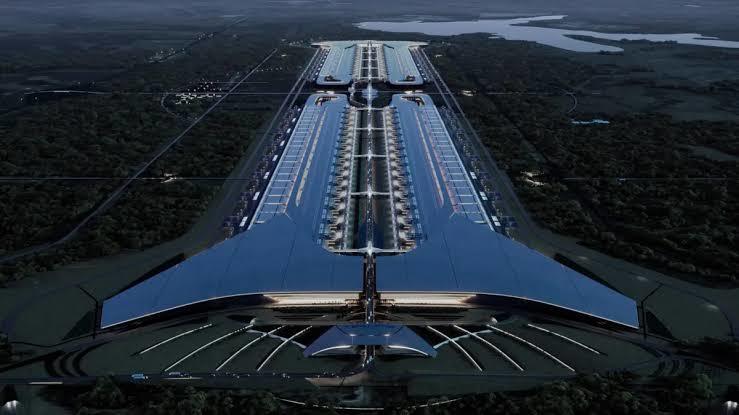
Both, but time is likely the binding constraint. Terafab's disclosed plan concentrates advanced logic and memory manufacturing, packaging and testing in one campus, with planned manufacturing space of more than 100 million square feet in Grimes County, Texas, United States. The first phase is estimated at about $16.8 billion from SpaceX and Tesla. That scale is enough to justify a strategic partner, but it is also large enough to create execution risk. A slower ramp may be more damaging to Musk's companies than a higher capex bill, because the stated future chip demand is more than 1 terawatt of compute across Tesla and SpaceX businesses.
Project Anatomy: What Terafab Is Trying to Solve
Terafab is best read as a supply-chain hedge rather than a simple new factory. It was launched to reduce dependence on external chip capacity, especially when AI accelerators, humanoid robots and autonomous vehicles all compete for advanced silicon. The project is jointly advanced by SpaceX and Tesla. Its target products include chips for Tesla's Optimus robots and Cybercab, as well as computing needs tied to SpaceX's planned space data centers.
The research fab already started this April at the north campus of Tesla's Texas Gigafactory is the early indicator. Musk has described the full production plan as very aggressive: first test chips by May or June 2027, then scale production in the third or fourth quarter of 2028. The project also faces challenges in procuring advanced lithography tools and other semiconductor manufacturing equipment. Intel previously announced participation in the project, but the cooperation model remains undisclosed. If TSMC now gains a builder-operator role, the architecture among Musk's companies, TSMC and Intel may need to be redrawn.
Checklist: What to Track Before Deciding Who Is Winning
- Whether TSMC and the Musk-side entities separate construction rights, operation rights, equity ownership and technology licensing in public statements.
- Whether TSMC's role is described as 'main builder-operator' or only 'co-investor and technical supervisor' — the first would materially change risk transfer.
- Whether tool purchase orders, especially lithography and packaging equipment, are confirmed as secured rather than only planned.
- Whether the Texas research fab reaches tape-out milestones with yield-learning milestones aligned with TSMC-style qualification language.
- Whether Intel's involvement is clarified in a way that avoids a foundry rivalry conflict at the same site.
Data Citation: The Numbers That Anchor the Case
- Location and scale: Grimes County, Texas, United States; planned manufacturing space more than 100 million square feet.
- Phase one capital: SpaceX and Tesla first-phase investment of about $16.8 billion.
- Demand target: Tesla and SpaceX future chip demand expected to exceed 1 terawatt of compute.
- Schedule: first test chip target May or June 2027; scaled production target third or fourth quarter of 2028; Musk has called the schedule very aggressive.
- Industry pressure: TSMC's Q3 2026 earnings-call transcript, published on investor.tsmc.com, frames AI demand as extremely robust and above supply capability, reinforcing why packaging and process control can be scarce.
Common Misconceptions About the TSMC Pivot
- Misconception: TSMC taking control means Musk abandons chip independence. Evidence: even a TSMC-operated fab can be dedicated primarily to Tesla and SpaceX products. Independence may become demand-side certainty rather than operator-side autonomy.
- Misconception: the only missing ingredient is money. Evidence: the reported negotiation includes operation, joint investment, technology cooperation and advanced packaging, all of which are organizational capabilities.
- Misconception: a research fab started this April proves the 2027 test-chip schedule is safe. Evidence: research tools and volume-ready equipment qualification are different systems; procurement challenges remain explicitly acknowledged.
- Misconception: Intel's participation can be treated as a neutral fallback. Evidence: the cooperation form is undisclosed, and a stronger TSMC operator role could change allocation, technology-sharing and customer-competition rules.
Scenario Choice: Which Structure Produces the Fastest Path?
| Scenario | Likely execution effect | Business meaning | Investor question | Most useful signal |
|---|---|---|---|---|
| TSMC builds and operates | Faster process maturity, lower early yield risk | Terafab becomes a captive AI and robot silicon campus with foundry discipline | Does Musk keep product-priority control? | Contract language that puts operation in TSMC hands while reserving wafer allocation for Tesla and SpaceX |
| Hybrid: TSMC owns process line, Musk owns campus | Complex governance but can preserve independence optics | Coordination overhead rises; IP and maintenance boundaries become critical | Who pays for idle capacity if demand shifts? | Separate clauses for packaging, equipment service level agreements, and exit rights |
| Musk companies continue alone | Maximum autonomy, maximum schedule risk | Terafab becomes a long-term capability build rather than near-term chip supply | Can internal demand wait? | Confirmed tool delivery dates for advanced lithography and packaging tools |
Action Recommendations: How to Watch the Deal Without Overreading It
- Track governance first, not marketing. If construction and operation clauses remain split, the reported 'softening' is still only a negotiation posture.
- Price the timeline as a probability, not a promise. The 2027 and 2028 milestones should be compared against confirmed equipment orders, cleanroom fit-out and packaging-line qualification.
- Watch supplier breadth. DigiTimes has separately reported that Tesla and SpaceX are engaging South Korean semiconductor suppliers as Terafab's equipment and materials chain is assembled, suggesting the bottleneck is not limited to one tool category.
- Separate wafer output from system readiness. Advanced logic, memory and packaging must converge; a successful test chip does not automatically become a usable AI or robot compute platform.
What This Means for Different Watchers
For investors, the practical takeaway is to price execution risk rather than headline partnership risk. The DigiTimes report increases the probability that Musk's companies will accept TSMC's operating model in exchange for speed, while reducing the probability that a fully customer-operated Terafab reaches volume on time. For industry analysts, the more interesting variable is whether the negotiation expands from wafer fabrication into packaging, because AI accelerators are constrained by more than front-end silicon. For business-development teams, the signal is that large chip projects increasingly need anchor operators, not merely anchor customers. For supply-chain managers, the message is to watch equipment qualification and supplier certification; if TSMC enters as operator, its existing vendor ecosystem may become a faster on-ramp than a new one assembled around the Musk companies alone.
Decision Advice
The most defensible base case is not 'Terafab succeeds' or 'Terafab fails'. It is 'the original autonomy-first blueprint is being revised because the operating risk is larger than the political appeal'. If the final deal gives TSMC construction and operation leadership, track two outcomes: faster qualification and less independent manufacturing learning. If the final deal keeps operation with Tesla and SpaceX, track slower milestones and a higher probability of schedule slips beyond the May or June 2027 test-chip target.
Bottom Line
Terafab's next chapter will be judged by whether it converts capital, land and demand into qualified production capacity. The reported shift from a tenant-only TSMC idea to a builder-operator discussion shows that Musk's companies are willing to trade control for execution, but the terms are not yet public. Until equity, operation and packaging responsibilities are clear, CompanyWatch should treat the project as an unfinished governance design: a semiconductor campus planned for more than 100 million square feet, backed by an initial about $16.8 billion, aimed at more than 1 terawatt of future compute, and now dependent on whether TSMC, SpaceX, Tesla and Intel can divide a very aggressive roadmap without breaking it.