
Tesla's Austin Night Shift, Decoded: A CompanyWatch Checklist for Tracking Cybercab and Battery Output
GlobalBizSight · CompanyWatch · By Marc Hale
Tesla has moved Gigafactory Texas onto a day-and-night double shift that is expected to run at least through the end of 2026, staffing night-shift Cybercab and battery roles in Austin, Texas. It has not, however, switched to seven-days-a-week, 24-hours-a-day production: vehicle final assembly still runs Monday through Thursday, and weekend work remains limited to selected production and construction departments. The distance between those two statements is where the usable analysis sits.
What actually changed at the Austin plant — and what did not
The short answer: Tesla extended the working day, not the working week. That distinction matters because a "factory goes around the clock" headline implies a step change in weekly output, while a two-shift pattern on four assembly days implies a partial, reversible capacity lever.
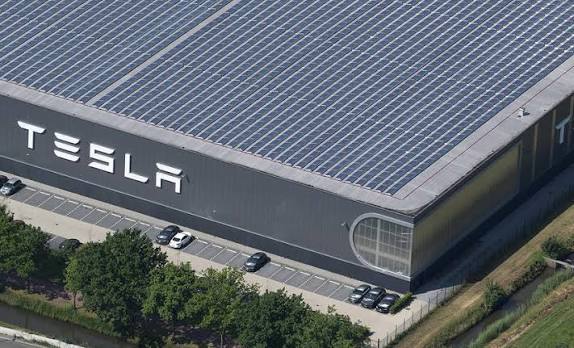
The primary record here is thin by design. Joe Tegtmeyer, who has flown drones over the site for years and whose November 2 update was picked up by Chinese and US trade outlets on November 5, described a two-shift pattern of 12 hours each, with lines running into the night. Tesla had not confirmed the schedule change and had not said which models the extra hours would serve. Drone frames from the same update showed rows of gold Cybercab units waiting in the delivery lots.
Against that, Tesla's official careers page for Austin, Texas is the harder evidence, because hiring is expensive to fake. It lists a Cybercab night-shift manufacturing process engineer and night-shift assembly technician roles, and shift engineering leads in the battery manufacturing department covering four shifts to keep anode, cathode and foil coating running around the clock. Four-shift coverage in one department, and Monday-through-Thursday sequencing in another, is not a contradiction — it is a plant being ramped unevenly.
| Claim as it circulates | What the record actually supports | Why the difference is worth money |
|---|---|---|
| Gigafactory Texas now runs 24 hours a day, seven days a week | Day-and-night double shift; final assembly still Monday through Thursday; some departments work beyond weekdays and on weekends | A four-day assembly week caps the maximum delivery step-up regardless of shift count |
| Tesla announced the change | Reporting traces to Tegtmeyer's aerial update; Tesla had not confirmed and had not named the affected models | Unconfirmed operational claims should be footnoted, not underwritten into a valuation case |
| More shifts automatically means more vehicles on the road | Tesla told Munro Live during a plant tour that Cybercab build speed is already running ahead of Robotaxi deployment speed, and that the line has not been starting up every day | The binding constraint looks like deployment and regulation, not presses and welding booths |
Step by step: how to verify a shift change before you publish it
CompanyWatch treats an unconfirmed factory story as a workflow, not a headline. Six steps, in order:
- Start with hiring, not with video. Pull the Tesla official careers page for Austin and count shift-specific postings by department. Roles tied to anode, cathode and foil coating across four shifts say something different from a single general assembly night posting.
- Ask whether the company confirmed. If not, label the source and the date. In this case the disclosure dates to a November 2 drone update, reported on November 5, with no company statement.
- Match shifts to processes. Electrode coating and drying equipment is costly to stop and restart, so battery departments tend toward continuous operation; vehicle final assembly is takt- and labour-driven and can be scheduled by day. That explains why the day-and-night pattern reads as credible in the battery manufacturing department and partial on the assembly side.
- Add a countable third-party series. Texas DMV filings tracked by third-party databases showed roughly 319 Cybercabs registered by 8–9 October 2026 and about 1,244 Tesla Robotaxi registrations statewide by early November 2026 — a supply-side proxy that Tesla cannot spin.
- Tie the hours to the order book. Gigafactory Texas builds Model Y and Cybertruck and has now brought Cybercab into production, and the six-seat Model Y L has been slipping: early buyers were told of three-to-four-month delays, with new orders quoting delivery between January and March 2027. Some of those night hours may simply be catching up backlog.
- Write the falsification test before the note. For this story it is blunt: if the fourth-quarter delivery release due in early January 2027 shows no visible step-up from Austin, or if the night-shift postings disappear from the careers page in December, the double shift was a short sprint, not a new baseline.
Why the battery lines are the more interesting tell
Read on its own, a night shift looks like a scheduling item. Placed next to Tesla's capital plan, it looks like the tail end of a very expensive year.
- On the 28 January 2026 earnings call, management guided 2026 capital expenditure to more than US$20 billion, funding six new plants or lines — including a lithium refining facility, an LFP battery plant, a Cybercab plant, a Semi plant, a new megafactory and an Optimus line — up from about US$8.5 billion in 2025 (transcript reporting by Shanghai Metals Market and Eletric Vehicles, 29 January 2026).
- That guidance was revised upward on the Q1 call in late April 2026, when CFO Vaibhav Taneja put 2026 spend above US$25 billion (Business Insider, 23 April 2026), before drifting back toward roughly US$20 billion by the Q3 call on 21 October 2026.
- Q3 2026 gives the return side: revenue of US$28.05 billion, total gross margin of 19.6%, operating income of US$718 million, about 408,000 vehicles delivered, US$1.5 billion of positive free cash flow and more than US$45 billion in cash and investments (Electrek, 21 October 2026; TradingKey call transcript, 22 October 2026).
- Capacity is not the only thing being built at Austin. Tesla has said it operates North America's first large-scale cathode production facility as part of 4680 cell output in Austin, which is exactly the kind of chemical process line that wants round-the-clock staffing.
The inference for analysts is narrow but useful: when a company has committed tens of billions to six new ramp programmes, night shifts are the cheapest incremental capacity available — cheaper than another plant, faster than another line, and reversible by 31 December 2026 if demand does not cooperate.
What the added hours have to prove: a six-metric watchlist
| Metric | Latest readable number | Confirmation signal | First checkpoint |
|---|---|---|---|
| Austin Cybercab fleet in service | More than 300 units on 10 October 2026, roughly eight times the level a month earlier | City-by-city growth without a safety-standdown event | Dallas, the first city outside Austin, slated for November 2026 |
| Build-versus-deploy gap | Tesla says Cybercab build speed exceeds Robotaxi deployment speed | Line starting daily, then fleet count converging to output | Q4 delivery release, early January 2027 |
| Shift pattern duration | Day-and-night double shift expected to last at least through the end of 2026 | Night postings still live in December, or extended into 2027 | Annual shareholder meeting, 3 December 2026, held on the Austin site |
| Customer Cybercab handovers | Tesla has targeted first customer deliveries before the end of 2026 | A dated delivery event and a published configuration | Shareholder meeting, then the Q4 update in February 2027 |
| Model Y L delivery windows | New orders quoted January–March 2027 as of early November 2026 | Estimates pulled in, which would show night hours working off backlog | Order configurator refresh, week by week |
| Regulatory overhang | NHTSA opened an Audit Query on Cybercab self-certification on 3 September 2026, covering about 1,000 vehicles | Scope narrowing, or no expansion to a recall-level review | NHTSA enforcement Q&A updates |
Five misreadings that weaken a Tesla capacity note
- Reading night shifts as 24/7 operation. The reported pattern is two 12-hour shifts with final assembly still Monday through Thursday, plus weekend work confined to some departments — not a continuous calendar.
- Assuming the double shift was confirmed. Tesla had neither confirmed the schedule nor identified the models affected; the careers page corroborates the direction, not the detail.
- Attributing all extra hours to Cybercab. Model Y and Cybertruck share the site, Model Y L is late, and Tesla has said FSD is driving US order demand. Battery and general-assembly hours may be defensive catch-up rather than robotaxi expansion.
- Treating output as the bottleneck. With NHTSA's self-certification probe open and Tesla itself reporting that build speed outruns deployment, the gate looks like permitting, insurance and fleet operations, not factory hours.
- Extrapolating one plant into guidance. A shift change at Gigafactory Texas is a single-site signal; converting it into a delivery forecast requires the Q4 numbers, and those arrive only in early January 2027.
Action recommendations by reader type
If you invest in or cover the name
- Reprice the ramp as a sequencing question, not a capacity question: the company has said it can build faster than it can deploy, which shifts the value of the night shift from volume to optionality.
- Anchor any model on the two hard gates in front of you: the 3 December 2026 annual meeting and the fourth-quarter delivery release in early January 2027. Everything before those dates is commentary.
- Track capital discipline as the swing factor: a 2026 capex plan that moved from more than US$20 billion to above US$25 billion and back to roughly US$20 billion in one year is a balance-sheet story before it is a story about cars.
If you run strategy or competitive intelligence
- Copy the metric set rather than the product: continuous staffing of anode, cathode and foil coating is what tells you a battery ramp is real, and it is observable from public job postings months before a capacity announcement.
- Watch for the second-plant pattern. Six ramp programmes in one year means other sites will show the same night-shift hiring signature; Austin is the early warning, not the only instance.
If you sell into the ramp
- Expect the constraint to move to consumables, utilities and shift coverage — coating-line materials, plant services, logistics and third-party labour — rather than to major capital equipment.
- Get on the calendar early. Deployment into Dallas and Fort Worth, the first external customer handovers and the year-end shift window compress supplier qualification into a single quarter.
CompanyWatch will keep this file open through the year-end shift window. Analysts who want the watchlist template in spreadsheet form can reach the desk at info@globalbizsight.com.
Frequently asked questions
Is Gigafactory Texas now running 24 hours a day, seven days a week?
No. Reported practice is two 12-hour shifts, day and night, with vehicle final assembly still scheduled Monday through Thursday. Parts of the site, including battery coating and some construction departments, extend into nights, non-weekday hours and weekends, and the arrangement is expected to last at least through the end of 2026.
Did Tesla confirm the night shift?
Not publicly. The schedule account comes from Tegtmeyer's aerial update, and Tesla has not stated which models the added hours cover. The independent corroboration is the company's own hiring: night-shift Cybercab process and assembly roles, plus battery manufacturing shift leads across four shifts, on the Tesla official careers page for Austin, Texas.
Why would more Cybercab output not simply produce more rides?
Because deployment lags build. Tesla has said production is already ahead of Robotaxi rollout, and NHTSA's September 2026 Audit Query into the Cybercab's self-certification — covering roughly 1,000 vehicles — adds a compliance overlay on top of permits, insurance and fleet operations in each new city.
When will the shift change show up in hard numbers?
Two dates matter. The annual shareholder meeting on 3 December 2026, held on the Austin campus, is the nearest management forum; the fourth-quarter delivery data due in early January 2027 is the first clean read on whether nightly hours converted into units.
What is the biggest risk to this story?
Reversibility. A shift pattern that is not company-confirmed and runs only "at least through the end of 2026" can be ended quietly, and 12-hour double shifts carry their own cost: overtime, attrition, higher defect rates during ramp and warranty exposure — all of which show up in margins before they show up in press releases.
Sources consulted
- NHTSA press release on the Cybercab self-certification investigation — https://www.nhtsa.gov/press-releases/investigation-tesla-cybercab-self-certification
- Reuters on US regulators opening a probe into about 1,000 Cybercabs, 4 September 2026 — https://www.reuters.com/business/autos-transportation/us-auto-safety-regulator-opens-probe-into-nearly-1000-tesla-cybercabs-2026-09-04/
- Reuters on the start of Cybercab production in April 2026 and Musk's warning that early output "will be very slow" — https://www.reuters.com/business/autos-transportation/teslas-cybercab-event-set-thursday-with-few-details-2026-09-03/
- Electrek, Tesla Q3 2026 financial results, 21 October 2026 — https://electrek.co/2026/10/21/tesla-tsla-q3-2026-financial-results/
- Business Insider on Tesla raising 2026 capital spending above US$25 billion, 23 April 2026 — https://www.businessinsider.com/the-bill-for-teslas-ai-expansion-just-keeps-getting-bigger-2026-4
- Hexun reporting of Joe Tegtmeyer's Austin shift schedule, 5 November 2026 — https://m.hexun.com/auto/2026-11-05/225231615.html
- Texas DMV-derived robotaxi registration tracker for Tesla Robotaxi — https://www.fsddb.com/robotaxi?operator=tesla-robotaxi-llc
- Tesla 2026 annual shareholder meeting details, 3 December 2026 — https://www.votetesla.com/annual-meeting-details/