
CompanyWatch Guide: Mark Walter, Cadillac F1 and the Signals Behind a $3 Billion Sale
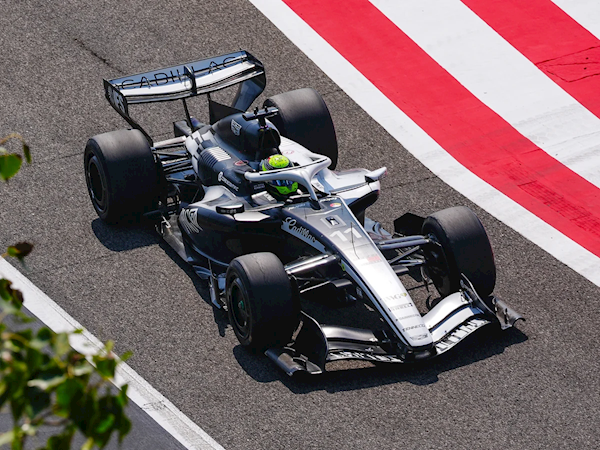
A $3 billion asking price on a new Formula 1 entry transforms a sporting underperformance story into a corporate liquidity stress test. The Cadillac F1 team, currently the only zero-point team and facing a projected first-season loss of $400 million according to Sportico, is now being read through a governance lens: why is the owner's balance sheet, not just the lap time, driving the process?
This CompanyWatch guide uses the reported sale of the Cadillac F1 team as an operating checklist for investors, analysts and strategy teams. The core facts are unchanged: Walter is under two federal investigations tied to undisclosed loans connected with his company; he also needs capital for business operations and to fill a funding gap; regulators may impose large penalties. These conditions explain why sport assets can move from "not for sale" to market faster than a performance cycle would suggest.
Event map: what changed, and why it matters
Start from the sequence, not the headline. The most important change is not that Cadillac F1 scored points; it did not. It is that the asset's owner appears to need cash and is prioritizing asset disposal.
- Sportico's reported figure: Cadillac F1's first-season projected loss is $400 million; Monaco was the moment Pérez was closest to scoring before a time penalty removed the chance.
- Seller's pressure point: The direct reason is not track results but Walter's funding situation. He is currently facing two federal investigations involving undisclosed loans; he needs funds for business rotation and to cover a funding gap; large fines may widen the shortfall.
- Recent disposals: This August, Walter transferred control of the NBA's Los Angeles Lakers at a $12.5 billion overall valuation to Bob Iger and Josh Kushner. Recently, he sold 13% of Premier League club Chelsea to Clearlake Capital.
- Message shift: Last month, TWG Global said the Lakers, Dodgers and Cadillac F1 team were not for sale. Three months later, the Cadillac F1 team is being marketed at a $3 billion asking price.
That sequence matters because it separates two questions a CompanyWatch reader should ask: can the team win races, and can the owner continue financing the team while investigations and penalties are unresolved? The second question is the one moving now.
Valuation logic: why $3 billion can still be a real market test
For a brand-new team with zero points, a $3 billion asking price sounds counterintuitive until the asset is treated as a scarce access vehicle. The current grid has only 11 teams, so a seat is not interchangeable with a typical startup stake. Buyer interest, when it exists, is priced against expected future cash flows, franchise scarcity, brand reach and regulatory barriers to entry, not only current race results.
Cost discipline is central to that logic. Formula 1's budget cap is intended to prevent unchecked spending while allowing smaller or newer teams to close gaps with better execution. In its cost-cap explainer, Formula 1 says the 2026 cap increases to $215 million. A buyer must therefore compare two clocks: the sporting development clock, which may take years, and the owner's financial clock, which appears to be moving quarterly.
Practical data table for the Cadillac F1 file
| Data point | Reported figure | Source in the file | How CompanyWatch uses it |
|---|---|---|---|
| Asking price | $3 billion | Sportico | Treat as seller's initial anchor, not an agreed enterprise value. |
| First-season projected loss | $400 million | Sportico | Estimates the cash runway a buyer must replace. |
| Current championship points | zero | Sportico | Shows why sporting recovery alone does not answer the liquidity question. |
| Grid size | 11 teams | F1 reporting | Supports scarcity but does not remove execution risk. |
| 2026 cost cap | $215 million | Formula 1 | Frames maximum annual team spending under the current regulatory model. |
| Cadillac entry fee context | $450 million anti-dilution fee | Autoweek | Shows that the team's seat carries one-time entry economics already paid into the existing grid. |
Operating checklist: how to read the sale as a corporate event
For investors and strategy teams, the useful move is to build a small transaction file instead of reacting to the price headline. Below is the step-by-step method CompanyWatch would apply.
- Separate asset performance from owner distress. The Cadillac F1 project can be operationally new, still developing, and financially heavy; the seller's federal investigations and cash needs explain why it is being sold. Do not treat race results as the primary cause.
- Trace the cash bridge. Map which sales are expected to fund which obligations: Lakers disposal, Chelsea stake, possible fines, working capital, and debt-service needs. Ask whether asset proceeds are unrestricted or tied to lender approvals.
- Check whether prior denials are statements of policy or statements of fact. TWG Global's earlier position was that its sports assets were not for sale. Reuters and ESPN reported that position as a formal denial after scrutiny of Walter's business interests. A denial followed by a sale process is not evidence of mismanagement by itself, but it is a warning sign that liquidity assumptions changed.
- Price the seat through a buyer's funding plan. A $3 billion asking price implies more than brand value. It asks whether the buyer can fund losses while the team moves from zero points to points-paying finishes, while respecting the $215 million cost cap environment.
- Monitor governance gates, not just marketing claims. Confirm whether any buyer must clear F1-related approval processes, FIA registration or technical requirements, and whether the change of control affects sponsor, employee and supplier contracts.
Common pitfalls in the Cadillac F1 story
Several errors repeat when corporate watch analysts discuss sports franchises.
- Pitfall 1: treating zero points as proof that the asset has no value. A racing team can be commercially valuable before it is on the scoreboard. The F1 long-term entry ticket framing is credible if the buyer has patient capital and can execute within cost limits.
- Pitfall 2: treating $3 billion as a closed deal value. It is an asking price. The transaction's real read is the gap between the owner's financing need and the buyer's ability to pay, fund losses, and absorb regulatory risk.
- Pitfall 3: ignoring the $450 million anti-dilution fee context. AutoWeek reported that Cadillac agreed to a one-time $450 million anti-dilution fee to enter F1. That fee, distributed through the pre-existing ten-team grid structure, is a reminder that entry into F1 is a contractual and financial construction, not a simple purchase.
- Pitfall 4: assuming the Dodgers analogy proves all assets are safe. The Dodgers were named in the "not for sale" message alongside the Lakers and Cadillac F1. Asset-specific structures matter: some properties may be operating businesses, others financing collateral, others strategic platforms.
- Pitfall 5: waiting for race results to validate the thesis. For CompanyWatch, the better validation is financial and governance disclosure: deal confirmation, investigation updates, penalty estimates, cash bridge, and buyer profile.
Action suggestions for the next 90 days
For a reader who needs to track this company-level event rather than debate its racing merits, the next phase is about evidence. The following actions convert the sale rumor into a usable watchlist.
- Identify whether the $3 billion asking price becomes an agreed valuation, a partial stake sale, or a controlled process with selected bidders.
- Track whether the two federal investigations expand into asset-sale approvals, loan disclosures or company governance issues that could affect buyer confidence.
- Estimate the cash runway: use the $400 million first-season projected loss as a starting point, then test how much additional funding is required before the team becomes consistently competitive.
- Watch for any official confirmation that TWG Global's "not for sale" stance has shifted from denial to a formal transaction update.
- Evaluate the buyer's profile across three dimensions: liquidity, motorsport operating experience, and regulatory capacity to complete F1-related approvals.
For investors and strategic observers, the key question is not whether Cadillac F1 is the best-looking racing project in the 2026 grid. It is whether a $3 billion asking price can survive a seller whose funding gap, fines and disclosure risk have already forced the Lakers and Chelsea stake moves.
What this event reveals about corporate asset discipline
The Cadillac F1 case shows that modern holding-company portfolios are managed like liquidity stacks. A franchise that can be strategically important on one quarter can become a financing lever in the next. The practical takeaway is simple: follow the cash bridge, not the marketing narrative. When Sportico reported the $3 billion ask, the sale became a test of whether the F1 long-term entry ticket can be valued independently of the seller's short-term pressure.
A complete CompanyWatch assessment will only emerge after three types of confirmation: the transaction structure, the regulatory investigation path, and the buyer's funding plan. Until then, the right professional stance is neither panic nor dismissal. It is a structured file, dated assumptions, and a clear set of signals that would change the conclusion.