
CompanyWatch Verdict: Waymo's Own App vs. Uber's Aggregator in Austin and Atlanta — Which Model Wins from January 2028?
Our call: neither side loses, but the value shifts. Waymo ends Uber's exclusive robotaxi access in Austin, Texas and Atlanta in January 2028 and starts dispatching riders through its own app, while Uber keeps Waymo cars on its platform until the agreement lapses in May 2028. For two service models — vertically integrated direct app versus open aggregator — the next eighteen months will show which one actually owns the customer.
By Marc Hale · GlobalBizSight CompanyWatch — single-company tracking for investors, analysts and corporate development teams.
What exactly changed — and what did not?
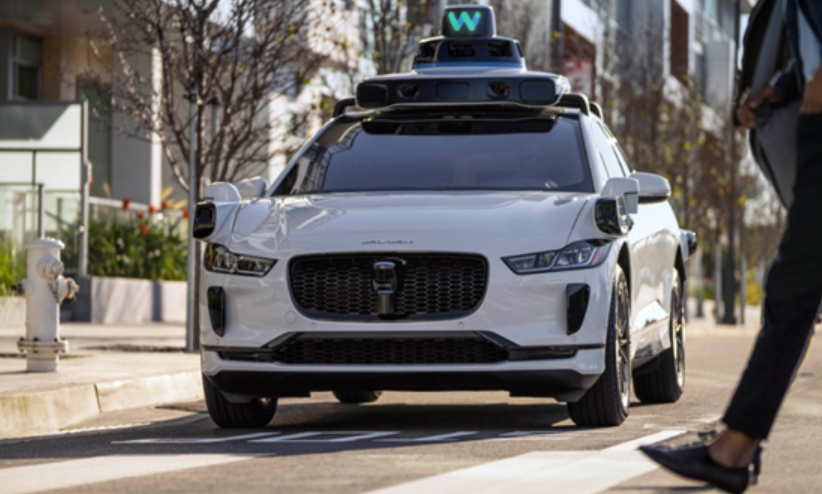
Conclusion first: this is a channel decision, not a technology or licensing event. Waymo, the Alphabet-owned driverless company, notified Uber that it will run its own ride-hailing application in the two US markets where Uber has been the only booking front door for its vehicles.
- January 2028 — Waymo launches its own app in Austin and Atlanta; exclusivity with Uber ends.
- May 2028 — the existing Austin/Atlanta agreement reaches its scheduled expiry, so two service models (Uber-dispatched Waymo cars and direct Waymo-app hail) will run in parallel for roughly four months.
- Earlier this year — reports circulated that Waymo was weighing an exit; the notification confirms the direction of travel.
- Unchanged — Waymo cars continue to carry trips booked through the Uber platform until the contract ends, and Uber remains a distribution channel in other markets where the two companies still work together.
The signal matters more than the mechanics: over the past several years Waymo treated platform access as a growth accelerator; it now treats it as a ceiling.
Why now — the three signals that made the deal redundant
Conclusion: Waymo outgrew the trade it was making. The original bargain was demand for data and legwork; by 2026 Waymo could source demand itself.
First, scale. Co-CEO Tekedra Mawakana told media that Waymo first chose Uber because of the ride-hailing group's enormous rider base and market coverage, which let Waymo enter new markets quickly. That entry-cost argument weakens as Waymo's own funnel grows: TechCrunch reported on 27 March 2026 that Waymo was providing around 500,000 paid robotaxi rides a week across ten US cities — evidence that in multiple US cities the company no longer needs a third-party booking front door.
Second, capital. Reuters reported on 2 February 2026 that Waymo closed a $16 billion round at a $126 billion post-money valuation, with outside investors including Sequoia Capital, DST Global and Dragoneer alongside Alphabet. Money that size is raised to build owned infrastructure — brand, apps, depots, support — not to subsidise somebody else's checkout page.
Third, brand leakage. Mawakana's explanation is unusually plain: riders hailing through Uber often cannot be sure whether a driverless car or a human driver will arrive, which makes the experience a lottery. In a Bloomberg interview published 4 November 2026 she described booking a robotaxi through the Uber app as a "crapshoot" for riders, adding that customer feedback asking to reach Waymo directly drove the decision. This is the core of the case: Waymo has been bearing vehicle ownership, sensor maintenance and depreciation while the counterparty holds the relationship.
There is also a precedent. As CNBC and Reuters reported on 29 June 2026, the Phoenix pilot quietly ended after nearly three years, leaving Waymo's own app as the only way to hail its cars there. Austin and Atlanta were the last markets where Uber held exclusivity — which suggests a sequencing pattern rather than an isolated falling-out.
Direct app vs. marketplace: a side-by-side scorecard
Conclusion: the direct model wins on margin and ownership; the aggregator wins on utilisation and expansion speed. Which one "wins" depends on whether you are scarce on vehicles or scarce on riders.
| Dimension | Waymo (direct app, vertically integrated) | Uber (aggregator, open AV network) |
|---|---|---|
| Demand access | Own funnel; slower cold-start per city, brand-dependent | Instant reach into an existing rider base |
| Revenue per trip | Retains the full fare once scale is reached | Platform commission; The Verge reported in September 2024 that the Austin/Atlanta split was never disclosed |
| Asset risk | Waymo owns vehicles, calibration, downtime | Partner carries balance-sheet risk |
| Ground operations | In-house depots, cleaning, roadside assistance, care | Uber handled fleet-management services (cleaning, repair, depot ops) in Austin and Atlanta |
| Data & brand | Full first-party rider data and direct relationship | Relationship sits with the platform, not the AV maker |
| Expansion ceiling | Limited by own fleet and city-by-city ops buildout | Tens of markets; several AV and OEM partners on one stack |
| Primary constraint | Cost of capital and utilisation outside core cities | Supply dependency — any partner can leave |
Scoring our four weighted criteria (margin 30%, utilisation 25%, data ownership 25%, expansion speed 20%): Waymo's direct model leads in mature, dense markets where it already has fleet density; Uber's model leads where a single company cannot justify its own demand-generation spend.
Is Uber actually exposed — or hedged?
Conclusion: short-term narrative damage, long-term structural hedge. In recent years Uber deliberately avoided betting on one company, and the market still reacted sharply: Reuters reported on 24 July 2026 that Uber's shares closed down 4.3% on the story, and cited Financial Times reporting that Waymo had viewed the partnership as carrying "unsustainable financial terms".
- Partner diversification — Uber has lined up multiple autonomous developers, including Lucid and Nuro, whose Houston service was announced by Uber's investor-relations newsroom on 17 June 2026 for a 2027 start, alongside relationships spanning WeRide, Pony.ai, Motional, Avride and Volkswagen-based fleets.
- Enablement layer — Uber unveiled Uber Autonomous Solutions on 23 February 2026, packaging insurance, fleet operations, infrastructure and demand for AV partners, effectively selling distribution as a service.
- Coverage target — Bloomberg reported on 11 December 2025 that CEO Dara Khosrowshahi expected robotaxis live in more than ten markets the following year, with Hong Kong and Japan under discussion.
- The real risk — not lost vehicle supply but lost default behaviour: once a credible direct Waymo option exists, riders in Austin and Atlanta have two choices, and the habit of opening the Uber app first erodes.
Uber's own response, quoted in the master reporting, is worth reading literally: a dedicated in-app entry exclusively for booking Waymo driverless cars was never Uber's choice but flowed from Waymo's development plan; Waymo cars stay on the platform until expiry.
Regulatory and competitive backdrop: why Austin is the pressure point
Conclusion: the switch lands in a market that is about to be crowded. Texas requires authorisation before operating automated-driving vehicles (Texas Department of Motor Vehicles AV regulatory programme), and rules that took effect from 1 September 2025 place driverless ride-hailing operators under transportation-network-company licensing, camera and insurance obligations — the same perimeter as human-driver platforms.
Meanwhile Amazon's Zoox, which Reuters and CNBC reported on 5 August 2026 would start charging for rides in Las Vegas from 10 August 2026, has been running an Austin test fleet and has publicly named Austin among its next US markets. By early 2028, then, an Austin rider may have several driverless options — Waymo direct, Waymo via Uber, Zoox, and Tesla-style supervised-autonomy fleets — and the scarce resource shifts from technology to booking-front-door share.
Common misconceptions about the January 2028 switch
- "The partnership is over." It is not. Two service models coexist until May 2028; Waymo vehicles keep taking Uber-booked trips until then.
- "Waymo is cutting Uber out of robotaxis." Waymo has been operating its own app in multiple US cities for years; this extends an existing channel, it does not invent one.
- "Uber loses its AV business." Uber's own strategy assumes supply from several developers rather than a single company, and its enablement unit monetises departing and arriving partners alike.
- "Riders will immediately feel a difference." Behaviour change is gradual; expect cannibalisation to show up first in app-download and repeat-rate metrics, not in headline trip counts.
- "This is a technology verdict." The decision drivers cited — user relationships, brand clarity, trip-match certainty — are distribution and economics issues, not capability issues.
Action recommendations and a CompanyWatch tracker
Investors: treat this as a channel-margin test. Track Uber's disclosed AV-supplied trip volume and its take-rate mix, and Waymo's weekly-paid-rides cadence against its ~500,000/week March 2026 baseline.
Corporate strategy and BD teams: the pattern — enter via a platform, then re-platform once density justifies owned demand — should be priced into any mobility or AV partnership term sheet. Insist on co-branding, rider-notification clarity, and defined data boundaries before exclusivity.
Analysts and market researchers: build a four-metric tracker: (1) Waymo app adoption in Austin/Atlanta versus its other cities; (2) Uber's partner count and market count against its "more than ten markets" target; (3) Phoenix as the read-across control group for what happens to platform volume after a partner leaves; (4) Texas licensing actions and any exclusivity-clause restatements in renewals.
FAQ: what readers search after the Waymo–Uber announcement
Can I still book a Waymo ride on Uber after January 2028?
Yes. Until the contract's scheduled expiry in May 2028, Waymo cars remain bookable through the Uber app in Austin and Atlanta, while the Waymo app becomes available in parallel.
Why did Waymo leave the Uber deal?
Co-CEO Tekedra Mawakana cited riders' inability to be sure they were getting a driverless car, direct customer feedback asking to reach Waymo, and the desire to own the user relationship; earlier Financial Times reporting, relayed by Reuters, pointed to economically strained terms.
Which model is better for consumers?
In the near term the direct app wins on clarity — you get a robotaxi when you ask for one — while the platform wins on price/availability comparison across mixed human and autonomous supply.
Does this hurt Uber's robotaxi strategy?
It costs exclusivity in two markets, not the strategy: Uber continues to aggregate several AV partners and to sell its operations stack through Uber Autonomous Solutions.
Bottom line
GlobalBizSight's read: the Austin and Atlanta switch converts a supply partnership into head-to-head competition in two live US markets and, more importantly, settles a sector question — that in autonomous mobility, whoever owns the booking front door eventually owns the margin. For Waymo the move is defensive as much as offensive: capital raised at a $126 billion valuation obliges it to prove demand generation without a partner's app. For Uber the move is survivable but diagnostic: its open network thesis must now be validated in markets where its scarcest former supplier has become a rival. We will keep both entities in the CompanyWatch tracker through the two-service-model overlap window and re-score the verdict once Q1 2028 app-adoption data is visible.
Questions on this company file or partnership data requests: info@globalbizsight.com. Follow more corporate tracking at GlobalBizSight.
References
- Reuters, 24 July 2026 — Waymo explores ending Uber partnership; Uber shares closed down 4.3%; FT reporting on "unsustainable financial terms": reuters.com
- Reuters, 2 February 2026 — Waymo valued at $126 billion in $16 billion financing: reuters.com
- TechCrunch, 27 March 2026 — Waymo providing about 500,000 paid robotaxi rides per week across ten US cities: techcrunch.com
- CNBC, 29 June 2026 — Waymo and Uber end the Phoenix robotaxi pilot: cnbc.com
- Bloomberg, 4 November 2026 — Waymo Co-CEO says the Uber app arrangement was a "crapshoot" for riders: bloomberg.com
- Uber Investor Relations, 17 June 2026 — Uber, Nuro and Lucid to bring robotaxi service to Houston in 2027: investor.uber.com
- Uber Investor Relations, 23 February 2026 — Uber Autonomous Solutions unveiled: investor.uber.com
- Bloomberg, 11 December 2025 — Uber boss sees robotaxis in more than ten markets next year: bloomberg.com
- The Verge, 13 September 2024 — Austin/Atlanta division of labour and undisclosed revenue split: theverge.com
- Reuters, 5 August 2026 — Zoox to start paid robotaxi rides in Las Vegas: reuters.com
- Texas Department of Motor Vehicles — Automated Vehicles Regulatory Program: txdmv.gov