
CompanyWatch Playbook: How to Track the Rumoured Maextro Sub-Brand in the RMB 400,000 to RMB 500,000 SUV Band
Cailian Press reports that Maextro — the ultra-luxury marque built by Huawei and JAC Motors — may get a brand-new sub-brand, with a price band of roughly RMB 400,000 to RMB 500,000 and SUVs as its lead body style. A person familiar with the matter said the detailed plan is still not finalised and that the effort is separate from the Maserati cooperation being discussed with Stellantis. Read it as an unconfirmed product-planning signal, not an approved corporate strategy.
For CompanyWatch readers the headline is the least interesting part of this story. What matters is the mechanics underneath it: how much loading a second, cheaper badge would put through a plant that was built for very low volumes, where the rumoured price band sits against the five-brand ladder Huawei already operates, and how fast a single anonymous brief can move a listed company's share price. The sections below give a verification sequence, the misreads to avoid and the indicators worth tracking.
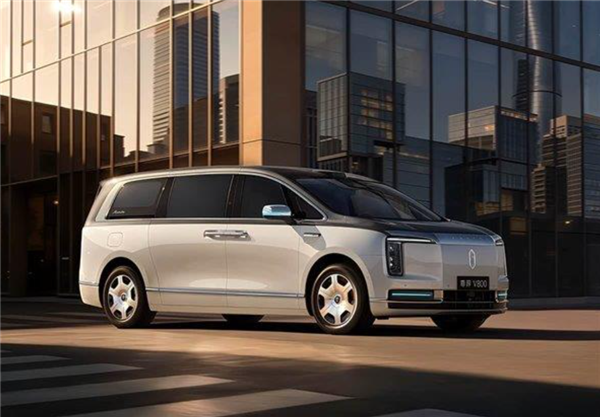
What has actually been reported about the rumoured sub-brand?
Conclusion first: everything currently rests on one account carried by Cailian Press, and that same account flags its own gaps.
- Reported: on the basis of Maextro, Huawei and JAC Motors may launch an entirely new sub-brand positioned in the RMB 400,000 to RMB 500,000 price band, focused on SUV models.
- Explicitly unsettled: the person familiar with the matter says detailed planning has not been finalised, and specific elements of the sub-brand remain open.
- Explicitly separated: the sub-brand plan and the Maserati cooperation are described as two independent projects rather than one deal.
- Not reported at all: a signed agreement, a launch date, a model name, plant allocation, dealer structure or volume target.
The fourth bullet is the discipline point. In Chinese auto-sector coverage, product-planning chatter routinely gets re-labelled as "confirmed" within a news cycle, and the difference matters for anyone holding JAC Motors shares or quoting a component programme at Huawei or Stellantis.
How is the sub-brand plan different from the Maserati project?
Conclusion first: the two efforts share one physical asset — the Maextro super factory — but not one decision-maker, one counterparty set or one timeline.
| Project A: rumoured Maextro sub-brand | Project B: Maserati cooperation | |
|---|---|---|
| Product described | New badge, RMB 400,000 to RMB 500,000, SUV-led | Two new all-electric models co-developed for the Maserati brand |
| Parties | Maextro side: Huawei and JAC Motors | Three parties: Stellantis, Huawei and JAC Motors |
| Company disclosure status | None; plan described as not finalised | JAC Motors' September 30 announcement: cooperation intent has been discussed, but content and form are undetermined and no binding agreement has been signed |
| Manufacturing | Unspecified; plant loading is the open question | Whole-vehicle manufacturing reportedly earmarked for the Maextro super factory |
| What would confirm it | A Shanghai Stock Exchange disclosure, an MIIT vehicle-catalogue filing, or a Huawei channel launch | A signed framework agreement or an official three-party announcement |
The Maserati thread is the better-evidenced of the two. Reuters reported in early September that Stellantis was in talks with Huawei and JAC Group on long-term industrial cooperation for its loss-making luxury marque, and JAC Motors itself responded on September 30, warning that the three-party communication had produced no binding agreement and that follow-through carried significant uncertainty. Maextro, by contrast, has no equivalent disclosure behind the sub-brand rumour.
Why would a 400,000 to 500,000 yuan badge make strategic sense at all?
Conclusion first: the logic is factory economics, not brand ambition. JAC's own project description states that the Maextro super factory covers about 1,500 mu with roughly 445,000 square metres of floor area, more than 1,800 intelligent robots and a planned annual capacity of 200,000 units; it was completed in December 2024 with management projecting output value above RMB 100 billion at full load.
That capacity has nothing like enough product running through it. JAC Motors' 2025 annual report shows its commercial-vehicle plant at 72.68% utilisation, while Chinese financial media calculating from company disclosures have estimated the super factory's loading in the low single digits — a spread of over 100,000 idle units a year. A 2026 analysis in TMTPost assumed the site is configured with separate modular lines for SUVs, sedans and MPVs at roughly 15,000 units per line per quarter, and that loading would have to climb above 50% before JAC's gross margin repairs noticeably; treat that figure as modelling rather than disclosure.
A volume product in the RMB 400,000 to RMB 500,000 band is the fastest theoretical way to fill a line. The obstacle is where that band already sits inside Huawei's own alliance. Per People's Daily Online's review of 2025, Maextro's S800 captured around 50% of sales in China's million-yuan luxury car segment, while AITO's M9, M8 and M7 topped the 500,000-yuan, 400,000-yuan and 300,000-yuan SUV segments respectively, and domestic premium new-energy brands grew combined volume more than 40% year on year. In other words, a new badge in this price band would be pitching against a sibling brand before it ever meets a European rival.
Maextro's own moves have been upward, not downward: the S800 Grand Design went on sale in June 2026 with a starting price of RMB 1.388 million, and the V800 and V680 MPVs followed in the alliance's summer line-up. A separate sub-brand would protect that flagship halo while chasing volume elsewhere — which is precisely why the brand-attribution question is contested. Later the same day as the report, He Lei, chief executive of the Chinese EV research and media platform Xinchuxing, posted that the story was inaccurate and that the vehicle in circulation was not a Maextro sub-brand; National Business Daily's requests to Huawei and JAC Motors went unanswered as of filing. Note the narrow wording of that denial: it rejects the brand relationship, not necessarily the existence of a 400,000 to 500,000 yuan SUV project.
What would the rumour change in JAC's numbers, and when?
Conclusion first: nothing in the income statement for at least two years; the near-term effect is sentiment and option value, not revenue.
- Product cadence sets the clock. The first Maextro model, the S800, launched in May 2025 with a price range of RMB 708,000 to RMB 1,018,000, took 2,600 orders within 72 hours and entered mass production on June 18, 2025. An unannounced programme that starts from tooling, homologation and dealer training today would realistically be a 2027-to-2028 volume story.
- Mix math matters more than badge count. Selling units at RMB 400,000 to RMB 500,000 lowers average selling price versus the current ultra-luxury line-up, but raises throughput; with 100,000-plus units of idle capacity, the binding constraint is utilisation, not dilution.
- Event risk is asymmetric. In October 2026 JAC Motors shares fell by the daily limit after a Dongchedi test video showed brake-pedal bracket failures on three Maextro V800 MPVs; the two-day slide erased about RMB 11 billion of market value before a limit-up rebound on October 16, when a joint regulator-led investigation was disclosed. Rumour-driven upside can therefore be wiped out by a single quality clip, so do not size a position as if the downside were symmetrical.
- Governance cost of a second badge. JAC Motors has repeatedly said it is concentrating resources on making Maextro commercially successful; adding a second brand competes for the same capital, engineering bandwidth and showroom floor space inside the Harmony Intelligent Mobility Alliance channel.
Which six steps should a tracking process follow?
- Classify the source. Log whether the item is a named company disclosure, a Cailian Press report citing an informed person, or social-media commentary; only the first is actionable.
- Check the exchange record. Search JAC Motors' Shanghai Stock Exchange filings for the two trading days after any sub-brand or Maserati item — the September 30 pattern, an announcement acknowledging talks while denying any binding agreement, is the reference template.
- Look for product fingerprints. MIIT vehicle-catalogue entries, battery and motor filings, hiring for a distinct brand identity, and body-style teasers appear 6 to 12 months before a launch.
- Watch the retail network. Huawei's alliance channels have finite showroom slots; a dedicated store format or a separate order system is a stronger signal than any price-band report.
- Read capacity data, not press releases. Track the super factory's reported output and any SUV line additions in JAC's quarterly disclosures; a new badge with unchanged throughput is a marketing plan, not an industrial one.
- Triangulate demand. Use order velocity benchmarks such as the S800's 2,600 orders in 72 hours, and compare against AITO's established position in the 400,000-yuan and 500,000-yuan SUV segments.
Which four misreads show up most often?
- The sub-brand is not part of the Maserati deal. The informed account carried by Cailian Press explicitly says the two are independent projects with different counterparties and products.
- No denial does not mean confirmation. Silence from Huawei and JAC Motors is the standard posture on unsettled product planning; treat the absence of response as no evidence at all.
- A 400,000 to 500,000 yuan model does not mean Maextro is going mass market. The reported structure keeps the flagship at RMB 708,000 to RMB 1,018,000 and above, and pushes volume into a separate badge.
- The denial does not settle it either. The public rebuttal addressed brand attribution, not whether a project exists; the original report already described the plan as not finalised, so both statements can be true at once.
What should investors, analysts and suppliers do next?
- Equity investors: do not underwrite a programme that has no disclosure behind it. Set a written trigger — an exchange announcement or a catalogue filing — before adjusting price targets, and account for the October 2026 episode as evidence of headline-driven volatility.
- Industry analysts: model the rumoured band twice, once as incremental demand and once as cannibalisation of sibling SUVs, and note that the segment is already led by AITO's M8 and M9 rather than by foreign luxury brands.
- Suppliers and business-development teams: request a capacity slot enquiry in writing rather than a design win; ask which plant line a 400,000 to 500,000 yuan SUV would run on, and treat a refusal to name the line as a status marker.
- Competitive-intelligence teams: put Stellantis, Huawei and JAC Motors on a joint watchlist, because the Maserati cooperation has formal disclosure and the sub-brand rumour does not.
Questions readers keep asking about the Maextro sub-brand rumour
Is the new Maextro sub-brand officially confirmed?
No. The report, carried by Cailian Press, cites a person familiar with the matter who says the detailed planning of the sub-brand has not been finalised; no company announcement or filing supports it, and one industry figure publicly disputed the brand attribution on the same day.
Is it the same thing as the Maserati cooperation?
No. The informed account describes two independent projects. The Maserati thread involves three parties — Stellantis, Huawei and JAC Motors — with reports of two all-electric models to be manufactured at the Maextro super factory; JAC Motors said on September 30 that no binding agreement had been signed.
If it happens, when would a car actually reach customers?
Nowhere near 2026. Using the S800 as the cadence benchmark — launched in May 2025 at RMB 708,000 to RMB 1,018,000, in mass production from June 18, 2025 — a new programme announced today points to 2027 or 2028 for meaningful deliveries.
Why report it at all if the plan is unsettled?
Because the factory economics are the news. A site planned for 200,000 units a year, with reported loading far below that, needs volume product; whether it arrives as a Maextro sub-brand or as Maserati work determines how JAC's utilisation, Huawei's channel and the alliance's price ladder evolve.
What is the single best tell over the next two quarters?
An SUV line appearing in JAC Motors' capacity or production-data disclosures before any brand announcement. Hardware precedes badges.
Written by Marc Hale for the GlobalBizSight CompanyWatch desk. Corrections, tips and document requests: info@globalbizsight.com.
Reference sources
- Cailian Press, exclusive report on the rumoured Maextro sub-brand — https://m.cls.cn/detail/2528854
- Reuters, "Stellantis in talks with Huawei, JAC over Maserati partnership" — https://www.reuters.com/business/autos-transportation/stellantis-talks-with-huawei-jac-over-maserati-partnership-sources-say-2026-09-04/
- JAC Group, official report on the completion of the Maextro super factory — https://www.jac.com.cn/news/20241216/5987.html
- JAC Motors 2025 annual report, plant utilisation table — https://www.jac.com.cn/u/cms/www/202604/150828321ybx.pdf
- People's Daily Online, China auto industry review of 2025 segment leadership — https://en.people.cn/n3/2026/0228/c90000-20429745.html
- CnEVPost, Maextro S800 order tally and July 2026 alliance delivery data — https://cnevpost.com/2025/06/03/maextro-s800-2600-orders-72-hours/ and https://cnevpost.com/2026/08/01/huawei-hima-delivers-45046-vehicles-jul-2026/
- Caixin Global, JAC shares slump after brake-pedal defect video — https://www.caixinglobal.com/2026-10-09/jac-shares-slump-after-viral-video-showing-brake-pedal-defects-102491723.html
- iFeng Autos, Xinchuxing chief executive He Lei denying the sub-brand attribution — https://auto.ifeng.com/c/8xumsc9nc3a