
GlobalBizSight DataStories Case Review: Why EU Grid Tariffs May Climb 50%-100% by 2050
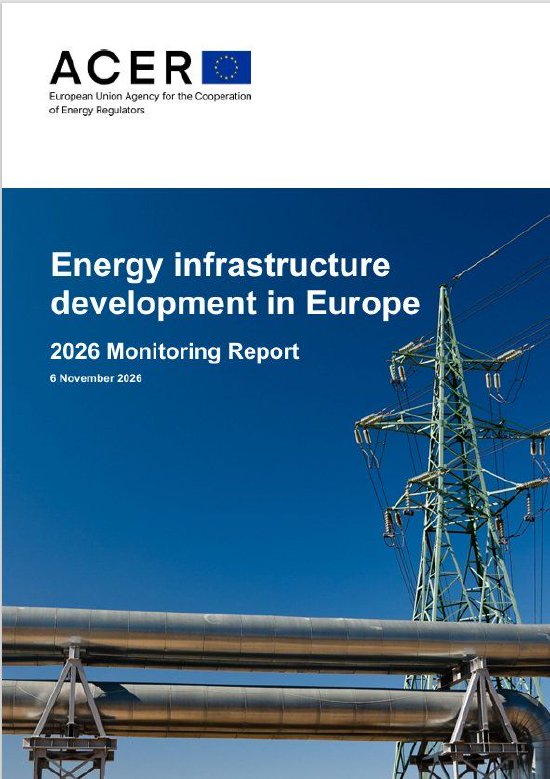
ACER's 2026 European Energy Infrastructure Development Monitoring Report, published on November 6, says EU consumer grid fees could rise 50% to 100% by 2050. The pressure comes from higher transmission capital spending, distribution investment, unit construction costs, project delays and congestion. For managers, this turns a public-infrastructure story into a recurring cost forecast.
What does the ACER report actually show?
The Agency for the Cooperation of Energy Regulators, known as ACER, frames the warning as a cost-recovery problem rather than a simple energy-price story. Three data layers explain the direction: investment volume, equipment and construction cost, and the ability to move power without congestion.
| Data layer | ACER report evidence | Business reading |
|---|---|---|
| Transmission spending | From 2019 to 2025, annual capital expenditure by EU electricity transmission system operators rose 193%, from about EUR 10.4 billion to EUR 30.5 billion. | Grid spending is entering a new cycle, not just routine maintenance. |
| Distribution spending | From 2021 to 2024, annual distribution network capital expenditure rose 51%, from EUR 23.5 billion to EUR 35.3 billion. | Solar, electric vehicles, heat pumps and electrified industry are being pushed to local networks. |
| Forward investment plans | Among 18 countries that provided forecasts, 15 expect 2030 grid investment to exceed the 2025 level, with an average increase of 134%. The Netherlands expects almost five times; Estonia, Latvia and Cyprus expect investment to fall. | Tariff risk will be uneven across Europe; fast-expanding markets will show the strain first. |
The report adds a less visible driver: unit costs. ACER estimates that from 2018 to 2024, the cost of building each unit of European electricity infrastructure rose by about 50% in total, while some equipment prices increased more sharply. More steel, cables, transformers and permitting time can make the same megawatt path costlier.
How are households and firms already paying?
The cost is not only a 2050 projection. From 2019 to 2025, the average EU household network fee rose 40%, from EUR 60 per MWh to EUR 84. That fee now accounts for about 28% of household electricity bills. Between 2023 and 2025, household and industrial network fees increased by 14% and 38%, respectively. For companies, that means transport and distribution costs can move faster than the commodity electricity price itself.
Bruegel researchers Conall Heussaff and Georg Zachmann argue that the affordability question depends less on the headline investment number than on how costs are spread across users and years. Their analysis warns that if per-unit network charges rise too quickly, they can slow electrification and shrink the cost base used to recover grid investments. That view adds a practical nuance to ACER's forecast: the tariff path matters as much as the investment total.
Which case best shows how quickly grid cost becomes a bill shock?
The Netherlands is the clearest single-country example. ACER says Dutch grid investment expected for 2030 is almost five times the 2025 level. Public estimates linked to the Dutch consumer and market regulator, ACM, project an average 20% rise in 2027 electricity and gas grid transport tariffs, with households paying about EUR 90 more for electricity transport and about EUR 50 more for gas transport, separate from the underlying energy price. The same case points to a total grid rebuilding investment of around EUR 235 billion by 2040, with grid prices already near 30% of Dutch household energy bills and expected to rise by about 5% to 6% per year in later years on top of inflation.
The Netherlands case also shows the industrial consequence. Hydrogen Europe's Clean Hydrogen Monitor says network costs in the Netherlands have more than quadrupled over seven years. That matters because grid charges are not just a household budget line: they can change the economics of hydrogen production, factory electrification, data-centrification and other growth projects that depend on reliable, affordable power connections.
Why do delays and congestion add another layer of cost?
The ACER report says about 40% of EU key transmission projects have experienced delays, and the average implementation period is 12 years. If the whole set of major transmission projects were delayed by one year, ACER estimates a net economic welfare loss of about EUR 4 billion. That is the cost of waiting: projects that are not built cannot relieve congestion, and congestion must be managed through operational spending.
That operational layer is already visible. In 2025, EU transmission system operators spent about EUR 5.4 billion to relieve grid congestion, more than 25% higher than in 2024. Congestion revenue generated by cross-border electricity trading reached EUR 9.2 billion, about seven times the 2019 level. The European Commission Joint Research Centre estimates that, if grid expansion continues at the current pace, Europe's annual congestion-management cost could exceed EUR 100 billion by 2040, about 20 times the current level.
ACER also notes a governance problem. As of 2025, about 60% of available congestion revenue was retained for future use, with a cumulative balance of about EUR 12.5 billion, instead of being deployed more quickly to ease cross-border bottlenecks or reduce network charges. The implication is that scarce cash already linked to congestion is not automatically flowing back into the pressure points that raise bills.
Why is shrinking gas demand raising tariff burdens?
Gas networks face a different but similar cost-recovery squeeze. EU gas consumption in 2025 remained 16% below the 2017 to 2021 average, and deeper cuts may be needed to meet transition goals. As consumption and the paying user base shrink, fixed pipeline maintenance and operating costs must be recovered from fewer customers. Between the 2020/2021 and 2024/2025 gas years, EU gas transmission tariffs rose by about 40% on average.
ACER warns that if gas use keeps falling while the pipeline footprint is not adjusted, remaining users may carry rising charges. This means Europe's energy transition has two accounting problems: it must finance new electricity infrastructure, while also resolving how old gas infrastructure will be paid for as volumes decline.
What are the common misconceptions?
- Grid fees are electricity prices. They are not. A falling power price can still sit alongside a rising network charge, because the charge pays for transport and distribution assets.
- More grid investment always means higher consumer bills. Not mechanically. Demand growth, better use of existing assets, faster approvals and smarter cost allocation can change the per-user outcome.
- Congestion revenue should lower fees automatically. ACER's data show that much of it was retained rather than deployed quickly enough to relieve bottlenecks.
- Gas network decline only affects gas users. Fixed costs spread across a shrinking customer base, raising charges for those who remain connected.
What should managers do now?
- Split the energy bill in planning. When modelling costs, keep commodity electricity or gas separate from transmission, distribution and congestion-related charges.
- Stress-test the Netherlands scenario. If a business has European sites, assume network-charge volatility, not just energy-price volatility. Recent EU household and industrial fee growth of 14% and 38% from 2023 to 2025 is a useful floor for short-term sensitivity analysis.
- Check site-level grid headroom. In high-investment markets, connection capacity, delay risk and time-of-use tariffs may shape location decisions as much as wage or tax costs.
- Follow ACER's four policy levers. Improve existing grid utilization, strengthen investment planning, shorten approvals for priority projects, and better allocate costs across countries and user groups.
- Monitor industrial electrification risk. Sectors that depend on cheap, flexible power - including hydrogen, manufacturing electrification and energy-intensive data operations - should build network-charge exposure into project return cases.
FAQ: what the data story means for readers
Why could EU consumer grid fees rise 50% to 100% by 2050?
Because the spending required for transmission and distribution is increasing, the unit cost of grid construction has already risen, and delays and congestion keep raising operational costs. If those costs are recovered mainly through network charges, consumers may pay the difference.
Is the increase certain for every user?
No. The report gives an expected range, not an equal tariff hike. Household fees rose 40% from 2019 to 2025, while industrial fees rose faster between 2023 and 2025. Country plans and cost-recovery rules will determine who pays what.
Why does the Netherlands matter if the report is EU-wide?
Because it compresses the chain into a visible national case: a near-fivefold 2030 investment forecast versus 2025, regulatory projections of about 20% higher 2027 network charges, and evidence of multi-fold network cost growth over seven years for some industrial users.
What is the most underappreciated number?
The retained congestion revenue. About 60% of available congestion revenue was kept for future use as of 2025, amounting to about EUR 12.5 billion cumulatively. That suggests a repair fund exists, but its use is slower than the congestion problem.
Sources and evidence used
The core figures come from ACER's 2026 European Energy Infrastructure Development Monitoring Report, published on November 6, and from ACER's assessment of transmission, distribution, unit-cost, delay and congestion trends. The congestion-cost projection by 2040 is attributed to the European Commission Joint Research Centre in the ACER report. The Netherlands tariff and investment details are drawn from public estimates associated with the Dutch regulator ACM, reported at https://m.163.com/dy/article/L6R318240514DCDB.html. The industrial network-cost trend is from Hydrogen Europe's Clean Hydrogen Monitor, available at https://hydrogeneurope.eu/wp-content/uploads/2026/10/Clean_Hydrogen_Monitor_09-2026_withoutAnnex.pdf. The cost-recovery argument is from Bruegel policy brief https://www.bruegel.org/policy-brief/upgrading-europes-electricity-grid-about-more-just-money.