
Paying More, Using the Same: A GlobalBizSight DataStories Case Replay of 13 AI-First PR Platforms
The short answer: budgets moved faster than behavior. The share of PR professionals using at least one paid AI tool rose from 57% to 75% over the past two years, while generative-AI use barely budged, from 75% to 76%. More seats were bought; the workday barely changed. A 2026 case replay of 13 platforms shows where that money actually lands.
What does the 2026 spend signal actually mean?
Conclusion: this is a pricing story more than an adoption story. Muck Rack's State of AI in PR 2026 report puts paid-tool usage at 75%, up from 57%, yet only 76% say they use generative AI in workflows — effectively flat against 75% the year before. Translation: money moved from free trials into invoices, not into new hours of AI-assisted work. A "paid AI tool" is a line item; "generative AI use" is a habit. The first grew, the second did not.
Set that against the category's growth curve. Valued at US$13.8 billion in 2025, the global PR tools market is projected to reach US$30.1 billion by 2034, according to Research and Markets. In plain terms, that is roughly a 2.2x expansion over nine years, or about 9% a year if it holds — our calculation, not the firm's guidance. A 2034 projection is a direction of travel, not a revenue forecast, and AI-integrated platforms are expected to carry a significant share of it.
One useful counterweight comes from Prowly's 2024 PR tech-stack survey: 43% of PR professionals canceled paid tools that year, and the share struggling to prove the value of their work rose from 41% in 2022 to 48% in 2024. Read together, the figures describe a market that pays more while staying unconvinced — exactly the tension this case replay sets out to explain.
How do the 13 platforms compare on cost and job?
Conclusion: the field splits into three budgets — journalist access, listening depth, and proof of impact — and the platforms price those budgets very differently.
| Platform | Job it owns | Hard number from the field | Best fit |
|---|---|---|---|
| Muck Rack | Database plus AI research | 88% discard off-beat pitches; around $10,000 per year | Relationship-led mid-market teams |
| Cision | Mass distribution and database | 84% of Fortune 500; between $10,000 and $15,000 annually | Enterprise comms at volume |
| Meltwater | Monitoring scale | over 1.3 billion documents daily; more than 270,000 sources; 15 social channels | Global, cross-language brands |
| Semrush AI PR Toolkit (Prowly) | Discovery to measurement | Tiered annual-billing rates, from US$149 per month when billed annually | Teams wanting one workflow |
| Brand24 | Real-time mentions | Emotion-level NLP; conversational reporting | Lean in-house teams |
| Signal AI | Risk signals | Structured and unstructured source fusion | Financial PR |
| Onclusive | Business-outcome measurement | Formerly AirPR | CMO and CFO reporting |
| Brandwatch | Social intelligence | Hootsuite and Salesforce integrations | PR and social in one team |
| Press Ranger | Outreach only | Beat and coverage-history filters | High-volume agencies |
| Agility PR Solutions | All-in-one mid-market | over 1.1 million contacts; over 397 G2 reviews | Agencies below Cision-level pricing |
| Goodie | Answer-engine visibility | ChatGPT, Perplexity, Gemini, Claude | B2B thought leadership |
| Propel PRM | PR-first CRM | 2019; over one million journalists; over five million pitches | Relationship-led agencies |
| Shadow | Agent-run stack | two modes; 8 to 12 tools; $2,000 to $5,000 per employee per month | Multi-client consolidation |
Case files: what each platform actually did
Case file 01 — Muck Rack
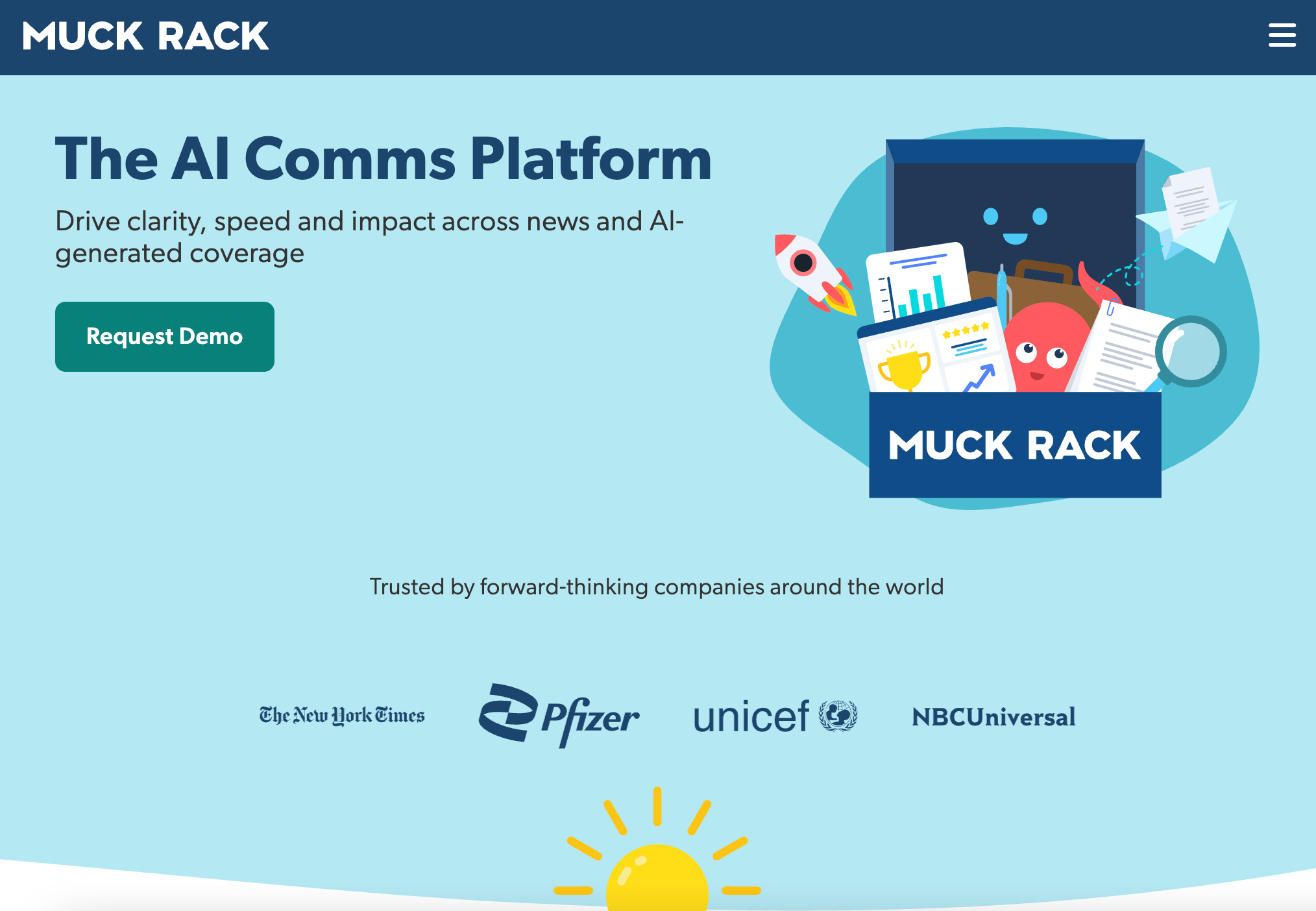 Process: filter reporters by beat, publication, social activity and recent coverage, then apply AI to pitch refinement and target selection. Result: fewer wasted sends. Its own 2026 State of Journalism report found that 88% of journalists say they immediately discard pitches that miss their beat — a discard rate no amount of personalization tokens fixes. Reusable lesson: fix targeting before you fix copy. Pricing starts around $10,000 per year, which is why the buyer is usually a mid-market agency or enterprise team. Best fit: teams that keep relationship history across contacts in a CRM layer. For how monitoring fits the rest of the stack, Muck Rack's media-monitoring guide is a useful companion read.
Case file 02 — Cision
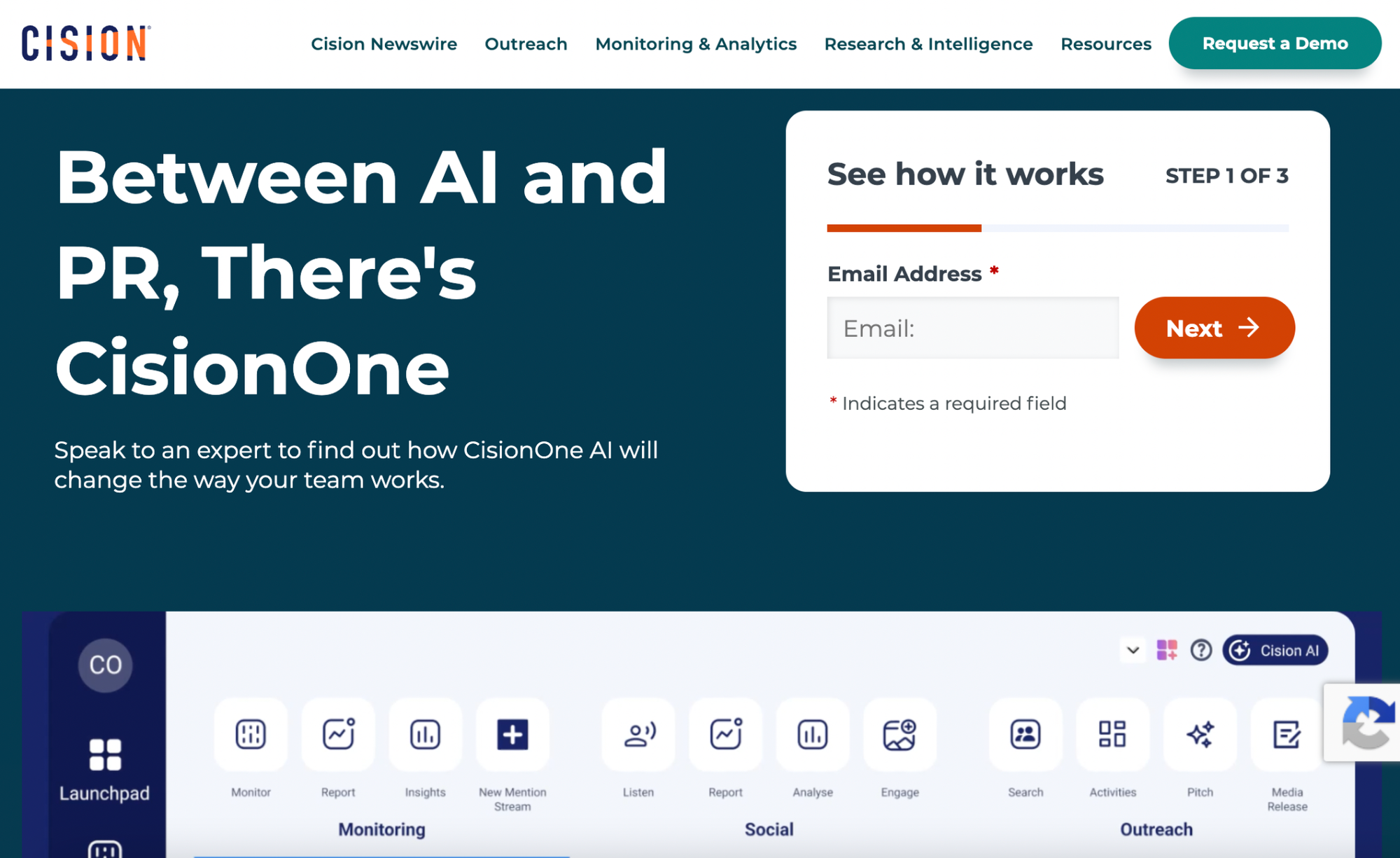 Process: mass distribution through PR Newswire, paired with one of the largest journalist databases. Result: reach few rivals match; the company reports that 84% of Fortune 500 companies use it. CisionOne adds AI-driven issue detection and sentiment analysis to conventional monitoring. The trade-off is cost and onboarding: pricing typically falls between $10,000 and $15,000 annually depending on features, and new users need substantial training — a real cost line, not a footnote. Reusable lesson: buy this when distribution volume is the constraint, not when you merely want a media list.
Case file 03 — Meltwater
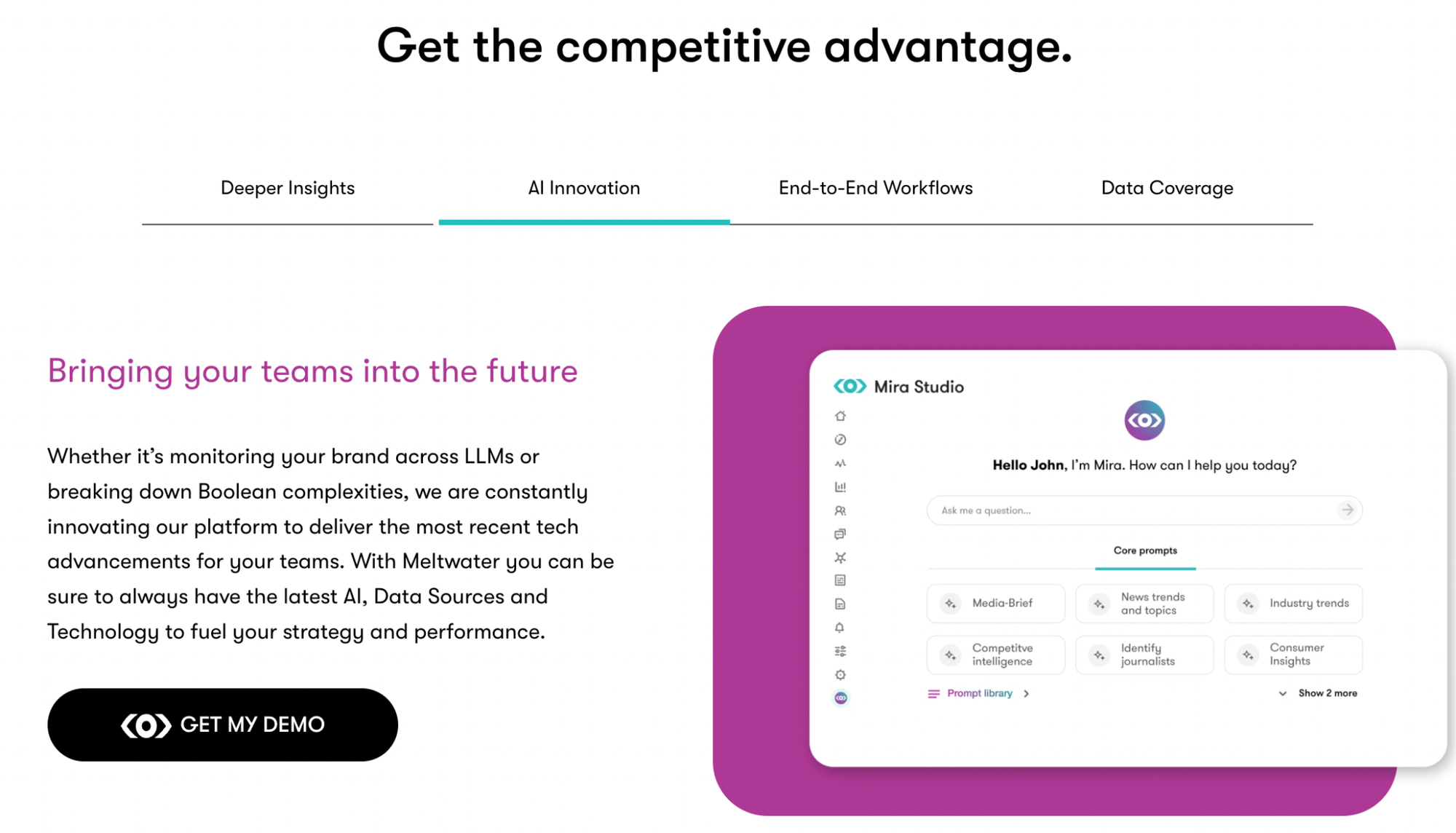 Process: ingest at scale, then analyze. Third-party research aggregated by Prowly says the platform handles over 1.3 billion documents daily from more than 270,000 global news sources and 15 social media channels, including major Asian platforms. Result: cross-language, cross-market coverage that narrower tools miss. A late 2025 release introduced predictive analytics that estimate whether spikes in mentions are likely to grow or fade. GenAI Lens watches how brands show up inside ChatGPT, Gemini and Perplexity. Reusable lesson: for regional brands, source breadth is the moat; sentiment labels are commodities.
Case file 04 — Semrush AI PR Toolkit (formerly Prowly)
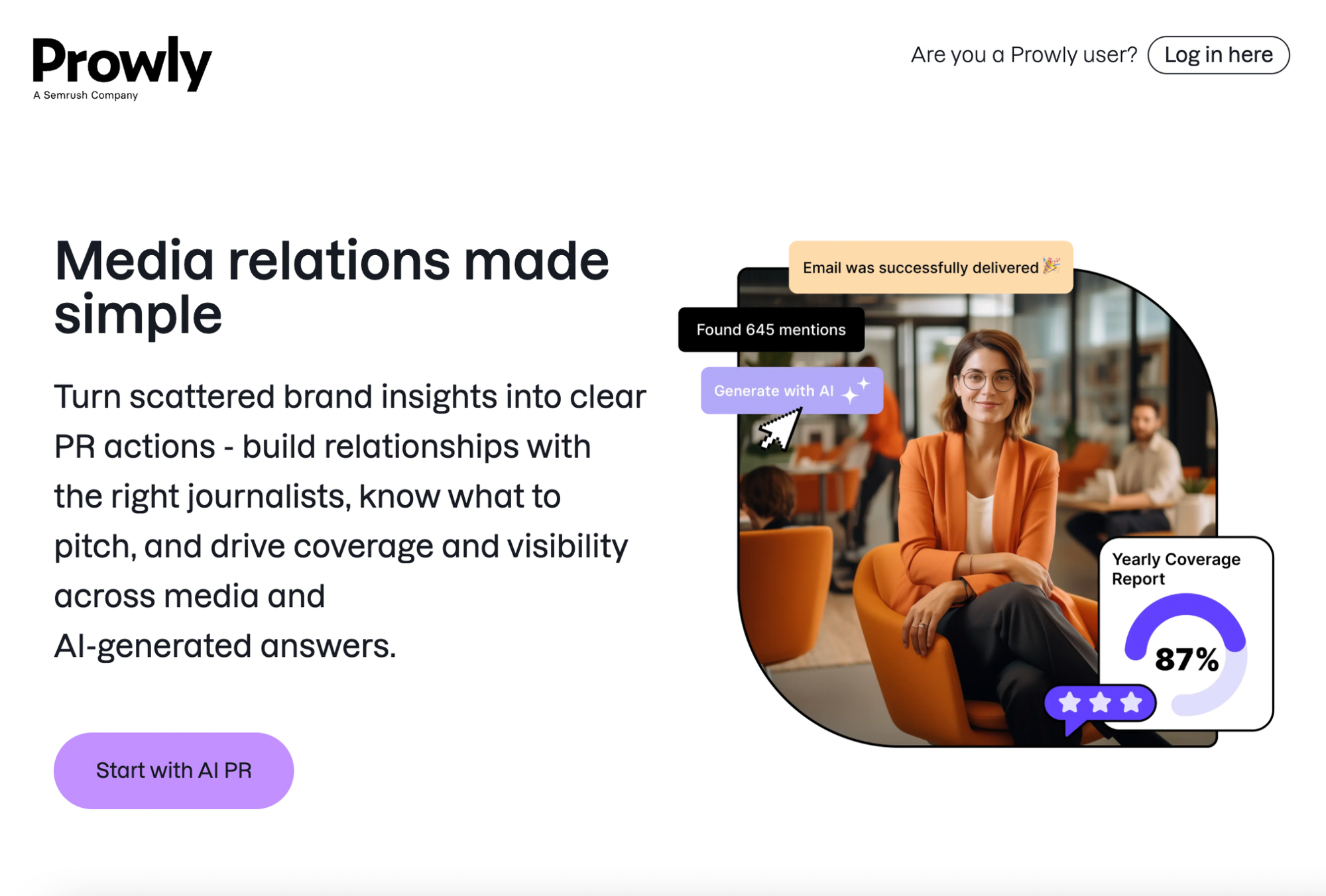 Older reviews may still treat Prowly as a standalone subscription, but that pricing and feature mix should not be used to assess the current toolkit. The Semrush AI PR Toolkit (Prowly) includes an AI-cited media finder, a journalist database, and outreach tools. Semrush's official AI PR pricing and plan documentation says Base costs US$149 per month when billed annually and covers media discovery plus pitching. Pro is US$279 per month when billed annually and adds media monitoring, audience insights, follow-ups and advanced analytics. Business is US$499 per month when billed annually and adds competitor media tracking and multi-brand intelligence. These Semrush AI PR Toolkit figures are monthly-equivalent prices under annual billing, not confirmed month-to-month rates. Reusable lesson: check tier boundaries — monitoring only begins with Pro.
Case file 05 — Brand24
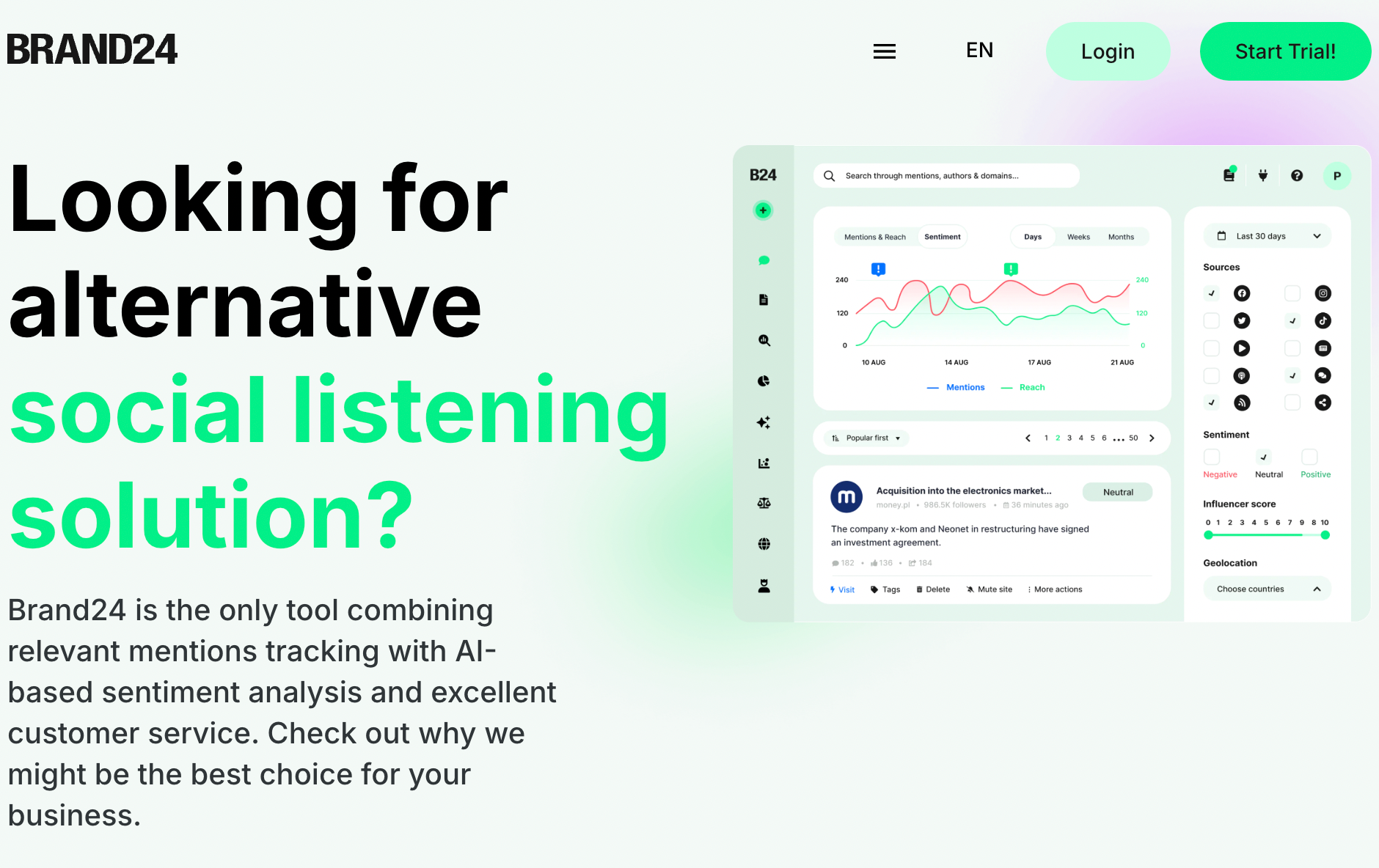 Process: real-time tracking across social and non-social channels, with an NLP layer that sorts reactions into joy, frustration or anger instead of a flat positive or negative label. Result: more specific emotional signals for reputation work. Brand Assistant is a ChatGPT-style conversational interface built on a team's own monitoring data, so users ask questions rather than run queries. Reusable lesson: conversational reporting cuts the hours spent assembling weekly decks — provided someone owns the follow-up.
Case file 06 — Signal AI
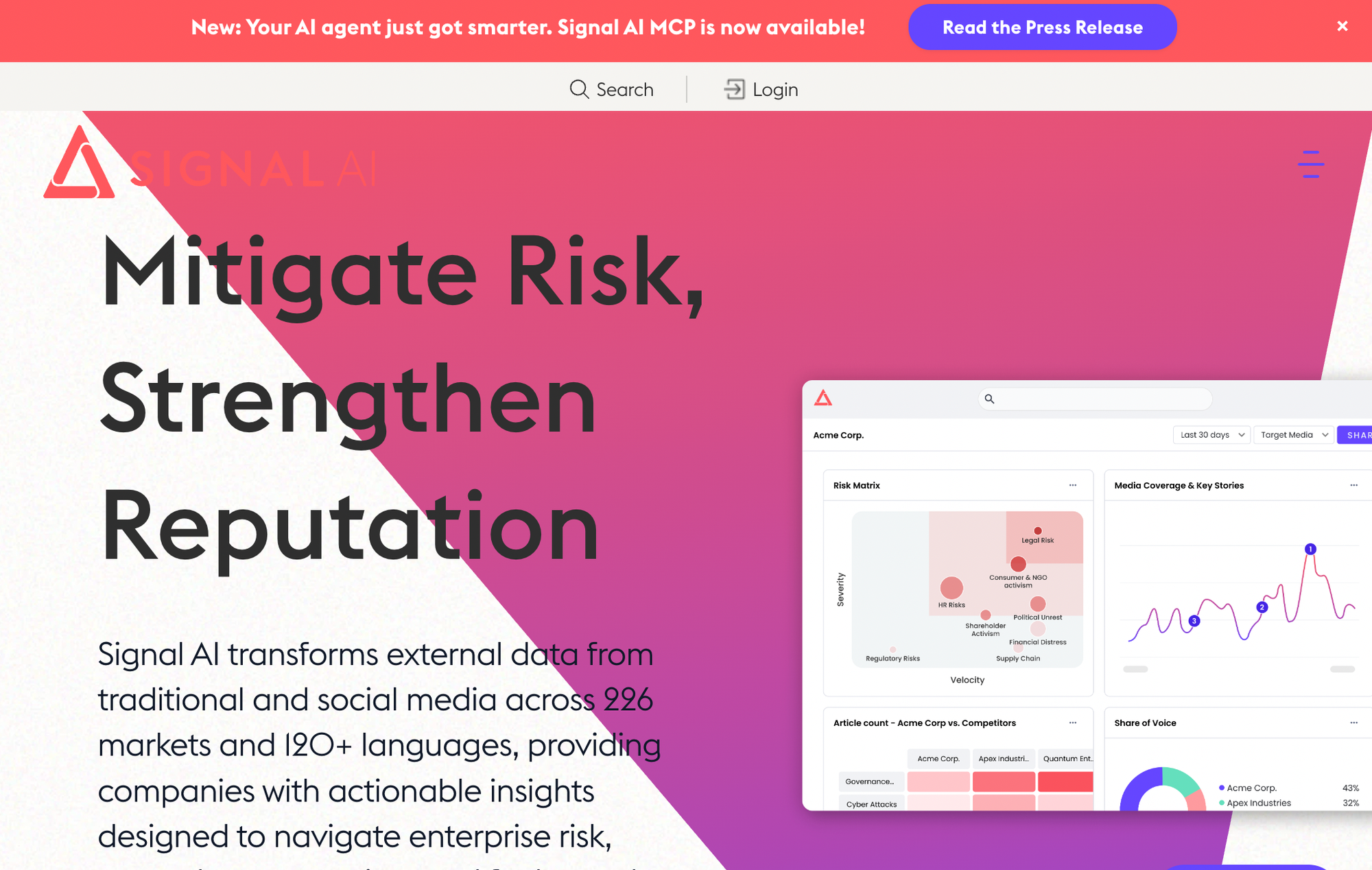 Process: news, regulatory filings and social content are processed as unstructured data to surface signals conventional monitoring catches too late. Result: issues teams see a risk before it becomes a headline. Reusable lesson: the fit is sharpest in financial services PR, where filings, competitive intelligence and coverage interact; elsewhere the value overlaps with general monitoring.
Case file 07 — Onclusive
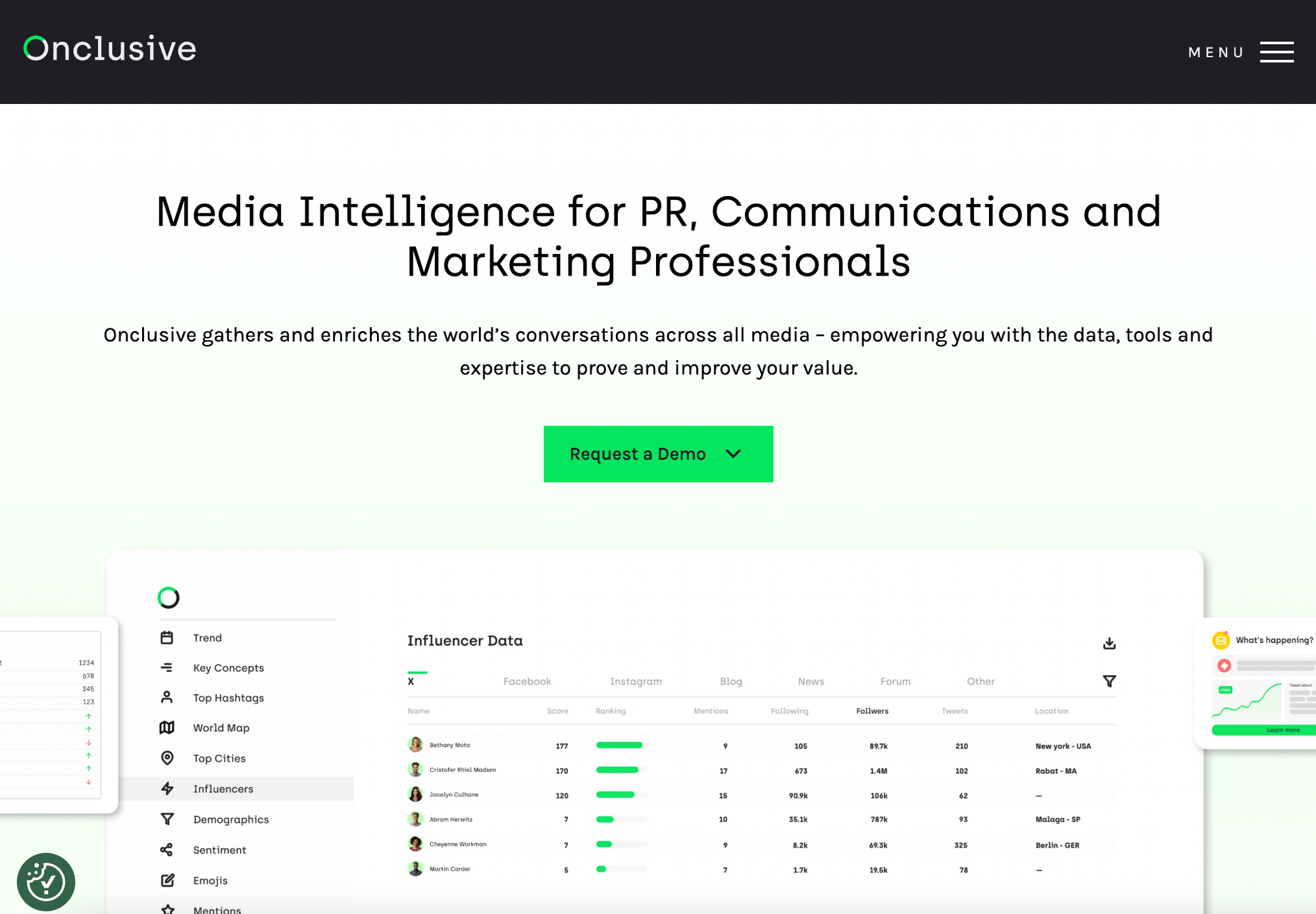 Process: formerly AirPR, the platform links earned media to web traffic, leads and conversions. Result: PR performance can be presented in the language of marketing attribution rather than share of voice alone. A media database and monitoring tools are included, but analytics depth is the differentiator. Reusable lesson: if you report to a CMO or CFO, shortlist this — with one caveat, the hard part is linking coverage to downstream business measures cleanly, which depends on tagging discipline.
Case file 08 — Brandwatch
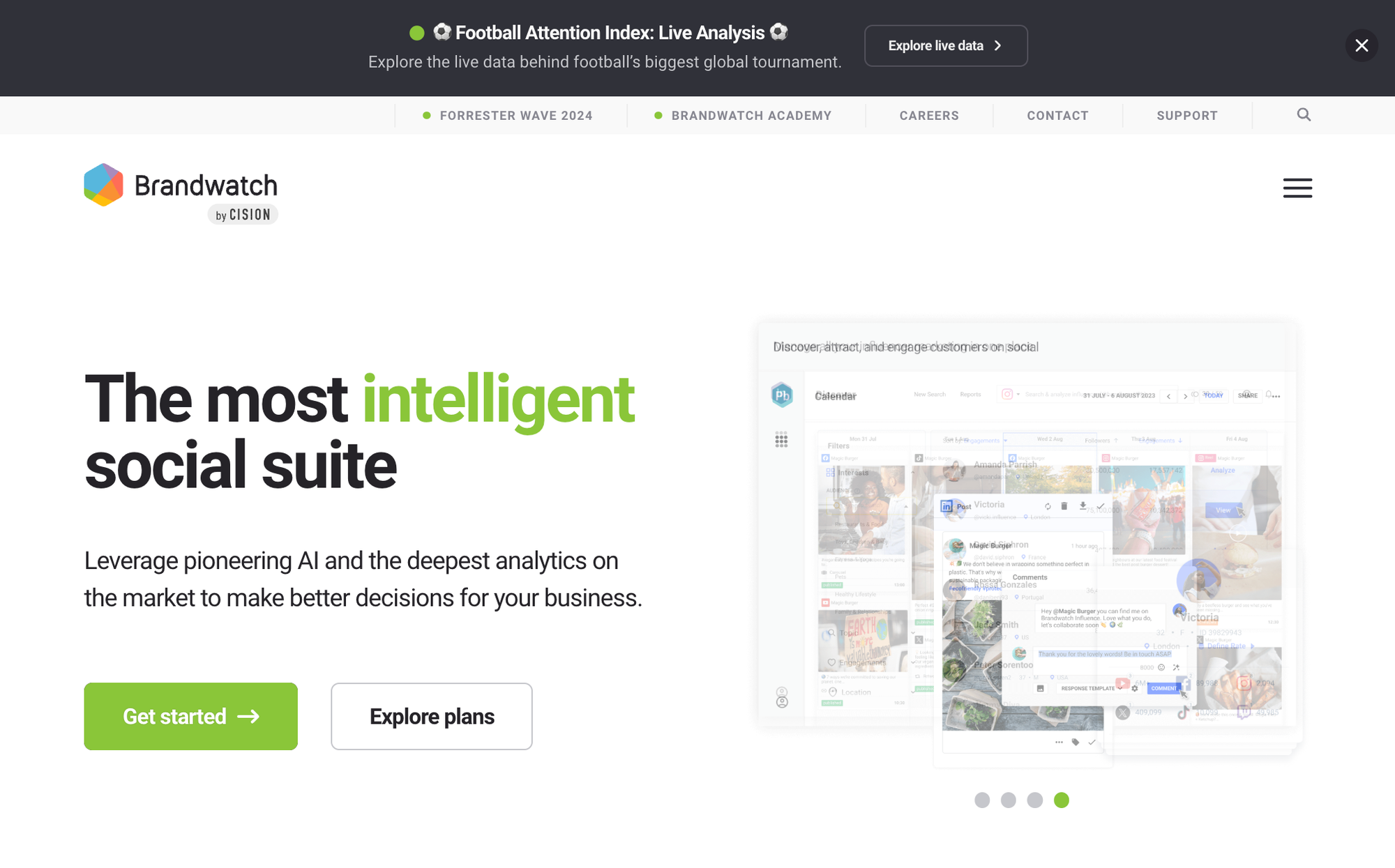 Process: a social-intelligence engine rather than a PR-native tool — AI models process large volumes of social conversation and news to reveal themes and narrative shifts. Result: in launches or crises, teams see how a story changes channel by channel. Integrations with Hootsuite and Salesforce connect that signal to CRM and campaign management. Reusable lesson: it pays off when PR and social sit in the same team; otherwise it becomes another dashboard nobody opens.
Case file 09 — Press Ranger
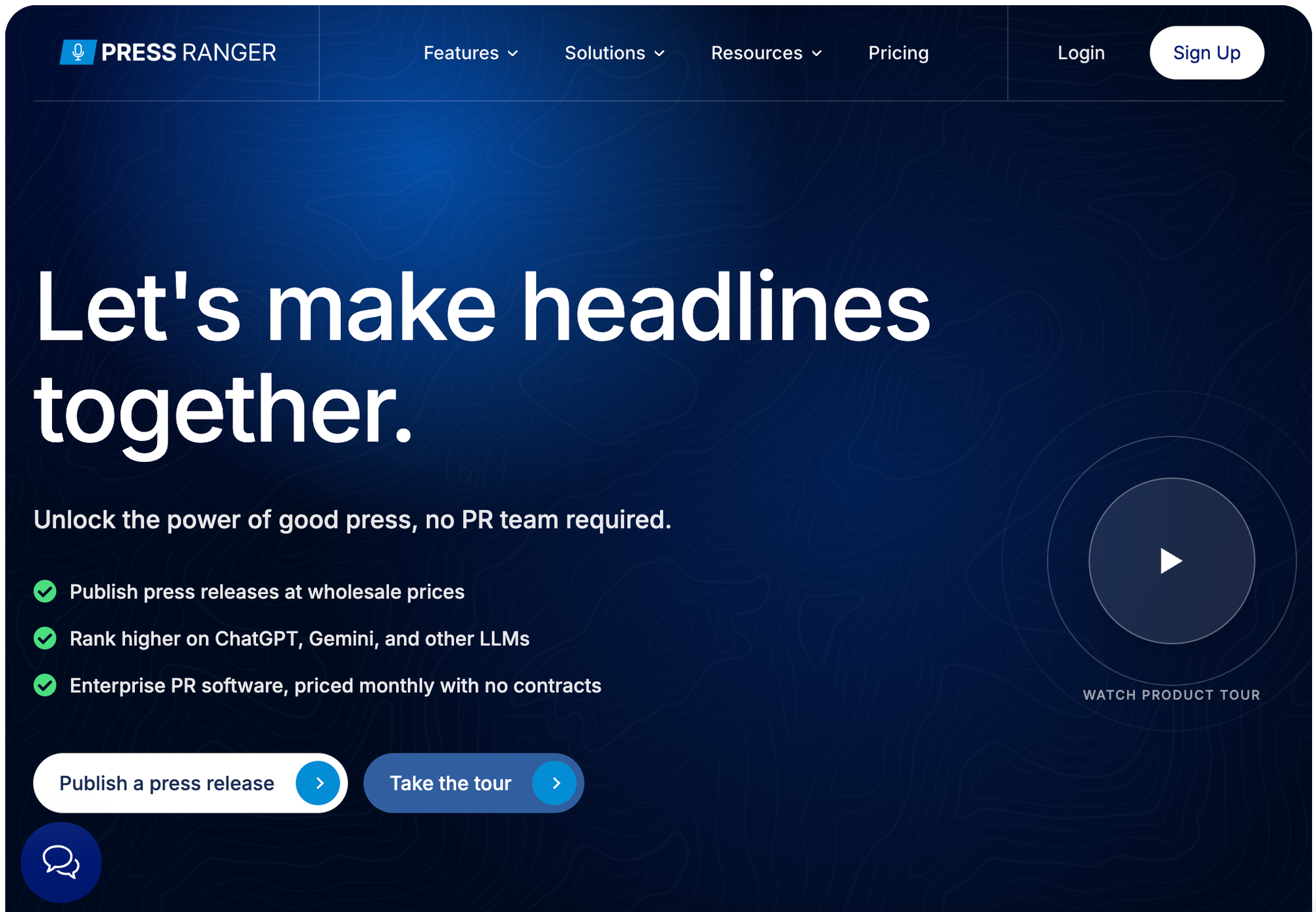 Process: find journalists by publication, beat and coverage history, then manage outreach inside the platform. Result: less manual list-building for agencies running high-volume, multi-client pitching. Reusable lesson: the tool is deliberately narrow — no full monitoring or analytics suite — and that is the point. Practicality over breadth is a legitimate choice when list quality is the bottleneck.
Case file 10 — Agility PR Solutions
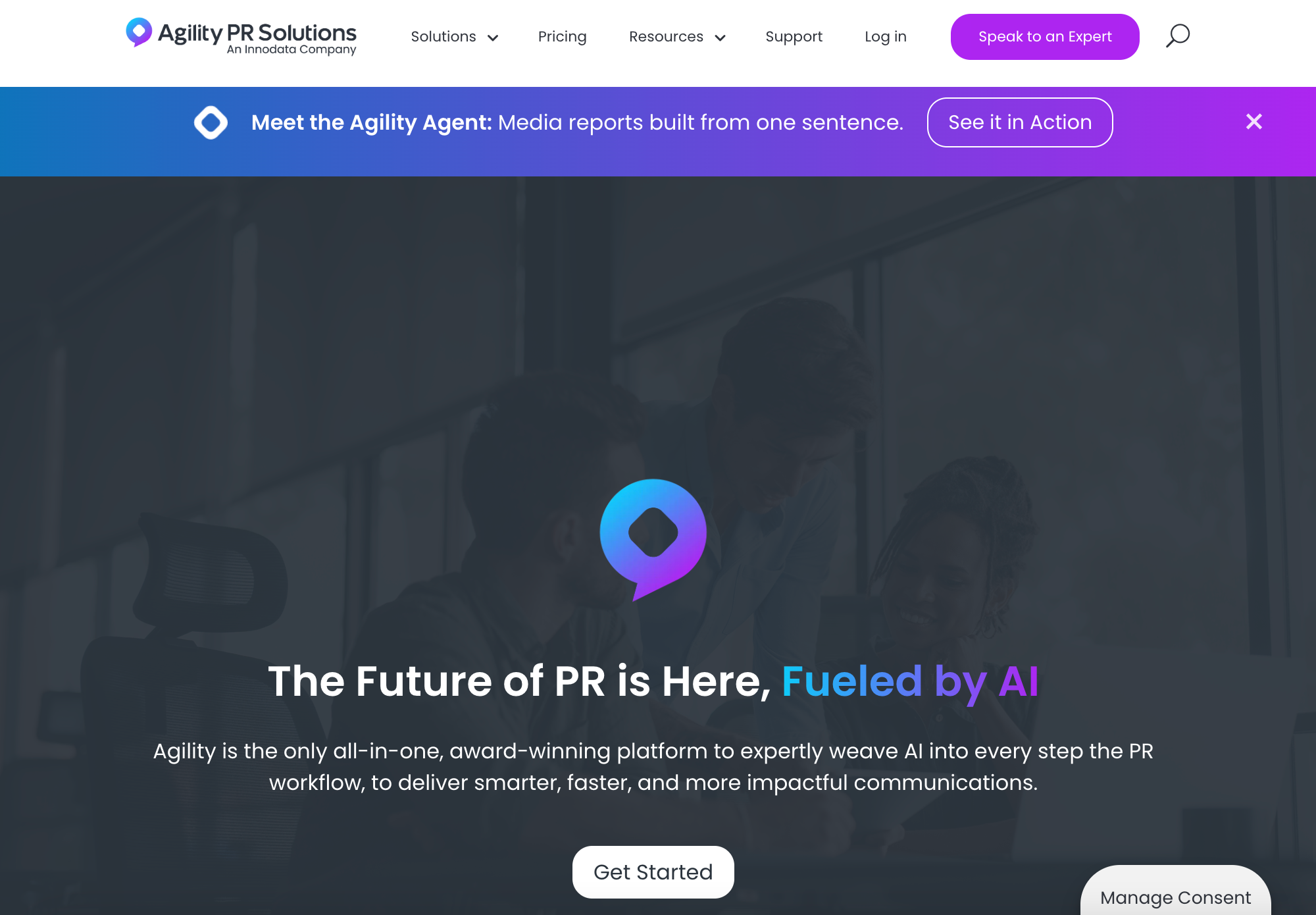 Process: outreach, monitoring and analytics in one workflow, backed by a database of over 1.1 million journalists and outlets maintained by an in-house research team rather than automated scraping alone. Influencer Streams track journalist activity in real time, surfacing social mentions, recent articles and incoming PR requests. The AI layer, PR CoPilot, handles pitch personalization, subject lines and release drafting. Result: client-ready reports without manual assembly. G2 users rate it across media targeting, distribution and analytics, with over 397 verified reviews; pricing is custom-quoted. Reusable lesson: verified contacts beat scraped ones when deliverability drives outcomes.
Case file 11 — Goodie
 Process: an Answer Engine Optimization platform with AI visibility monitoring, an optimization hub of content recommendations and an AEO content writer; it tracks how brands appear in ChatGPT, Perplexity, Gemini and Claude answers. Result: teams can see what an assistant says about a client, not only what a journalist published. The IAB's 2026 playbook, Measuring Visibility in the AI Era, treats this as a measurement discipline that includes checking whether a provider's numbers are reliable. Regional context matters: a May 14, 2026 Newswire release on Assembly's APAC rollout put weekly AI-search usage in the region at 78%. Reusable lesson: brand discovery increasingly runs through AI-generated answers, so this belongs in the comms brief, not only the SEO queue — and for APAC teams, our note on answer inclusion explains why a mention is not the same as correct price or positioning.
Case file 12 — Propel PRM
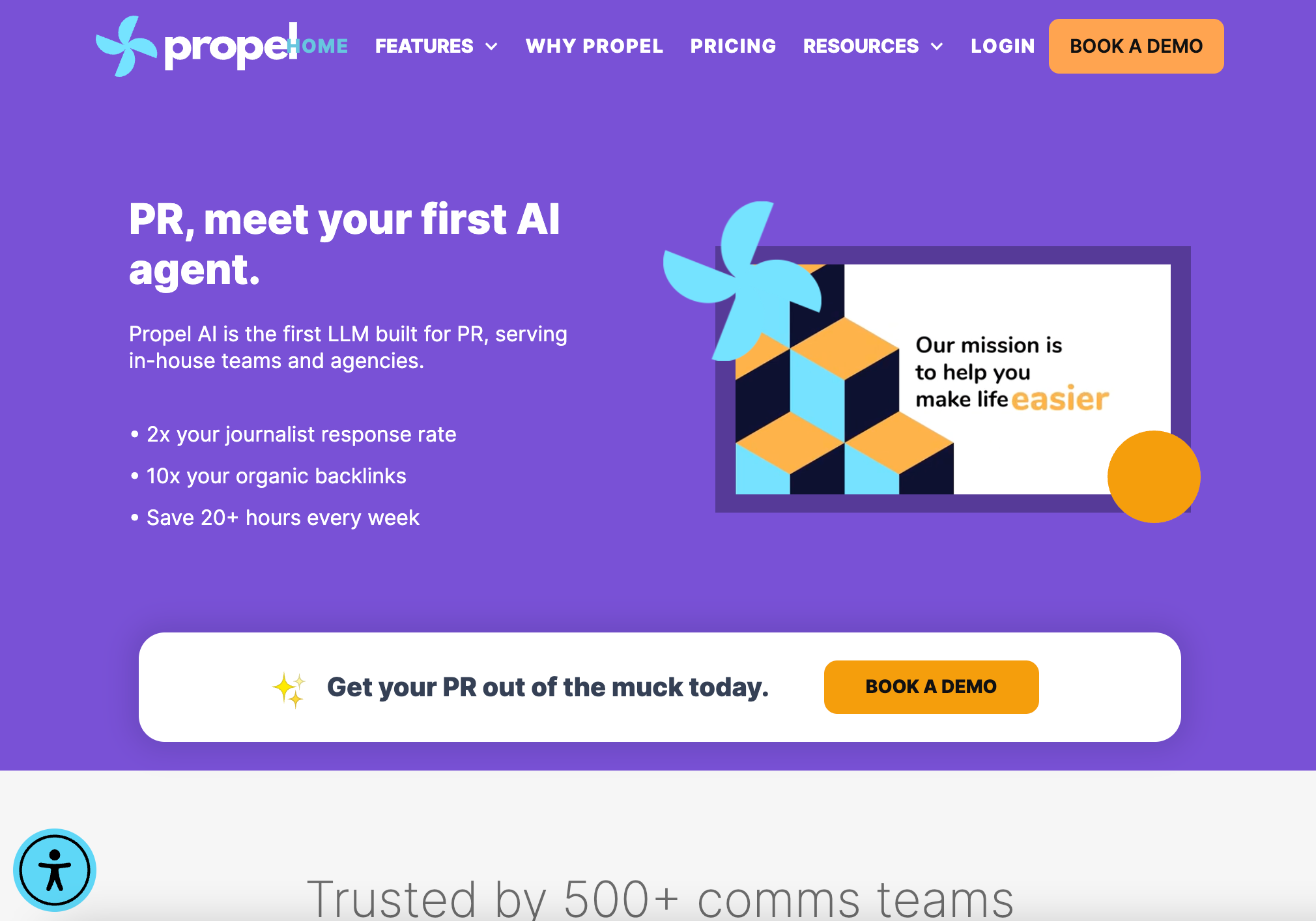 Process: Propel describes itself as the first CRM built specifically for PR, founded in 2019 by a former agency owner who could not find software that matched how PR teams actually work. It pairs a media database of over one million journalists with Gmail and Outlook integrations, so users pitch from their native email client and track opens in real time. Its AI layer, Artificial Media Intelligence (AMI), is trained on a proprietary dataset of over five million pitches and press releases. AMI drafts pitches and releases, suggests relevant journalists and tracks engagement scores over time. Clients include Microsoft, NPR, and Real Chemistry. Propel 2.0, released in early 2024, added deeper AI across the pitch-to-publish workflow. Reusable lesson: PR-specific training data beats general-purpose writing models when the job is pitching.
Case file 13 — Shadow
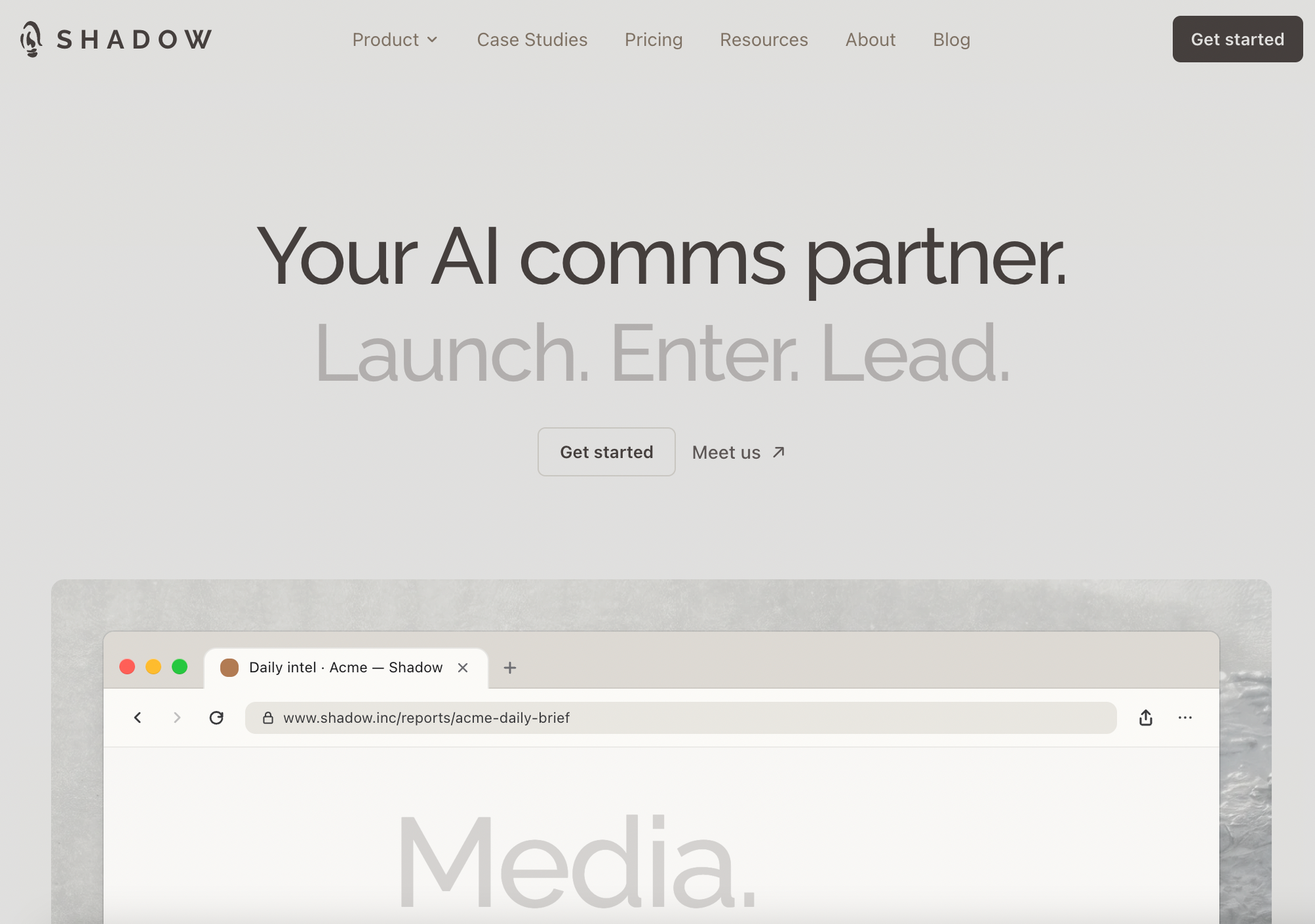 Process: Shadow runs in two modes that should be separated — an AI-native PR agency serving growth-stage tech companies, with clients including OpenAI, Roblox, and Amazon, and a platform licensed to other agencies. The consolidation case rests on a concrete cost problem. PR Council 2025 data cited by Shadow says the average PR agency runs 8 to 12 disconnected platforms, costing a total of $2,000 to $5,000 per employee per month once licenses and integration overhead are included. Agents cover journalist research, pitch writing, monitoring, press release drafting and reporting in one system with persistent client context. Reusable lesson: the savings case is about integration overhead and hours, not prettier dashboards — buy the economics, not the demo.
What should a team do with a budget it can no longer justify?
Conclusion: start with the measurement gap, not the next tool. A report from Muck Rack found that only 12% of PR professionals who use AI are currently using AI agents, even though most know about them. That gap is likely to close over the next 12 to 18 months as platforms push agent-based features beyond beta. Note the asymmetry: enterprise monitoring suites have been running for a decade, while the AI-native names above did not exist two years ago. The largest gains sit where the workflow is least automated.
- Name the budget line first — journalist access, listening, or proof of impact — and compare only within it.
- Run a 30-day discard-rate test: how many pitches actually match a reporter's beat?
- Price the whole stack per employee per month, including integration overhead, not just license fees.
- Add one AI-answer check to the monthly dashboard.
- Keep human review on anything that goes to a journalist; agents draft, people decide.
- For high-volume pitching on smaller budgets, Press Ranger, Respona, and HeyJared are more practical than an enterprise suite.
FAQ
Is paying for AI actually increasing?
Yes, at the expense of free experimentation. Paid-tool usage stands at 75%, up from 57%, while generative-AI use is essentially flat at 76% versus 75% a year earlier — a shift from trials to invoices, not a surge in new users.
What does a PR platform really cost?
It depends on the job. Muck Rack starts around $10,000 per year; Cision typically falls between $10,000 and $15,000 annually. The Semrush AI PR Toolkit (formerly Prowly) starts at US$149 per month when billed annually for Base, rising to US$279 per month when billed annually for Pro and US$499 per month when billed annually for Business — all monthly-equivalent rates under annual billing.
Do I need an answer-engine tool if I already monitor news?
Only if discovery matters to your category. Goodie and Meltwater's GenAI Lens monitor AI-generated answers from ChatGPT, Gemini, Perplexity and Claude, a surface traditional monitoring does not cover. The IAB's 2026 guidance suggests treating vendor visibility claims as auditable, not decorative.
Will agents replace the PR team?
Not soon. Only 12% of AI-using PR professionals use agents today, and most platforms are still pushing features beyond beta. Expect the gap to narrow over the next 12 to 18 months in operational tasks first — research, drafts, reporting — not in judgement.
For investors, one reminder: a 2034 market projection is not a moat. The signal worth underwriting is renewal quality in a market where 43% of practitioners canceled tools in a single year — vendors that turn paid seats into measurable work keep the budget; vendors that only turn trials into invoices do not.
By Nina Roberts, GlobalBizSight DataStories
References
- Muck Rack — Media monitoring with AI and integrated analytics
- Prowly Journal — Budgets tighten, AI rises: PR tech stack in 2024
- IAB — Measuring Visibility in the AI Era
- Newswire — Assembly rolls out Stagwell Search+ across APAC, May 14, 2026
- GlobalBizSight DataStories — Open-Loop Budget Gates Compared
- GlobalBizSight DataStories — Answer Inclusion for APAC Brands