
RTX PRO 5500 at $17,999: A Retailer Listing, a 20,000-Card Order, and the New Logic of GPU Pricing
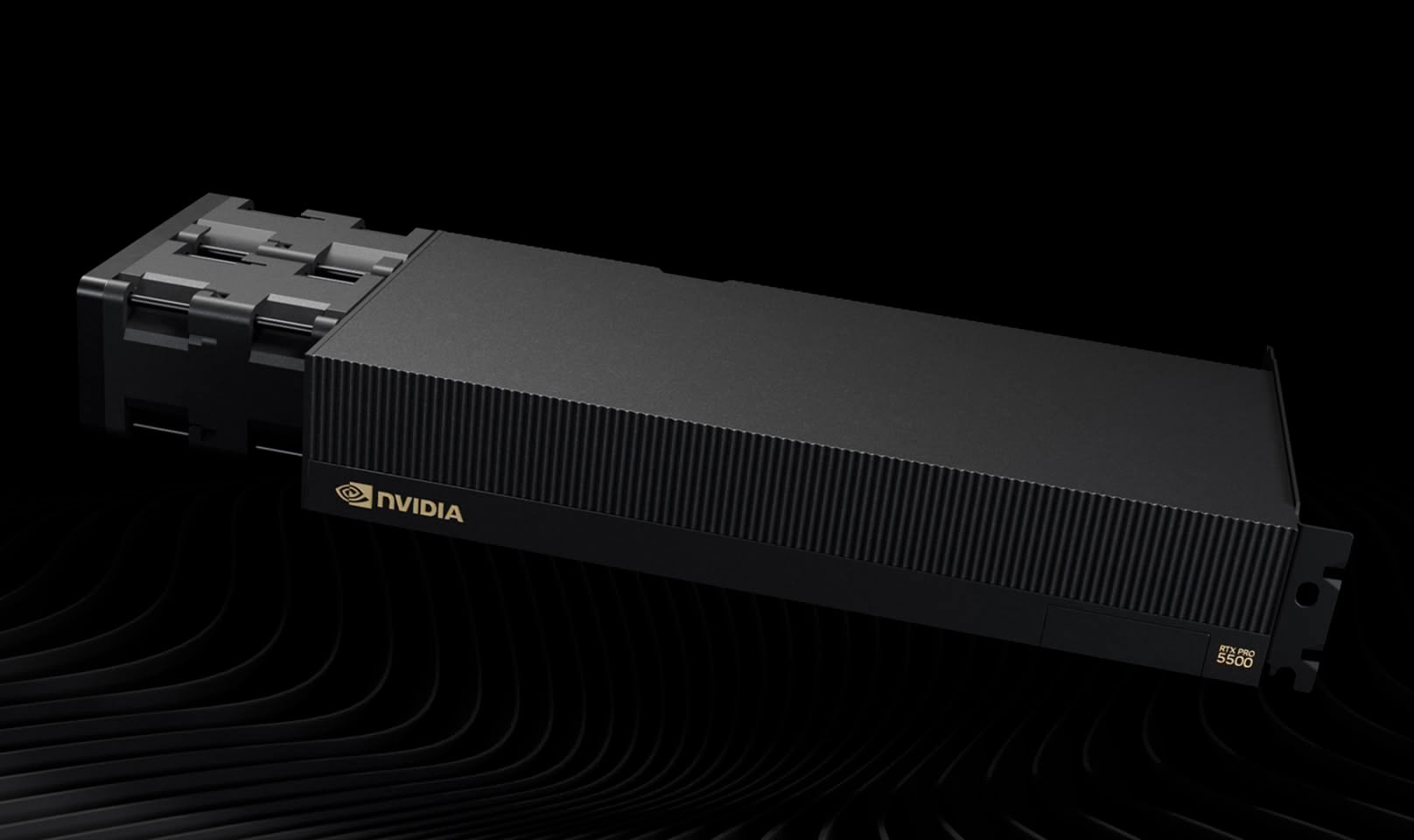
US reseller SHI listed the PNY-built RTX PRO 5500 Blackwell Workstation Edition at $17,999, and at $17,408.63 after its about 3.3% discount — roughly $1,409 above Nvidia's own US official store price of $16,000 for the stronger RTX PRO 6000 Blackwell Workstation Edition. The smaller card is not cheaper to build or slower to sell; it is simply harder to obtain. Export-control routing, an oversized Chinese order book and GDDR7 scarcity have made availability, not the spec sheet, the variable that sets price.
What was actually observed on the retailer page
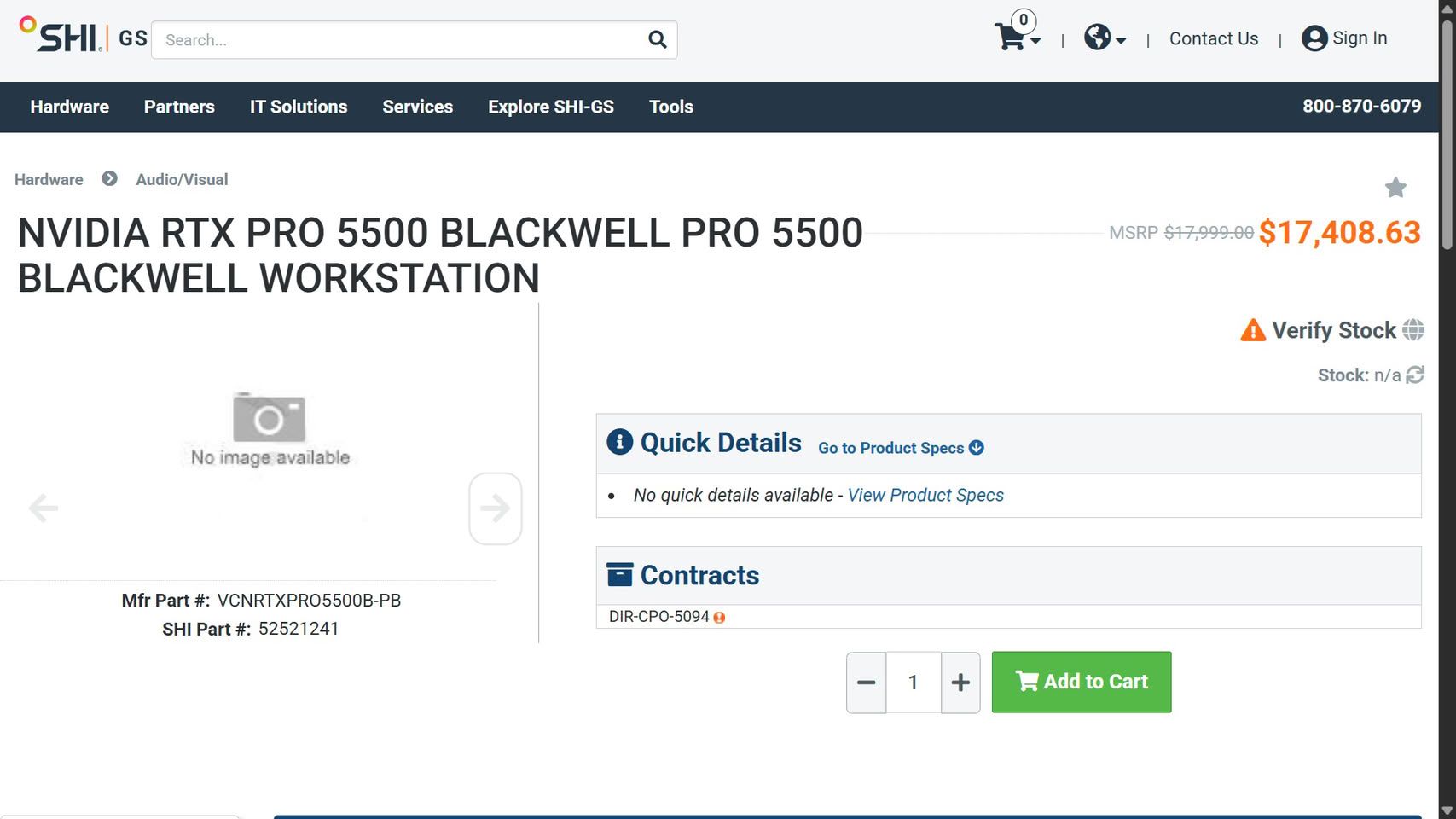
The record starts with a single catalogue entry. The product is PNY's RTX PRO 5500 Blackwell Workstation Edition, manufacturer part number VCNRTXPRO5500B-PB. SHI's product page showed a suggested retail price of $17,999, an advertised discount of about 3.3%, and a discounted transaction price of $17,408.63.
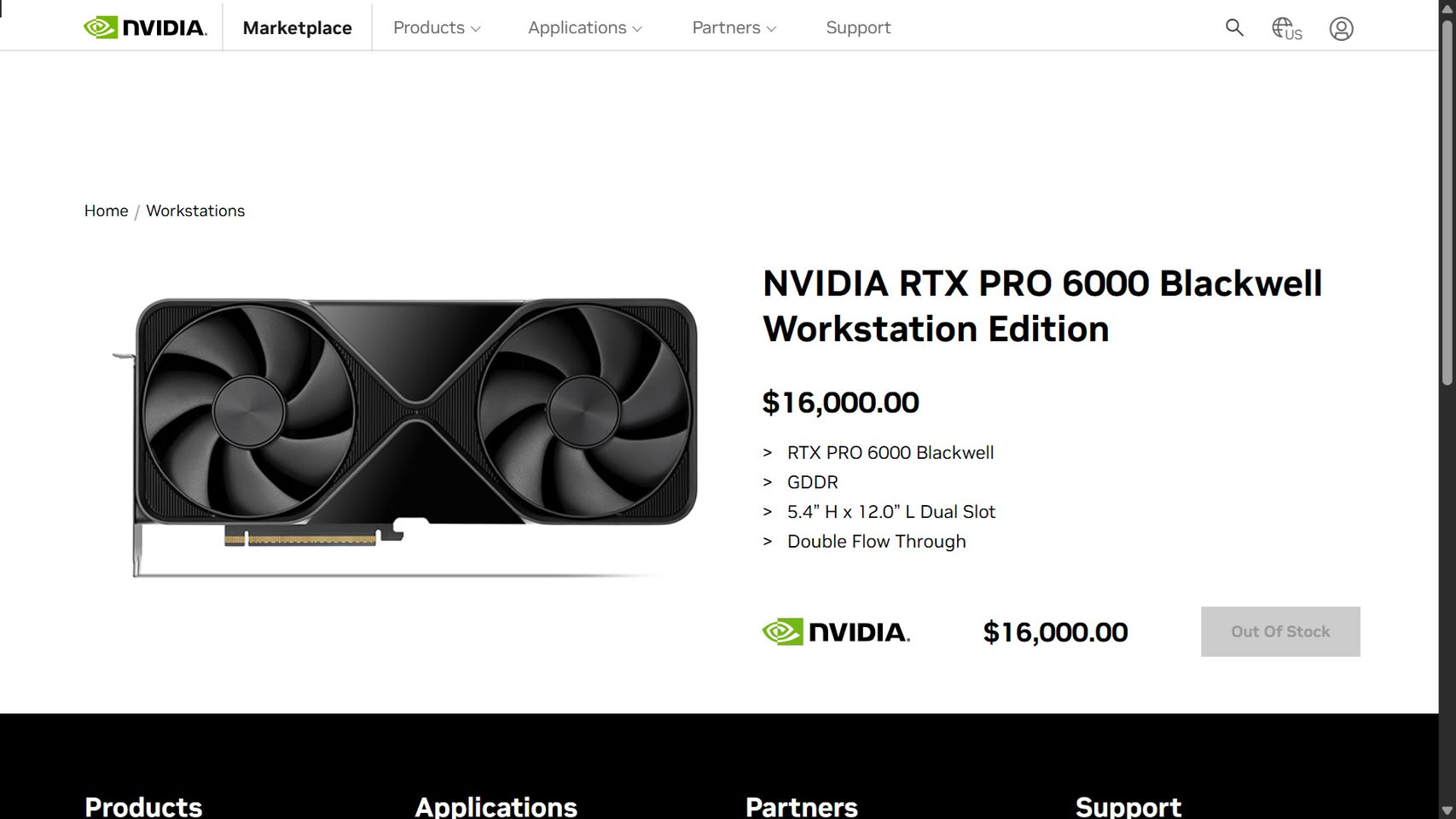
Set against Nvidia's US official store, which prices the flagship RTX PRO 6000 Blackwell Workstation Edition at $16,000, the discounted RTX PRO 5500 quote is still about $1,409 higher. In other words, a buyer at this channel pays a premium for a card with fewer compute cores and less memory than the model sitting above it.
One boundary has to be drawn before any conclusion: $17,999 is a retailer listing, not an announced price. Nvidia has entered RTX PRO 5500 in its product catalogue, but its official product page kept the model marked as coming soon, so no Nvidia-set MSRP existed at the time of observation. Channel quotes are market signals, not price policy.
Why the numbers refuse to add up
Hardware specifications do not explain the premium on their own.
| Metric | RTX PRO 5500 | RTX PRO 6000 | Difference |
|---|---|---|---|
| Architecture | Blackwell | Blackwell | same generation |
| CUDA cores | 21,760 | 24,064 | about 2,300 fewer |
| Memory | 84GB GDDR7 ECC | 96GB GDDR7 ECC | 12GB less |
| Memory interface | 416bit | not stated in the source listing | n/a |
| Memory bandwidth | 1398GB/s | 1792GB/s | about 22% lower |
| Maximum board power | 600W | not stated in the source listing | n/a |
| Observed price | $17,999 ($17,408.63 after discount) | $16,000 | about $1,409 higher |
Two derived ratios make the inversion more concrete. At $17,999, the RTX PRO 5500 asks about $214 per GB of memory; at $16,000, the RTX PRO 6000 asks about $167 per GB. On the discounted figure of $17,408.63 the per-GB cost is still about $207, roughly 24% above the flagship. Measured against compute, the listing works out to about $827 per 1,000 CUDA cores versus about $665 for the RTX PRO 6000. These are GlobalBizSight calculations from the two published list prices, not Nvidia figures, and they restate the same finding: buyers are paying per unit of scarcity, not per unit of performance.
Is $16,000 even a fair baseline?
The comparison is being made on a moving floor. Nvidia's own store price for the RTX PRO 6000 Blackwell Workstation Edition climbed from under $8,500 at pre-order to $13,250 in June 2026, a rise of roughly 57%, and then to $16,000 in August 2026, which Tom's Hardware calculated as a further 20.8% step; Igor's Lab put the total increase from $8,565 at about 86.8%. The flagship benchmark used to judge the RTX PRO 5500 quote is therefore itself a scarcity-adjusted number, and the "inversion" is best read as the whole professional Blackwell line repricing upward, with the supply-constrained model repricing fastest.
What actually drives the premium: three stacked constraints
- Order-book pressure. Reuters reported on 20 October 2026 that ByteDance, Alibaba and Tencent had placed orders for more than 3 million RTX PRO 5500 cards at about $11,400 per card, a combined sticker value above $35 billion. Later reporting suggested Chinese orders in total may already exceed 6 million cards. Against that, Nvidia's projected 2027 output for the model is only around 3 million units. Even generously read, that is demand running ahead of a full year of production capacity.
- Regulatory routing. Nvidia's B300-class products remain blocked for shipments to China, and H200 exports are subject to case-by-case licence review under the US Commerce Department policy revision published in January 2026. RTX PRO 5500 is left as one of the few high-performance Nvidia cards Chinese buyers can still legitimately obtain at scale, so purchase decisions cluster on it. For teams building inference clusters, deliverability now outranks raw specifications.
- Memory bill of materials. Reaching 84GB of GDDR7 ECC on one board takes 28 GDDR7 chips. J.P. Morgan Global Research has estimated that DRAM prices would rise more than 400% between the start of 2024 and the end of 2026, and TrendForce put conventional DRAM contract prices on a 10-15% quarter-on-quarter rise for the fourth quarter of 2026. Graphics memory is made by the same three suppliers that feed high-bandwidth memory for data centres, so every extra gigabyte on a workstation card is an allocation argument with a wafer queue.
Case retrospective: the 20,000-card order that moved a listed company's stock
The clearest illustration of how buyers behave under this kind of scarcity is a procurement episode on the Chinese market rather than the US listing itself.
Process: in October 2026, Chinese listed IT services provider Tianyang Technology (stock code 300872) disclosed through its own social media channel that it had signed a GPU procurement agreement covering 20,000 Nvidia RTX PRO 5500 Blackwell cards, with a formal exchange announcement following on 13 October 2026. Reported estimates placed the contract value in the range of RMB 1.6 billion to RMB 2.4 billion.
Result: the shares rose 12.38% on the day of the disclosure, closing at RMB 16.16, and a further 2.48% in the next session, according to Guancha and Cailianshe reporting. The Shenzhen Stock Exchange then issued a regulatory letter questioning the disclosure, since the product had no announced price and no confirmed delivery schedule at that point.
Channel pricing tells the same story from the demand side. Leiphone reported that expected-delivery quotes for the RTX PRO 5500 in China were concentrated in a band of roughly RMB 80,000 to RMB 120,000 per card, with large-account quotes near RMB 85,000 — close to the about $11,400 unit price reported by Reuters — while channel prices for RTX PRO 6000 server-class cards sat near RMB 180,000 to RMB 190,000. Buyers are effectively paying half of the flagship's channel cost for a card they can actually receive.
Reusable lessons from the case:
- A pre-delivery order fixes volume but not cost. With no official price published, the final invoice can move in either direction after the purchase commitment is made.
- Announcing scarce hardware without a confirmed delivery date creates market and disclosure risk. In this case it drew an exchange regulatory letter.
- Benchmark against delivered alternatives, not list prices. The relevant comparison for the buyer was the channel cost of obtainable capacity, not the specification gap.
- Quote ranges wider than 40% (RMB 80,000 to RMB 120,000) signal that the market has no reliable supply expectation, only priority queues.
Common mistakes when reading a price inversion
- Treating a reseller listing as MSRP. The $17,999 figure came from a channel page, and Nvidia had not published official pricing for the model.
- Reading it as a product-line repositioning. Nvidia did not promote the lower-spec card above the flagship; a constrained SKU simply trades at a premium.
- Comparing prices while ignoring delivery dates. A cheaper card that cannot ship is more expensive than a delivered one when cluster build-out is time-sensitive.
- Assuming more memory always means better value. On a per-GB basis, the RTX PRO 5500 quote was about 24% dearer than the RTX PRO 6000.
What buyers, analysts and investors should do next
- Price from allocation, not from the catalogue. Ask suppliers to state deliverable quantity and delivery window in writing before accepting any quote, and treat verbal availability promises as unpriced risk.
- Track the official-price event. The moment Nvidia posts a public price for RTX PRO 5500, channel premiums above that number become negotiable rather than structural.
- Model memory cost explicitly. With 28 GDDR7 chips per card, GDDR7 and DRAM contract-price moves translate faster into workstation card prices than GPU compute cost does.
- Run a buy-versus-rent check. If scarcity pricing persists into 2027, capacity that can only be rented at current cloud rates may beat a locked-in purchase order whose unit price is still unknown.
- Watch the regulatory dial. Any change in case-by-case licensing for B300 and H200 shipments to China reshuffles which SKU absorbs the demand, and with it where the premium sits.
- For analysts: use price per delivered GB and price per confirmed card as the reporting metric. Price per core no longer discriminates between constrained and unconstrained supply.
Frequently asked questions
Is the RTX PRO 5500 really more expensive than the RTX PRO 6000?
Not officially. The comparison comes from one US retailer: SHI quoted the PNY RTX PRO 5500 Blackwell Workstation Edition at $17,999, or $17,408.63 after an about 3.3% discount, while Nvidia's US official store lists the RTX PRO 6000 Blackwell Workstation Edition at $16,000 — a gap of about $1,409 in favour of the flagship on the official channel.
Why would a weaker card carry a higher price?
Because the constraint is supply, not performance. The RTX PRO 5500 has 21,760 CUDA cores, 84GB GDDR7 ECC memory on a 416bit interface and 1398GB/s bandwidth, all below the RTX PRO 6000's 24,064 cores, 96GB and 1792GB/s. What it has instead is status as one of the most powerful Nvidia cards Chinese buyers can still obtain, with reported orders of more than 3 million cards against expected 2027 output of around 3 million units.
Will the premium last?
It depends on three variables that are all observable: whether Chinese mega-orders convert into delivered volume, whether Nvidia scales output beyond the roughly 3 million units projected for 2027, and whether GDDR7 pricing keeps climbing. If order volume is confirmed while capacity stays flat, the shortage premium should persist; if memory contract prices stabilise and licensing changes, channel quotes typically fall back first.
Does this mean Nvidia is raising professional GPU prices generally?
The direction is visible, but it predates this listing. Nvidia's store price for the RTX PRO 6000 Blackwell Workstation Edition moved from $13,250 to $16,000 during 2026, an increase of about 20.8% on Tom's Hardware's tracking, before the RTX PRO 5500 quote appeared. Input costs and allocation are repricing the whole tier.
Reference sources
- Reuters, exclusive report on ByteDance, Alibaba and Tencent orders for Nvidia RTX PRO 5500 cards (20 October 2026): https://www.reuters.com/business/retail-consumer/bytedance-alibaba-tencent-place-over-35-billion-worth-nvidia-chip-orders-2026-10-20/
- SHI product listing for the Nvidia RTX PRO 5500 Blackwell Workstation Edition (part VCNRTXPRO5500B-PB): https://www.shi.com/product/52521241/NVIDIA-RTX-PRO-5500-BLACKWELL-PRO-5500-BLACKWELL-WORKSTATION
- Tom's Hardware on Nvidia's RTX PRO 6000 Blackwell price increases through 2026: https://www.tomshardware.com/pc-components/gpus/nvidia-doubles-rtx-pro-6000-blackwells-msrp-to-a-staggering-usd16-000-96gb-card-started-pre-orders-below-usd8-000-last-year
- Igor's Lab on RTX PRO 6000 Blackwell reaching $16,000: https://www.igorslab.de/en/nvidia-rtx-pro-6000-blackwell-16000-dollar-96-gb-workstation-gpu-price-increase/
- US Federal Register, Revision to License Review Policy for Advanced Computing Commodities (January 2026): https://www.federalregister.gov/documents/2026-01-15/2026-00789/revision-to-license-review-policy-for-advanced-computing-commodities
- J.P. Morgan Global Research on the AI-driven memory shortage and DRAM price inflation: https://www.jpmorgan.com/insights/global-research/artificial-intelligence/dram-memory-shortage-from-ai
- Guancha reporting on Tianyang Technology's 20,000-card GPU purchase agreement and the exchange's regulatory letter: https://www.guancha.cn/CaiJing/2026_10_20_905010.shtml
- Leiphone reporting on RTX PRO 5500 channel quote ranges in China: https://m.leiphone.com/category/chips/STx9ZzfDNh5W80Bm.html