
GlobalBizSight DataStories: SoftBank's $3.7 Billion Turbine Loss Signals a Cooling AI Power Trade
The AI power trade is not collapsing, but it has just met its first real demand test. SoftBank Group's $3.7 billion write-down on natural-gas turbine reservations — reported today by The Wall Street Journal — shows that the rush to lock up power for data centers has outrun the market's ability to absorb it. The data-center boom is cooling at the margin, not ending.
The same report can be read two ways. The Journal frames it as a miss for SoftBank Group and its billionaire founder, Masayoshi Son. Heatmap's coverage zeroes in on the turbines — and on what it means when the most aggressive buyer in the queue starts handing product back.
What Exactly Did SoftBank Write Off?
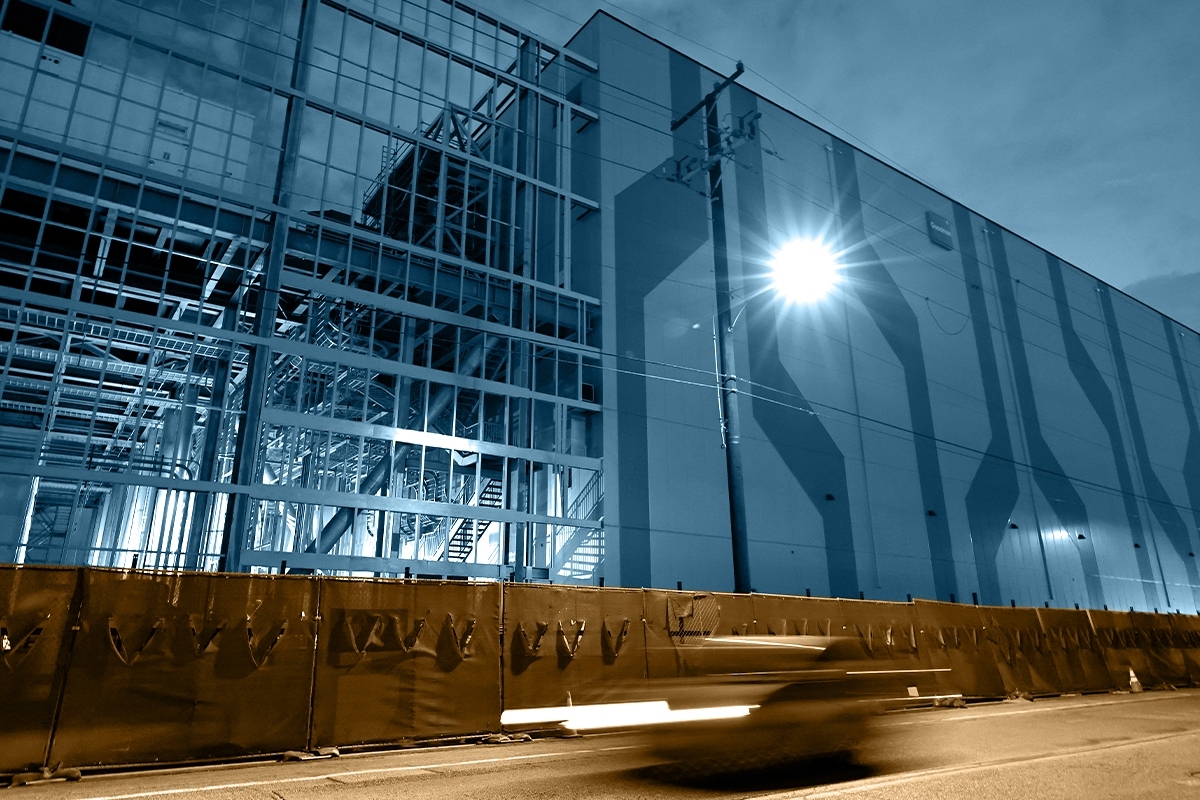
The Journal put SoftBank's turbine reservations at about 13 gigawatts of natural-gas capacity. To put that in perspective, it rivals the peak electricity demand of New York City on a sweltering summer afternoon. SoftBank is now expected to walk away from reservations for about four gigawatts, returning them to manufacturers. The remaining 9 gigawatts was already earmarked for the Trump-backed OpenAI data center in Pike County, Ohio.
The accounting is unusually blunt. SoftBank said it took a $2.85 billion loss on non-refundable advance payments used to secure manufacturing capacity and equipment, plus an additional $880 million tied to contract commitments, according to a Morningstar report. Cumulative payments under those arrangements reached $9.48 billion by 30 September, one analysis of the disclosures found. The write-down is the cost of changing procurement plans, not a cash drain that threatens the balance sheet overnight.
One thing this news cannot quite tell us is what type of turbine set-up will be used in the Pike County facility, which, if completed, would be the world's largest gas-fired power plant. Recent public filings indicate the plant will skip the more efficient combined-cycle configuration, leaving its carbon intensity above most other new natural gas plants.
Why Are Gas Turbines the Bottleneck for AI Data Centers?
The bulk of the reserved equipment reportedly came from GE Vernova, a top global maker of gas turbines. GE Vernova's gas turbine order book has been full for nearly two years, and the queue now extends into 2031. The shortage is structural: the company's gas turbine backlog reached 116 GW in the second quarter of 2026, and it has said heavy-duty turbine deliveries are sold out through 2028.
CEO Scott Strazik expects gas turbine reservations to be sold out through 2030 by the end of 2026, according to Utility Dive. Faced with that queue, data center developers have turned to dirtier stopgaps — diesel generators and even retired jet engines. The New York Times reported on 3 November that old, polluting jet engines are being scavenged from boneyards and converted into generators to meet AI's insatiable power needs.
The demand side is not standing still. The International Energy Agency projects that data centre electricity consumption will more than double to around 945 TWh by 2030, growing roughly 15% per year — more than four times faster than total electricity demand. Grid Strategies, a US utility consultancy, aggregates data center load forecasts for 2030 to about 90 GW, nearly 10% of forecast peak load. SoftBank's problem, in that context, is not that demand disappeared; it is that the company reserved capacity faster than it could convert reservations into bankable projects.
What Does the Market Rout Tell Us About AI Demand?
SoftBank's write-down landed on an already shaky market. Nvidia shares have fallen 11% over the past five days, with another 8% dropped in after-hours trading after the Jensen Huang turmoil broke. The New York Times reported that Nvidia is preparing to push Jensen Huang out as CEO after allegations tied to an affair with a Chinese woman said to be a spy. The same report said Huang had at least one other affair with a Nvidia executive.
The Huang story broke on top of an already weak tape. Alphabet, Meta, and Microsoft have all lost ground month to date. Before that, Nvidia was already about 10% lower on the month. Micron and Applied Materials have each fallen more than 25% in that span, while GE Vernova and Oklo are down nearly 20%. Coreweave did bounce on an earnings beat today, but it is still 24% lower on the month and nearly 50% below its May level.
| Company | Move | Period |
|---|---|---|
| Nvidia | -11% | the past five days |
| Nvidia | -8% | after-hours since the ouster news |
| Alphabet, Meta, Microsoft | negative | on the month |
| Nvidia | -10% | on the month before the scandal |
| Micron, Applied Materials | -25%+ | same period |
| GE Vernova, Oklo | -20% | same period |
| Coreweave | -24% | on the month |
| Coreweave | -50% | since May |
Huang has assembled a sprawling, sometimes circular web of energy-related investments — Emerald AI, which helps data centers flex their electricity consumption, and Redwood Materials, the battery recycler run by former Tesla executive J.B. Straubel. He has used Nvidia's enormous balance sheet to absorb risk across a web of AI companies, helping make the AI trade the biggest story in American markets.
That balance sheet is now under pressure. Should the chip designer's financial network unravel — or should the next CEO prove less tolerant of risk — the fallout would reach far beyond Nvidia.
Is the Data-Center Boom Peaking, or Just Maturing?
Step back, and the AI bubble has given way to something muddier. The rout is not universal. Anthropic looks set for one of the largest IPOs ever in the next week, though perhaps at a valuation short of what its investors once imagined. Fortune reported on 10 November that Anthropic's shares are expected to price at $70 to $78, implying a valuation around $1.3 trillion — still enormous, but below the $1.5 trillion target bankers had weighed. And the underlying AI technology continues to improve at a rate that worries even its boosters.
Still, even as data center and AI politics prepare to dominate the new Washington, it is fair to ask whether data centers as a mainstream economic trend have already peaked. In the midterms, Americans voted for a quieter AI boom. They may get one sooner than they expected.
FAQ: The AI Power Trade After SoftBank's Write-Down
Does SoftBank's turbine write-down mean the AI data-center boom is over?
No. It means the boom is entering a more discriminating phase. Demand forecasts still point to sharply higher electricity use through 2030, but the marginal buyer — the one paying the highest price for the earliest slot — is now rethinking. A cooling at the margin is not a collapse.
Why are gas turbines in such short supply?
Manufacturing capacity is finite and lead times are long. GE Vernova's order book has been full for nearly two years, its backlog reached 116 GW in the second quarter of 2026, and its waiting list stretches into 2031. Data center developers that cannot wait are turning to diesel generators and converted jet engines.
What happens to the turbines SoftBank is giving back?
The roughly four gigawatts of released reservations go back to their manufacturers, which can resell the slots — GE Vernova has said deposits and capacity reservation fees are non-refundable, so the company keeps the cash and keeps the slot. That is why the write-down hurts SoftBank's earnings more than the physical equipment market.
How exposed is Nvidia to the AI power trade?
Nvidia is exposed through both its chip demand and its investment network. Huang backed energy-adjacent companies such as Emerald AI and Redwood Materials, using the balance sheet to de-risk the AI ecosystem. A leadership change or a lower risk appetite at the top could ripple across that network.
What should investors and operators watch next?
Watch three signals: whether more turbine reservations are released across the industry, whether data center power contracts are renegotiated rather than canceled, and whether the Anthropic IPO prices near the top of its range. Those three data points will tell you whether this is a pause or a turning point.
References
- The Wall Street Journal, "Masayoshi Son's Huge Bet on Electrical Turbines Backfires" — https://www.wsj.com/business/energy-oil/masayoshi-sons-huge-bet-on-electrical-turbines-backfires-b51f160c
- Morningstar, "Elon Musk was half-right in his comment last week about SoftBank back-pedaling on a gas turbine order" — https://www.morningstar.com/news/marketwatch/2026111044/elon-musk-was-half-right-in-his-comment-last-week-about-softbank-back-pedaling-on-a-gas-turbine-order
- Utility Dive, "GE Vernova expects to end 2025 with an 80-GW gas turbine backlog" — https://www.utilitydive.com/news/ge-vernova-gas-turbine-investor/807662/
- IEA, "Energy and AI: Energy demand from AI" — https://www.iea.org/reports/energy-and-ai/energy-demand-from-ai
- Grid Strategies, "National Load Growth Report 2025" — https://gridstrategiesllc.com/wp-content/uploads/Grid-Strategies-National-Load-Growth-Report-2025.pdf
- The New York Times, "Old, Polluting Jet Engines Are Being Scavenged to Power Data Centers" — https://www.nytimes.com/2026/11/03/climate/jet-engines-ai-data-center-generators-boneyard.html
- Fortune, "Anthropic's lower-than-expected IPO valuation" — https://fortune.com/2026/11/10/anthropic-lower-than-expected-ipo-valuation-smart-strategy-or-red-flag/