
GlobalBizSight GlobalMarkets Playbook: EU Parcel Fees, AI Cargo Demand and Fuel Risks for 2027 Air Freight
EU low-value parcel fees are not closing Europe air freight; they are rerouting it. The July EUR 3 duty and November EUR 2 handling fee cut cross-border parcel volume, yet November general-cargo shipping, passenger-flight cuts, capacity shifts toward the United States and AI-related freight keep peak-season rates firm. Exporters should plan for fuel volatility, lane substitution and stricter 2027 contract terms.
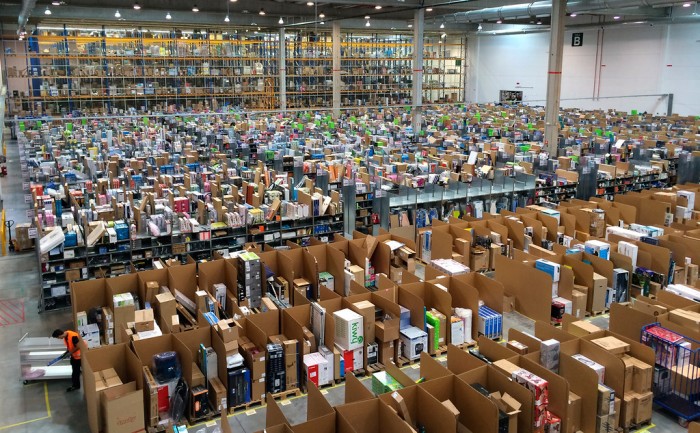
What did the EU parcel-fee change do to Europe air cargo?
Conclusion: The policy change reduced direct parcel volume, but it did not remove freight demand. According to interviews reported by Cailian Press, some Europe-bound cross-border e-commerce platforms saw volumes fall by about 50% from pre-policy levels, continuing the decline after the July EUR 3 tariff. Xinhua reported that the European Union introduced a EUR 2 handling fee on November 1. European Commission customs guidance describes the temporary EUR 3 duty from July 1, 2026 and the related Union handling rules.
During the 9th CIIE, Jakob Jeppesen, chief executive of DSV Asia-Pacific air and ocean freight, told Cailian Press: “Cargo from China to Europe has indeed declined. Even so, Europe’s e-commerce platform user base remains very large, so demand still exists. Many e-commerce platforms are gradually expanding into the Middle East and South America, which will also extend cross-border e-commerce transport demand to those regions.”
This week, Europe spot rates moved slightly higher. Three drivers explain the move: November is a general-trade export peak, which fills the parcel gap; high aviation fuel prices and weak passenger demand have reduced European passenger flight frequency; and some airlines have shifted capacity to U.S. routes.
Which lane prices now tell decision-makers?
Conclusion: Rate direction is diverging by lane, not by mode. During the current next-year block-space signing season, forwarders and airlines are increasingly showing a preference for the U.S. lane and caution on Europe.
Air-freight forwarders quoted one South China outbound route directly to Cailian Press: “The price for shipments from South China to Australia has reached above RMB 30 per kg, while its historical rate is usually around RMB 20 per kg, and early this year it was even in single digits.”
| Lane or contract reference | Market signal | Practical reading |
|---|---|---|
| South China to Australia | Spot prices reached above RMB 30 per kg, versus a historical rate of around RMB 20 per kg and early-year single-digit levels. | Use as an early-warning case: when parcel growth meets limited aircraft space, a quiet lane can reprice quickly. |
| South China to Europe | Spot prices are around RMB 45 per kg, a small rebound from a month earlier. | Do not read the rebound as parcel demand returning; it reflects general cargo and capacity constraints. |
| South China to the U.S. | Spot prices are around RMB 60 per kg, higher than the end-of-August range of RMB 43 per kg to RMB 50 per kg, when the low season was anything but weak. | Lock longer-term allocation if your freight competes with peak retail and AI hardware. |
| Next-year U.S. East Coast quotes | Forwarders say airline quotations for next-year block-space agreements are around RMB 50 per kg for the U.S. East Coast. | Compare the base rate separately from fuel and security surcharges before signing. |
Why are AI and semiconductor shipments keeping peak season firm?
Conclusion: AI infrastructure has become a non-e-commerce demand buffer. During the CIIE, Cathay Airways (00293.HK) and its Cathay Cargo unit, plus UPS, all pointed to AI-related demand.
Jeppesen said global data-center construction is driving shipments of IT equipment, cooling systems, server racks and memory. Because data centers consume large amounts of power, energy availability is shaping market location; North America, Europe and Australia are viewed as attractive, which can strengthen the lanes serving them. For sector context, AI chip demand is also the core force behind our chip supercycle scorecard.
Risk: this support is not frictionless. Cailian Press notes reports of protests in several European countries calling for a pause in data-center construction. If permitting slows, demand for racks, cooling units and memory hardware may shift by geography rather than disappear.
What are shippers and airlines doing about capacity and product mix?
Conclusion: Airlines are adjusting networks, not waiting for rates. Air China Cargo (001391.SZ), whose air-cargo market focus is concentrated in Europe and North America, has said it arranged route plans in response to European tariff-policy effects and stronger U.S. air-cargo demand, using route-network adjustment to adapt.
China Eastern Airlines Logistics (601156.SH) runs full-cargo routes covering Chicago, Los Angeles, New York, Frankfurt and Amsterdam. The company has said its cross-border e-commerce solution is affected by major European and U.S. markets removing low-value parcel duty-free treatment, so it is expanding China Eastern cold-chain origin-to-market services and customized logistics solutions.
Why should 2027 buyers treat fuel as a contract variable?
Conclusion: Fuel, not base rate alone, is the key swing factor. UPS China president Wang Yiwei said during the CIIE that the air market is in its traditional peak season, so short-term rates will remain relatively high; however, judging the coming year requires accounting for fuel-price and supply-demand changes, making an accurate call difficult now.
Jeppesen was more explicit: “I think next year’s base-rate situation will be close to this year’s, but fuel prices are high; current fuel cost is close to $2 per kg, while it used to be around 50 cents per kg, and this may be the biggest factor affecting air freight transport cost next year.”
IATA's June 2026 air-cargo release shows why a single-year view is risky: global demand growth was 8.5%, while capacity growth was 4.4%; European carriers had demand up 6.9% and capacity up 3.7%. When capacity adds slowly, fuel moves can amplify price swings, especially on lanes where parcel cargo has already been displaced by general cargo or AI equipment.
Practical checklist: how to protect margins before 2027 contracts
- Rebuild landed cost per parcel: model the July EUR 3 duty and November EUR 2 handling fee separately, not blended into air freight.
- Split Europe quotes into direct parcel, consolidated general cargo and warehouse inbound rates; do not assume one spot price represents the lane.
- Test Australia as an overflow market only after checking capacity. A lane once around RMB 20 per kg can move to above RMB 30 per kg if demand grows faster than aircraft space.
- For AI-related cargo, ask whether shipments qualify as high-yield industrial freight and whether the airline can guarantee main-deck space for server racks, cooling systems and memory.
- In next-year block-space negotiations, request a rate card that separates base freight, fuel surcharge, security surcharge and peak-season premium. Use the U.S. East Coast quote of around RMB 50 per kg as the baseline, then compare all-in cost.
- Build a Middle East and South America fallback lane for e-commerce demand that no longer works as direct-to-consumer parcels into Europe.
What are the three biggest misreads?
- Treating a Europe rate rise as e-commerce recovery. Parcel volumes remain down; general cargo and capacity shifts drive the move.
- Signing next-year rates as a single number. Fuel cost at $2 per kg is too volatile to be hidden inside base freight.
- Assuming AI demand is unlimited. If European data-center projects face permitting or protest delays, hardware flows can reroute.
Frequently asked questions
Is Europe air freight losing demand because of parcel fees?
Conclusion: no, not as a category. Cailian Press sources say direct cross-border parcel volumes into Europe are down about 50% from pre-policy levels, but November general-cargo shipping, capacity shifts and AI-related freight keep lane demand present. Jeppesen says the European e-commerce user base remains large, while platforms extend to the Middle East and South America.
Should shippers move volume out of Europe now?
Conclusion: diversify, not abandon. Keep Europe capacity because consumer demand and industrial cargo remain strong, but build test lanes in the Middle East and South America and monitor Australia capacity before committing high-volume parcel programs.
What will drive 2027 air freight costs most?
Conclusion: fuel and capacity allocation. Base rates may resemble this year, but fuel cost near $2 per kg, versus historical around 50 cents per kg, can dominate total cost and distort rate-card comparisons.
References and market context
- European Commission customs guidance on the temporary EUR 3 duty, taxation-customs.ec.europa.eu.
- IATA air-cargo market release, June 2026, iata.org.
- Cailian Press report on EU parcel fees, peak season, AI freight and 2027 expectations, cls.cn.