
GlobalMarkets Review: Thailand’s Three-Tier 35% EV Excise Tax Forces a Build-Local or Exit Decision
For cross-border vehicle exporters, Thailand has changed the unit of competition: market access is no longer judged only by landed price, but by whether a brand can convert sales into local industrial substance. Reuters reported that Thailand’s cabinet approved raising the excise tax on fully imported electric vehicles to 35% from 10%, with the change taking effect from January 1, 2027. The GlobalMarkets view is that this is a three-tier selection mechanism rather than a simple tax increase.
Tier map: who pays what, and why
| Operating position in Thailand | Expected tier logic | Core decision question | Strategic reading |
|---|---|---|---|
| Factory operating, high local content | Lowest tax tier | Can parts, assembly and supply-chain documents prove industrial substance? | Best defensive position; policy rewards capital already committed. |
| Factory or approved production plan, some imported parts | Middle tier | Is localization progressing fast enough to avoid pure-import treatment? | Transitional position; documentation and supplier qualification matter. |
| Fully imported, no local production plan | 35% highest tier | Can demand absorb a price jump of more than one quarter without brand damage? | Weakest position; pricing power must be verified before committing volume. |
Why excise replaced tariffs as the decisive lever
Under ASEAN-China free trade arrangements, Thai import tariffs on many China-origin electric vehicles sit at zero, so customs duty alone cannot be raised to protect local production. The Thai government therefore moved the adjustment lever to excise tax. This also explains why local content has become the scoring metric: the Thai Ministry of Finance is treating local content not merely as assembly, but as sourcing linked to higher-value parts such as motors and batteries.
The Nation Thailand reported that the policy is designed to attract manufacturing investment and support existing local manufacturers. For exporters, the practical conclusion is that the Thai market now prices regulatory distance as a real operating risk.
Case: one vehicle, one tax rate jump, one customer-facing price problem
The Thai Ministry of Finance example makes the conversion simple. For one vehicle priced at 1 million baht (approximately RMB 200,000), a 10% excise rate creates 100,000 baht of tax. If the highest rate of 35% applies, the price must rise by at least 250,000 baht (approximately RMB 50,000), a price increase of more than one quarter. This is not a marginal cost adjustment; it resets retail psychology, dealer margins, inventory turns and residual-value assumptions.
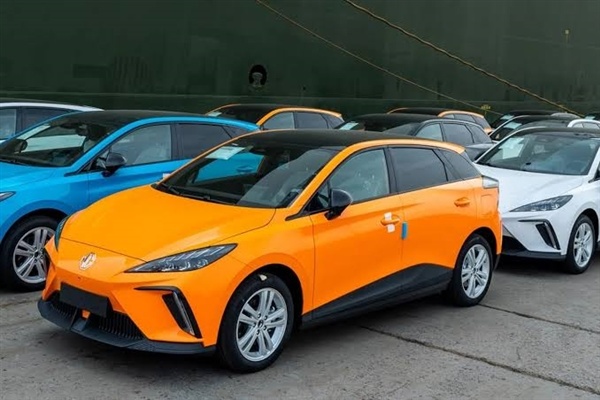
Case contrast: localisation as tax architecture
For already committed China-based brands, the same policy can become a moat. BYD has production in Rayong province; Changan Automobile established its first overseas new-energy manufacturing base in Thailand; Chery and GAC Aion are also advancing localisation. Their advantage is not simply lower tax, but eligibility for the tier logic that links investment, local content and production plans.
Common misconceptions
- Zero FTA tariff equals zero market risk. No: excise can override tariff preference and change landed economics.
- Any assembly automatically lowers tax. No: local content and parts qualification determine the tier.
- Export-only brands can wait until 2027 without consequence. No: dealer planning, pricing and inventory decisions are already affected.
- Higher tax only matters to small local brands. No: large import-dependent platforms face the same landed-cost shock.
Action list for GlobalMarkets readers
- Re-score every Thailand SKU against the three tiers before quoting dealers.
- Build a supplier file that proves local content depth, not just final-assembly location.
- Model three scenarios: export-only, assembly partnership and full factory entry.
- Reset 2027 price elasticity tests before signing long-term dealer incentives.
- Use public sourcing and regulatory documentation as an audit asset, not as after-the-fact proof.
FAQ: what decision-makers ask first
Does the 35% rate apply to all imported electric vehicles?
The reported rule targets fully imported electric vehicles without a qualifying local production position. Reuters and The Nation Thailand describe the policy as a tiered excise structure tied to local manufacturing and component sourcing.
Why does local content matter if the vehicle is already sold in Thailand?
Because the tax framework rewards industrial substance. A sales presence alone does not move a brand into a lower tax tier; local content, production plans and documented parts sourcing do.
Is the ASEAN-China zero-tariff channel still useful?
It can still remove import duty pressure, but it does not neutralise Thai excise exposure. For GlobalMarkets readers, the correct comparison is not tariff alone; it is total landed tax plus qualification risk.
In this cycle, Thailand is not simply making imported electric vehicles more expensive. It is turning tax classification into a market-entry filter. For China-based exporters, the choice is increasingly binary: deepen local substance fast enough to sit inside the favorable tier, or accept a 35% ceiling that can erase the price advantage that made the category scalable.