
Case Files in Quantum: What Three Startup Audits Revealed Before World Quantum Festival 2026
Quantum founders raise on three proofs, not one: technology a rival cannot copy, an intermediate product a customer buys today, and a credible route to paying users by the time the machine arrives. That was the bar applied by Nardo Manaloto, managing partner of Qubits Ventures, and Owen Lozman, managing partner of the Copenhagen-based fund 55 North, in conversations ahead of World Quantum Festival 2026 in Cannes, France. Their case files explain why the test has tightened: capital is entering the sector far faster than commercial evidence.
Why the roadmap is under scrutiny in 2026
Short answer: the funding curve and the revenue curve no longer match, so investors now underwrite the path between them rather than the physics. Three verifiable data points set the stage for every discussion on the Cannes circuit.
- McKinsey's Quantum Technology Monitor 2026 reports that investment in quantum technology start-ups reached $12.6 billion in 2025, 6.3 times higher than in 2024, while commentary on the same research has sector-wide revenue crossing the $1 billion mark in 2025 and heading toward roughly $4.4 billion by 2028.
- The Quantum Industry Association (QED-C) put private venture investment in the quantum industry at $4.9 billion in 2025, more than doubling the previous record year.
- QED-C's 2026 quantum sensing forecast sizes the sensing market at approximately $470 million in 2025, projected to reach $1.1 billion by 2028.
The two funding figures are measured differently — the McKinsey number counts total start-up investment, while QED-C reports private venture rounds — but both describe the same directional surge. GlobalBizSight's reading of the gap: roughly an order of magnitude more equity is chasing an industry whose entire billable output still fits inside a single mid-cap software company. That asymmetry is precisely what Manaloto and Lozman are trying to discipline, and it is why a scientific milestone no longer closes a round on its own.
Case 1: the photonic start-up asked what it can sell on the way to a decade
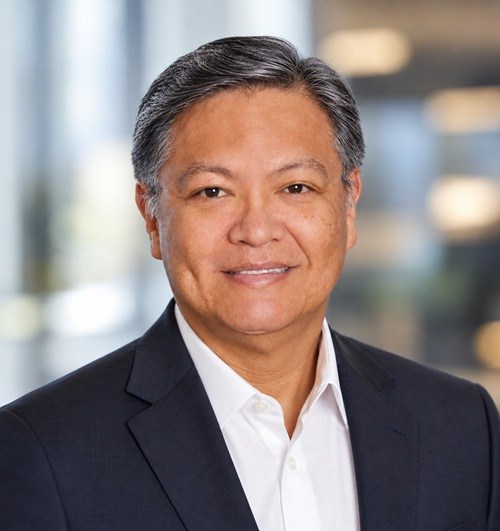 The first case file is an interrogation, not a pitch. Nardo Manaloto, managing partner of Qubits Ventures, pressed the founder of an unnamed start-up building a photonic quantum computer to lay out a commercial roadmap. The answer the founder had already given was the one many hardware teams default to: the ultimate product would require a decade. What Manaloto wanted to know was what the company could sell along the way — a question that converts a science narrative into a cash-flow narrative.
The founders proposed a ladder: first a photon detector, then a chip, then the computer itself. Manaloto's acceptance condition was structural rather than sentimental. Each intermediate product must solve a customer problem and carry commercial value on its own, while simultaneously advancing the long-term technology roadmap. A rung that only exists as a fundraising prop fails; a rung with its own buyers passes. "The roadmap also extends to the business side," he told EE Times.
The ladder is not a rhetorical invention. Independent analysis from McKinsey Tech Forward treats superconducting single-photon detectors as a missing piece for building quantum computers at scale, which means the first rung of that roadmap targets an acknowledged industry bottleneck with real buyers today. Component-first operators already occupy the space: Cambridge spin-out Nu Quantum, for example, is listed among quantum network component suppliers for single-photon devices, both sources and detectors. The practical lesson for hardware teams is narrower than the market headline, though. Detector and chip demand is genuine but modest in absolute terms, so an intermediate product buys survivability and process learning — it does not, by itself, produce venture-scale returns. Manaloto makes the same point from the other side: an intermediate product still needs a customer and a credible market.
Case 2: 55 North's bottleneck test and the Monarch Quantum bet
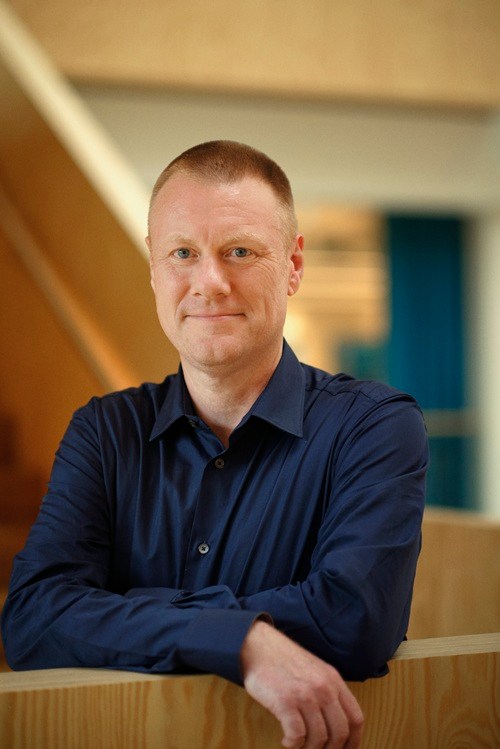 The second case file shows how the same discipline looks from the fund side. Owen Lozman, managing partner of 55 North, a quantum investment fund based in Copenhagen, came up through semiconductor investing, and he carries that pattern into quantum: he looks for start-ups that can solve an industry bottleneck by the time customers urgently need a solution.
His formulation is deliberately not about technical novelty. "Generally in deep tech, we’re not looking for, ‘Does the invention work?’ but, ‘Does it solve a problem at the time at which it’s going to be needed by the customer?’" he told EE Times.
In practice that can mean helping system developers move from laboratory assemblies to reliable, reproducible equipment. Lozman points to 55 North's investment in Monarch Quantum as the worked example: optical modules that can be manufactured consistently become increasingly important as quantum companies professionalize their supply chains. The commercial logic is a manufacturing story before it is a physics story — reproducibility is what turns a lab instrument into a product line.
How the three quantum business types are scored differently
Lozman separates quantum businesses into three types, each with distinct commercial challenges and distinct measures of progress. The comparison below is the most reusable artifact in these case files, because it tells a founder which exam they are actually sitting.
| Business type | What it must prove | What investors test | Dominant failure mode |
|---|---|---|---|
| Component suppliers | Reliable, reproducible equipment as quantum computer builders scale production | Revenue growth, production costs, profitability; Lozman favors technologies serving multiple qubit architectures and several potential customers | Single-customer dependency; a part that only one architecture can use |
| Quantum computer developers | Moving from demonstrating individual qubits to useful, scalable systems | Technical differentiation and scaling approach, including whether the company must build manufacturing capacity itself or can use existing semiconductor infrastructure | Capital intensity outrunning the roadmap; decade-scale timelines with no interim revenue |
| Software and applications companies | Understanding customer problems and preparing solutions for when suitable quantum hardware becomes available | Evidence of customer willingness to pay and a credible fit between product and customer needs | Expanding before the hardware is ready, burning cash without sufficient revenue |
Value before revenue: when the technology is the exit, not the sales line
Early sales demonstrate demand, but they are not the only route by which a quantum company becomes valuable. "In a lot of deep tech, the revenue is rarely the exit trigger," Lozman said, referring to what prompts an acquisition or another opportunity for investors to cash out. "Technology is often the exit trigger."
The mechanics are straightforward: a system developer may lack a capability that a smaller company has developed, and bringing them together can create substantially more value than either business holds separately. Manaloto arrives at the same conclusion from the diligence side, seeing value in defensible intellectual property, specialized engineering capabilities, strategic partnerships, and technologies that address critical industry bottlenecks — even before substantial revenue arrives. Lozman adds a scenario that founders resist: some companies pursuing complete quantum systems may eventually merge or become component suppliers themselves, in which case their technology stays important even if their original business model changes.
Case 3: Probius Bio and the healthcare sensing wedge
Healthcare is the application area that particularly interests Manaloto, and his interest is grounded in operating history rather than market slides. His background includes work with Kaiser Permanente's innovation group and technology fund, where he encountered the practical difficulties of detecting disease earlier and obtaining useful biological information.
He sees opportunity in quantum sensing instruments that could reveal additional information about cellular processes, and — critically for underwriting — some sensing businesses could commercialize instruments and measurements sooner than applications that depend on future quantum computers. That sequencing advantage is measurable: QED-C estimates quantum sensing at roughly $470 million in 2025 rising toward $1.1 billion by 2028, a market that already pays today rather than one that waits for fault tolerance.
Two positions illustrate the thesis. Qubits Ventures has invested in Probius Bio, a Stanford spin-out developing a quantum electrochemical spectroscopy platform. Manaloto describes a system that captures molecular vibrational signatures from biological samples and converts those measurements into biochemical datasets that could support biomarker discovery, drug development, and biological research. He is also evaluating an investment in an unnamed company developing diamond-based quantum sensing technology to investigate free radical activity and oxidative stress within living cells — measurements that could help researchers and pharmaceutical companies study cellular behavior, disease mechanisms, and drug responses.
For Manaloto, selling the instrument is the smaller prize. The larger one lies in translating biological measurements that have been difficult to obtain into information that researchers, pharmaceutical companies, and eventually healthcare providers can act on, with research applications providing an initial market before diagnostic or therapeutic uses are established. "What do I do with that data? How do I translate it? How can pharma use it?" Manaloto said.
Those three questions mark the distance between producing an unfamiliar measurement and delivering a usable product. A researcher needs to know what the measurement reveals about the biological sample. A clinician needs evidence that it informs a decision. The technology must fit the way these users already work, or offer enough benefit to persuade them to change practice. Integration with existing systems and compliance requirements add further work before a healthcare organization becomes a repeat customer, Manaloto said.
Case 4: the leak between the buyer and the beneficiary
The fourth case file is a pricing problem disguised as a technology story. Lozman identified a hurdle that rarely appears in quantum decks: the company selling a sensor may be separated from the organization receiving its greatest economic benefit. "It’s hard making money out of a sensor," he said. "It’s hard to get people to recover the value if the buyer and the beneficiary are not close in the value chain."
A measurement can improve a downstream process while leaving the instrument supplier struggling to capture a sufficient share of the benefit. The fix is commercial, not scientific: the business model must tie the product's price to an outcome the customer recognizes and will pay for. Lozman sees potential opportunities in pharmaceutical research for instruments that simplify drug discovery, improve toxicology assessment, or support better clinical-trial endpoints — cases where the buyer, a research organization, is close enough to the beneficiary to feel the value directly.
Qualification remains slow. Drawing on experience across electronics and healthcare, Lozman noted that customers have strong reasons to protect processes that already work, so a new technology must solve a sufficiently important problem to justify its introduction. The same caution becomes a moat once a product is established. "Once you’re in, it’s very hard to get displaced," Lozman said.
The cash-burn clock: survivability as the quiet KPI
For applications companies, timing creates a particular danger. They need close customer relationships and a clear understanding of product requirements, yet growing before suitable hardware exists can leave them spending heavily without the expected revenue.
"If you’re a year or two early and you’re burning too much cash, it’s very, very difficult to sustain your company," Lozman said. "Survivability will be a key kind of KPI for a lot of the assets in this space."
Read against the funding data, the warning is specific. When start-up investment multiples year over year, the temptation is to hire and expand at the pace of the raise rather than the pace of the installed hardware base. Manaloto's insistence on intermediate products addresses exactly this financing problem: the aim is to build revenue and company value while progressing toward the final technology.
Five common mistakes in quantum diligence
- Treating scientific progress as a company. Promise, customers, financing and timing are separate judgments.
- Naming an intermediate product without naming its buyer — a rung with no customer is a milestone, not a revenue line.
- Judging a component supplier on qubit-roadmap excitement rather than on revenue growth, production costs and profitability.
- Funding an applications company to scale ahead of hardware availability, converting a head start into a cash problem.
- Assuming the instrument purchaser captures the value. If buyer and beneficiary sit far apart in the chain, price will not follow the benefit.
Action checklist for founders and sector investors
Founders raising in this cycle should be able to answer:
- Which rung do we sell in the next 18 months, to which named customer type, at what price?
- Does that rung use the same engineering capability as the final machine, or is it a detour?
- Which bottleneck do we remove for someone who is already budgeting for it?
- What is our survivability runway if the hardware schedule slips a year or two?
Investors and corporate decision-makers should be able to answer:
- Which of the three business types is this company, and are we applying that type's metrics?
- Is the defensible asset the product line, the intellectual property, the engineering team, or the partnership position?
- Who pays, who benefits, and are they close enough in the value chain for price to capture value?
- What is the exit mechanism if revenue never becomes the trigger — acquisition of capability, or consolidation into a system developer?
FAQ: what these case files imply for the sector
What do quantum investors check before a machine exists?
Three things: defensible technology, intermediate products with their own customers, and a credible path to paying users at the right time. Manaloto's roadmap interrogation and Lozman's bottleneck test are two framings of the same requirement.
Does revenue drive quantum company valuations?
Not always, and sometimes not at all. Lozman is explicit that in much of deep tech "Technology is often the exit trigger," with capability gaps at system developers creating acquisition value ahead of large sales.
Which quantum segment is monetizing first?
Enabling hardware — components, optical modules and instruments — and sensing, because they do not require fault-tolerant machines. QED-C's forecast of about $470 million in 2025 rising to $1.1 billion by 2028 for quantum sensing reflects near-term paying demand.
What is the biggest risk for quantum software companies?
Timing. Being a year or two early while burning cash makes the company very difficult to sustain, which is why survivability functions as a KPI for assets in this space.
How should a healthcare quantum sensing start-up price?
Against an outcome the buyer recognizes, not against the novelty of the measurement. That usually means starting with research and pharmaceutical workflows, where buyer and beneficiary sit close together, before clinical or diagnostic sales cycles that require integration and compliance work.
Where these case files continue
Both Manaloto and Lozman will attend the World Quantum Cannes Festival on November 17–18, where quantum technology providers, investors and potential customers meet to discuss applications and commercialization. For investors, those conversations are a source of primary evidence: how prospective users define their problems, and what they might pay to solve them.
The deeper lesson from these four case files is that quantum is being re-rated as a sector before it is proven as a product category. Capital is abundant, revenue is thin, and the companies that hold their valuation will be the ones whose roadmap is legible as a business — a capability that solves a consequential problem, reaches the market at the right moment, and leaves its developer with a defensible position. The machine is the destination; the roadmap is the asset being priced.
References
- McKinsey & Company, Quantum Technology Monitor 2026: A commercial tipping point — https://www.mckinsey.com/capabilities/mckinsey-technology/our-insights/mckinsey-quantum-technology-monitor-2026-a-commercial-tipping-point
- McKinsey Tech Forward, superconducting single-photon detectors and quantum hardware at scale — https://www.mckinsey.com/capabilities/tech-and-ai/our-insights/tech-forward/single-photon-detectors-the-missing-piece-to-build-quantum-computers-at-scale
- Quantum Industry Association (QED-C), 2026 Market Forecast: Quantum Sensing — https://quantumconsortium.org/publication/2026-market-forecast-quantum-sensing/
- Quantum Industry Association (QED-C), global quantum computing market and private venture investment — https://quantumconsortium.org/global-quantum-computing-market-to-double/
- Aliro Quantum, list of quantum network component companies (single-photon device suppliers) — https://www.aliroquantum.com/blog/9-quantum-network-component-companies-list
- Investor interviews conducted by EE Times ahead of World Quantum Festival 2026 in Cannes, France.
Reviewed by the GlobalBizSight SectorDeepDives desk. Author: Marc Hale. Corrections or data requests: info@globalbizsight.com.