
Global CompanyWatch Case Review: How Google's AI Ad Slowdown Opened Doors for Meta and ChatGPT
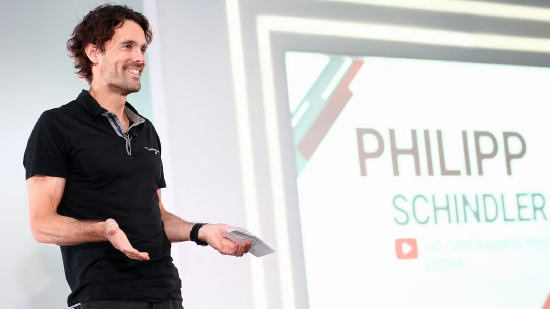
Philipp Schindler, Google's chief business officer.
Google's search-ad slowdown is not a demand collapse; it is a measurement and behavior shift. Users increasingly ask large models instead of keyword engines, while AI surfaces monetize less, so advertisers test Meta and ChatGPT. That is the case answer. The consequence for investors, agencies, and CMOs is that Google remains enormous, but its growth story now depends on turning richer prompts into verifiable returns.
Philipp Schindler pointed the finger at a familiar pattern: people researching online now use AI chatbots. “I wanted to invest more with Google, but I think this portion of search traffic has shifted to scenarios where people use large models to conduct research on their own.”
For more than twenty years, search-engine dominance and automated advertising systems built one of the most profitable ad businesses ever created. Now Google's own AI rollouts are pressing against that business. Meta's ad-growth rate was more than double Google's search-ad growth, while OpenAI also began entering advertising.
What happened when Google's own AI started competing with its ad engine?
On Oct. 29, the day after Google earnings were released, Alphabet shares fell nearly 13%. The full-year growth comparison shows search advertising year-over-year growth slipped from 17% in the second quarter to 12% in the third quarter. Philipp Schindler said part of the slowdown came from AI Mode, Google's ChatGPT-style search assistant, whose monetization is weaker than traditional search.
Google does not disclose separate ad revenue from AI features versus traditional search. The slower growth still suggests that, when users enter AI Mode, Google earns less than it earns from a conventional keyword session. According to Quartz, Google Search & other revenue grew 12% to $63.35 billion, while Meta's advertising revenue rose 26% to $63.1 billion. The absolute size of the two ad engines is now close; the growth direction is not.
Why did AI summaries and AI Mode create a transition problem?
Before this quarterly earnings report, Google had already rolled out AI summaries, including AI Overviews, and conversational AI features at scale as alternatives to traditional web search, while testing how ads could sit inside those surfaces. AI Overviews launched in May 2024; AI Mode followed nearly a year later. Advertising reached the two products months after they were live.
The sequencing matters. Traditional web-search advertising is built on keyword buying. AI summaries and AI Mode break that grammar: ads are no longer tied only to a keyword. They appear alongside long prompts and multi-turn conversations. Advertisers cannot buy Google's AI-search context separately, nor opt out cleanly from AI placements.
Google's own Google Ads Help documentation says that AI Overviews and AI Mode are included in metrics such as impressions, clicks, conversions and cost within existing campaign reporting. That makes the measurement problem structural: the ad system is changing, but the dashboard is not yet a separate AI ledger.
Since search shifted from desktop to mobile in 2016, AI summaries and chatbots represent one of the industry's biggest changes. The risk is that AI could erode Google's $224.5 billion search advertising business.
For several consecutive quarters, Google search-ad revenue did not initially show weakness. As Google AI features gained usage, search revenue growth began to cool. Part of that cooling is deliberate: Google is controlling ad density so that too many ads, or awkward ad formats, do not drive AI-search users away. The rest is product-transition pain, because Google is still learning how to place ads inside conversations and how to price them without simply copying the keyword-auction model.
A Google spokesperson said in a statement: “We take a prudent approach, prioritizing the best user experience, which creates a long-term stable foundation for customers and our business. Our ad experiments in AI summaries and AI Mode have made good progress, and we are now scaling monetization using ad formats that deliver verifiable return on investment for advertisers.”
How user behavior in AI changes conversion math
Google's core difficulty is that AI use looks different from classic web search. Google says prompts in AI Mode are roughly three times longer than traditional searches, with richer context and deeper questions. A user may ask, “what tent is best for a one-week hike in the Sierra mountains in September,” instead of typing only “tent”.
Fred Vallaeys, CEO of Optmyzr, who worked in Google's advertising division for nearly a decade, argued that this browsing pattern means users may not yet be ready to buy. They are less likely to click an ad, and less likely to purchase after clicking.
Vallaeys estimated, using 21,000 ad accounts on Optmyzr's platform, many of them small businesses, that conversion rates from Google ad clicks across the company's platforms—including search—fell 1.4% in the third quarter from the second quarter. Return on ad spend, meaning revenue generated for each dollar of advertising spend, fell 2.9%. That followed a 3.8% decline in the second quarter and marked a second consecutive quarter of decrease.
Advertisers also said Google shows fewer ads inside AI Mode. Over the past year, that scarcity lifted click costs: fewer ad slots, a similar pool of bidders, and automated auctions pushed prices higher.
Where budget is moving: Meta, ChatGPT, and the new buying rule
Six advertisers and agencies said many advertisers have grown disappointed and begun shifting budget elsewhere, including Meta. Like Google, Meta provides automated creative tools to improve conversion. Unlike some of Google's AI search products, Meta said its new AI products—such as the Muse agent—do not place ads in competition with its main feed, because those ads appear alongside short videos and social updates.
AccuraCast Group CEO Farhad Divecha, who buys media for brands, framed the change as a simple budget rule: “This year the market finally has viable options outside Google, such as ChatGPT ads and Meta. We will reallocate budget based on delivery performance.”
Google's transition echoes Meta's own history. When Meta launched Reels in February 2022 as a TikTok competitor, ad growth also hit a trough. The next year, discount policies and AI tools attracted advertisers, and ad revenue growth rebounded. That precedent is why Google still believes AI Mode and AI summaries can recover monetization.
ChatGPT is not yet a simple substitute. Adweek reported that OpenAI's early advertising push used a $60 default CPM and a $200,000 minimum commitment for some buyers, which can make the channel feel more like a brand-media experiment than a performance-search alternative. That pricing context explains why agencies may test it selectively rather than move core budgets at once.
| Signal | Meta | ChatGPT | |
|---|---|---|---|
| Role in the case | Incumbent ad engine under growth pressure | Automated creative and social feed beneficiary | New AI-native advertising experiment |
| Reader takeaway | Scale is still dominant, but reporting is blended | AI products are less cannibalistic because placement is adjacent | High entry thresholds limit first-wave budget shifts |
What Google is doing to repair measurement and value
Google has kept emphasizing AI opportunities to investors and advertisers. It uses AI to decide which search terms are suitable for triggering ads, which landing pages should appear after a click, and how to generate different versions of ad creative.
Under the table, Google is also negotiating partnerships and evaluating potential acquisitions to make AI-context ads more valuable. People familiar with the discussions said Google's business-development team is looking at AI ad-creative tools, an area where Google now competes with Higgsfield, Runway and Typeface. Some companies are using those tools directly instead of traditional agencies.
Google is also trying to solve a data problem that AI exposes. People familiar with the effort said Google paid Hightouch to help guide advertisers toward that startup's customer-data-sharing tools. The deeper issue is that Google often lacks visibility into what an advertiser's existing customers have already bought, especially when small advertisers do not feed purchase data back into the ad system.
To address that, Google reached partnerships with Adswerve, CustomerLabs, Datahash, Fifty-five, Jellyfish, Lytics, Tealium, Treasure Data and Zapier, helping advertisers connect first-party data to Google ads. It has also added reporting features that show query-level information that can trigger ads, and released Asset Studio as a creative hub powered by Gemini Omni and Nano Banana models.
Measured's chief strategy officer Nick Stoltz said: “These features are essentially adaptations to the search-paradigm change brought by AI.”
Victor Batista, global search lead at London digital agency Jellyfish, said advertisers are giving Google richer product descriptions so its AI can decide which conversations should include their ads. He added that many buyers now value impressions more than click-through rate because AI answers often satisfy users without producing a click.
“The value center has moved from clicks to impressions, and many searches never result in a click. Brands are now competing to be recommended inside AI answers,” Victor Batista said.
The broader control debate is also moving outside advertising dashboards. Public concerns over whether schools can turn off Google's AI features—see this CompanyWatch FAQ on schools and Google AI—show that Google's AI surfaces are becoming foundational infrastructure, not optional search settings.
This split between free access and paid capability is also visible in Meta's product packaging, as shown in our site's case review of Meta's Muse Wonder models for users.
Common mistakes and what to watch next
- Mistaking Google's AI rollout for failure. Google remains enormous; the issue is yield per session and measurement clarity, not disappearance of demand.
- Assuming AI ads are a keyword auction clone. They are not: prompts are longer, sessions are more conversational, and attribution may begin in a chatbot.
- Reallocating budget without a separate AI baseline. Because Google bundles AI metrics into existing campaign reports, teams need holdout tests and first-party conversion tracking.
- Chasing ChatGPT too early with broad budgets. Early pricing and minimums can make performance testing expensive before the channel proves scalable return on ad spend.
- Forgetting the Meta lesson. Meta's Reels transition in February 2022 initially hurt ad growth, then next year discount policies and AI tools restored momentum. Product transitions can be painful before they become profitable.
Action suggestions for advertisers: keep Google Search as the revenue floor, but create a separate test line for Meta, ChatGPT and Google AI surfaces; ask vendors to show incrementality rather than blended campaign performance; feed structured product data into Google so AI systems can match conversations; and monitor whether Google launches more granular AI reporting next quarter.
FAQ: What this Google, Meta and ChatGPT shift means
Is Google losing advertisers because AI search is worse?
Not exactly. Google is still winning search volume and remains the largest ad engine by revenue scale. The pressure is that AI Mode and AI summaries may monetize less per session, especially when ads are fewer, prompts are more exploratory and conversions arrive later.
Why do advertisers care that AI data is blended into reports?
Because budget decisions depend on marginal return on ad spend. If AI placements are bundled with traditional search, advertisers cannot easily tell whether Google's AI surfaces are helping, neutral or hurting performance.
Is Meta's growth proof that social is beating search?
Meta's case is not simply social versus search. Meta's automated creative and feed placement are currently converting richer query behavior into measurable outcomes. That is the practical reason advertisers are reallocating budget.
Should ChatGPT replace Google ads?
Not now. ChatGPT is an AI-native channel with emerging reach value, but early reporting and pricing suggest it is better treated as a testable layer above performance search, not a one-to-one replacement.
Reference sources
- Quartz: Google is taking AI Mode ads global as Q3 search growth slows
- Google Ads Help: About ads in AI-powered experiences in Google Search
- Adweek: OpenAI confirms $200,000 minimum commitment for ChatGPT ads
- Adweek: Meta beats Q3 expectations with strong earnings
- Digiday: Google Search loses its free pass with buyers